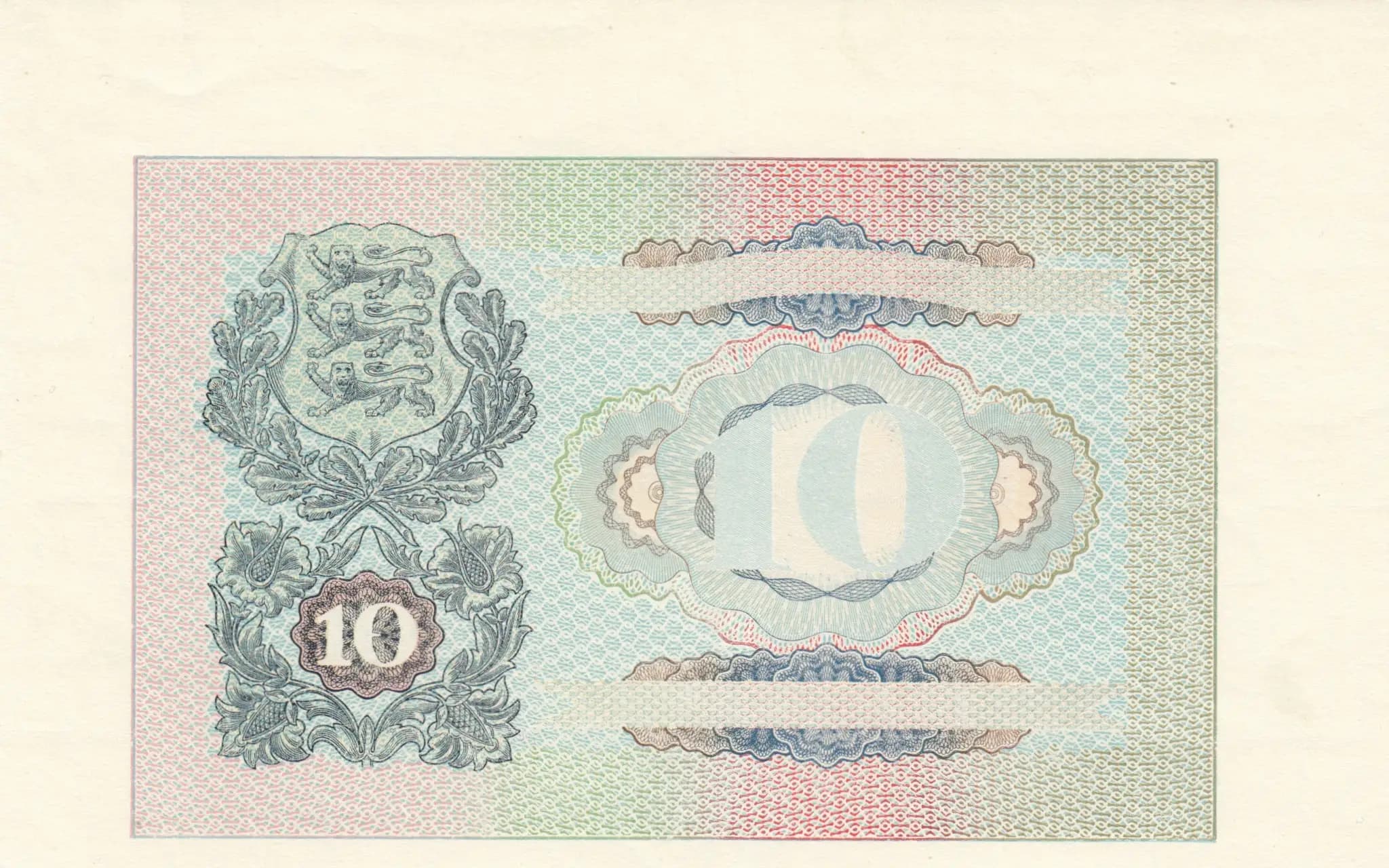
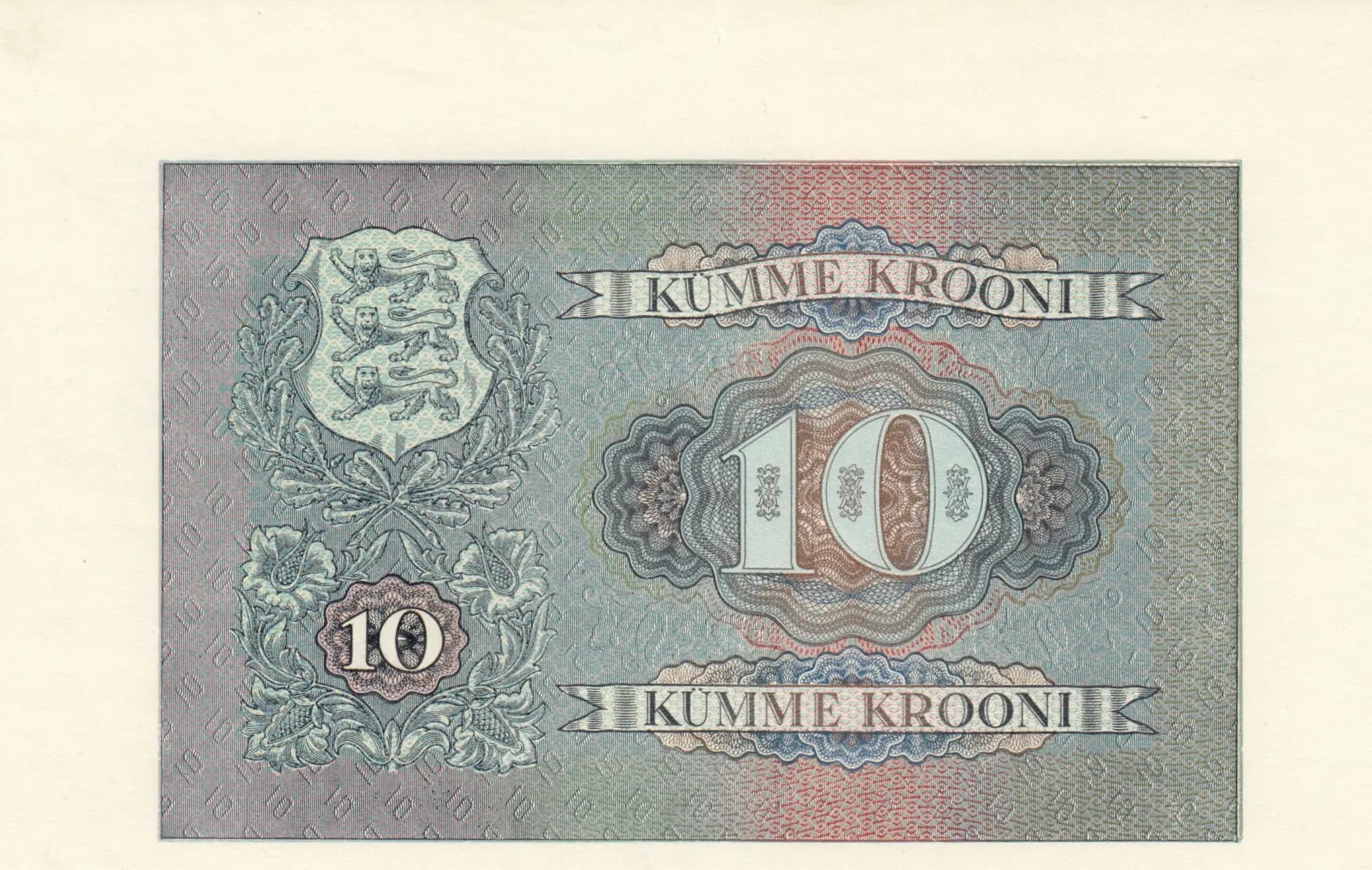
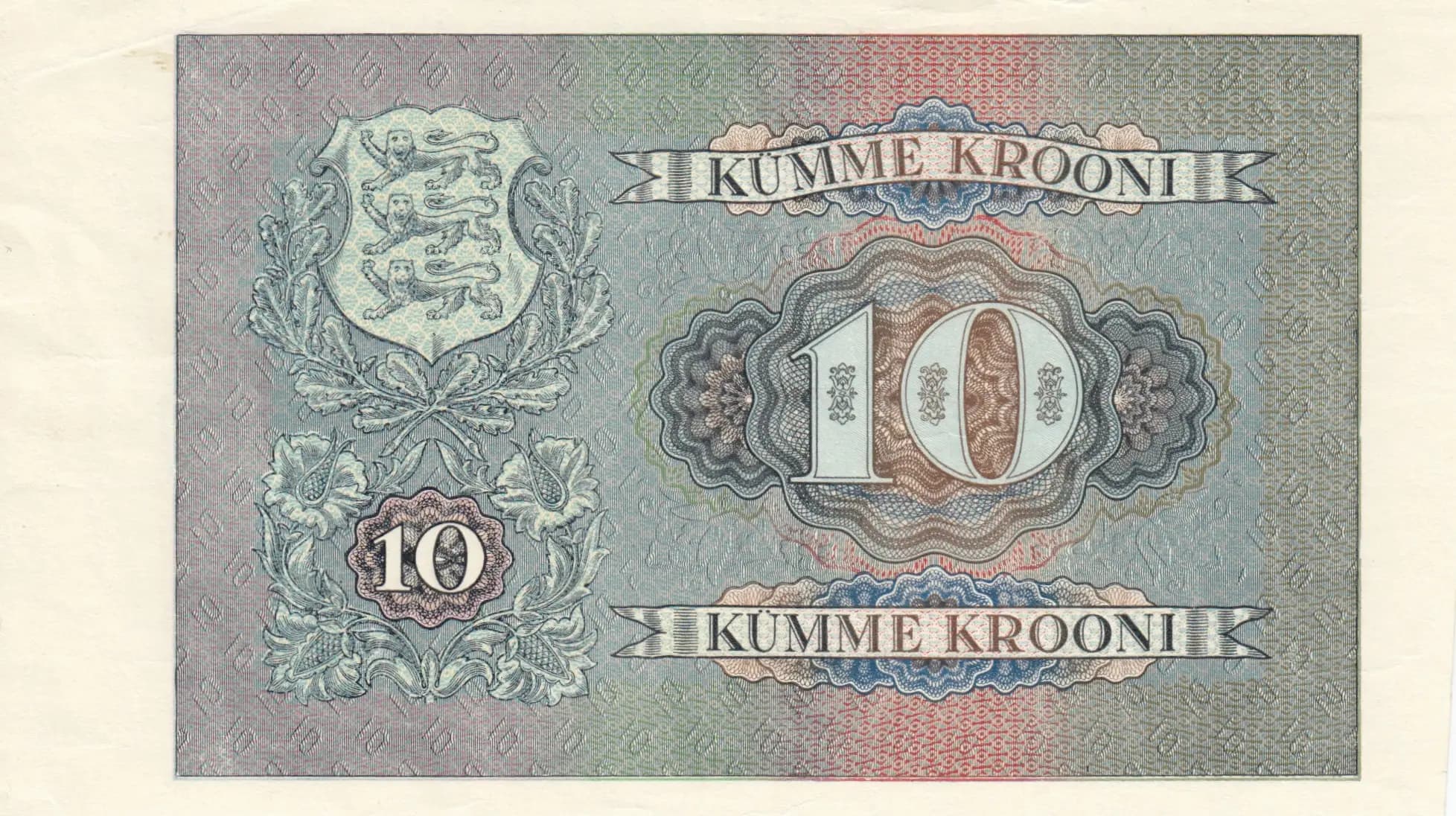
10 krooni 1940 progressive proof
About This Note
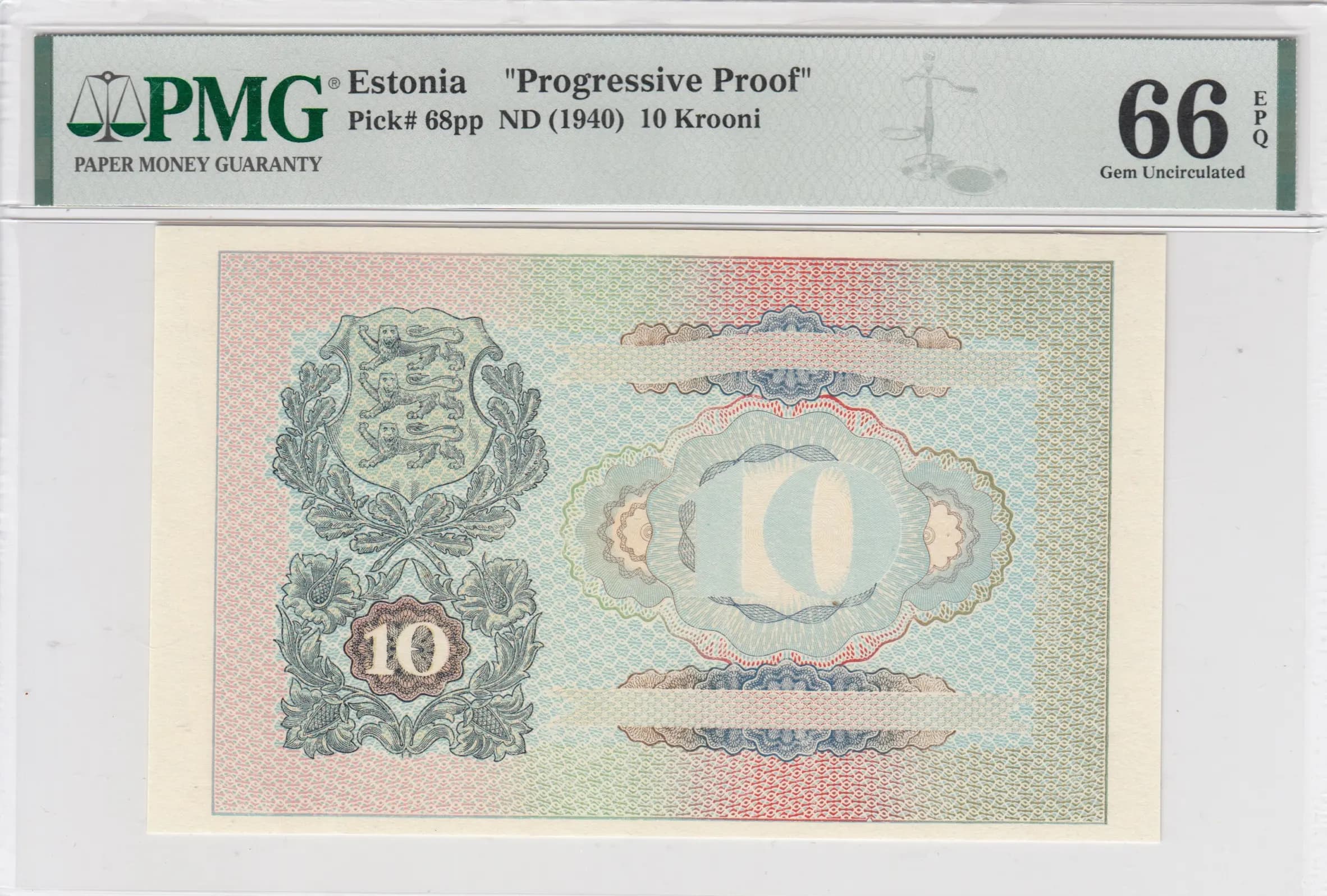
This is a PMG 66 EPQ certified Estonian 10 Krooni progressive proof from 1940, representing an uncirculated example of a note that never entered circulation. The reverse displays exceptional Art Deco design featuring Estonia's heraldic lion rampant within an ornate shield, flanked by botanical ornaments and an elaborate allegorical vignette, all rendered in a sophisticated five-color palette of pink, green, blue, tan, and brown. The crisp printing, pristine paper quality, and complex security pattern work demonstrate the high production standards of Eesti Pank during this period.
Rare to very rare. This is a progressive proof (Pick P-68pp3) rather than a regular issue, meaning it represents an intermediate stage in the banknote production process shown to bank officials for approval. Progressive proofs are produced in extremely limited quantities—typically only a few examples per stage. Additionally, this specific note was never issued for circulation, as Estonia was occupied by the Soviet Union in June 1940, shortly after this note was designed. The combination of being a proof strike, an unissued design, and existing in an exceptionally high grade (PMG 66 EPQ) makes this a significant rarity. Progressive proofs from short-lived or interrupted currency programs command substantial premiums among serious numismatists and Estonian collectors.
This note was produced in 1940, a critical year for Estonia when the nation faced imminent Soviet occupation (which occurred in June 1940), explaining why the note never reached circulation despite being engraved and proofed. The heraldic coat of arms featuring the lion rampant was the official symbol of the Estonian state during its period of independence (1918-1940), making this note a tangible representation of Estonian national identity during its brief independence era. The Art Deco aesthetic reflects the modernist design sensibilities prevalent in Northern European financial institutions during the interwar and early 1940s.
The reverse of this 10 Krooni note features a symmetrical, highly ornamental design centered on heraldic symbolism. The left portion displays the Estonian coat of arms—a lion rampant (standing on hind legs) positioned within a formal heraldic shield, surrounded by an elaborate decorative frame. Botanical ornaments including stylized flowers, laurel or palm fronds flank the arms in a classical manner typical of European banknote design. The right side features an oval central vignette containing abstract or allegorical designs symbolic of Estonian sovereignty. The entire background is composed of intricate geometric patterns and fine-line work creating a sophisticated microprint-style security feature. The color palette—predominantly pink/rose, green, blue, tan/beige, and brown—creates visual depth and complexity that would have been difficult to counterfeit with contemporary technology.
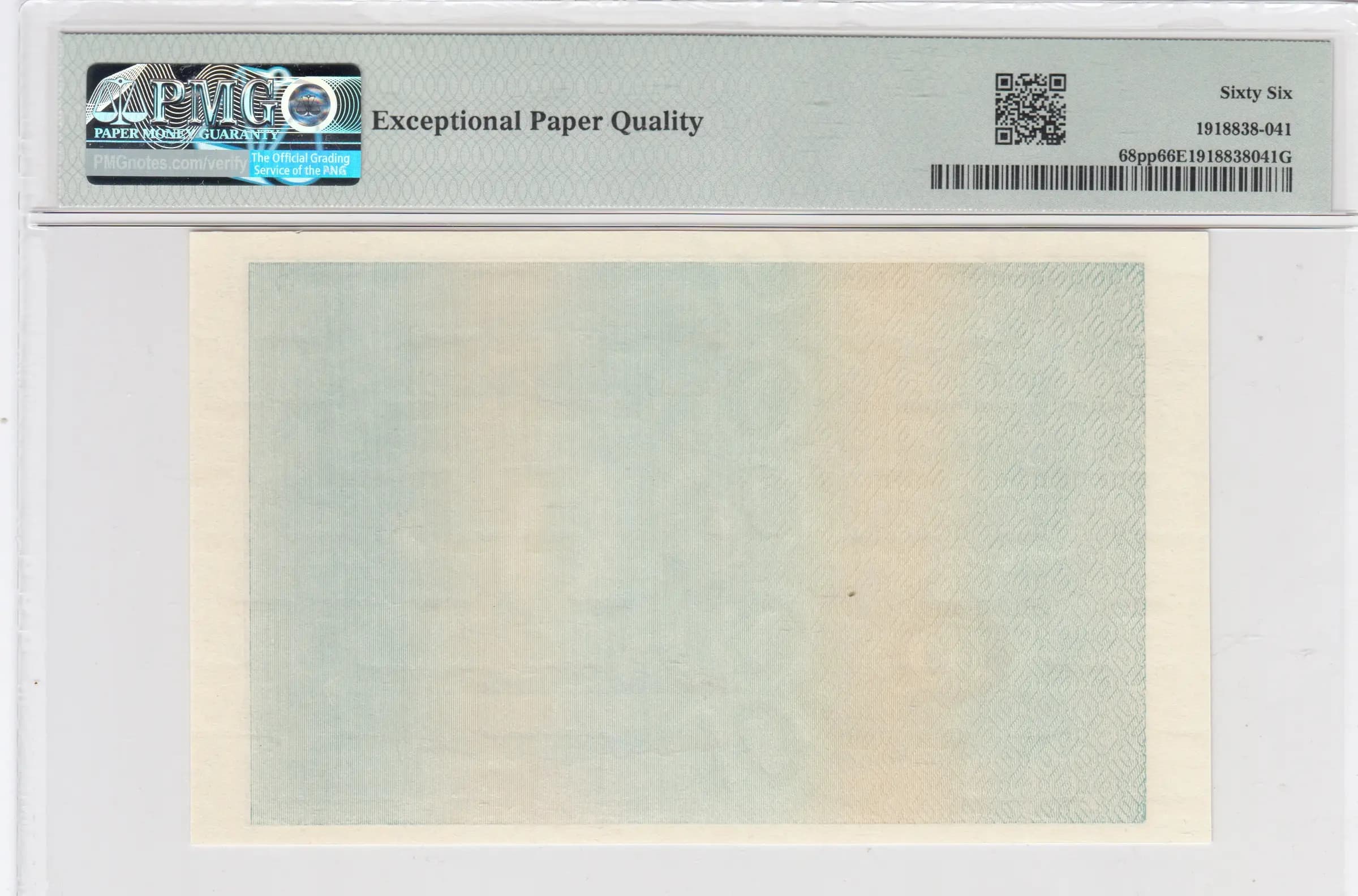
Back side: Denomination '10' displayed prominently in numeric form. PMG holder inscriptions (not part of original banknote): 'Exceptional Paper Quality' and 'Sixty Six' (grade 66), Certificate number '1918838-041', Certification identifier '68pp66E1918838041G'.
Intaglio printing (engraving), the standard security printing method for banknotes of this era. The fine-line geometric patterns, crisp denomination display, and complex heraldic detail visible in the image are characteristic of high-quality intaglio work. The multiple color application and security pattern complexity suggest this was produced by a capable European security printer, likely working under contract to Eesti Pank. The 'microprint-style' geometric patterns noted in the visual analysis are consistent with carefully engraved security lines typical of 1940s-era banknote production.
This is catalogued as P-68pp3, indicating it is the third stage of progressive proofs for Pick catalog number 68. Progressive proof stages typically show sequential additions of color plates and security elements. As a proof piece, this note would not have serial numbers or the standard inscriptions of a circulating note. The 'pp3' designation specifically identifies this as a multi-color progressive proof at an advanced stage of the design approval process. No variants based on signatures or serial prefixes apply, as this is a proof specimen rather than a production note.