10 krooni 1940 progressive proof
About This Note
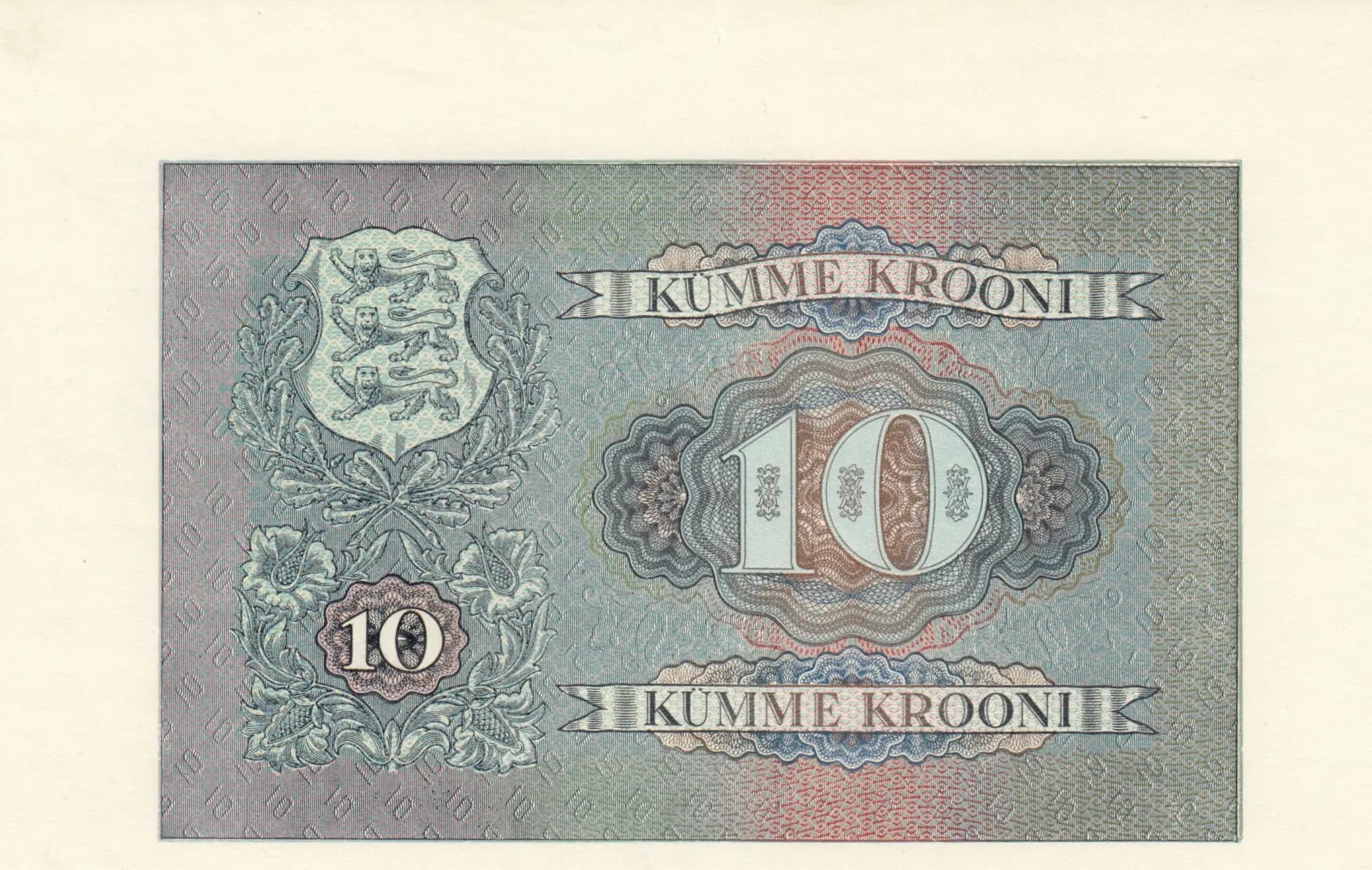
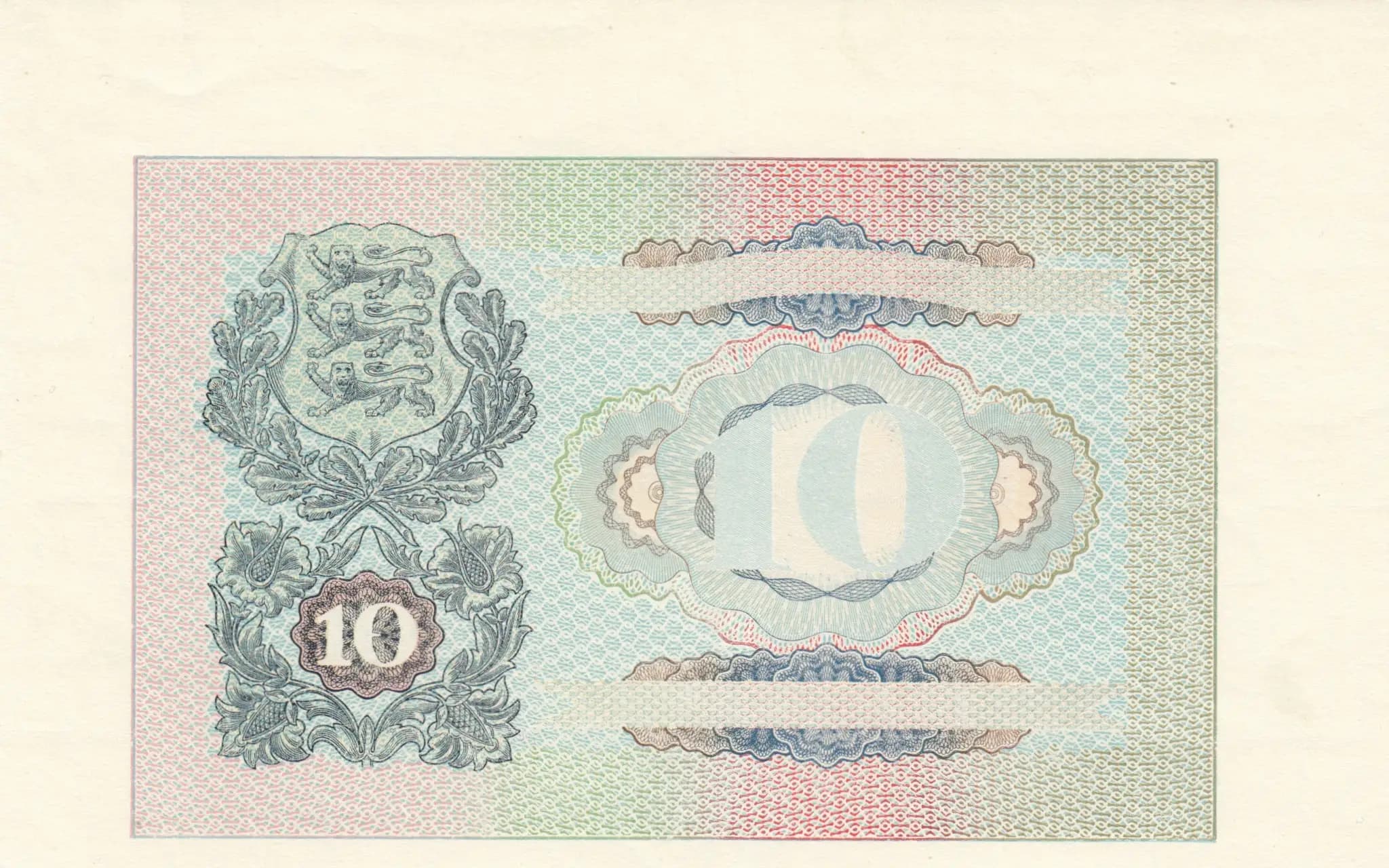
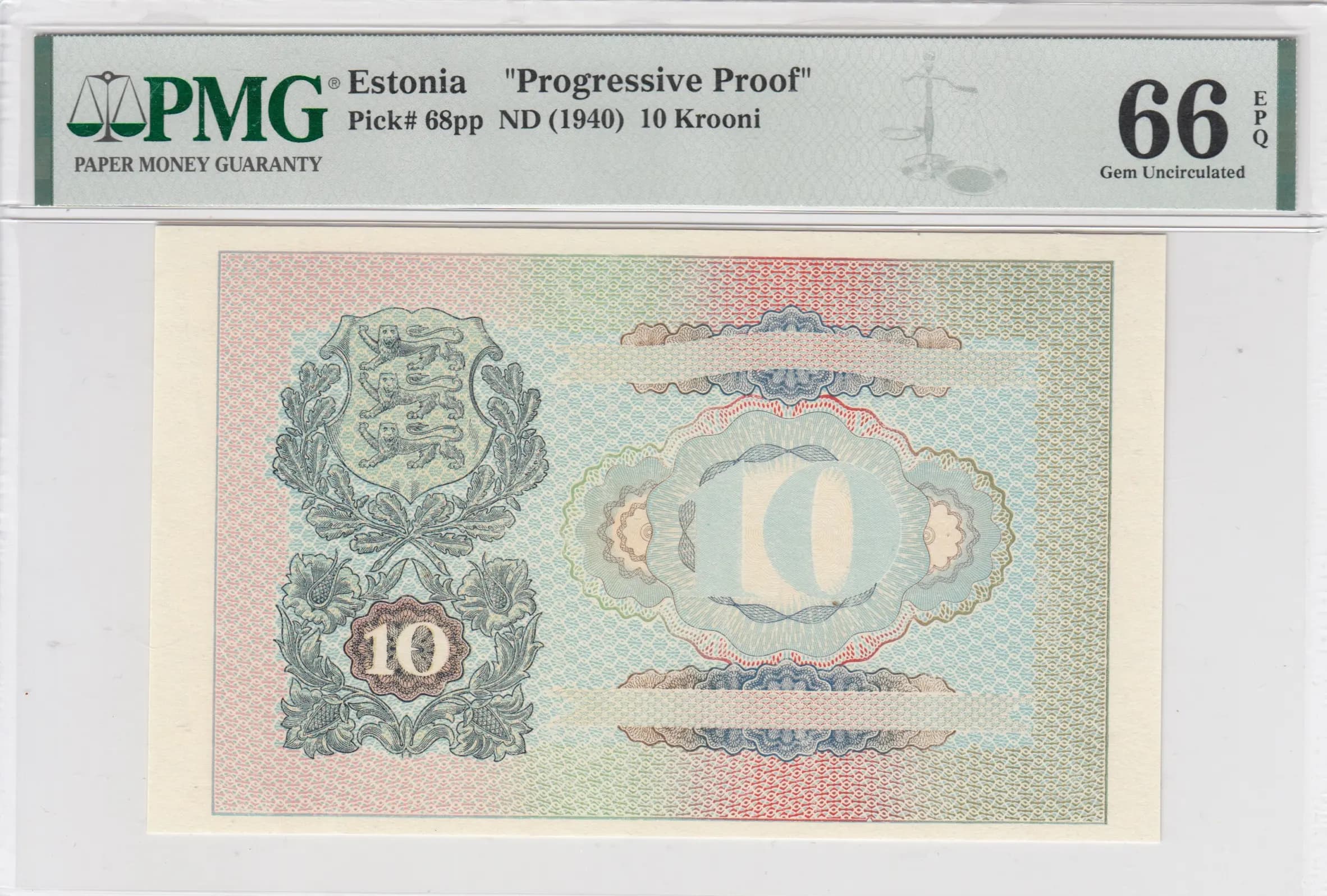
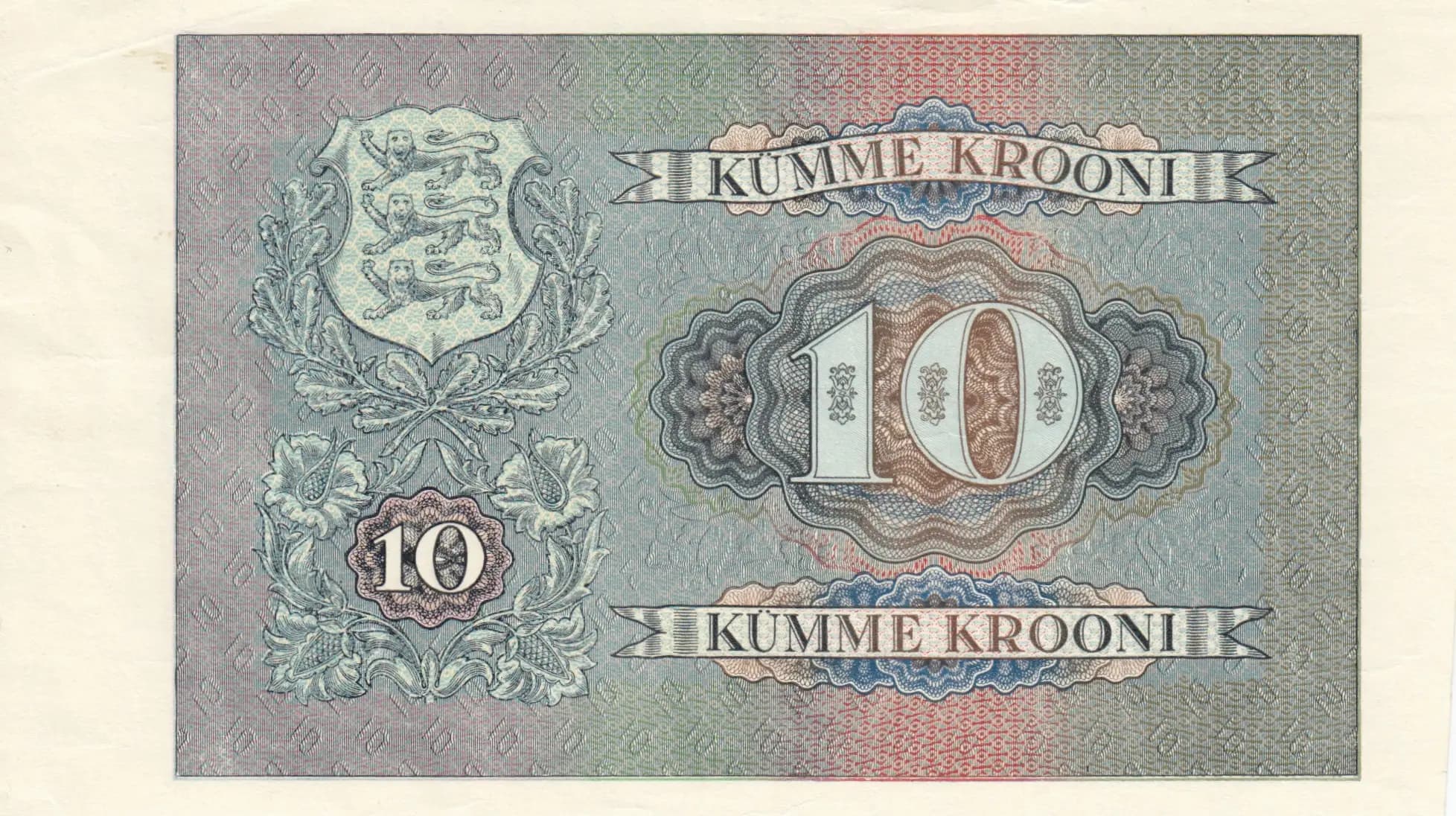
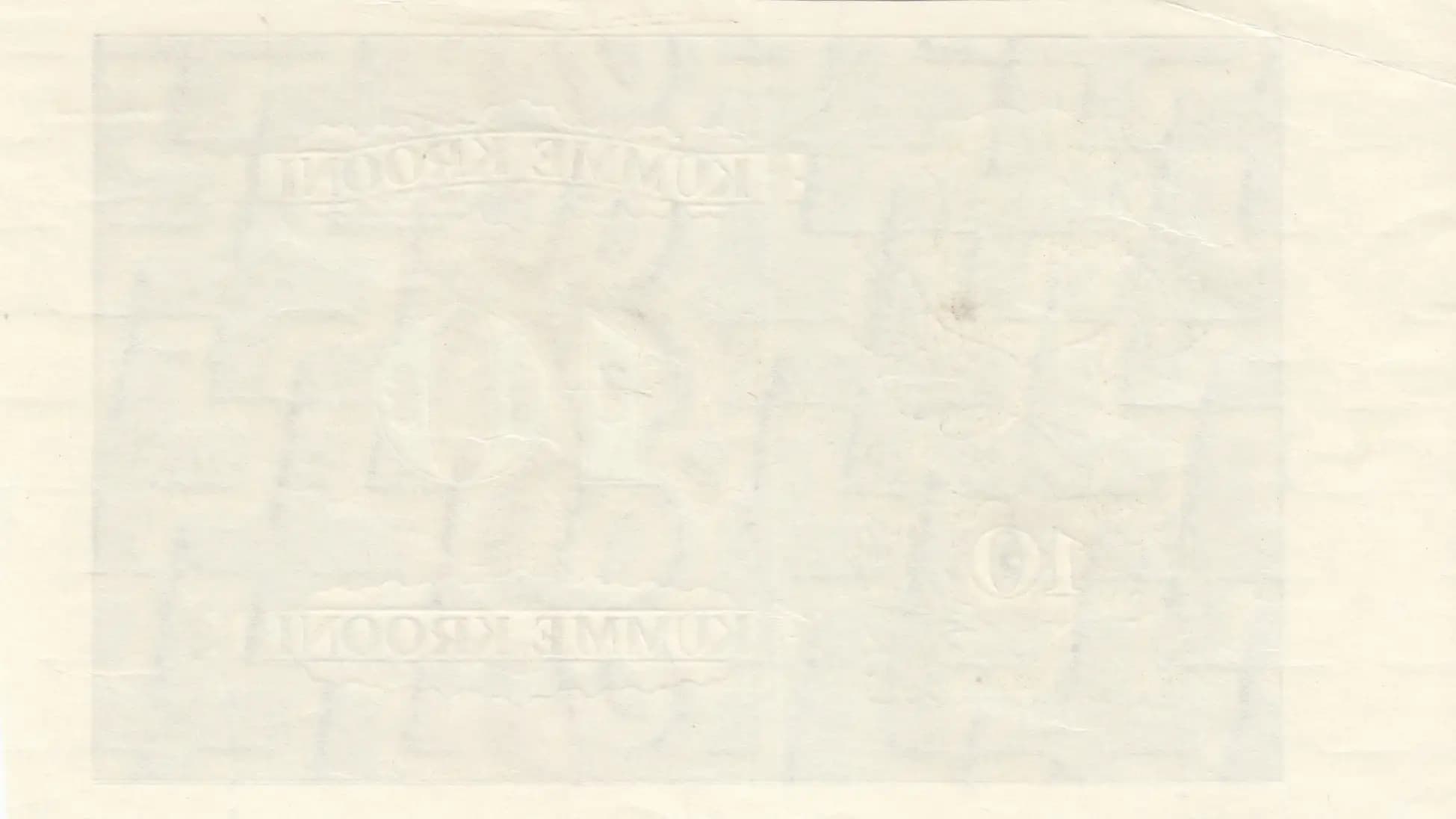
This is an Estonian 10 krooni progressive proof from 1940, graded AU, representing an important unissued design from Eesti Pank during a transformative period in Estonian history. The reverse side displays exceptional engraving quality with the three-lion coat of arms and ornate denomination medallion rendered in multicolored security printing, while the front appears to be an early progressive proof stage with only faint watermark and text impressions visible. As a progressive proof and unissued note, this piece is significant for understanding the design evolution and security features planned for Estonian currency during this historically volatile year.
Very rare. This is an unissued 1940 progressive proof from a banknote that never circulated, as Estonia ceased independence in August 1940. Progressive proofs represent limited strike quantities produced for design approval and archival purposes—typically only a handful of specimens exist. The combination of AU grade condition, progressive proof status, Pick catalog listing (P-68pp2), and unissued nature makes this a significant rarity for serious collectors of Estonian currency and 20th-century proof material. Few examples survive in institutional or private collections.
The 1940 Estonian 10 krooni represents a critical moment in Estonian monetary history, as this design was never officially issued before Estonia's incorporation into the Soviet Union in August 1940. The prominent three-lion coat of arms depicted on the reverse symbolizes Estonian national sovereignty and heraldic tradition, while the choice of a woman's portrait for the obverse (per catalog data) reflects contemporary design practices of Nordic and Baltic central banks. This unissued note serves as a historical artifact of the independent Estonian state's final year, making progressive proofs like this particularly valuable to collectors of Estonian numismatics and 20th-century European currency design.
The reverse features the coat of arms of Estonia—a shield bearing three lions passant guardant (walking, facing forward), a traditional symbol of Estonian heraldry and national identity. The shield is elaborately framed with ornamental baroque-style flourishes, foliate designs, and decorative supporter elements rendered in fine engraving. The denomination is presented prominently in an oval medallion on the right side, with the numeral '10' split between brown and white colored sections for visual impact. The text 'KUMME KROONI' (Ten Crowns in Estonian) appears in ornate banner ribbons both above and below. The background employs fine-line security patterns in green, blue, and red to create texture and anti-counterfeiting protection. The front side of this progressive proof stage shows only faint watermark impressions and barely legible text, indicating this is from an early stage of the design development process before full color plate application.
Back side: 'KUMME KROONI' (appears twice in banner ribbons above and below the denomination numeral) — translates to 'Ten Crowns' in English. Numeral '10' displayed in oval medallion. Front side: Text present but too faint in progressive proof stage to reliably transcribe or translate with confidence.
Intaglio (engraved line) printing combined with multicolor offset or letterpress elements, typical of 1930s-1940s European banknote production. The fine line patterns, elaborate heraldic engraving, and security background work characteristic of intaglio are evident. The progression from the nearly blank front stage (est203b) to the fully detailed reverse (est203a) indicates this is a documented progressive proof set showing the production stages. Eesti Pank likely contracted with a European security printer, possibly Bradbury Wilkinson or similar established firms serving Baltic central banks during this period.
Pick P-68pp2 designation indicates this is the second progressive proof stage variety. The 'pp' notation in the Pick catalog specifically denotes progressive proof material. The two-stage progression visible in the visual analysis (blank/watermark stage on front, fully developed reverse) is consistent with standard progressive proof documentation. Serial numbers, signatures, and other identifying marks are either absent or not clearly visible in the provided images, but the notation 'pp2' indicates this specific specimen is identified within the progressive proof sequence for this design.