10 krooni 1937 specimen
Market Prices
1 saleAbout This Note
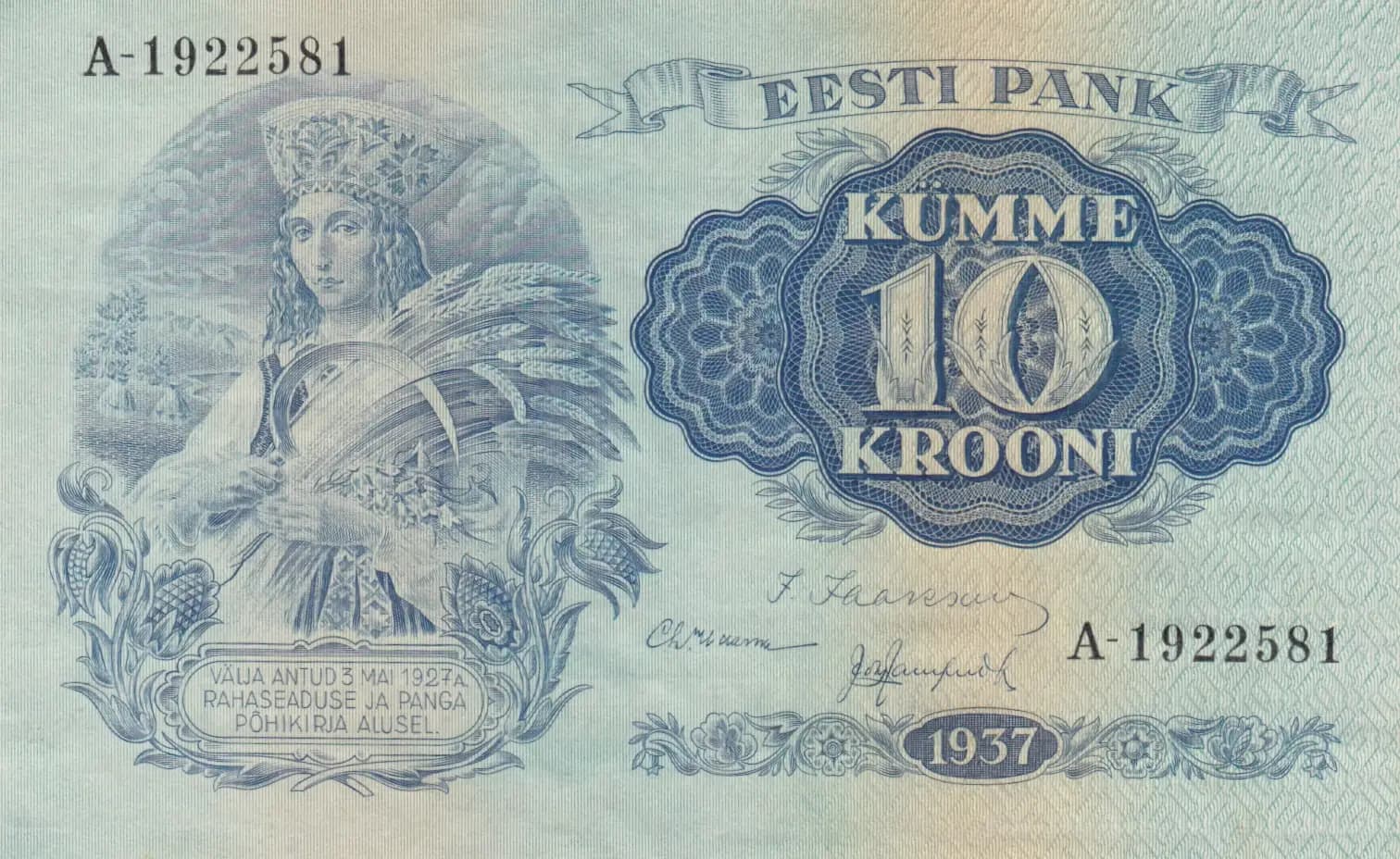
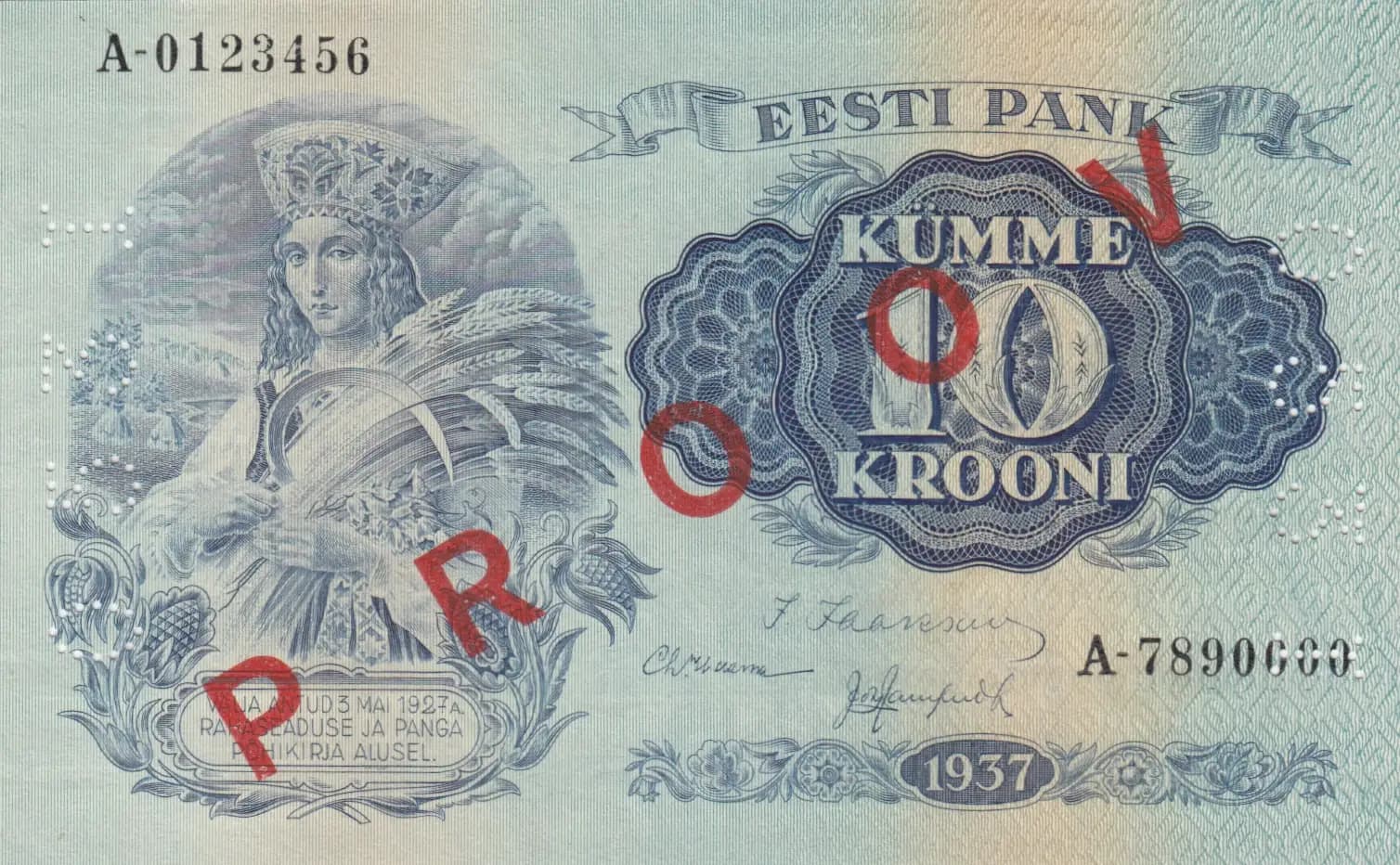
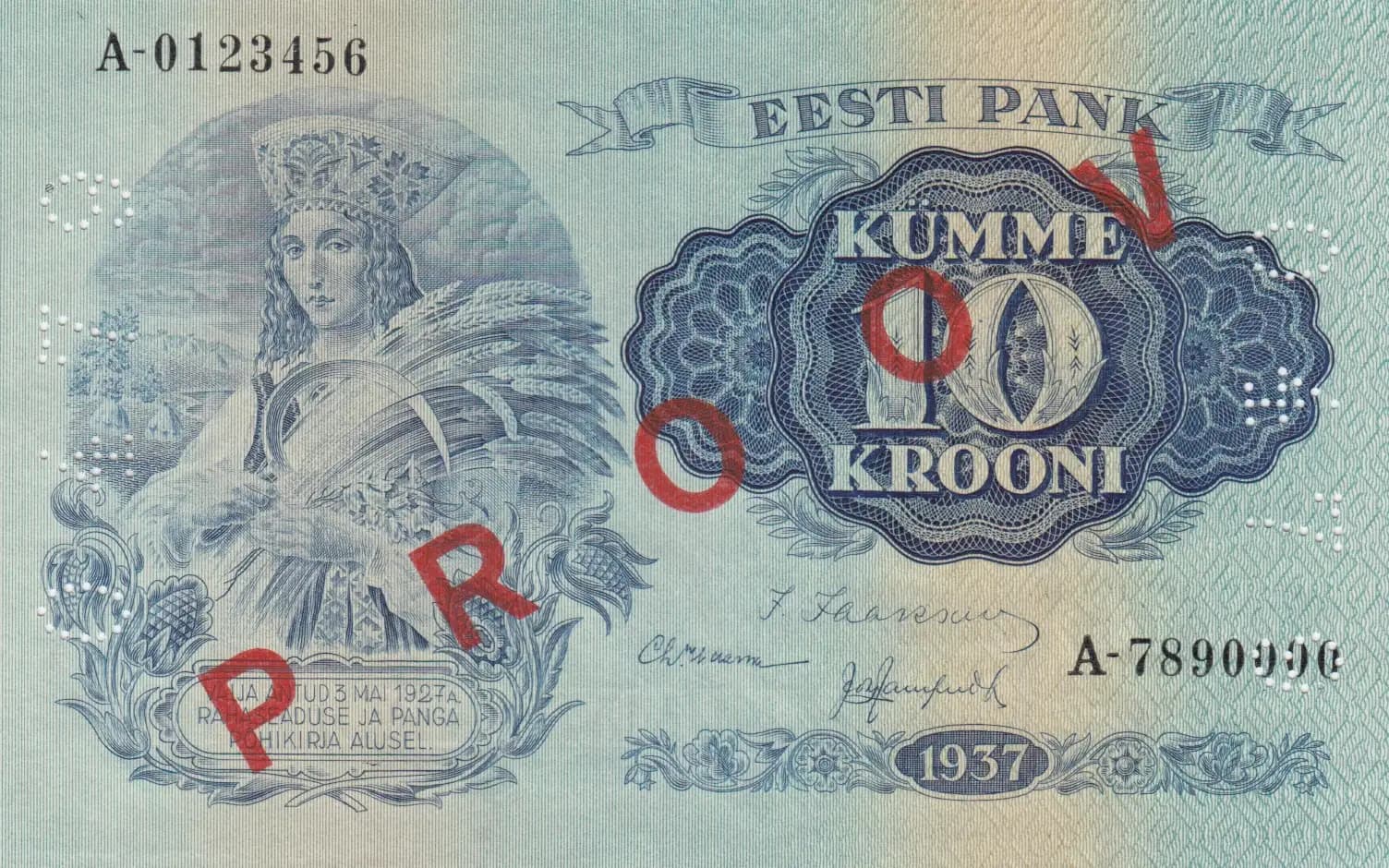
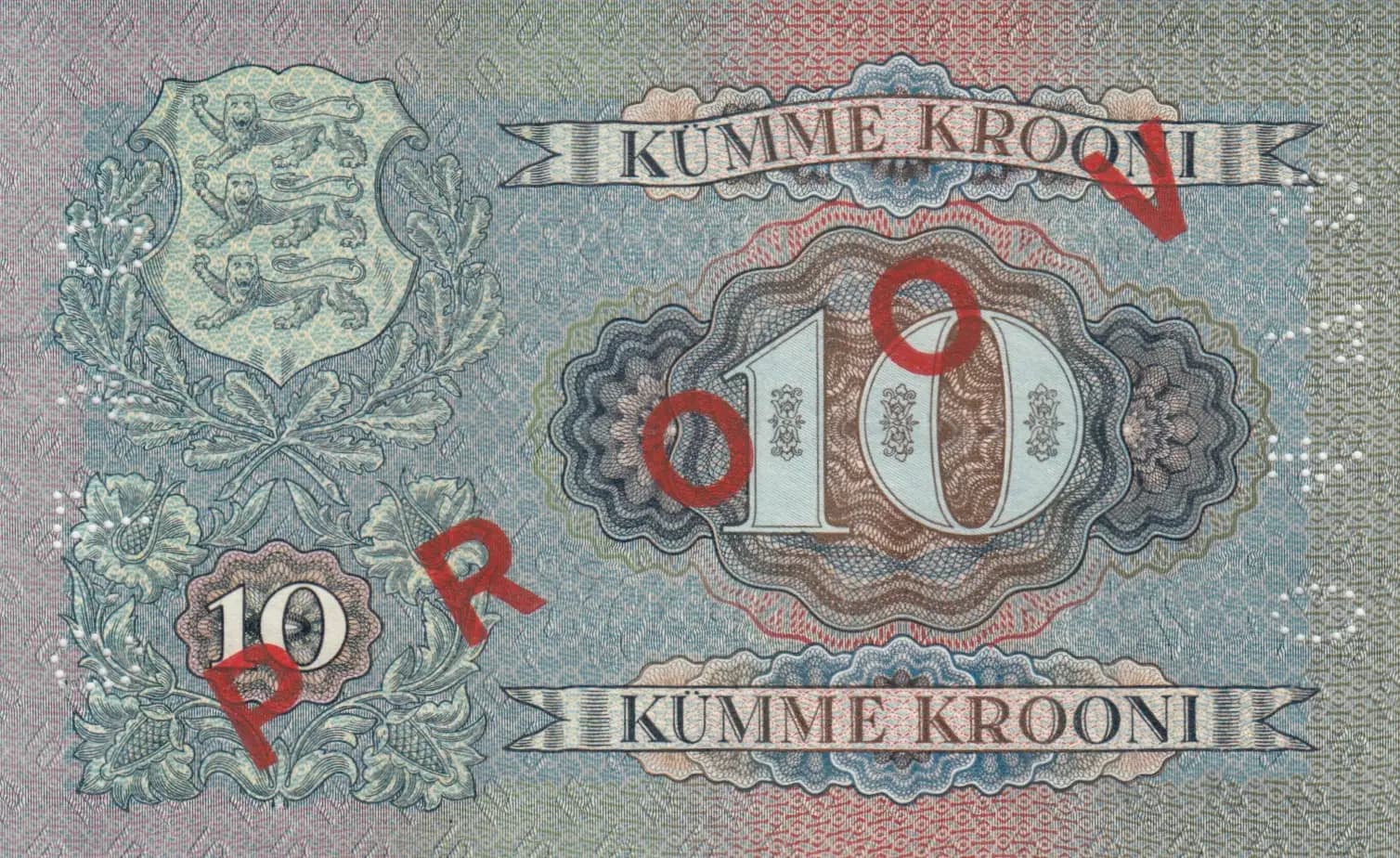
This is a 1937 Estonian 10 krooni specimen note (Pick P-67s) in uncirculated condition, distinguished by its red 'SPECIMEN' overprint across both sides. The note features elegant Art Deco-influenced design with a portrait of a woman in traditional ornate dress and headdress on the obverse, complemented by Estonia's three-lion coat of arms on the reverse. As a specimen note from the interwar period of Estonian independence, it represents an important artifact of the nation's early monetary history and remains well-preserved with only minor aging visible in the paper tone.
Common. The eBay market data shows a UNC specimen selling for $47.56 in 2009 with catalog values of $80 UNC (2016), indicating a well-established secondary market with reasonable liquidity. Specimen notes from the 1930s are regularly encountered in collections and on the market. The P-67s variant is catalogued by PMG alongside P-67a, suggesting neither is exceptionally scarce. The moderate price point and availability history indicate this is a standard collectible from the period rather than a rare or scarcely-encountered issue.
This 10 krooni note was issued by Eesti Pank during Estonia's independent statehood in the interwar period (1918-1940), a formative era for the newly sovereign nation following independence from the Russian Empire. The prominent display of the Estonian coat of arms featuring three lions on the reverse symbolized national identity and sovereignty during this period of political consolidation. The note's classical portraiture and ornate design reflect the aesthetic standards of 1930s European banknote design, while the specimen designation indicates this particular example was retained by the central bank for archival or distribution purposes rather than entering general circulation.
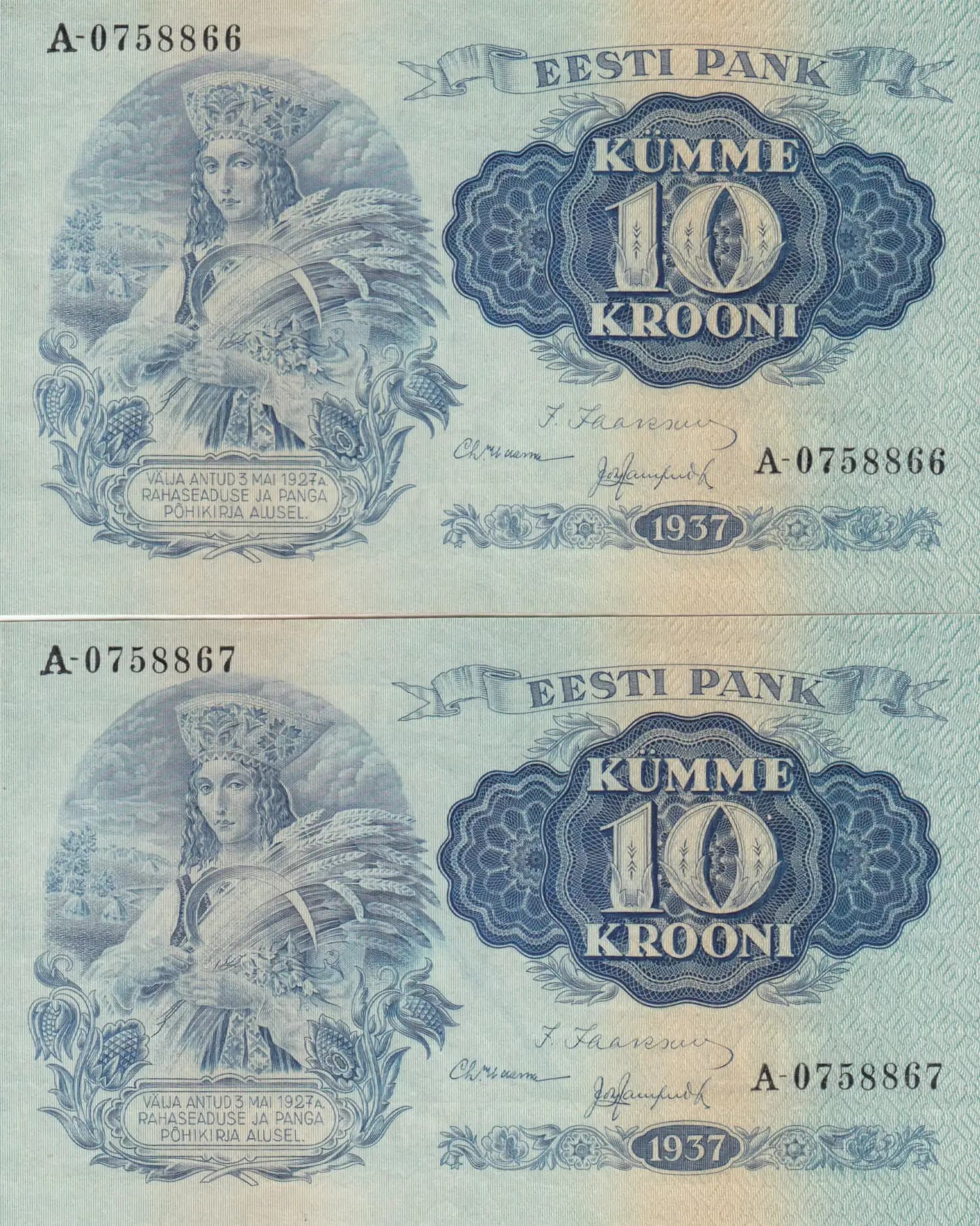
The obverse features a left-facing profile portrait of a woman wearing an elaborate traditional Estonian headdress adorned with jewels and ornamental decorative elements, rendered in fine engraved line work typical of the period. The woman's traditional costume and jewelry reflect Estonian cultural heritage. The denomination '10' is prominently displayed in the center within a decorative cartouche with ornamental floral border elements. A shield or coat of arms element appears in the lower left. The reverse displays Estonia's national coat of arms—a heraldic shield featuring three lions—as the dominant central symbol, emphasizing national sovereignty. Both sides employ intricate geometric and floral security patterns in the background. The color scheme utilizes light green/teal, blue, cream, and beige tones with red specimen overprint applied across both surfaces.
Front side: 'EESTI PANK' (Estonian Bank), 'KUMME KROONI' (Ten Kroons), 'SPECIMEN' (English overprint), serial number 'A-0123456' (top left) and 'A-789033JE' (bottom right), year '1957' [Note: Visual analysis shows 1957, contradicting catalog data of 1937]. Back side: 'KUMME KROON' and 'KUMME KROONI' (Ten Kroon/Kroons), numeral '10', 'SPECIMEN' (red overprint).
Intaglio engraving (line engraving/copperplate), the standard security printing method for high-value banknotes of this era. The extensive fine-line work, complex decorative borders, intricate geometric patterns, and layered security design visible throughout both sides are characteristic of professional intaglio production. The specimen overprint in red was applied separately, likely by lithographic means. Estonian banknotes of this period were typically produced by the Banknote Printing Works or contracted European security printers; however, the specific printer for this issue is not definitively established from the visual analysis alone.
This is the P-67s (specimen) variety as indicated by the red 'SPECIMEN' overprint applied across both obverse and reverse. PMG catalogs two variants for Pick 67: P-67a (standard circulation issue) and P-67s (specimen note). The visual analysis reveals serial numbers and confirms the specimen overprint characteristic. A discrepancy exists between the catalog data (1937) and visual analysis (1957 visible on the note), which requires clarification—this may indicate either a dating error in the visual analysis or a catalog attribution issue requiring verification from physical examination.