10 krooni 1937 pair
Market Prices
30 salesAbout This Note
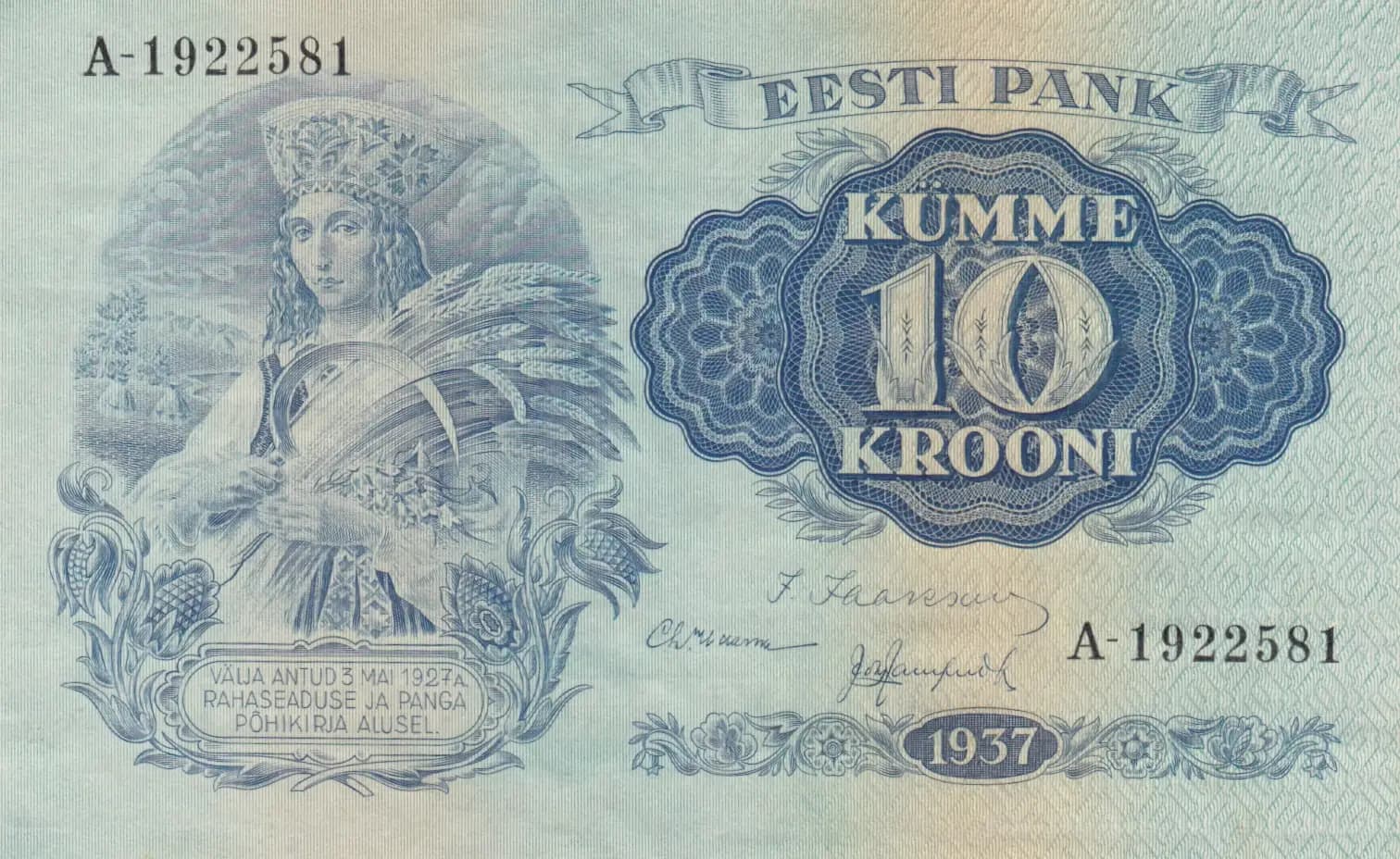
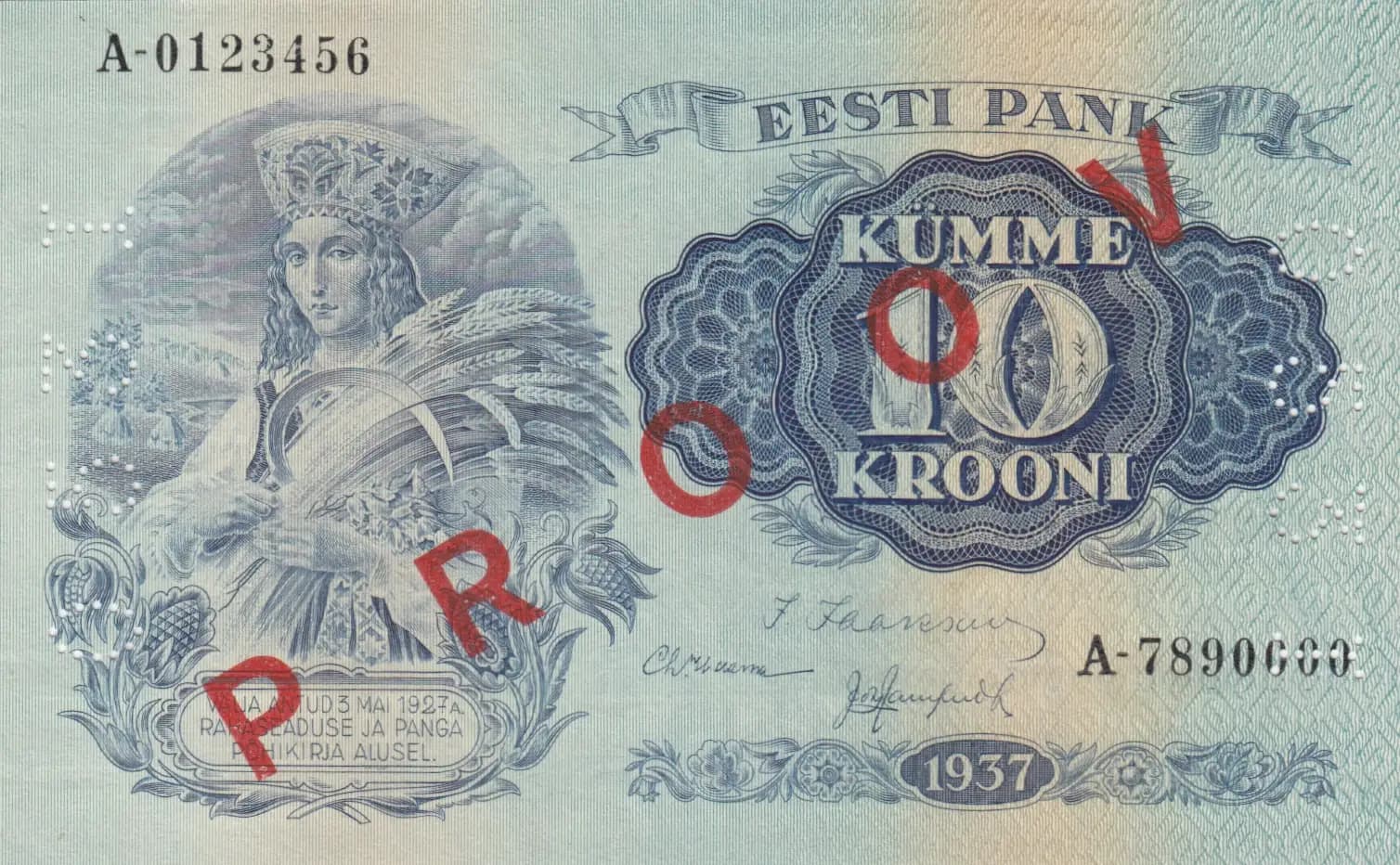
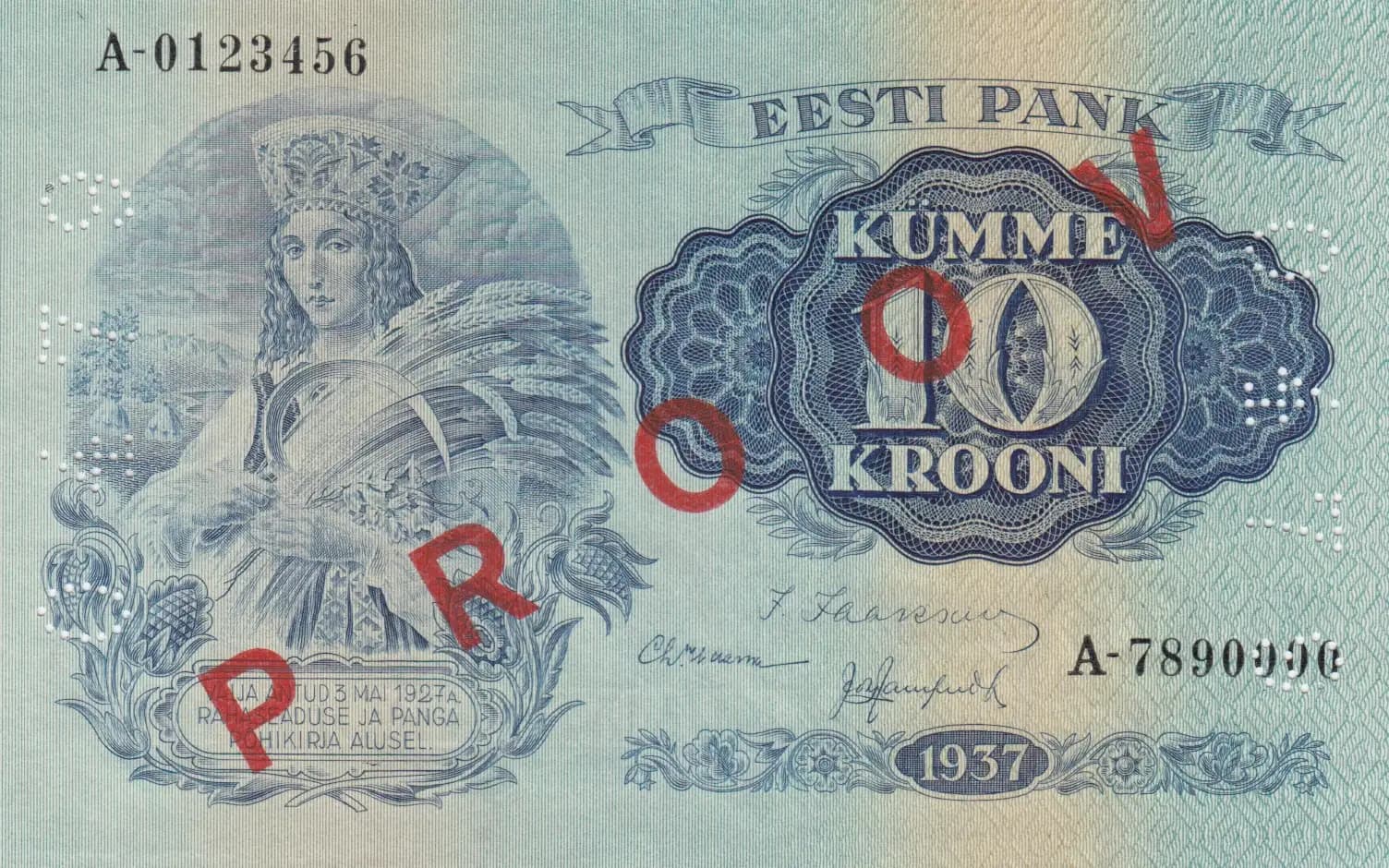
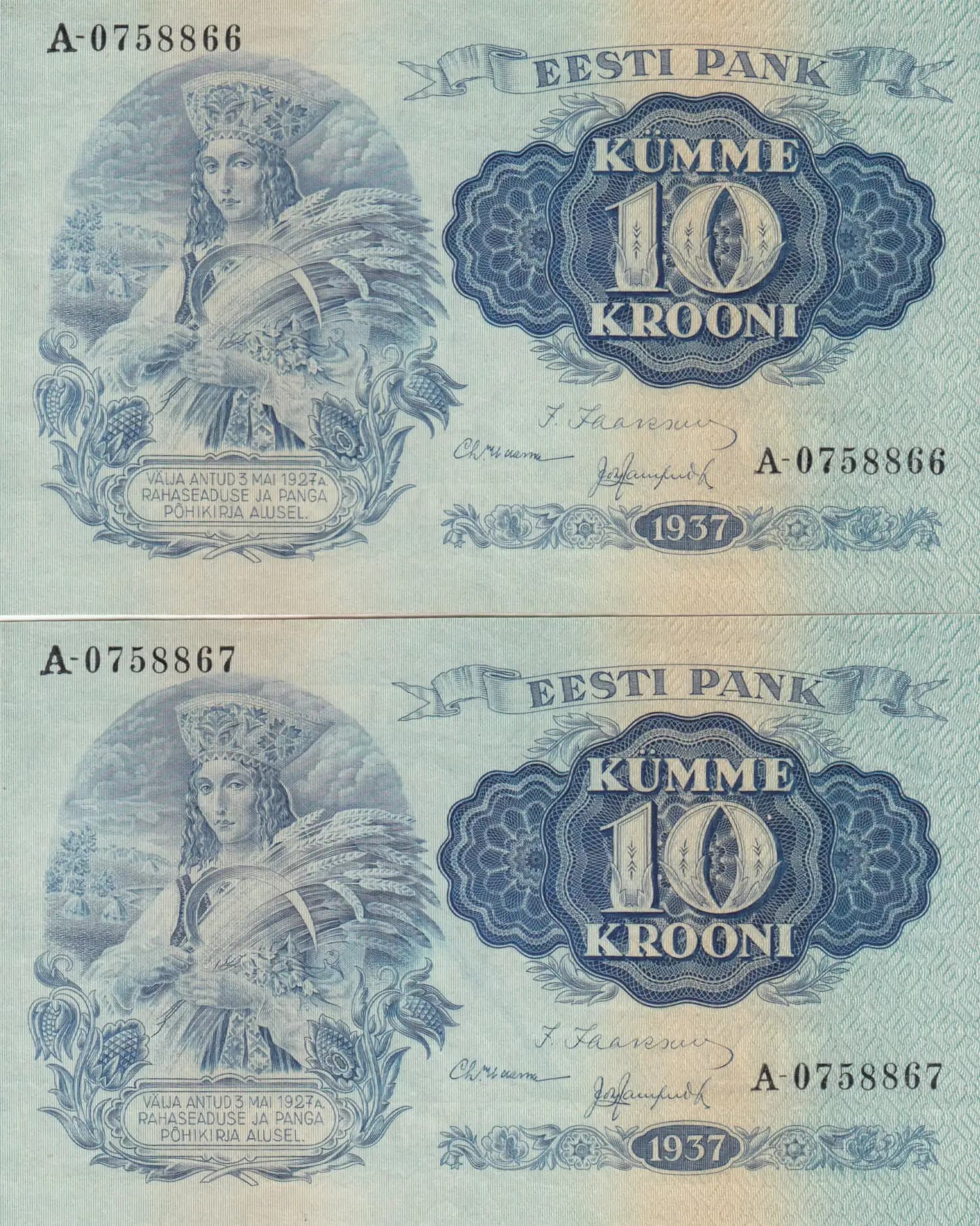
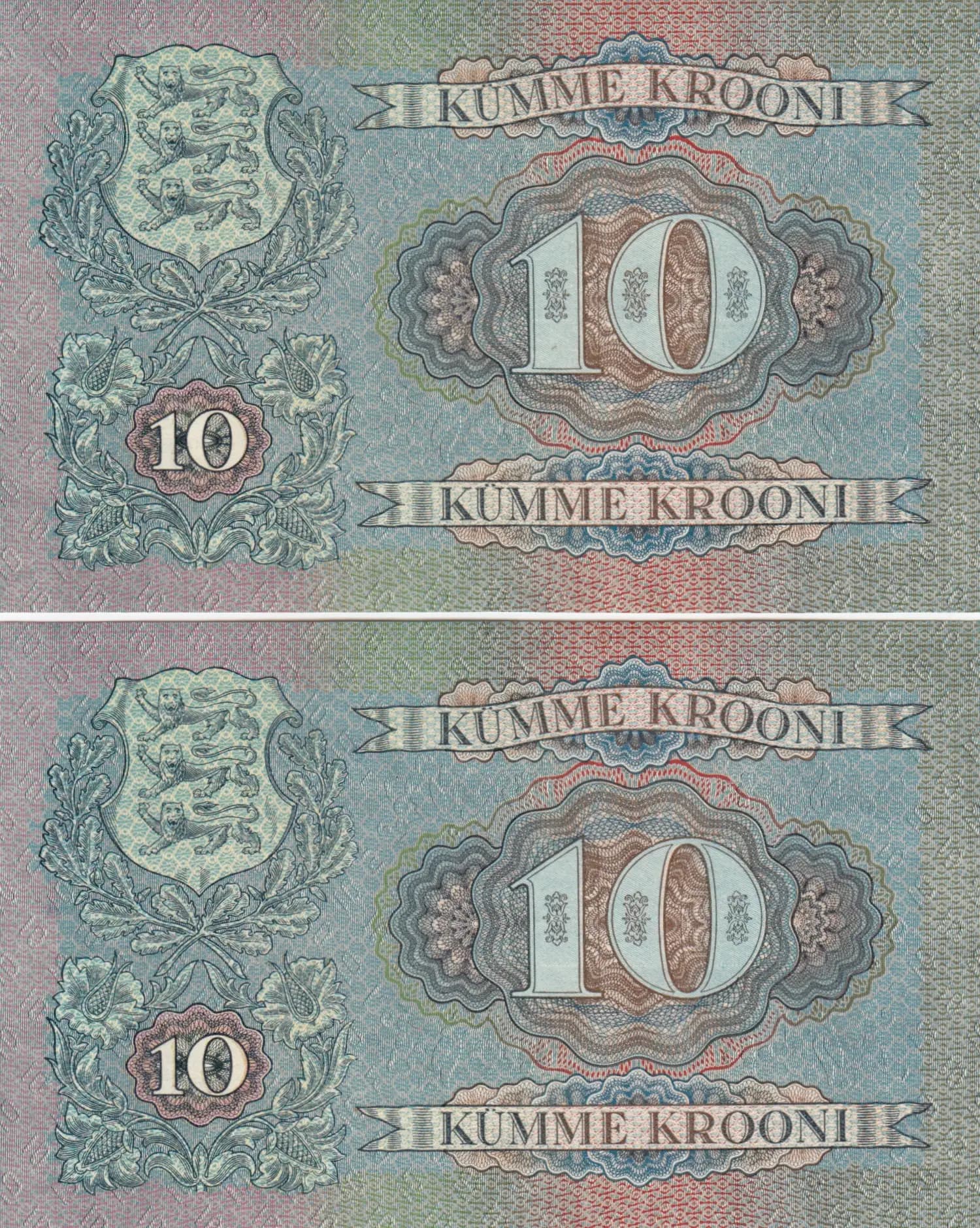
This is a consecutive pair of Estonian 10 krooni banknotes from 1937 in uncirculated condition, displaying exceptional eye appeal with crisp, clear printing and no visible wear. The notes feature an elegant female portrait wearing an ornate crown on the obverse and the Estonian coat of arms on the reverse, with predominantly blue-grey tones on the front and multicolored green, brown, and red hues on the back. The sharp engraving quality and pristine condition make this pair particularly desirable for collectors of interwar Baltic currency.
Common. The eBay price history provided shows numerous sales across multiple condition grades ranging from $5.50 to $137.50 (for PMG 66), with UNC examples selling for approximately $38-70 based on the 2016 catalogue values and various sales records. The availability of multiple sales records and consistent market presence indicate this is a regularly traded note with reasonable availability to collectors.
These notes were issued by Eesti Pank during Estonia's period of independence between the World Wars, operating under the authority of the Republic's May 1924 Currency Law. The female figure depicted on the obverse symbolized the newly independent Estonian nation, while the prominent lion rampant coat of arms on the reverse affirmed Estonia's sovereignty and national identity during this formative period of the Estonian state.
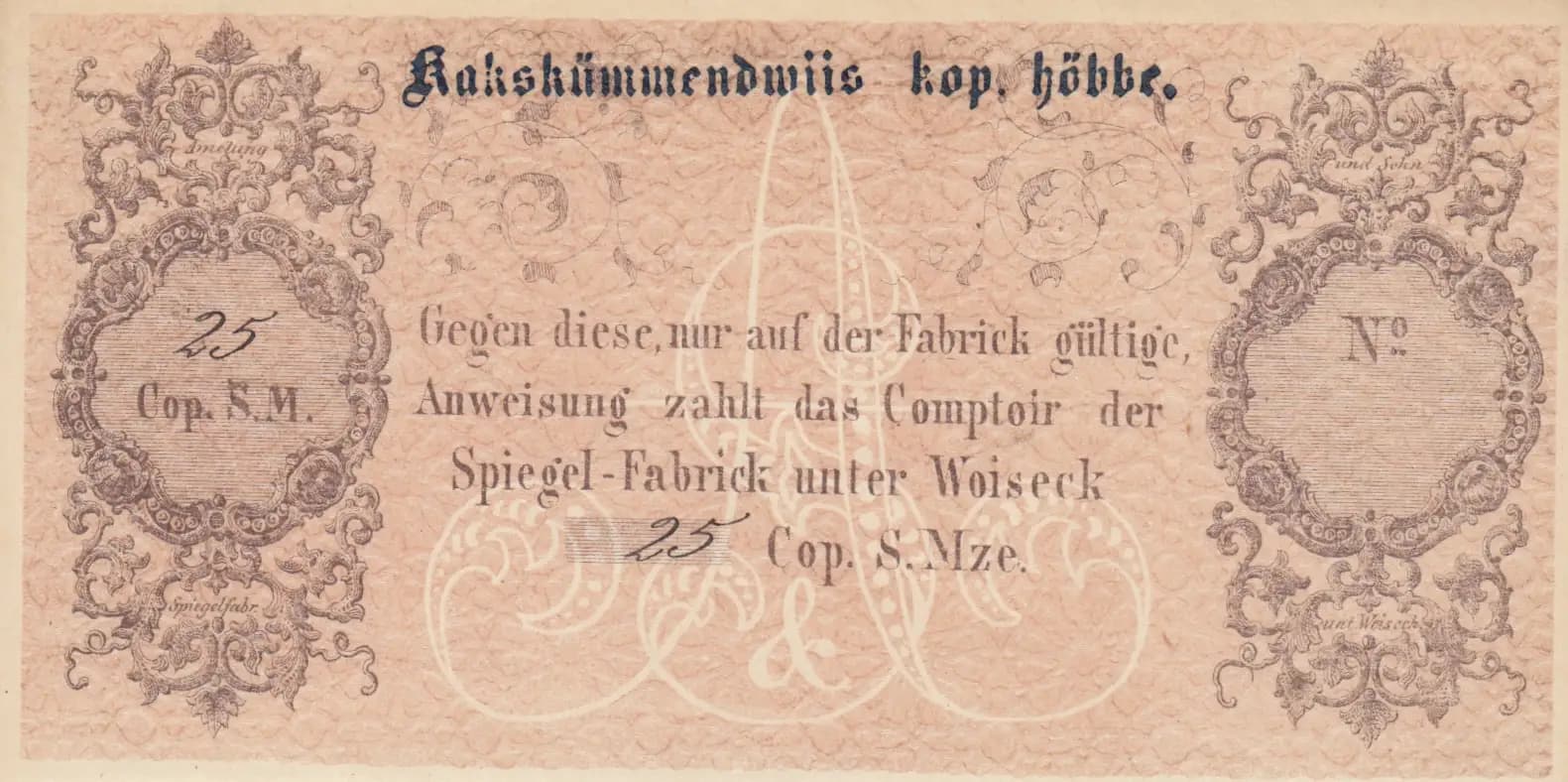
The obverse features a dignified female portrait representing the Estonian nation, positioned on the left side wearing an ornate crown adorned with wheat or grain stalks, draped in flowing fabric with decorative patterns. The portrait is surrounded by elaborate baroque-style ornamental frames with leafy and floral designs. The denomination cartouche on the right displays 'KUMME KROONI' with the numeral 10, with shield or coat of arms elements visible in the lower left. The reverse displays a large ornate cartouche containing the numeral 10 in the center, flanked by the Estonian coat of arms (lion rampant within a shield surrounded by laurel wreaths) on the left side. Ornamental leaf and scroll designs, along with botanical motifs, frame the composition, with 'KUMME KROONI' text appearing both above and below the central denomination.
Front side: 'EESTI PANK' (Estonian Bank); 'KUMME KROONI' (Ten Kroons); '1937' (year of issue); 'VABARIIGI MAI 1924A RAHASEADUSE JA PANGA POHIKIRJA ALUSEL' (Based on the Republic's May 1924 Currency Law and Bank Charter); Serial numbers 'A-0758866' and 'A-0758867' (consecutive pair). Back side: 'KUMME KROONI' (Ten Kroons - appears twice, top and bottom); '10' (numeral denomination in ornate cartouche).
Intaglio engraving (recess printing), the standard security printing method for Estonian banknotes of this era. The intricate engraved line patterns, detailed guilloché work throughout the design, fine line security backgrounds, and the crisp, sharp impression visible in both the portrait and ornamental elements are characteristic of high-quality intaglio production. The detailed engraving of the coat of arms and the complex background security patterns are typical of professional European security printing from this period.
This is identified as Pick-67, with PMG cataloguing variants P-67a and P-67s for this base Pick number. The observed notes are consecutive specimens (serial numbers A-0758866 and A-0758867), which is notable for collectors seeking serial pairs. The specific variant classification (P-67a or P-67s) would require comparison against PMG population data to determine definitively, as the visual analysis does not reveal obvious overprints or distinguishing variant markers that would clearly differentiate between catalogued subtypes.