10 krooni 1937
Market Prices
30 salesAbout This Note
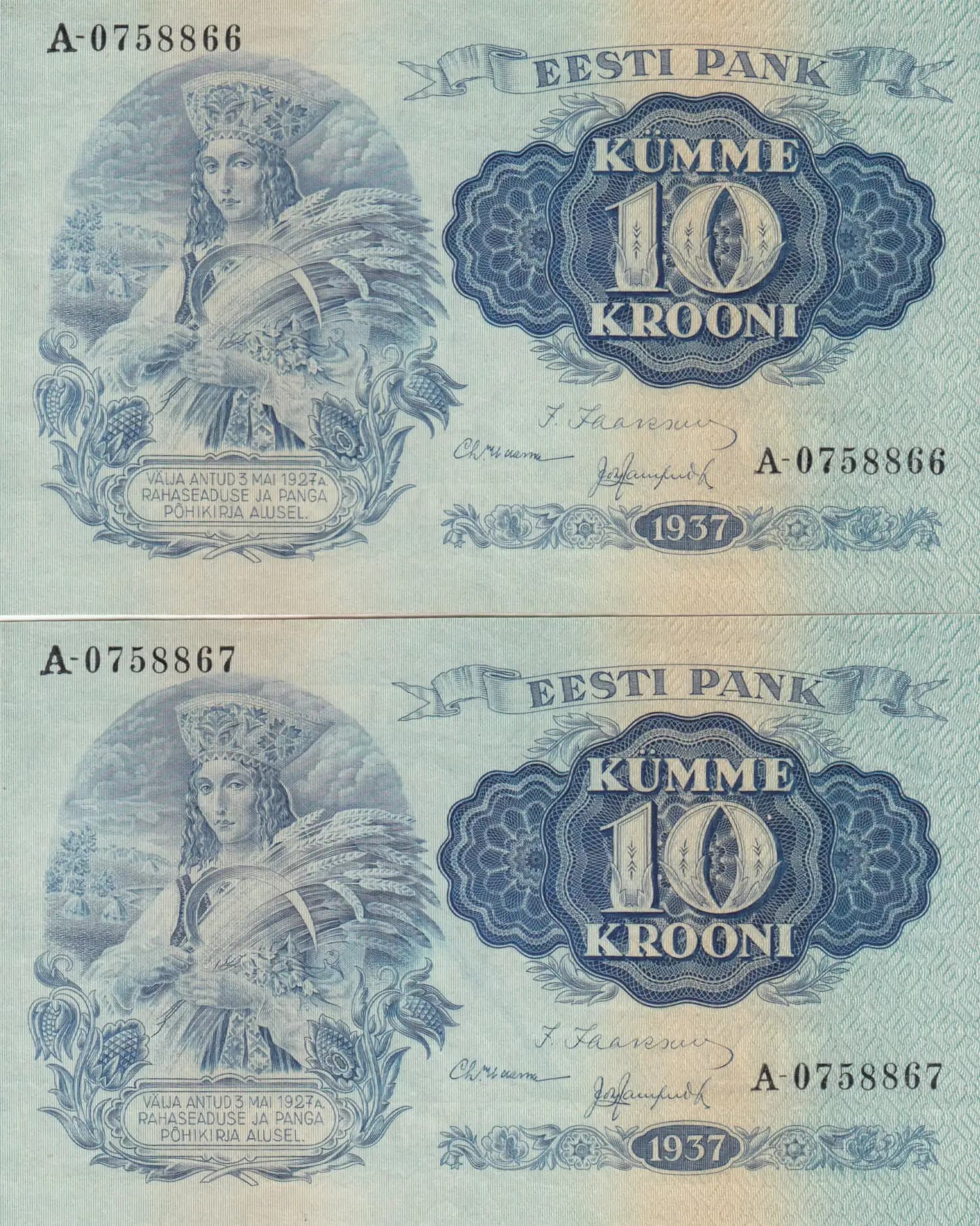
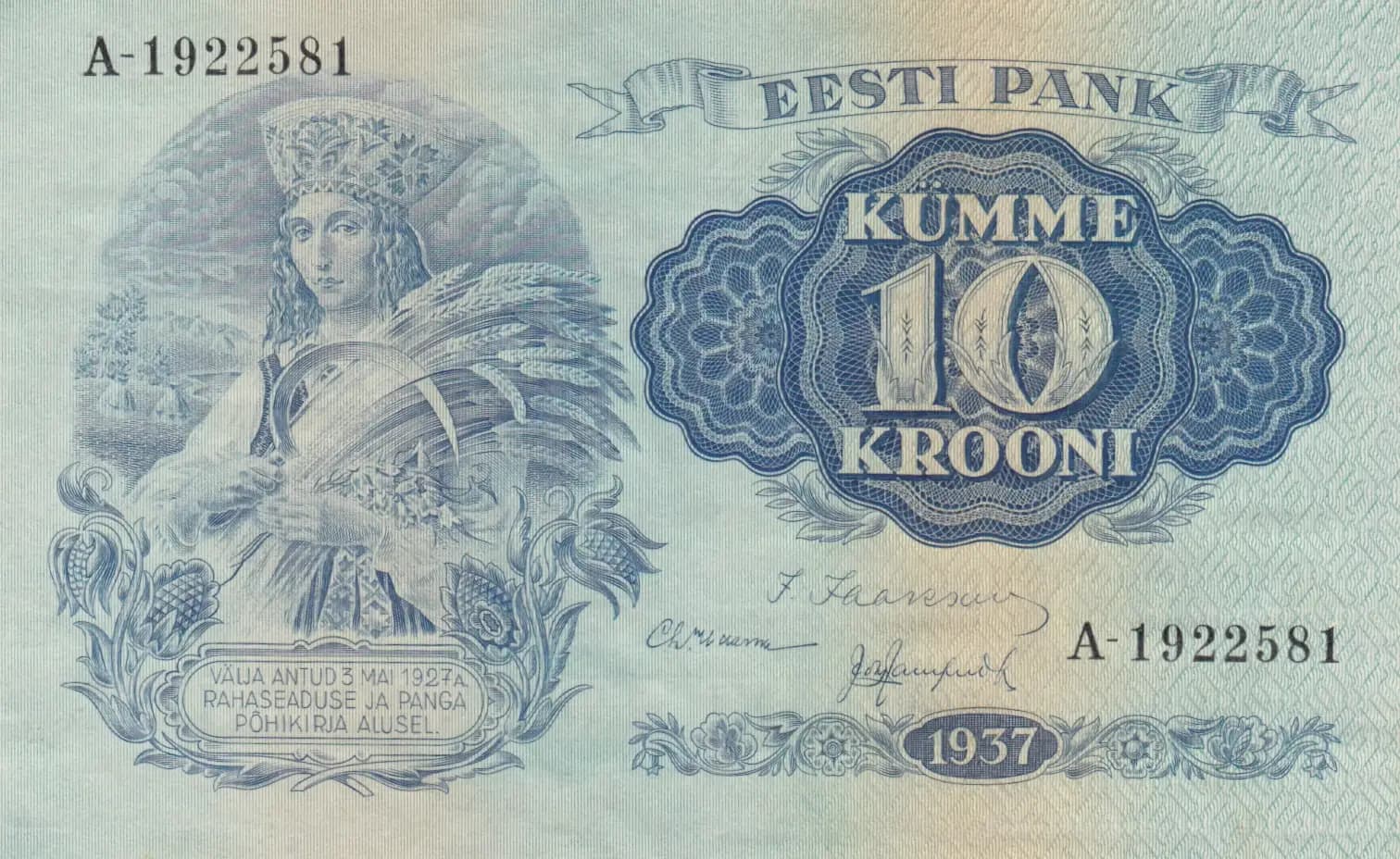
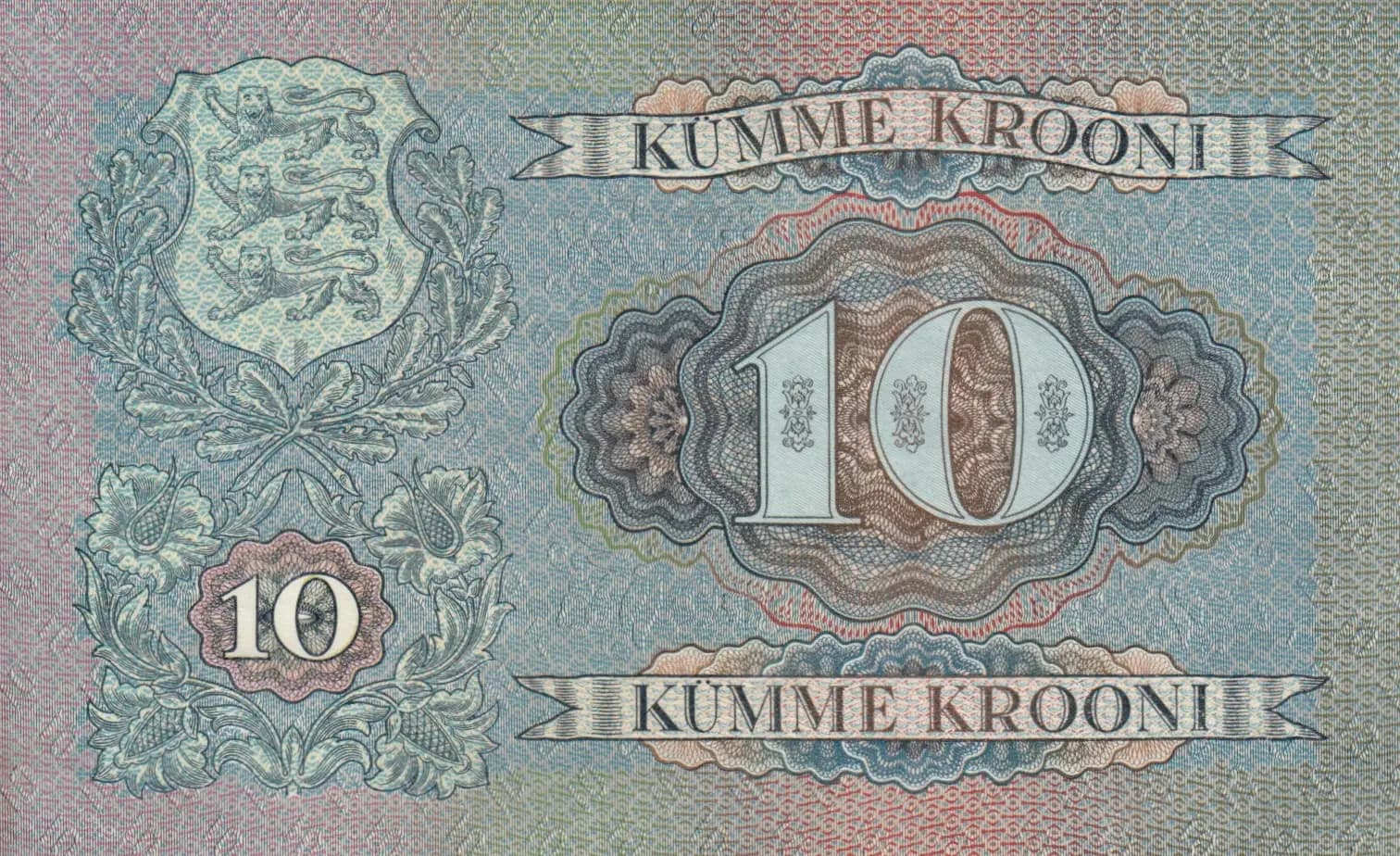
This is an outstanding example of Estonia's 1937 10 krooni note graded UNC, representing the interwar period of Estonian independence with crisp, vibrant printing and no visible signs of circulation wear. The note features elegant classical engraving with a detailed portrait of a woman in traditional dress on the obverse and the Estonian coat of arms prominently displayed on the reverse, both rendered in fine line work characteristic of high-quality 1930s security printing. Based on recent market activity, UNC examples of this note command prices around $35-$70, making it a desirable piece of early 20th-century Baltic numismatics.
Common. The 1937 10 krooni (Pick-67) is a standard circulation issue of the Eesti Pank with no documented scarcity. Market data from realbanknotes.com shows consistent sales activity across all grade levels, with UNC examples selling for $24-$38 over the past decade. The consistent availability and moderate pricing across grades indicates healthy supply relative to collector demand. Print runs for this denomination during this period were substantial, and many examples survive in various conditions.
The 10 krooni note was issued by Eesti Pank (Estonian Bank) during the period of Estonian independence between the World Wars, following the May 3, 1927 Monetary Law and Bank Charter referenced on the obverse. The allegorical female figure with wheat and corn stalks represents agricultural prosperity and national wealth during Estonia's brief but culturally vibrant period of sovereignty before World War II. The Estonian coat of arms—three lions—features prominently on the reverse as a symbol of national identity and authority.
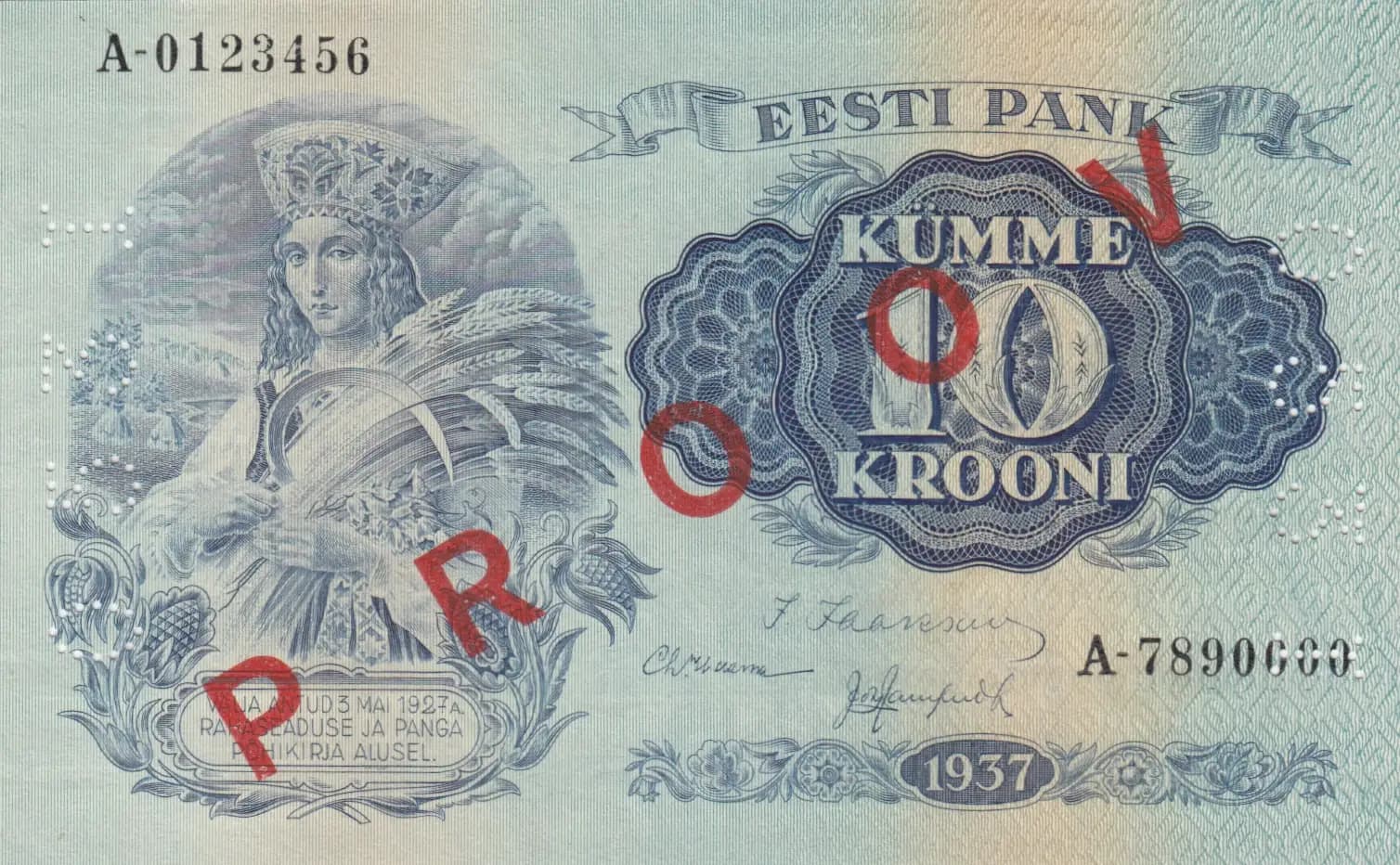
The obverse features an allegorical female figure representing Estonia or national prosperity, depicted with long wavy hair and an ornate crown or headdress in classical engraving style, shown from shoulders up within a decorative wreath. The composition includes symbolic botanical elements—wheat stalks and corn cobs in the lower left—representing agricultural abundance and economic vitality. The reverse displays the official Estonian coat of arms (three lions passant in a shield) centered within an ornamental heraldic wreath, with a large decorative numeral '10' in an elaborate cartouche occupying the right portion. Both sides employ fine line engraving with intricate guilloche security patterns and complex geometric background designs in multiple colors (greens, blues, reds, and browns).
FRONT: 'EESTI PANK' (Estonian Bank), 'KUMME KROONI' (Ten Kroon), '1937' (year of issue), 'VAUA ANTUD 3 MAI 1927.A RAHASEADUSE JA PANGA POHIKIRJA ALUSEL' (Issued pursuant to the May 3, 1927 Monetary Law and Bank Statute), serial number 'A-1922581' (appears twice). BACK: 'KUMME KROONI' (Ten Kroon, appears twice at top and bottom).
High-quality intaglio (engraved) printing with fine line work and detailed guilloche patterns. The note exhibits the characteristics of security printing from the 1930s era, with multiple color layers and complex background pattern work. While the specific security printer is not definitively documented in standard catalogs, the technical quality suggests work by an established European security printing house capable of producing advanced currency designs of the period.
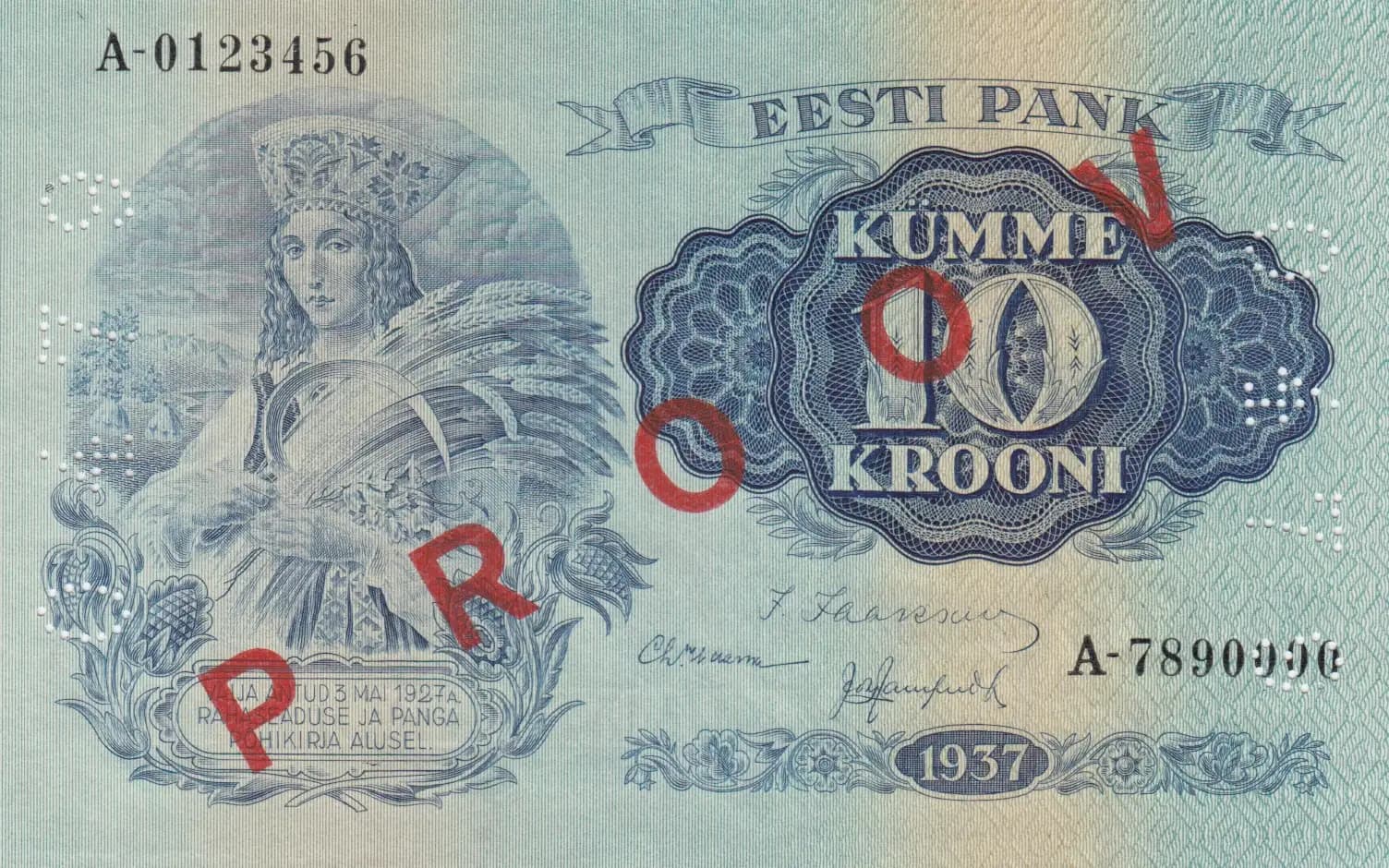
The PMG population report indicates two catalogued variants: P-67a and P-67s (where 's' typically denotes a specimen note). The observed example with serial number A-1922581 appears to be the standard P-67a circulation issue. No specific signature or date varieties are evident from the visual analysis, though Estonian notes of this period may exhibit minor printing variations in serial number prefixes and positioning consistent with long production runs.