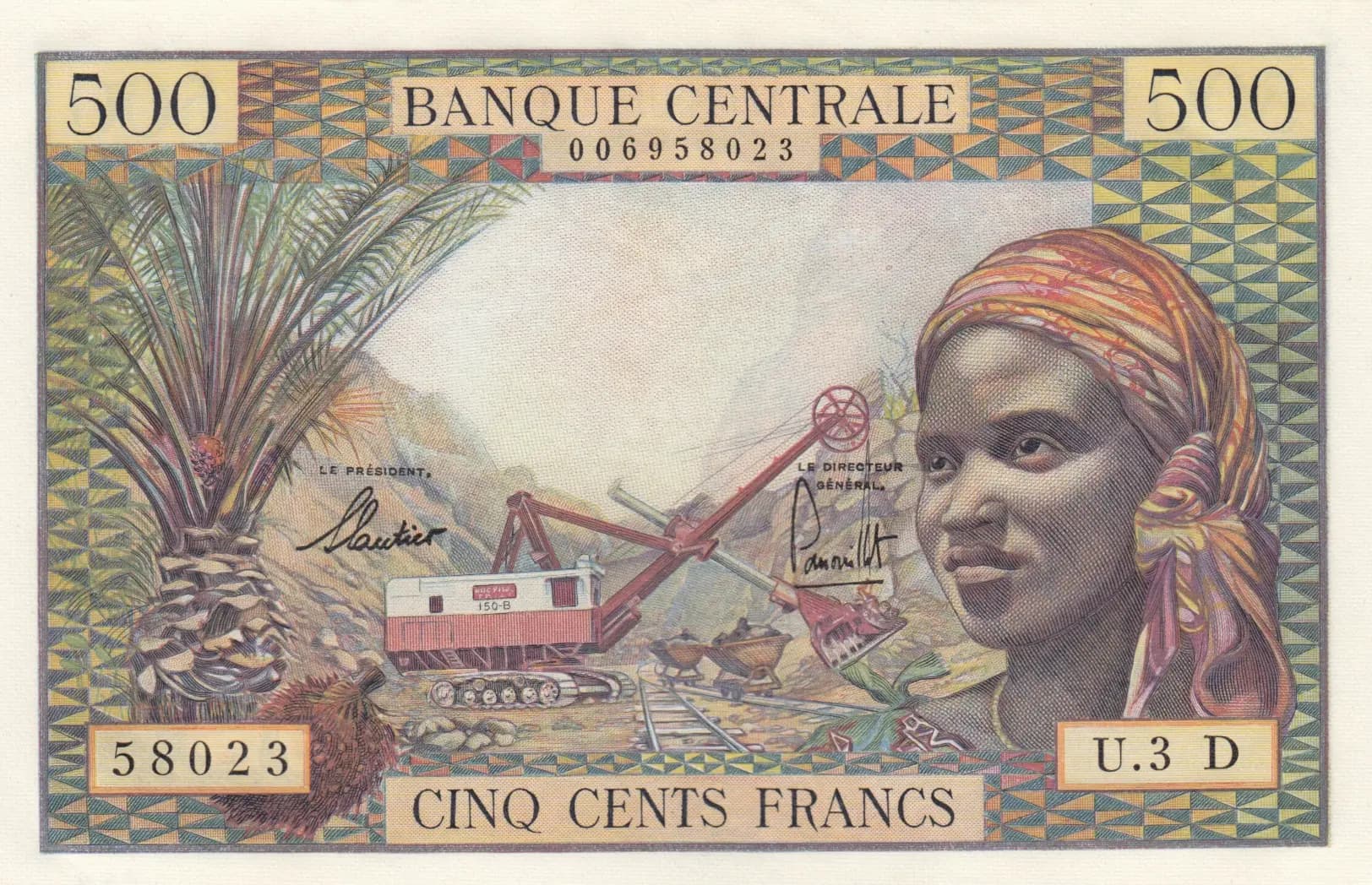
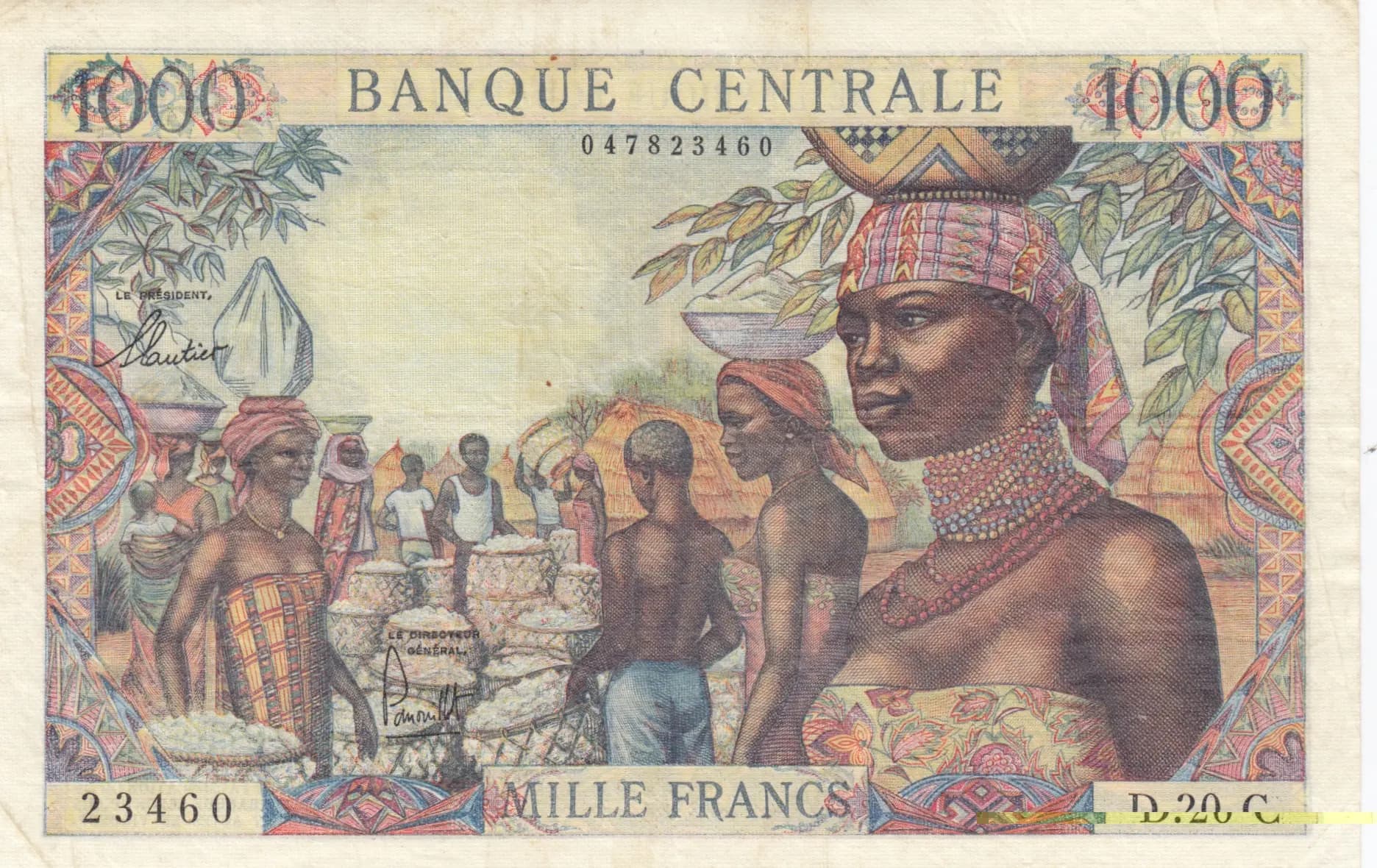
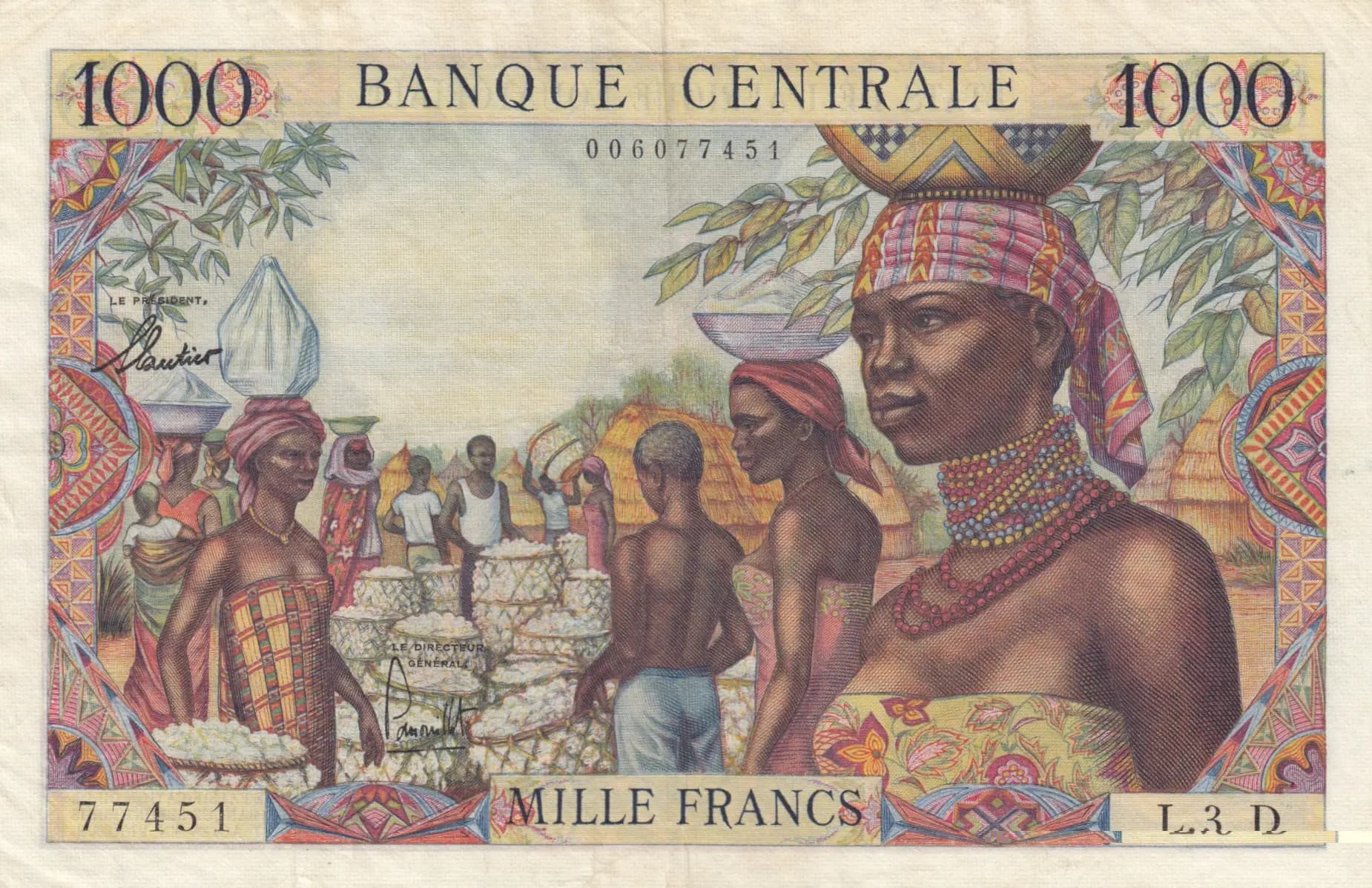
100 francs 1963
“Gabon”
About This Note
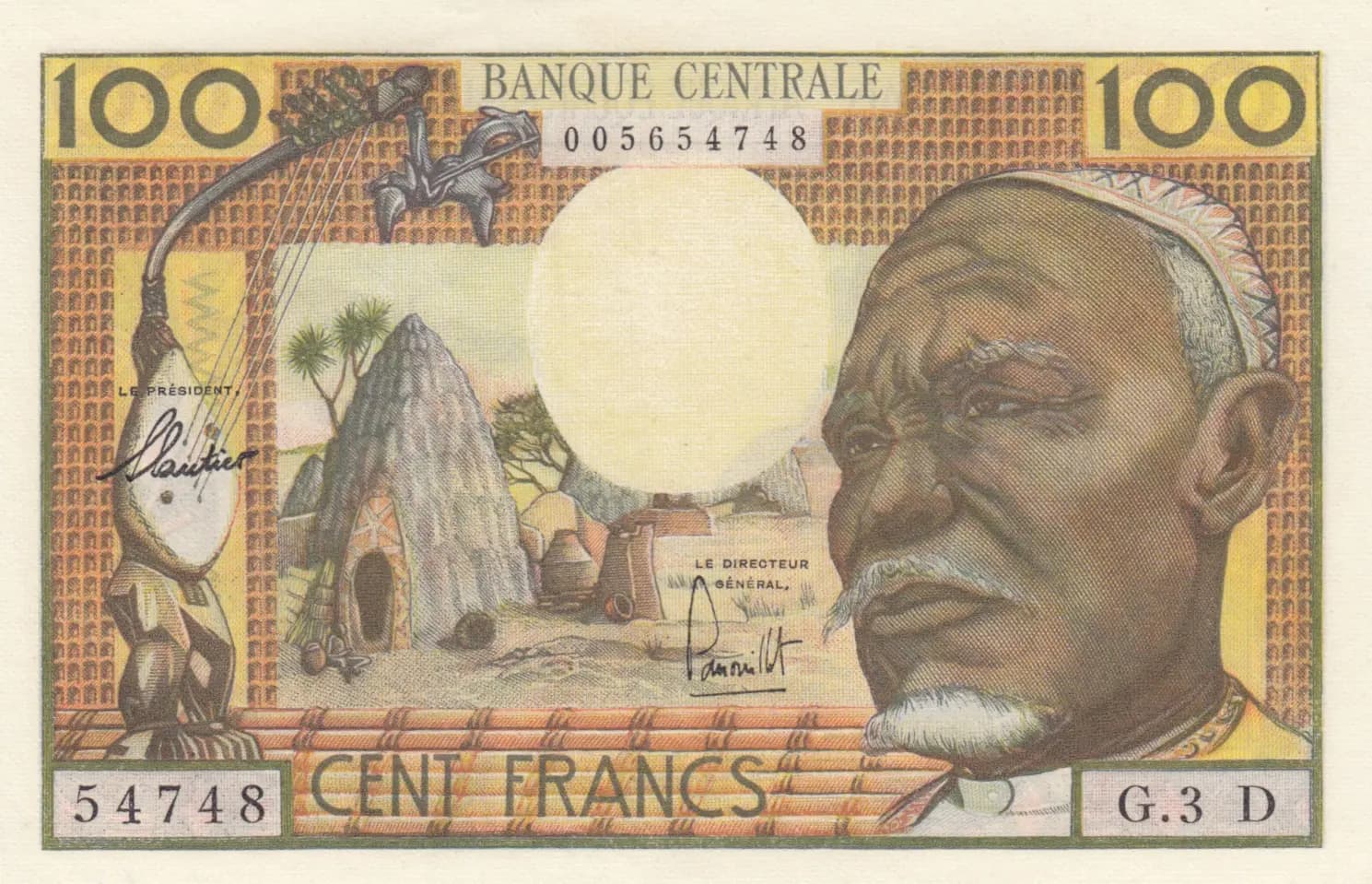
This is a VF-grade 100 Francs banknote from 1963, issued by the Banque Centrale des États de l'Afrique Équatoriale, representing the monetary authority of the Equatorial African States during a pivotal post-independence period. The note exhibits exceptional print quality with vibrant yellow-gold, orange, and brown tones on the obverse and a rich multicolored reverse featuring wildlife and traditional African imagery. The specimen shows no wear or circulation marks, making it an attractive collectible example of this early Central African currency.
Common. This note was issued in 1963 as the standard currency for the Equatorial African States, a multi-nation monetary union with substantial population and economic activity. The Pick catalog recognizes eight identified variants (P-3a through P-3ds) based on code letters, indicating a large printed quantity across multiple series. VF-condition examples are frequently encountered in the market, typically trading in the $15–$35 range, confirming widespread survival and availability to collectors.
This note was issued in 1963, the same year Gabon declared independence from French Equatorial Africa, marking the transition period when the region's monetary systems were reorganizing under newly autonomous nations. The design reflects the cultural identity of the newly independent states, prominently featuring traditional African elements—spears, shields, and wildlife—alongside portraits of political leadership (the President and General Director), symbolizing the establishment of sovereign governance. The use of French language throughout reflects the region's continued economic and institutional ties to France during the post-colonial period.
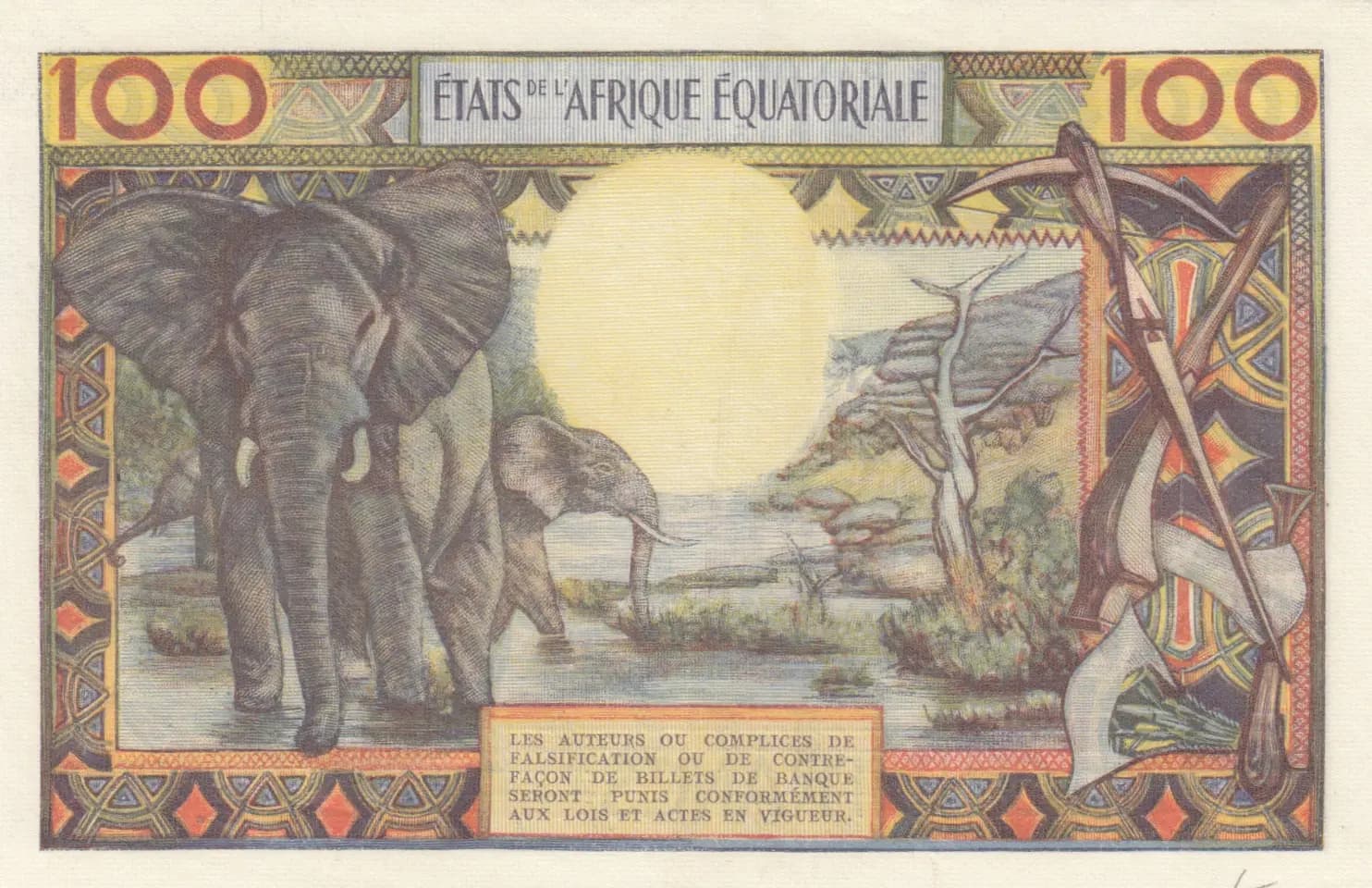
The obverse features a dual-portrait composition with a bearded male figure labeled 'LE PRÉSIDENT' on the left and another bearded male labeled 'LE DIRECTEUR GÉNÉRAL' on the right, both rendered in profile facing right. Between these portraits is a mountainous landscape scene depicting equatorial African terrain with palm trees, traditional dwellings with terracotta-red roofs, and peaked mountain formations, rendered in naturalistic detail. The reverse showcases an African savanna scene centered on an elephant at a watering hole, flanked by traditional spears and decorated shields with geometric tribal patterns. An acacia tree and grassland complete the landscape. Both sides feature ornamental borders composed of geometric patterns inspired by African tribal art, with the denomination '100' prominently displayed in large numerals at each corner. The dominant color palette employs warm tones (yellows, oranges, browns) on the obverse and a richer multicolor spectrum on the reverse.
FRONT: 'BANQUE CENTRALE' (Central Bank); 'CENT FRANCS' (One Hundred Francs); 'LE PRÉSIDENT' (The President); 'LE DIRECTEUR GÉNÉRAL' (The General Director); Serial number '00565474 8' and series designation 'G.3 D'. BACK: 'ÉTATS DE L'AFRIQUE ÉQUATORIALE' (Equatorial African States); 'LES AUTEURS OU COMPLICES DE FALSIFICATION OU DE CONTREFAÇON DE BILLETS DE BANQUE SERONT PUNIS CONFORMÉMENT AUX LOIS ET ACTES EN VIGUEUR' (The authors or accomplices of counterfeiting or forgery of banknotes shall be punished in accordance with the laws and acts in force); '100' (denomination in large numerals).
Intaglio engraving (line engraving) on a multicolor base, characteristic of French security printers during the early 1960s. The sharp detail visibility, fine line work in the portraits and landscape elements, signature registration, and precise geometric border patterns are consistent with the security printing standards employed by the Banque de France's affiliated security printing facilities for colonial and newly independent African currency issues of this era.
This specimen is identified as Pick-3d, characterized by the code letter 'D' visible in the series designation 'G.3 D' on the obverse. The PMG population data indicates both standard (P-3d) and specimen (P-3ds) variants exist for code letter 'D'. The serial number '00565474 8' and the absence of specimen overprints suggest this is a circulation-issue example (P-3d) rather than a specimen variant. The specific signatures visible on the specimen's signature lines would further narrow identification, though the legibility in reproduction is limited.