50 piastres 1941
Market Prices
13 salesAbout This Note
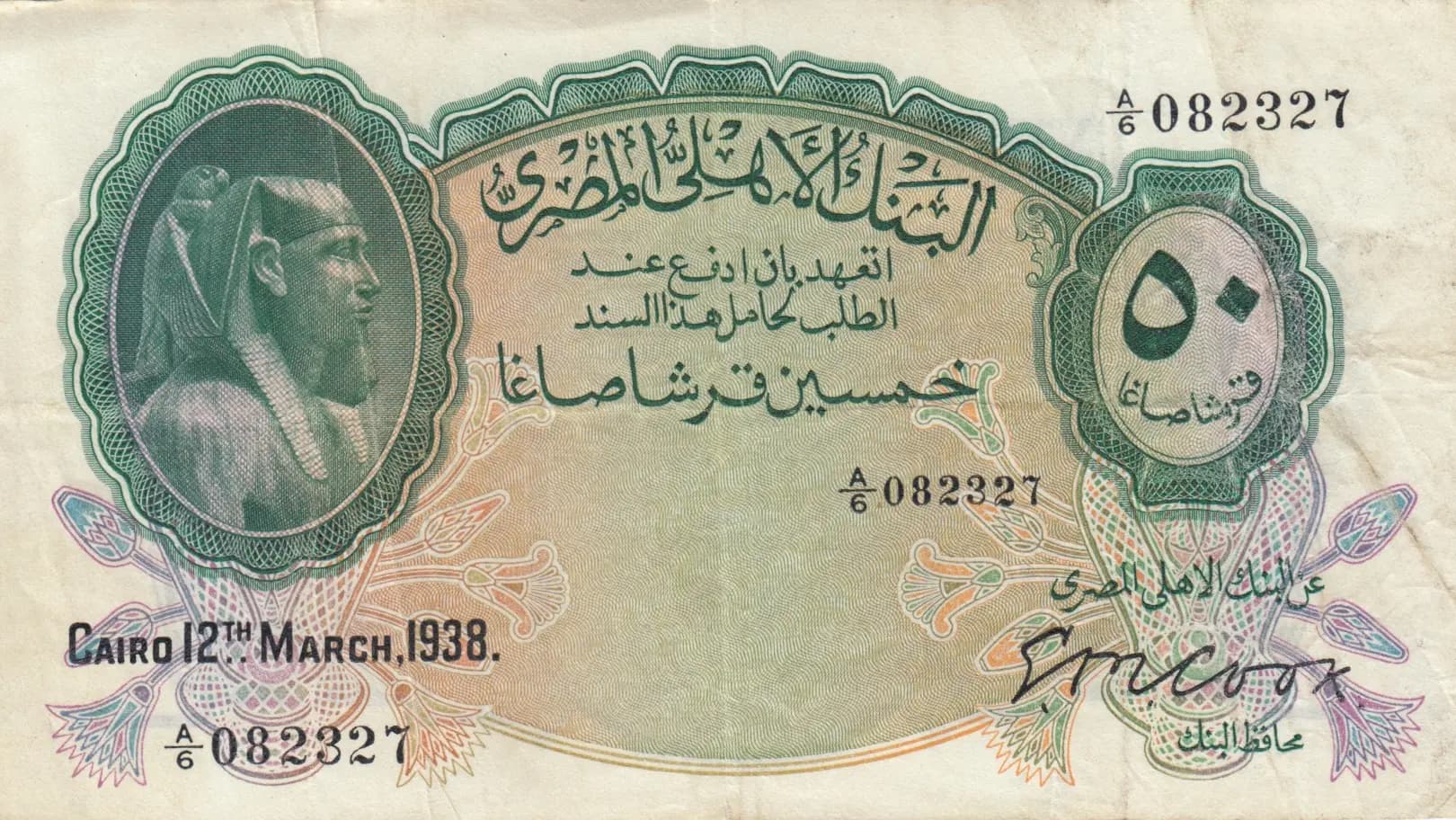
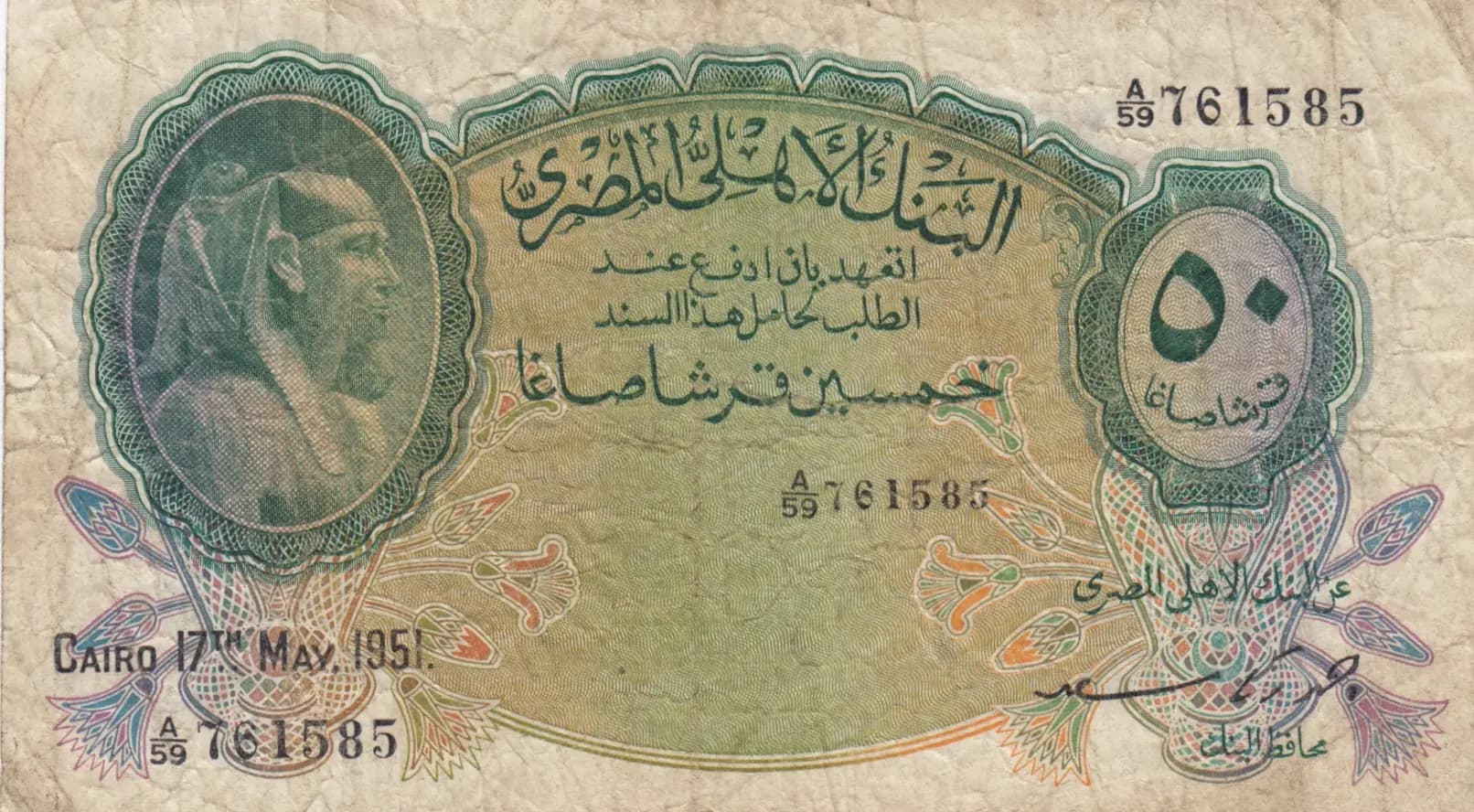
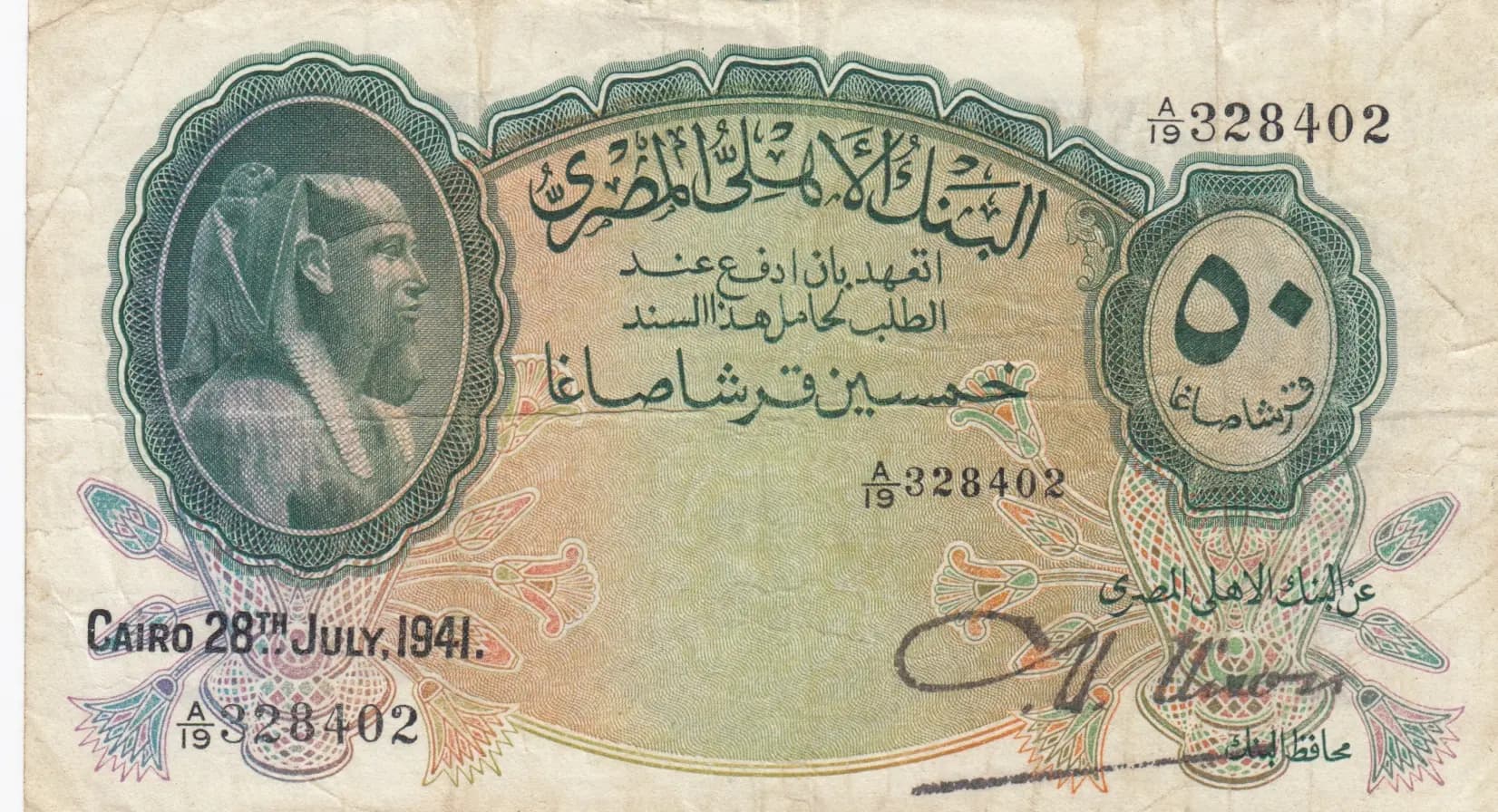
This is an Egyptian 50 Piastres banknote from 1941, issued by the National Bank of Egypt and printed by Bradbury Wilkinson. The note features a portrait of Tutankhamen in profile on the obverse within an ornate circular frame, rendered in green and beige tones with intricate engraving throughout. In Fair condition, this note shows typical age-related wear including yellowing, creasing, and foxing consistent with circulation, making it an accessible example of interwar Egyptian currency with strong historical significance.
Common. The eBay market data provided shows regular sales of this note in Fair condition averaging $11-$33 USD from 2015-2021, with one sale at $20 in September 2021. These modest and frequent sales prices indicate robust supply in the secondary market. The 1940-1943 series (P-21b variant) was a regular issue with substantial print runs by the National Bank of Egypt, and pieces remain readily available to collectors. Fair condition examples are particularly common, representing typical circulated notes from routine commerce.
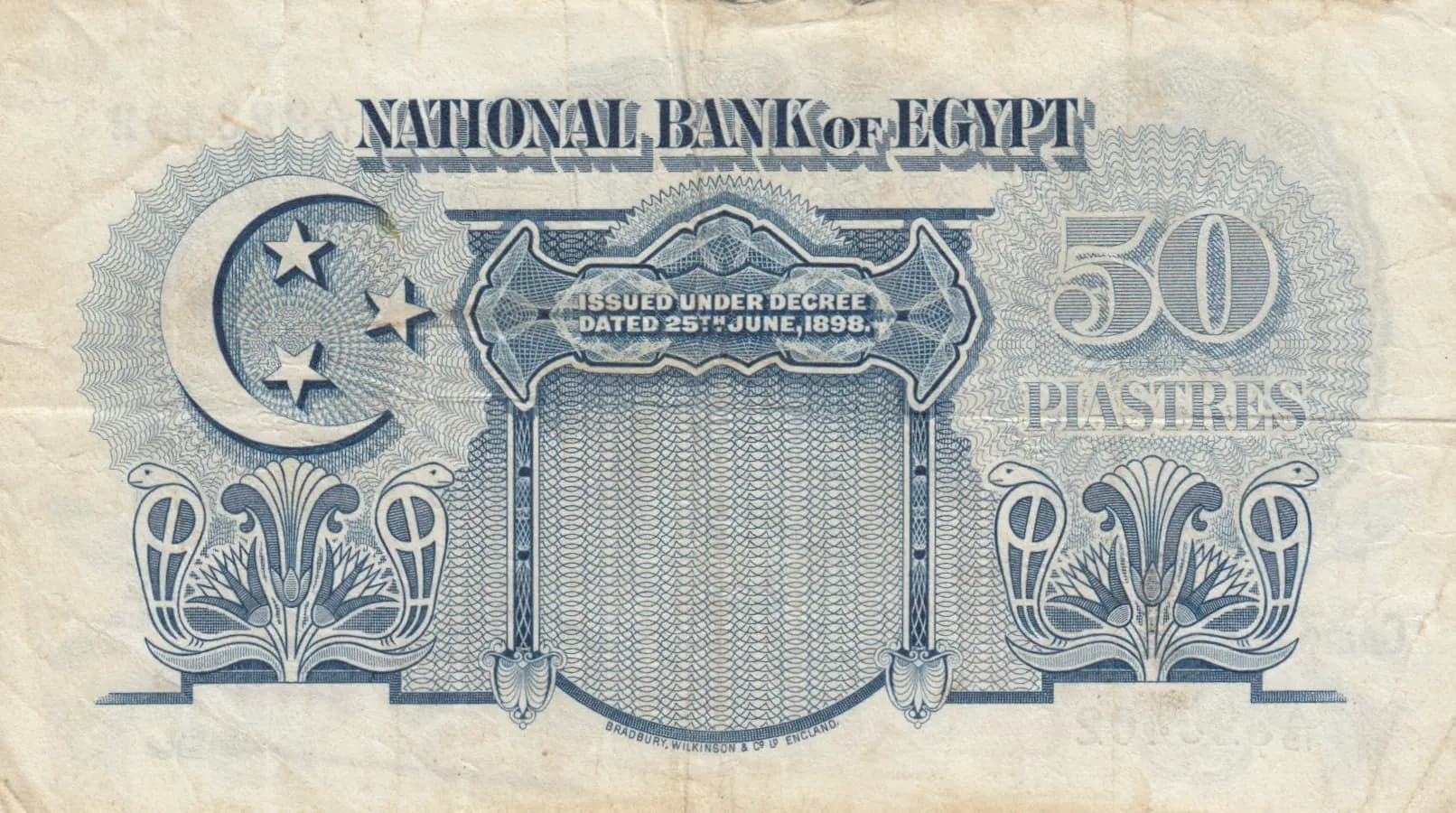
This banknote was issued on July 28, 1941, during Egypt's critical period under British influence in World War II and represents the modernization of Egyptian currency under the National Bank of Egypt's authority established in 1898. The prominent depiction of Tutankhamen reflects Egypt's deep historical pride and connection to ancient pharaonic civilization, a potent nationalist symbol during a period when Egypt was reasserting its identity. The crescent moon with three stars on the reverse symbolizes Islamic heritage and Egyptian sovereignty, both important elements of national identity during the pre-independence era.
The obverse features a portrait of Tutankhamen (the young pharaoh of ancient Egypt's 18th Dynasty) positioned in left profile within a detailed scalloped circular frame, rendered with fine engraving detail. The reverse displays the official national insignia of a crescent moon with three stars, a symbol of Egypt's Islamic and national identity, positioned on the left side with lotus flower motifs in the bottom corners—the lotus being a classical Egyptian decorative element associated with pharaonic art. Both sides employ ornate geometric lattice patterns, scrollwork, and floral border designs typical of high-security currency engraving from this period. The color scheme contrasts green and beige on the obverse with blue and white on the reverse, and the paper has aged to warm tan tones throughout.
FRONT: 'البنك الاهلى المصرى' (National Bank of Egypt) | 'اقتصاد وضع غند الطباحر هاشم السيد' (Issue under decree) | 'حسين فرشاصاغ' (Official name/signature) | 'CAIRO 28th JULY, 1941' (Issue date) | Serial numbers: A 1328402 and 19328402 | '50' (Denomination). BACK: 'NATIONAL BANK OF EGYPT' | 'ISSUED UNDER DECREE DATED 25TH JUNE, 1898' | '50 PIASTRES' (Denomination) | 'BRADBURY WILKINSON & CO LTD ENGLAND' (Printer attribution).
Intaglio engraving on banknote paper, produced by Bradbury Wilkinson & Co Ltd of New Malden, England—one of the premier security printers of the era. The fine line engraving, intricate lattice patterns, detailed portraiture, and ornate borders visible throughout both sides are hallmarks of the intaglio process, which was the industry standard for banknote production during this period and provided superior anti-counterfeiting security through the depth and complexity of the engraved plates.
This specific note is cataloged as Pick P-21b, one of four known variants for the 50 Piastres (P-21a, P-21b, P-21d, P-21e). The P-21b variant is identified as the 1940-43 issue in green and multicolor on the obverse with blue reverse, featuring Tutankhamen at left and crescent/stars on the back. The visual analysis confirms this identification through the color scheme, portraiture, and design elements. The note's specific serial number (A 1328402) and date of July 28, 1941 place it within the documented issue period for this variety. No overprints or exceptional distinguishing characteristics are evident from the images that would indicate a rarer sub-variety.