5 pounds 1958
About This Note
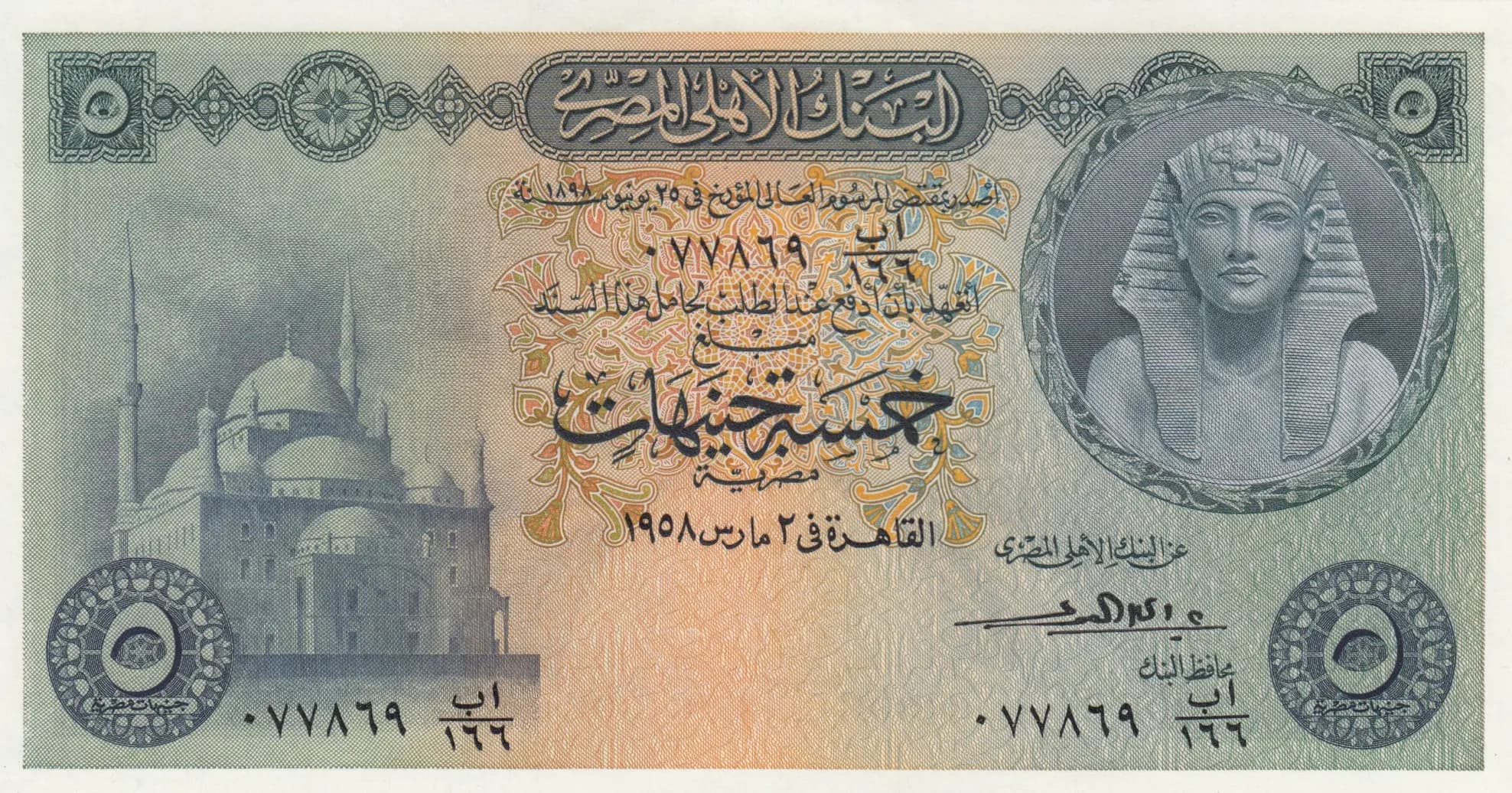
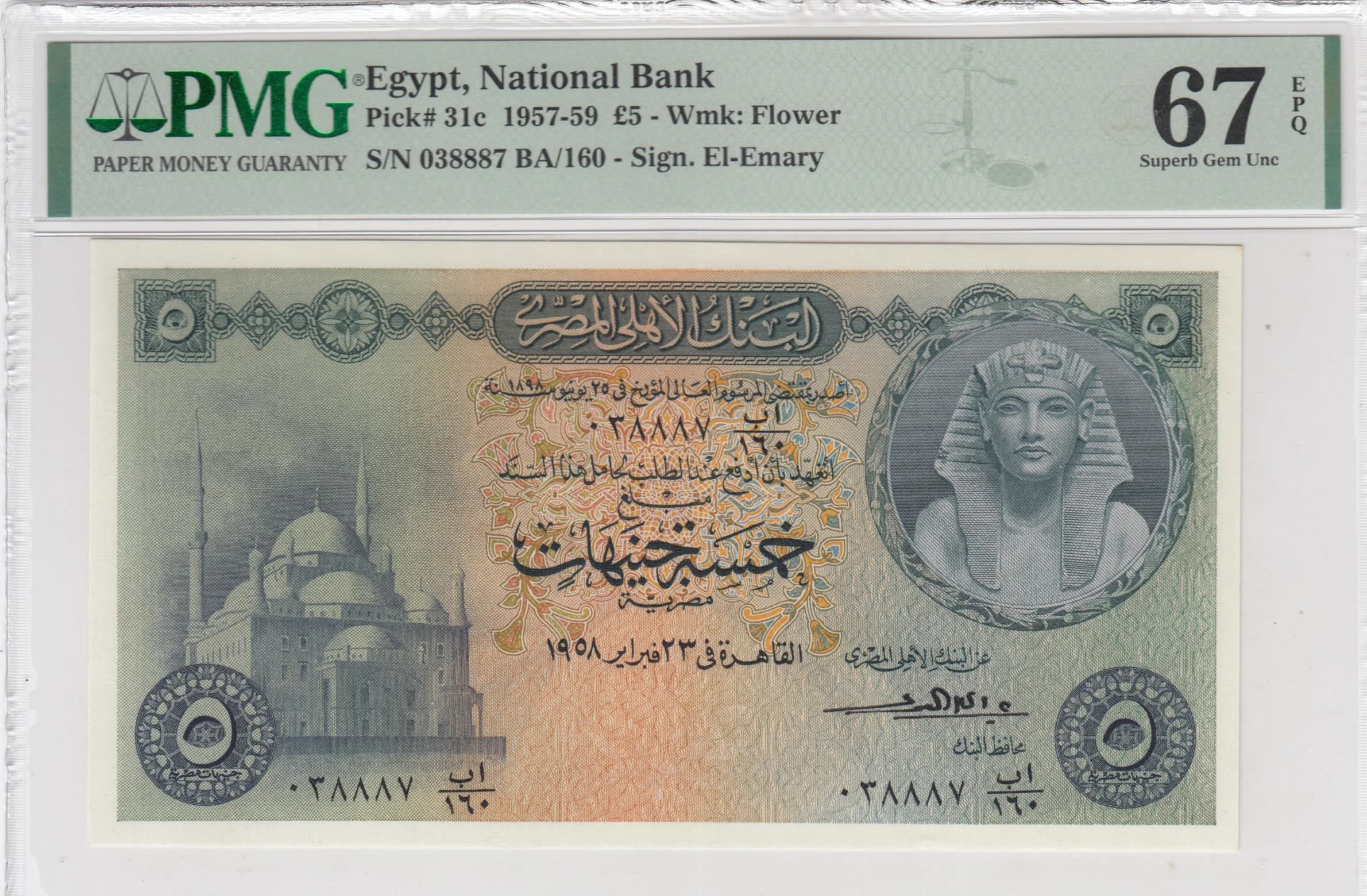
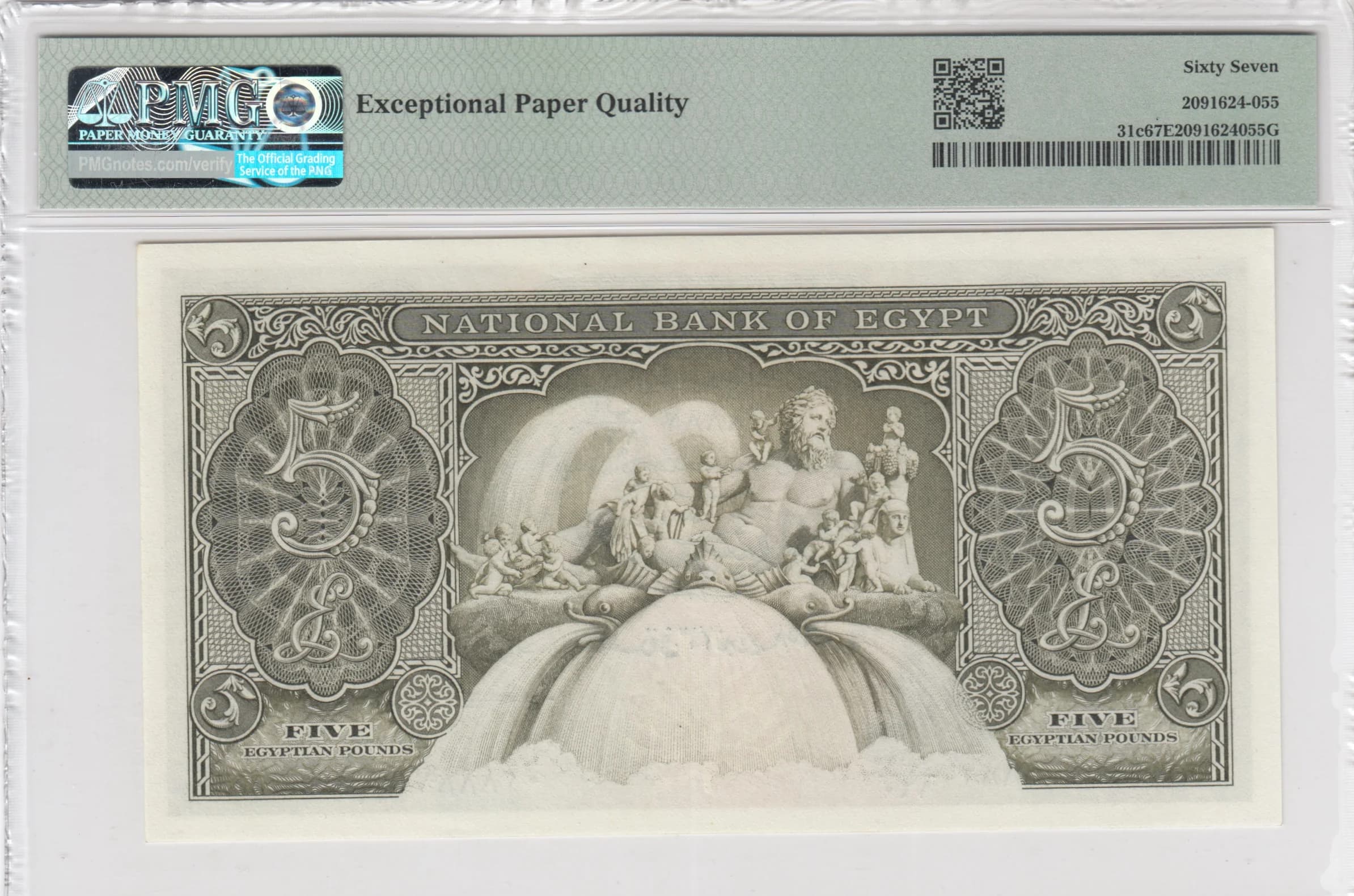
This is an exceptional example of Egypt's 1958 National Bank of Egypt 5 Pounds note (Pick 31(3)), graded PMG 67 EPQ. The note displays pristine uncirculated condition with sharp engraving detail throughout both sides, vibrant coloration on the obverse (greens, oranges, and tans), and perfect preservation of the intricate security features. The piece is notable for its explicitly dated inscription of Cairo, 23 February 1958, and represents a significant transitional period in Egyptian monetary history during the early years of the nationalist government.
Common. This is a standard circulation issue from a six-year series (1952-1960) of the National Bank of Egypt 5 Pounds denomination. The note was produced in substantial quantities and remains readily available to collectors, even in high grades. PMG 67 EPQ examples represent well-preserved specimens but are not exceptionally scarce. No documented recall, printing varieties causing rarity, or short production runs affect this note type.
Issued during the early years following Egypt's 1952 Free Officers' Revolution, this banknote reflects the modernizing nationalist agenda of the Nasser era. The front features Tutankhamen, connecting the nation's contemporary identity to its pharaonic heritage, while the Mohammed Ali Mosque represents Ottoman-era Islamic architecture in Cairo. The back's classical allegorical imagery of the River Nile—depicted as a reclining male figure with cherubs—symbolizes Egypt's dependence on this vital waterway and echoes European artistic traditions adopted by Egypt's banking establishment.
The obverse features a right-facing profile portrait of Tutankhamen wearing the traditional nemes headdress, positioned within an elaborate circular frame on the right side of the note. The left side displays the Mohammed Ali Mosque with its distinctive domes and minarets, a landmark that dominates the Cairo skyline. The center contains ornamental Arabic calligraphy in orange/tan tones with geometric and floral border patterns in all four corners. The reverse presents a classical allegorical composition in black and white intaglio, depicting the Nile as a reclining bearded male figure (river god) attended by multiple cherubs and classical figures amid clouds and drapery, surrounded by ornate baroque-style rectangular frames with scrollwork. This design draws inspiration from the Vatican's Museo Pio-Clementino classical sculpture tradition.
Front side - Arabic: 'البنك الوطني المصري' (National Bank of Egypt), 'خمسة جنيهات' (Five Pounds), 'القاهرة في 23 فبراير 1958' (Cairo on 23 February 1958). Serial designations: BA/160 and serial number 038887. Back side - English: 'NATIONAL BANK OF EGYPT', 'FIVE EGYPTIAN POUNDS'. The bilingual presentation (Arabic obverse, English reverse) reflects Egypt's post-colonial positioning between Arab identity and international banking conventions.
Intaglio engraving (line engraving and cross-hatching) combined with guilloche pattern work. The fine line engraving throughout, particularly evident in the classical figure work on the reverse and the geometric patterns on the obverse, indicates high-quality recess printing typical of banknote security standards of the 1950s. The complexity of the design and security features suggest production by an established European security printer, likely Bradbury Wilkinson or similar specialist firm contracted to the National Bank of Egypt.
This specific example is dated 23 February 1958 with serial designation BA/160 and serial number 038887. Within the Pick 31(3) classification, varieties are known to exist based on signature combinations and serial prefix variations. The BA prefix and specific date place this within the 1958 production run. The condition grade PMG 67 EPQ indicates an early grading result, as this note predates modern grading service establishment. Further research of signature varieties and prefix ranges would be required to determine if this specific combination represents a noted variety among numismatic specialists.