10 piastres 1940
Market Prices
43 salesAbout This Note
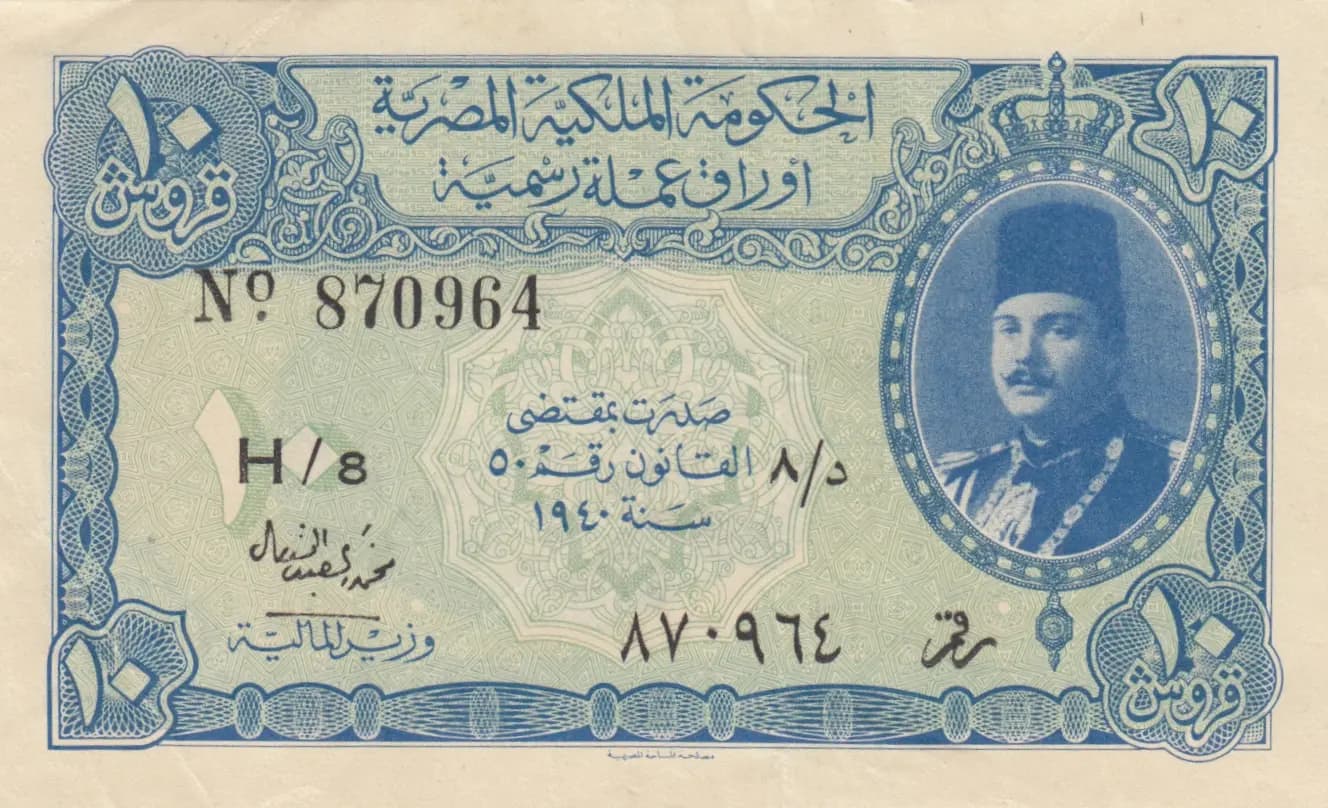
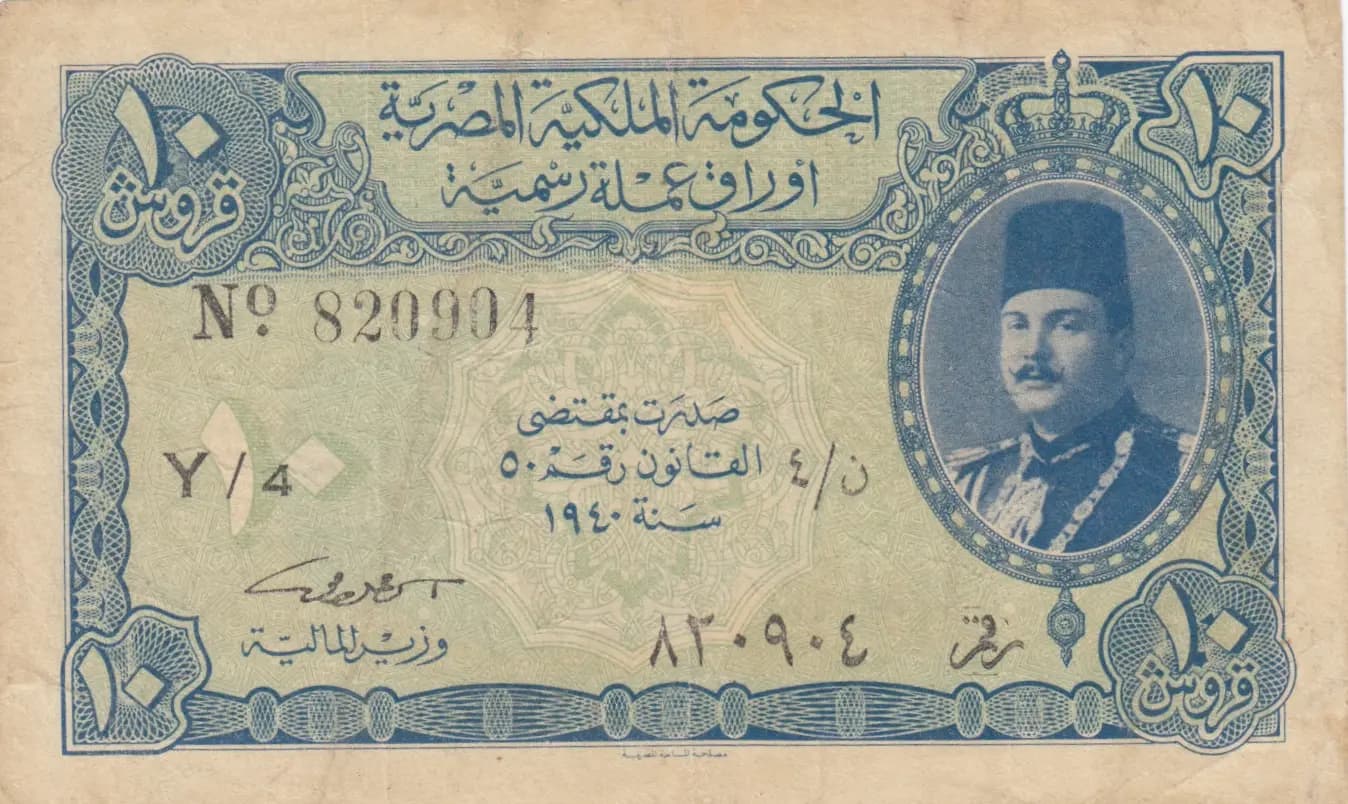
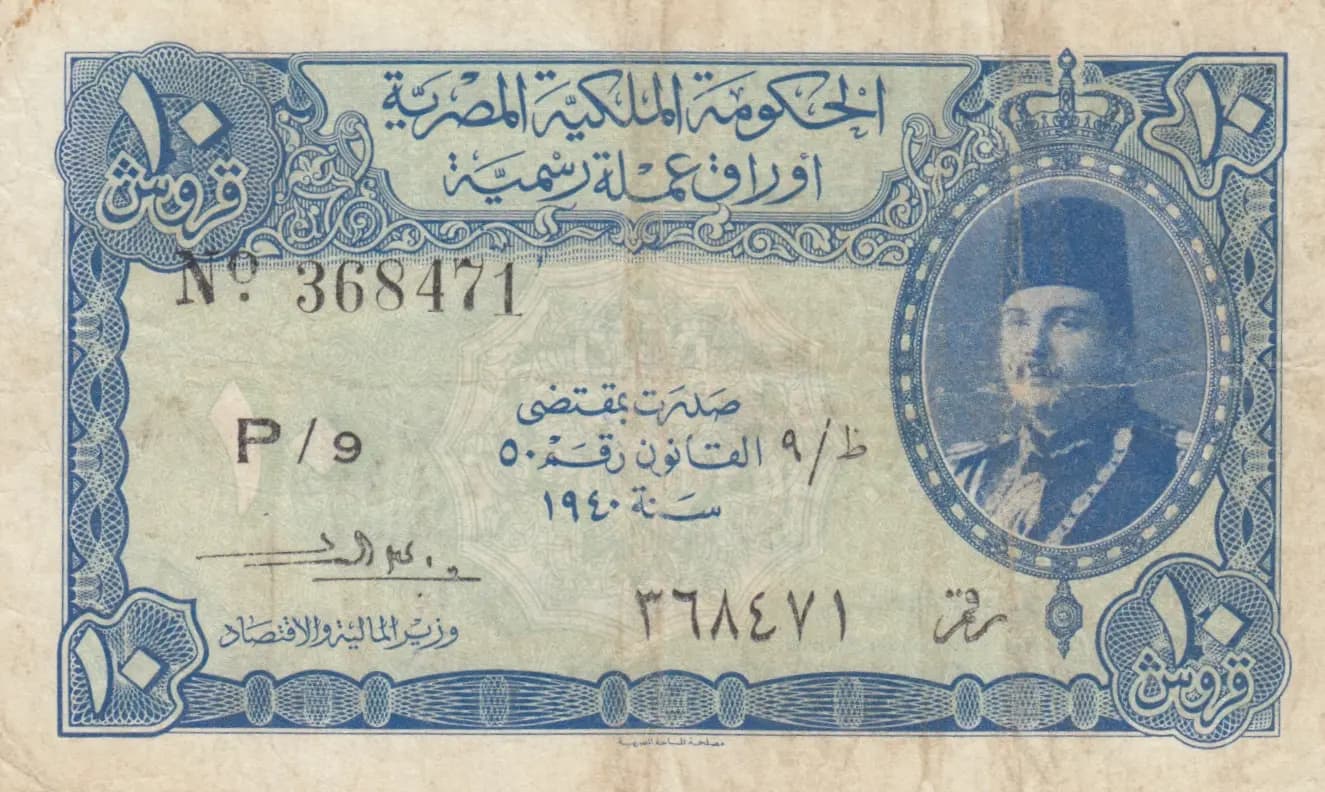
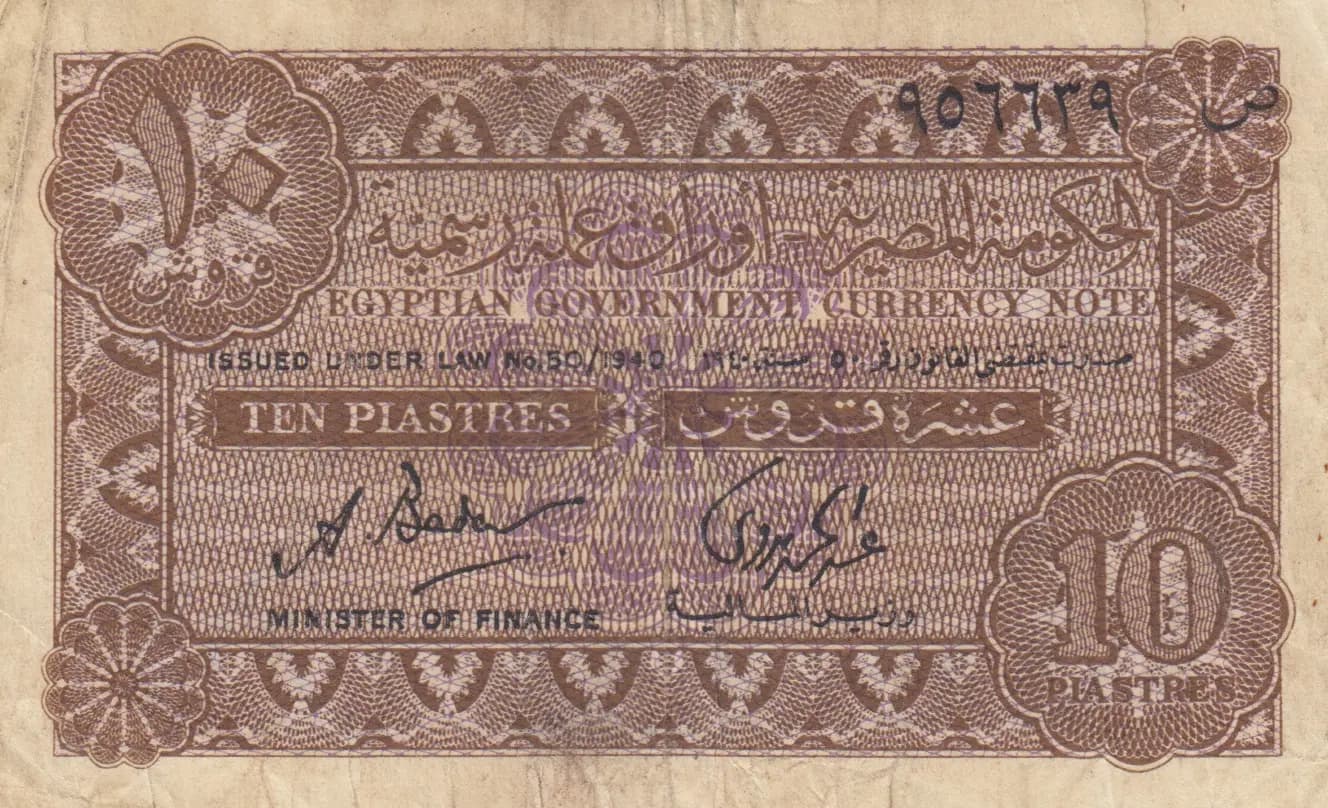
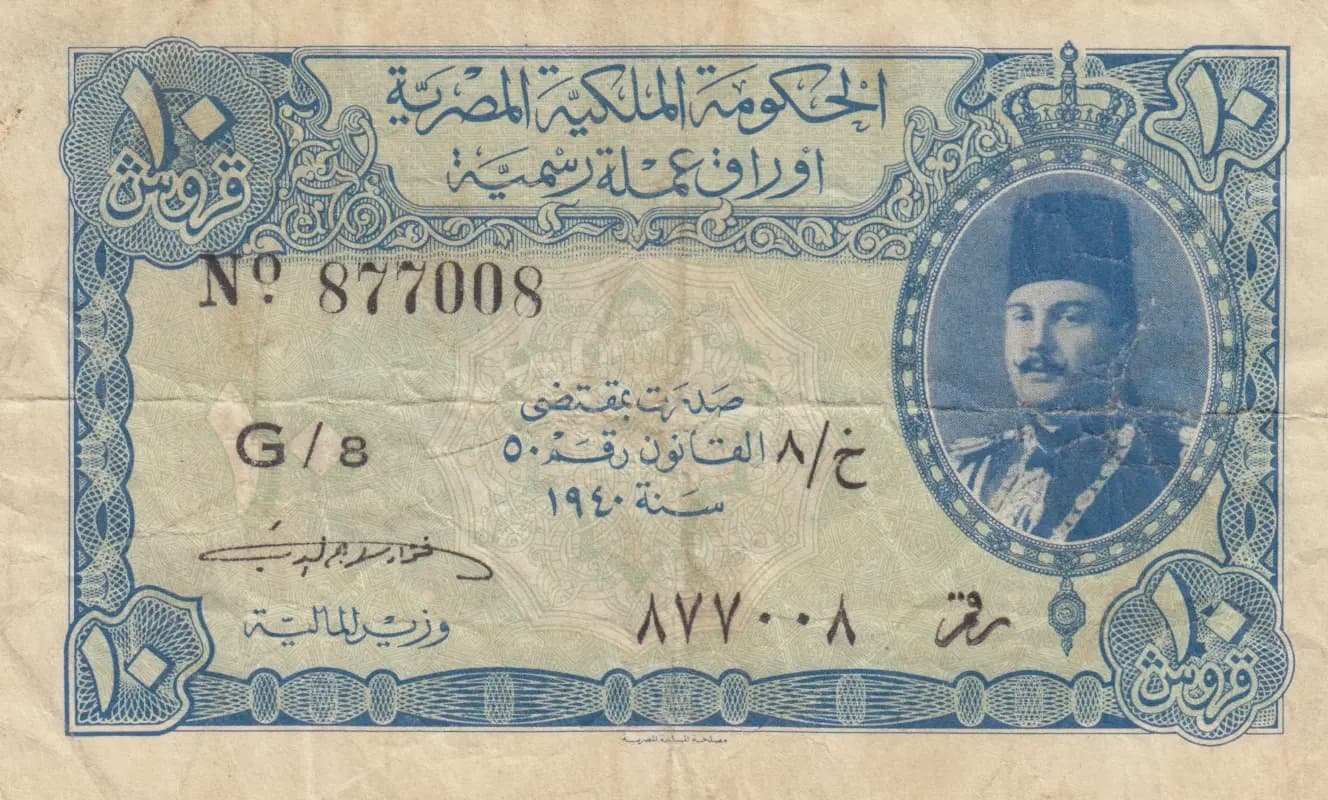
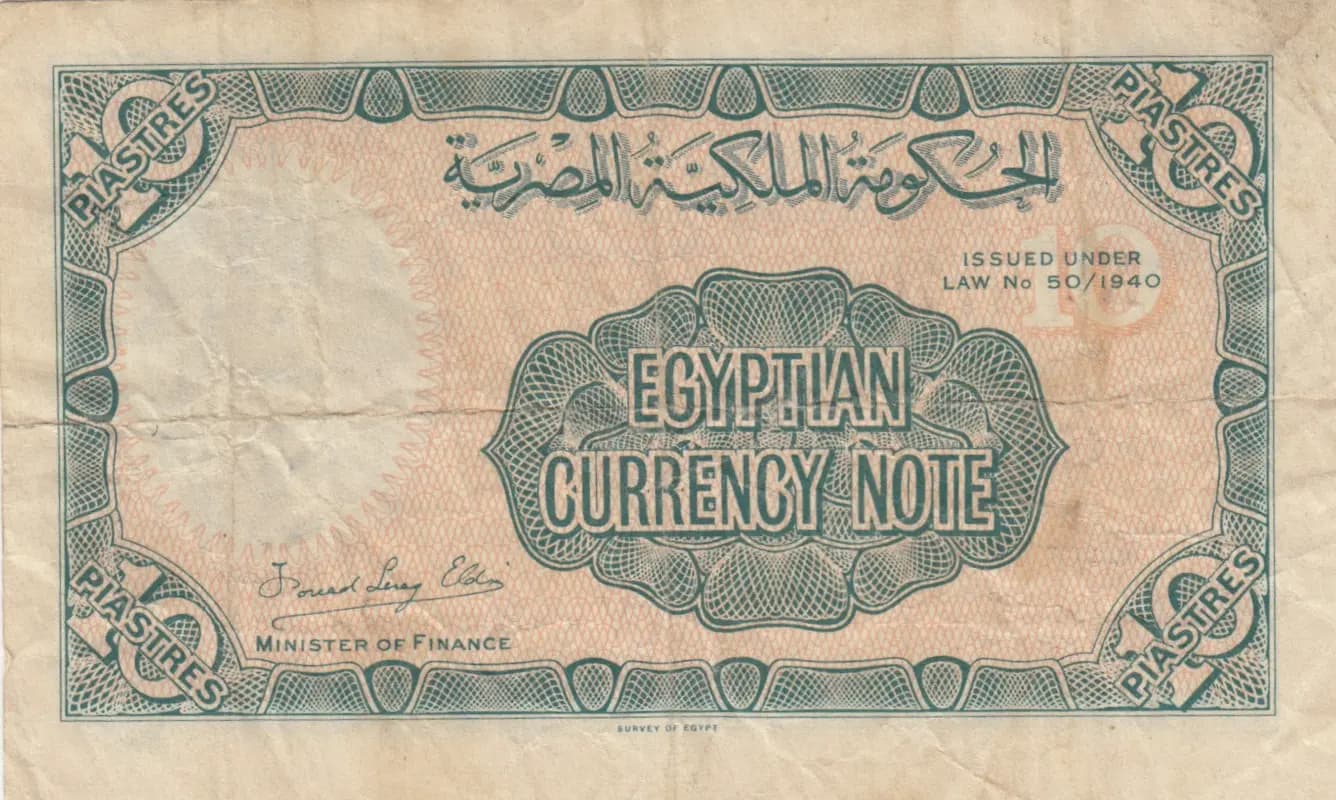
This Egyptian 10 Piastres note from 1940 (Pick P-168a) displays the ornate blue and beige design characteristic of mid-20th century Egyptian currency, featuring King Farouk I in profile within a crowned circular frame. The note exhibits significant age-related wear consistent with historical circulation, including yellowing, creasing, and light foxing throughout, placing it solidly in Fine (F) condition. The reverse displays the typical salmon-pink coloring with green text and Minister of Finance signature, representing a foundational example of post-1940 Egyptian banking legislation currency.
Common. This is a standard regular-issue banknote from a major currency-issuing authority with substantial print runs. eBay market data spanning 2009-2026 shows consistent circulation and affordable pricing in Fine condition, with examples regularly selling in the $5-$35 range, occasionally reaching $50-$88 for the grade. The availability of multiple examples at various condition grades and the long price history indicate this was produced in significant quantities. Only premium graded specimens (PMG 62+) command prices above $200, and high-grade examples remain affordable relative to rarity standards.
Issued under Egyptian Law No. 50/1940 during the reign of King Farouk I, this note reflects Egypt's monetary modernization in the interwar period. The inscriptions identifying the Egyptian Banking Union (الاتحادية البنكية المصرية) and the prominent royal portrait underscore the monarch's authority over the nation's currency at a time when Egypt was navigating its path toward greater independence from British influence. The Survey of Egypt credit as printer demonstrates the domestic institutional capacity for currency production during this pivotal historical moment.
The obverse features King Farouk I depicted in right-facing profile, wearing the traditional Ottoman fez hat, encased within an ornate circular frame surmounted by a royal crown — a standard iconographic presentation of legitimate monarchical authority. The design employs a blue and beige color scheme with intricate geometric and floral border patterns in the Egyptian revival aesthetic popular during the 1930s-1940s period. The reverse presents a simpler, more institutional composition in pink/salmon and green, emphasizing legal text and administrative signatures rather than portraiture, consistent with central bank note design conventions of the era. Fine-line engraving throughout provides security through complexity and difficulty of reproduction.
FRONT SIDE: 'اتحادية البنكية المصرية' (Egyptian Banking Union), 'أوراق نقدية شرعية' (Legal Currency Notes), Serial Number 'N° 877008', Denomination marker 'ع/8' (10 Piastres), 'سنة 1940' (Year 1940), 'صرف قضتحقي' (Official Currency Exchange), 'وزيرالمالية' (Minister of Finance). BACK SIDE: 'البنكية المصرية' (Egyptian Banking), 'PIASTRES' (corner denomination), 'ISSUED UNDER LAW No 50/1940' (Legal Authorization), 'EGYPTIAN CURRENCY NOTE' (Official Designation), 'MINISTER OF FINANCE' (Signature Authority), Signature of 'Fouad Seif Eldin' (Minister), 'SURVEY OF EGYPT' (Printer Attribution).
This note was produced using intaglio engraving, as evidenced by the fine line work, intricate border details, and raised ink impression visible in the visual analysis. The Survey of Egypt served as the printer, utilizing traditional bank note engraving methods standard for the period. The watermark areas visible in the images and the layered color printing (blue on green underprint on obverse; green on light orange underprint on reverse) indicate multi-plate engraving with sequential color applications, characteristic of high-security currency production circa 1940.
This note is catalogued as Pick P-168a, with a known variant P-168b also documented in the PMG population reports. The visual analysis identifies the signature of 'Fouad Seif Eldin' as Minister of Finance, which may represent one signature variety within the P-168a classification. Serial number 877008 with prefix G/8 is recorded; signature varieties are noted in realbanknotes.com reference material but specific signature distinctions between P-168a and P-168b variants are not detailed in provided catalog data. Collectors should cross-reference PMG population reports and Pick catalog notes for complete variety attribution.