10 piastres 1940
Market Prices
3 salesAbout This Note
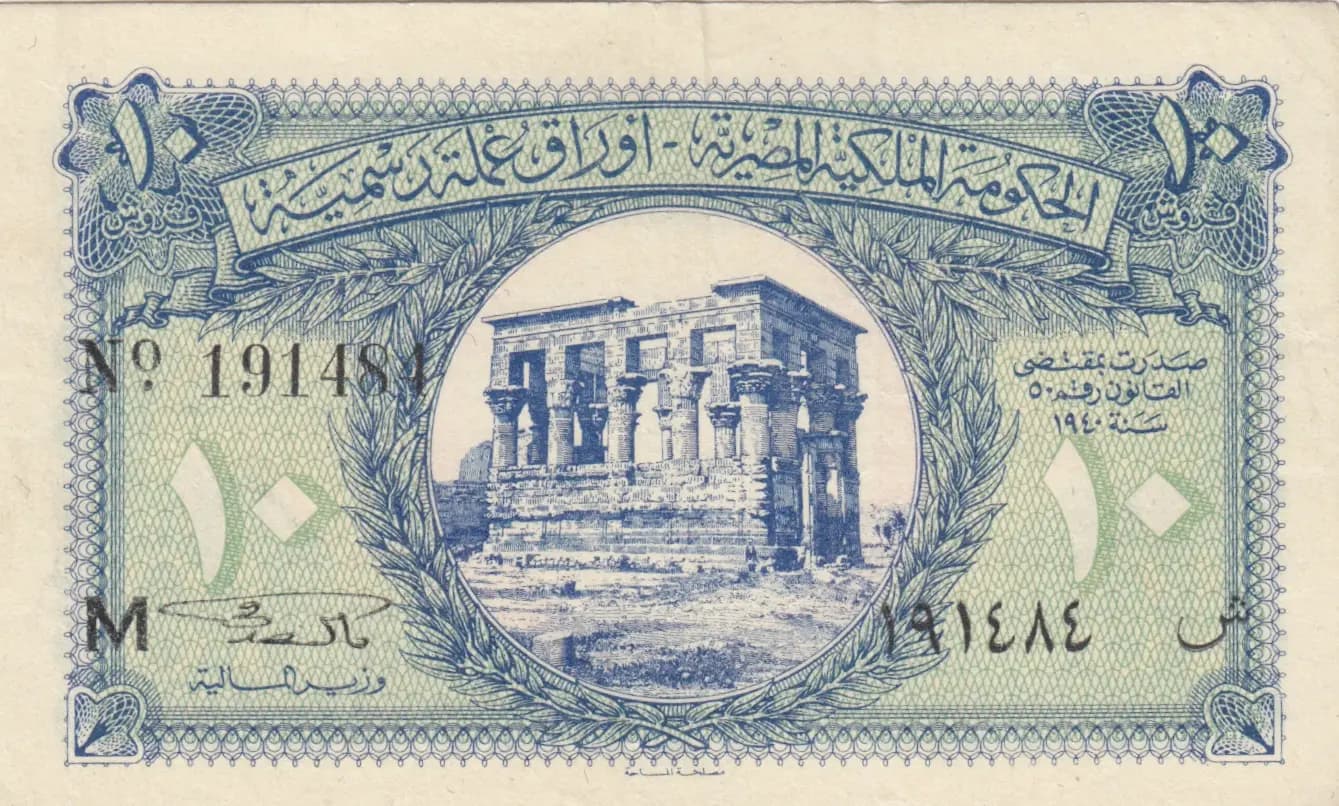
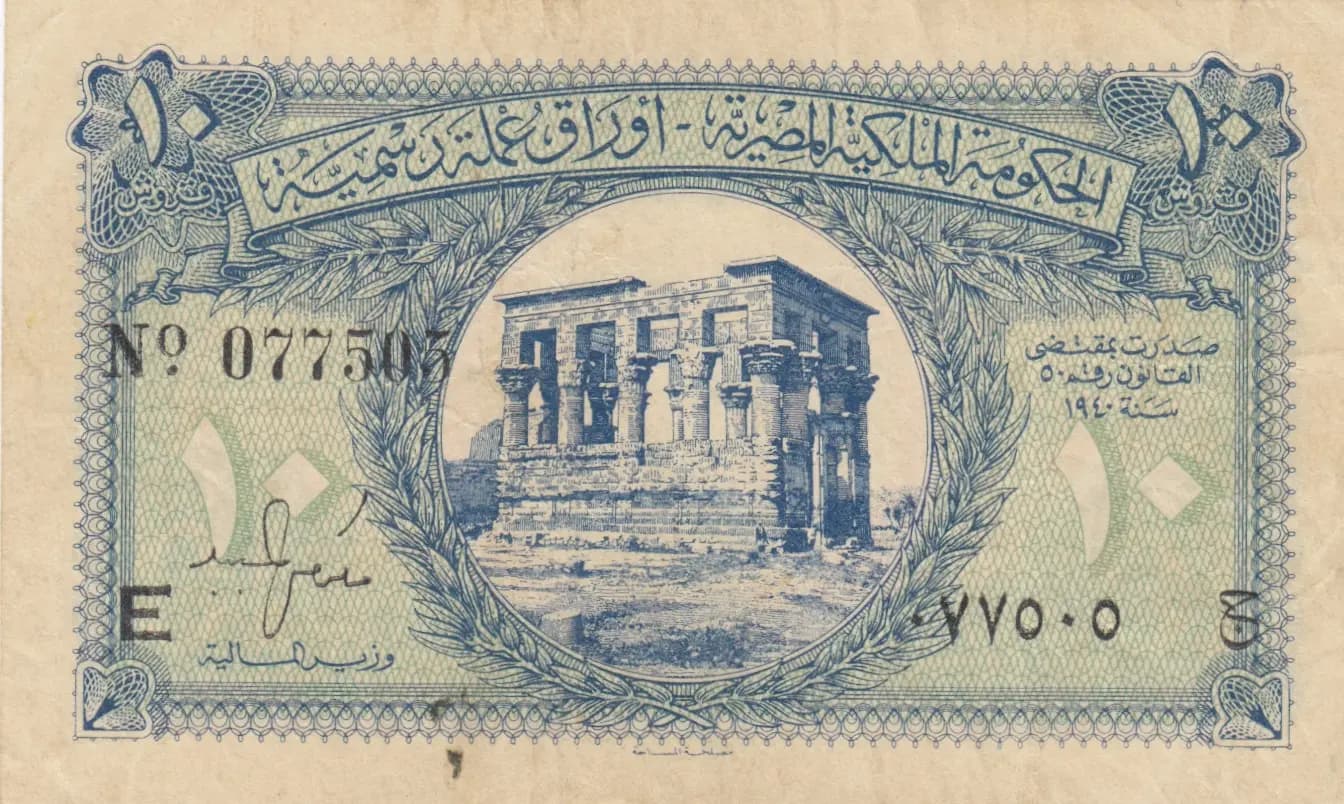
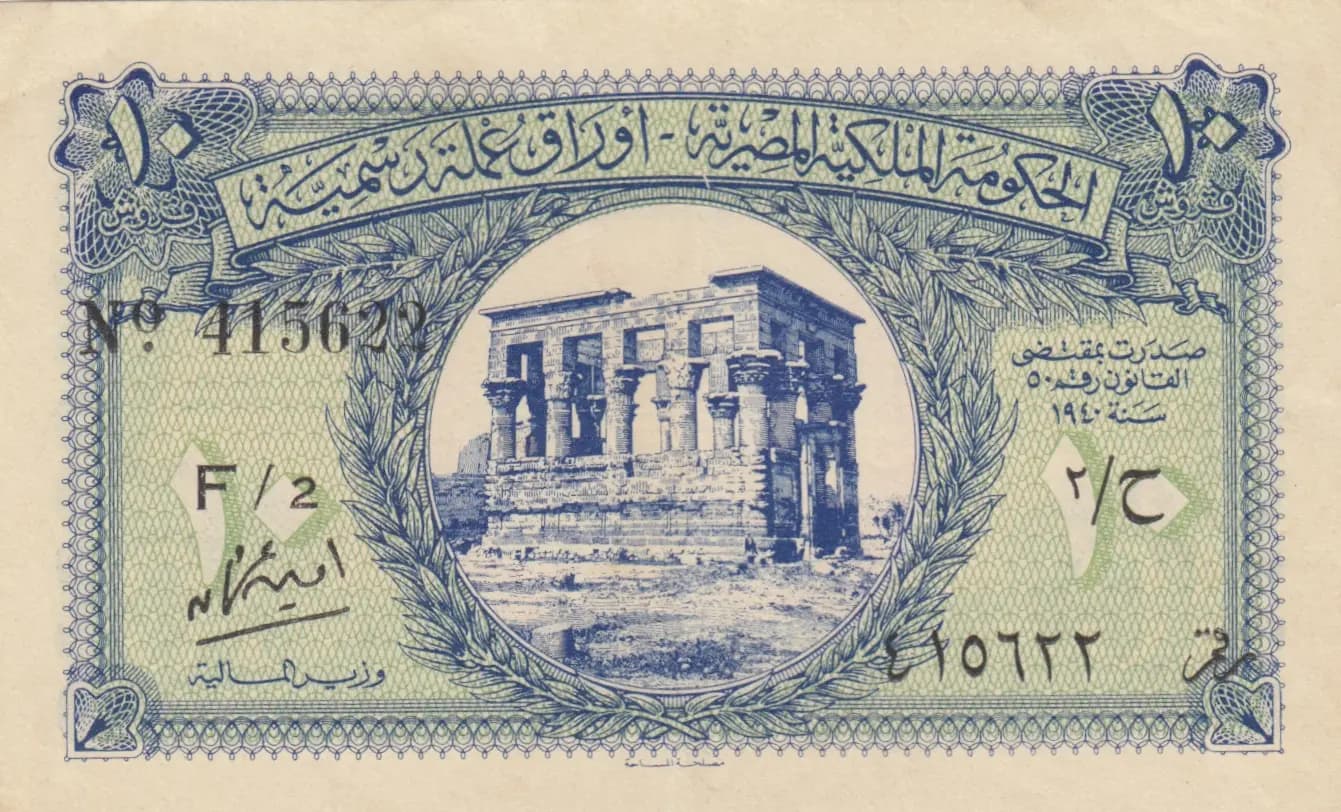
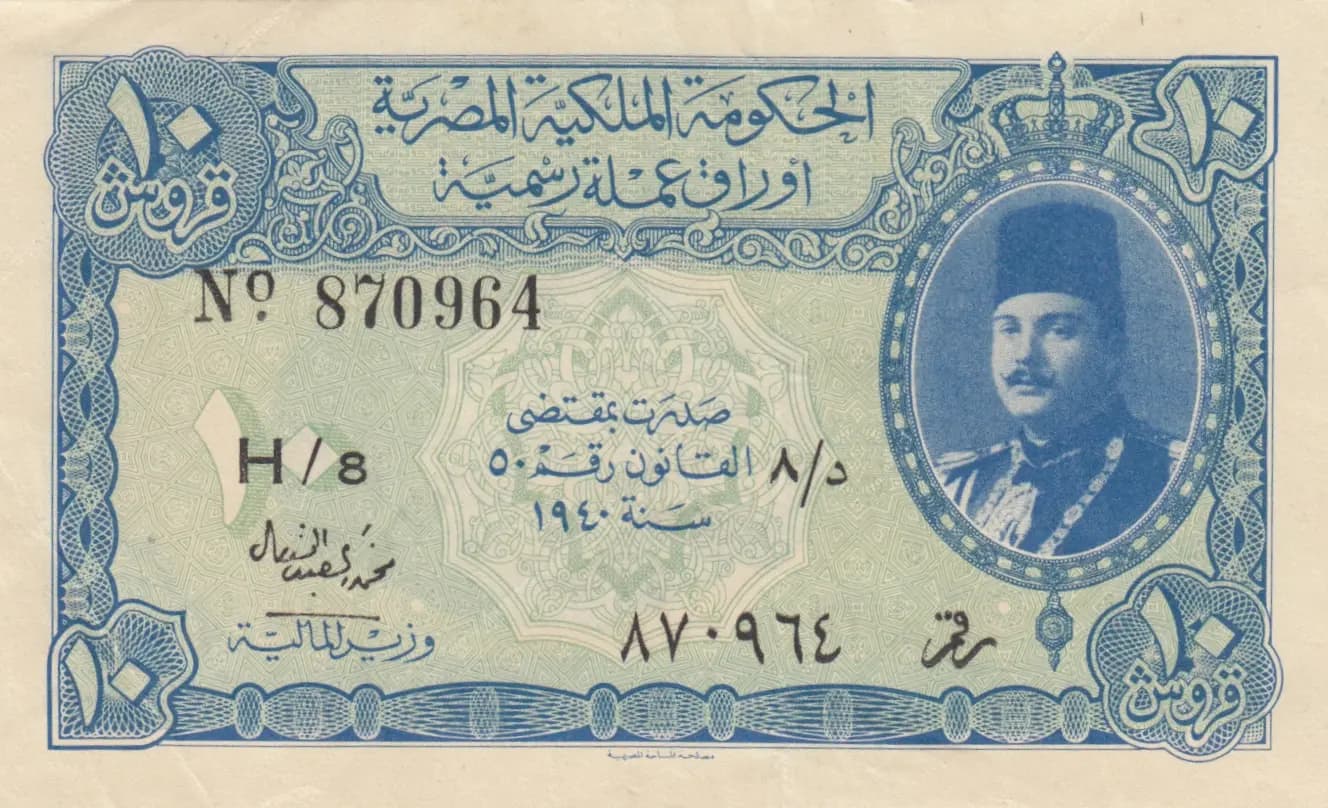
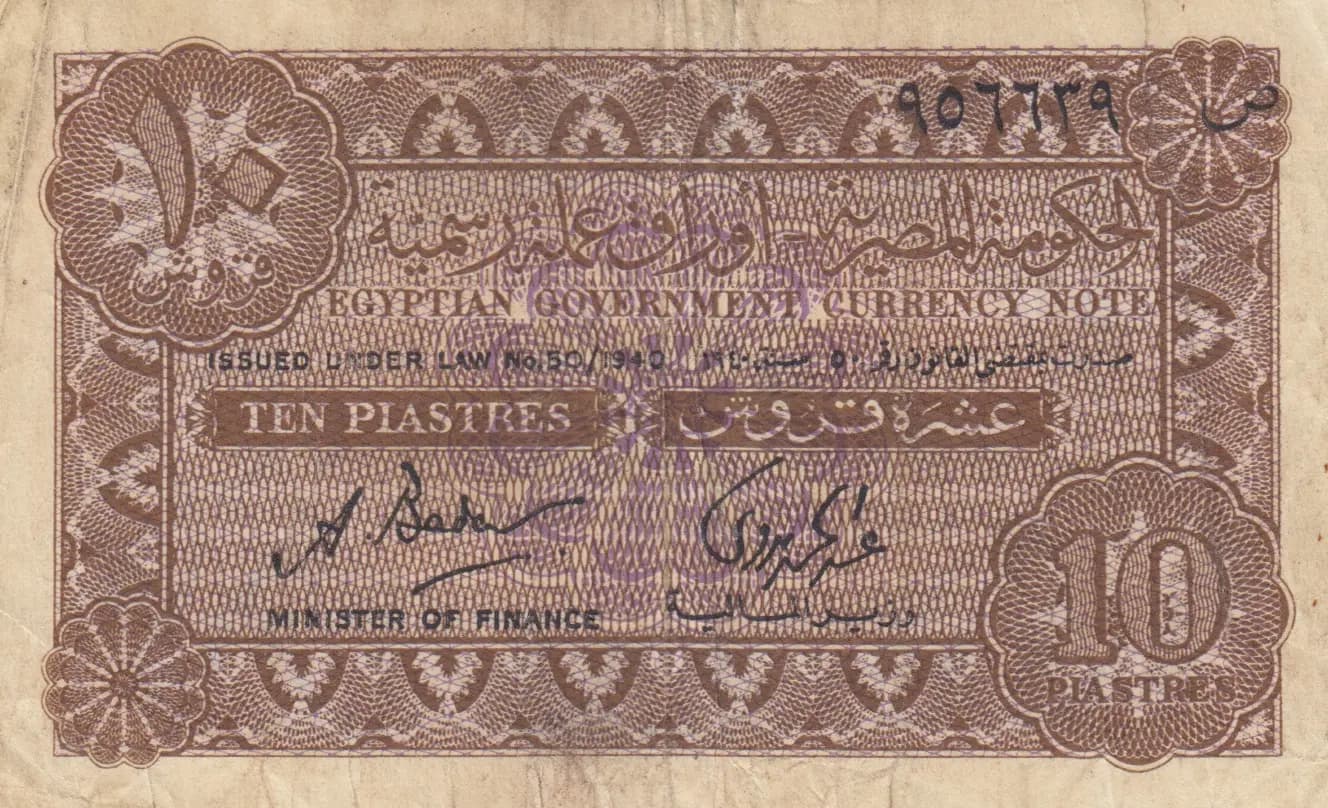
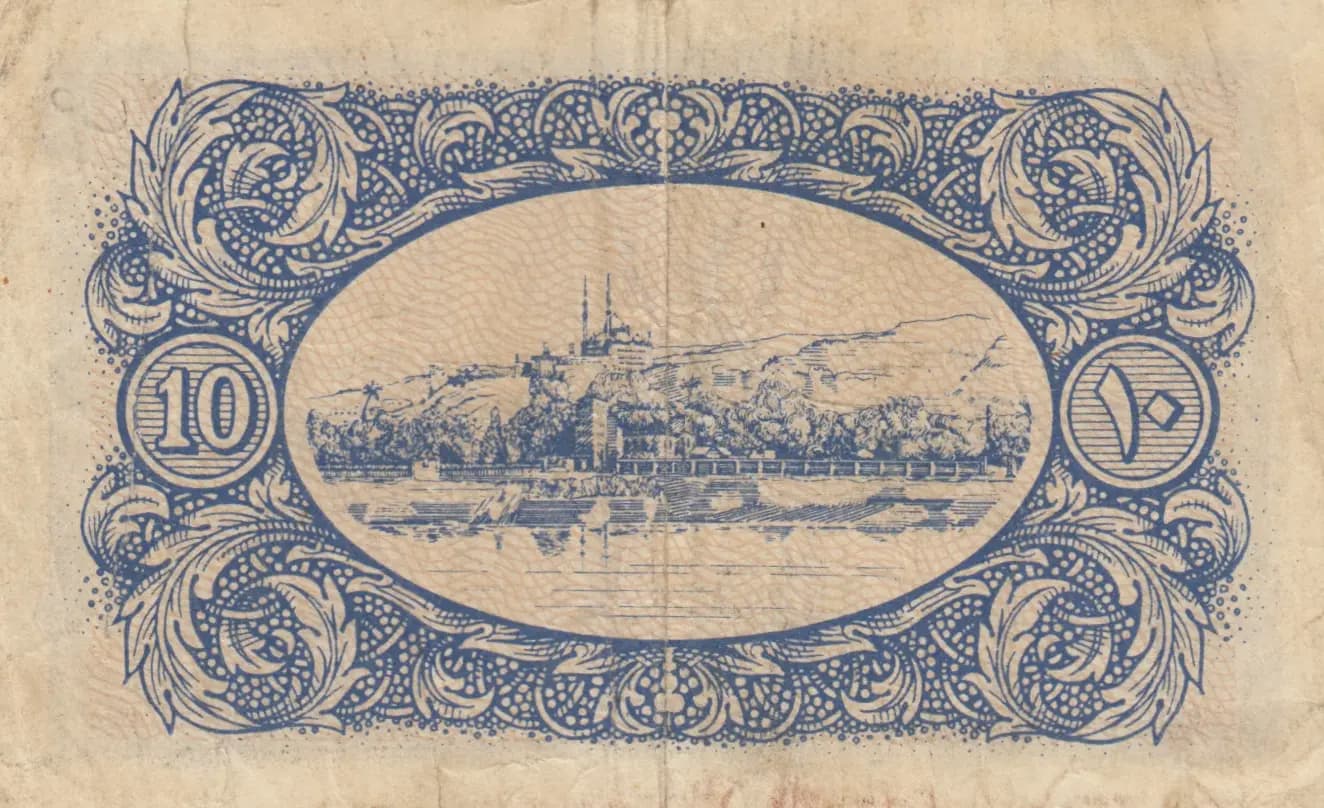
This Egyptian Government 10 Piastres note from 1940 (Pick P-166b) presents a well-circulated example in Fair condition, displaying the characteristic brown and lilac color scheme with blue reverse typical of this issue. The front features a male profile portrait in an ornate circular frame with intricate geometric and floral ornamental designs, while the reverse depicts a Nile waterfront scene with architectural structures including minarets—likely representing the Citadel or Mohammed Ali mosque area of Cairo. Despite visible creases, fold marks, and age-related yellowing consistent with historical circulation, the fine line engraving and detailed guilloché patterns remain discernible.
Common. eBay market evidence shows recent sales of Fair-graded examples at $7.50–$16.50 (2010–2023), well below the $30 VG catalog value threshold. The 1940 Egyptian 10 Piastres was a regular-issue denomination with substantial circulation throughout the period, resulting in high survivor numbers. No evidence of limited print runs, recalls, or short-term issuance. The three cataloged varieties (P-166a, P-166b, P-166c) represent standard variant tracking rather than rarity differentials.
Issued in 1940 during the final decade of the Kingdom of Egypt under British influence, this note reflects the Egyptian Government's pre-Nasser era currency system. The architectural imagery on the reverse—depicting the waterfront with minarets and the Citadel—serves as a nationalist symbol emphasizing Egypt's cultural and historical heritage during a period of growing independence movements. The bilingual English-Arabic inscriptions reflect Egypt's transitional status between colonial administration and emerging sovereignty.
The obverse features a left-facing male profile portrait—likely depicting a historical Egyptian figure of significance—enclosed within an elaborate quatrefoil or circular decorative frame. The surrounding design employs dense geometric cross-hatching and fine linework creating a sophisticated background, with ornamental rosette floral motifs positioned in the corners. Multiple decorative border frames and cartouches containing denomination numerals create a frame-within-frame composition. The reverse presents an engraved landscape vignette dominated by an Italianate waterfront scene featuring the Citadel of Cairo with its characteristic minarets and architectural towers, rendered in blue ink. Vegetation and water elements suggest the Nile riverbank setting, enclosed within an elaborate border of scrollwork and foliate ornaments. Both sides employ precision line engraving and guilloché pattern work characteristic of high-security currency design of the period.
Front (Obverse): 'EGYPTIAN GOVERNMENT CURRENCY NOTE' (English), 'TEN PIASTRES' (English), 'عشرة قروش' (Arabic: Ten Piastres), 'MINISTER OF FINANCE' (English), '10' (numeral). Back (Reverse): '10' (numeral in decorative cartouches on left and right sides). Note: The reverse carries minimal text inscriptions, with design focus on the central landscape vignette.
Intaglio engraving (recess/line engraving) with multiple color separation printing. The fine cross-hatching, detailed guilloché patterns, and ornamental borders visible throughout indicate traditional security printing methods employed by government currency printers of the era. The note exhibits the characteristic precision and depth of intaglio work. The specific Egyptian Government security printer for this 1940 issue was likely a European or British currency printer contracted for Egyptian Government notes, though the specific printer attribution would require Pick catalog confirmation.
This note is cataloged as P-166b, representing one of three documented varieties for the 1940 10 Piastres denomination. P-166a is noted as a version without watermark, while P-166b and P-166c represent variants with watermark present. The watermark on this specimen appears to be a geometric shape with Arabic serial number as noted in reference materials. Signature varieties exist for this issue, though the specific signature identification would require clearer frontal image inspection. The Arabic serial number format and exact prefix would further define the precise variety.