10 piastres 1940
Market Prices
7 salesAbout This Note
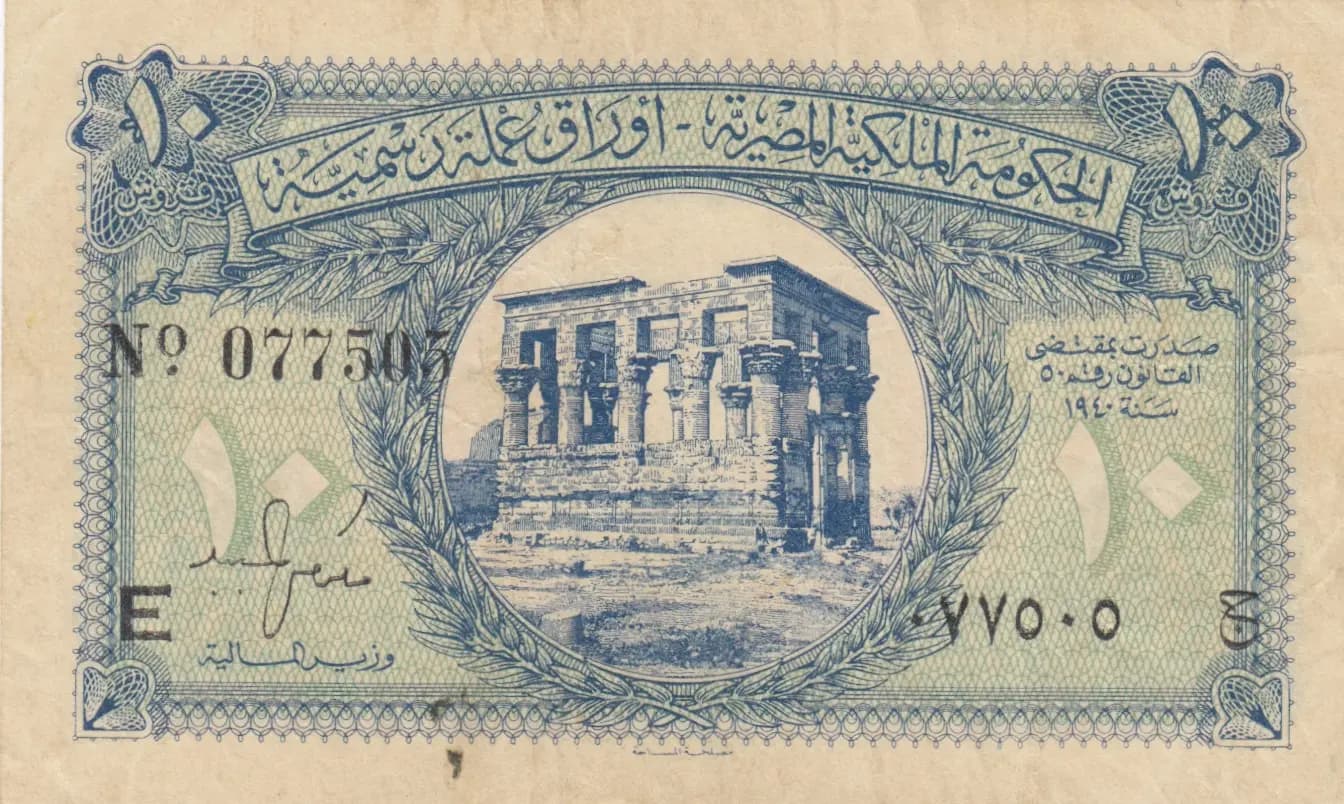
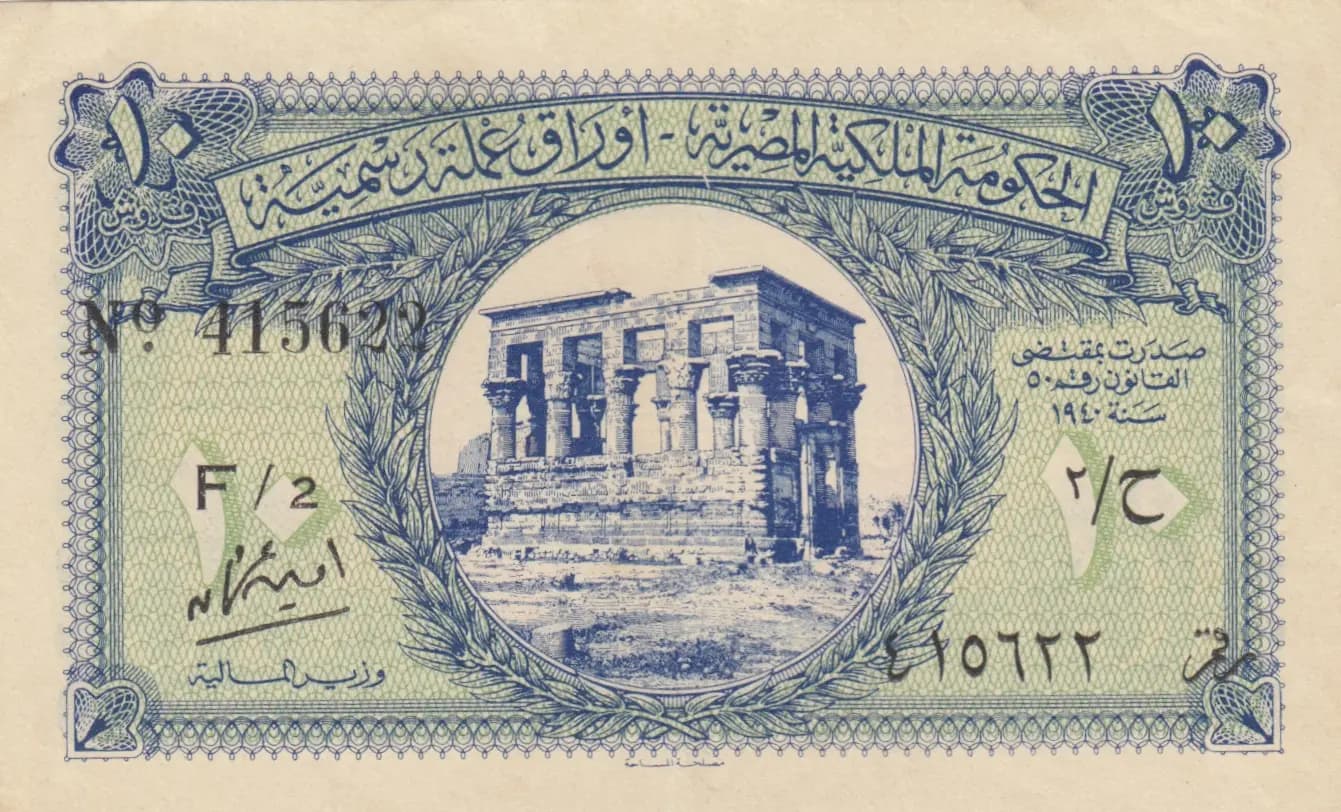
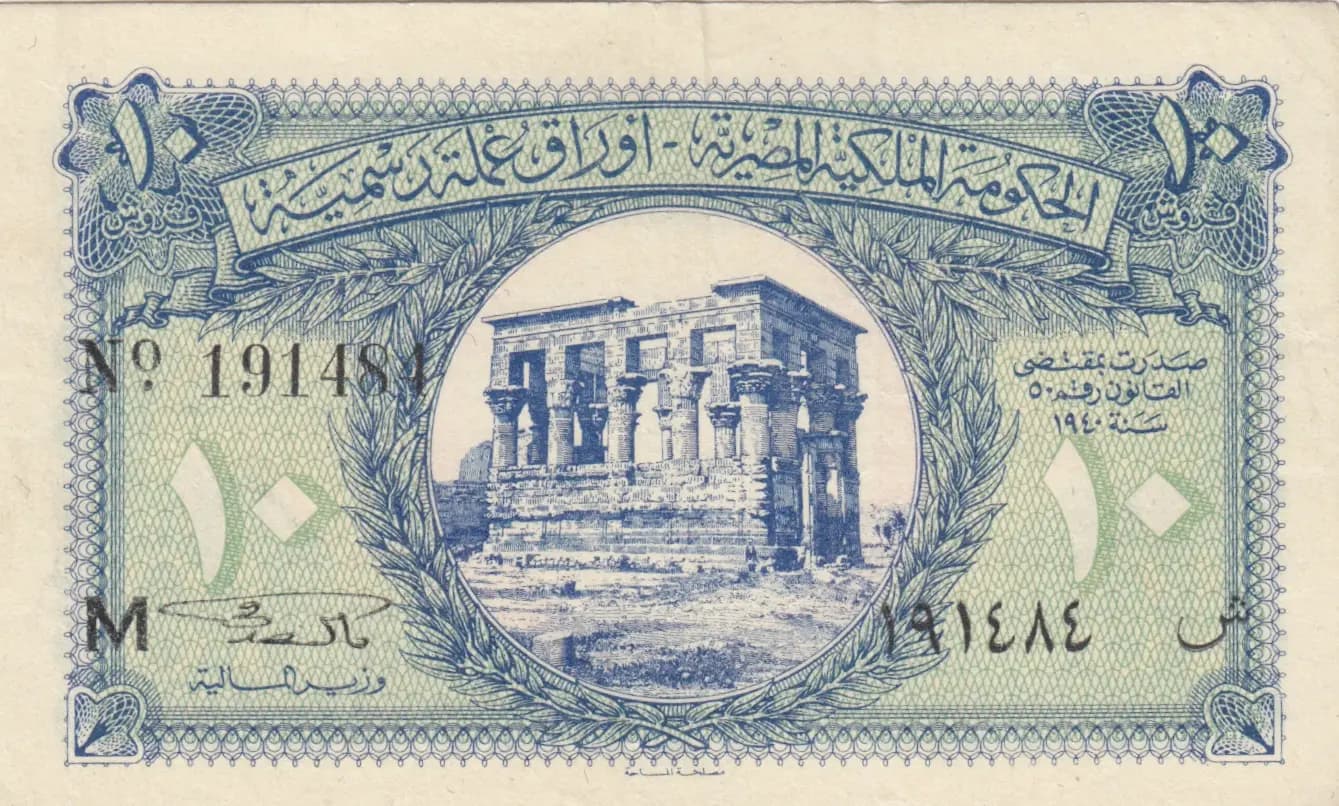
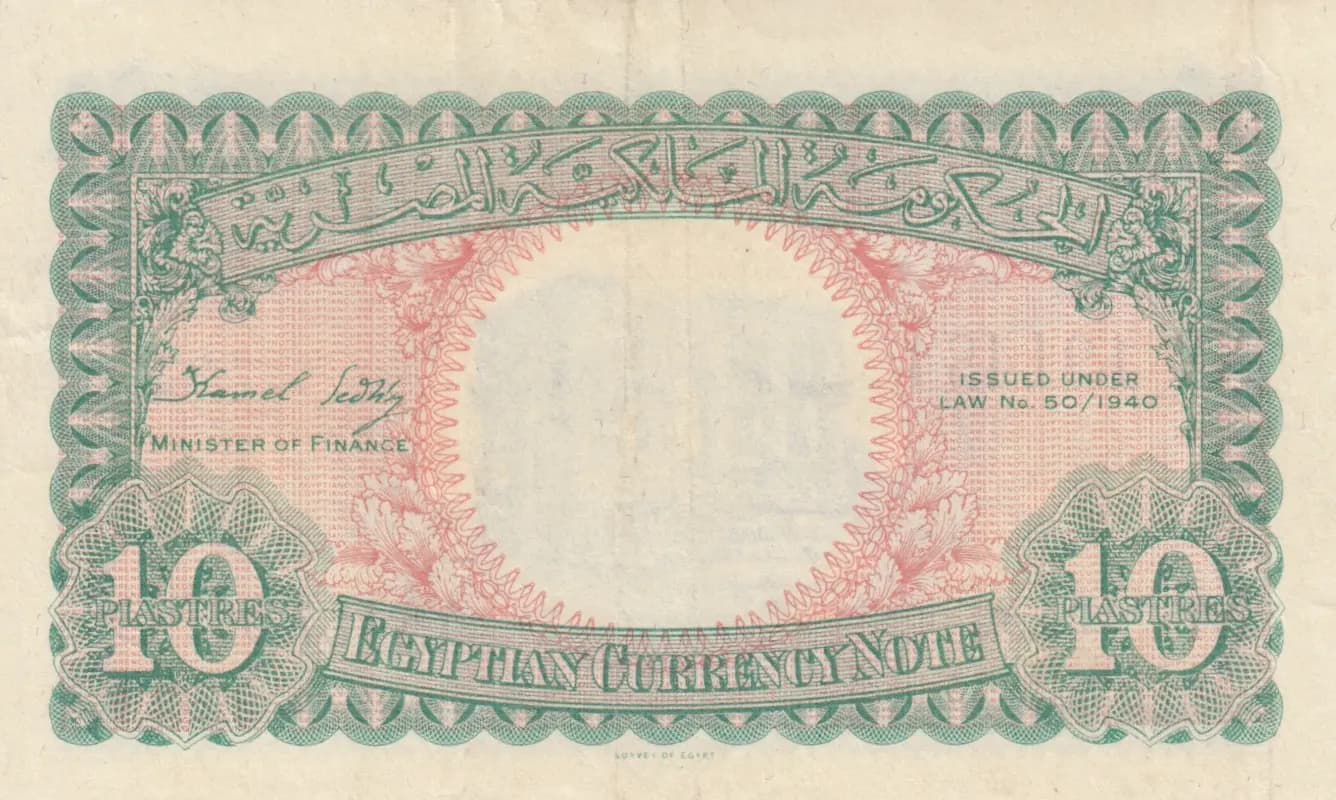
This 10 Piastres banknote from Egypt's 1940 issue presents a well-preserved example of early 20th-century Egyptian currency in Very Fine condition. The note features the iconic Temple of Philae rendered in blue ink on a cream background with an ornate decorative border, while the reverse displays green and red/pink borders with official ministerial signatures and law citations. The exceptional preservation of the engraved details and minimal wear make this a solid collector example of an historically significant Egyptian Government currency issue.
Common. eBay transaction data shows multiple examples selling between $4.44 and $33 in Fine condition from 2012-2021, with a 2024 PMG graded example (grade 25) fetching $122.50. The catalog value for VF is listed at $100 (2016), which aligns with these auction results. The existence of two Pick catalog varieties (P-167a and P-167b) and the indication of signature and color shading varieties suggest a substantial print run. This is a regular issue note with no evidence of limited production, short-lived issuing authority, or recall.
Issued under Egyptian Law No. 50/1940 by the Royal Government of Egypt, this note represents a pivotal moment in Egyptian monetary history when the National Bank of Egypt (البنك الاهلى المصرى) was managing currency during the late colonial period. The prominence of the Temple of Philae—one of Egypt's most iconic Greco-Roman period monuments—reflects the government's deliberate use of cultural heritage imagery to reinforce national identity and legitimacy during this transitional era in Egyptian governance.
The obverse features a central circular vignette depicting the Temple of Philae, the celebrated Ptolemaic-era temple complex originally located on Philae Island in the Nile, rendered with classical architectural precision showing multiple columns and Greco-Roman architectural details. The vignette is enclosed within a laurel wreath frame, flanked by decorative corner ornaments featuring stylized eagles or birds—symbols of sovereignty and imperial authority. An intricate floral and geometric border frames the entire note in navy blue ink. The reverse maintains the formal governmental aesthetic with green borders framing ornamental geometric and floral patterns, while the central field remains open for the minister's signature and official documentation of issue.
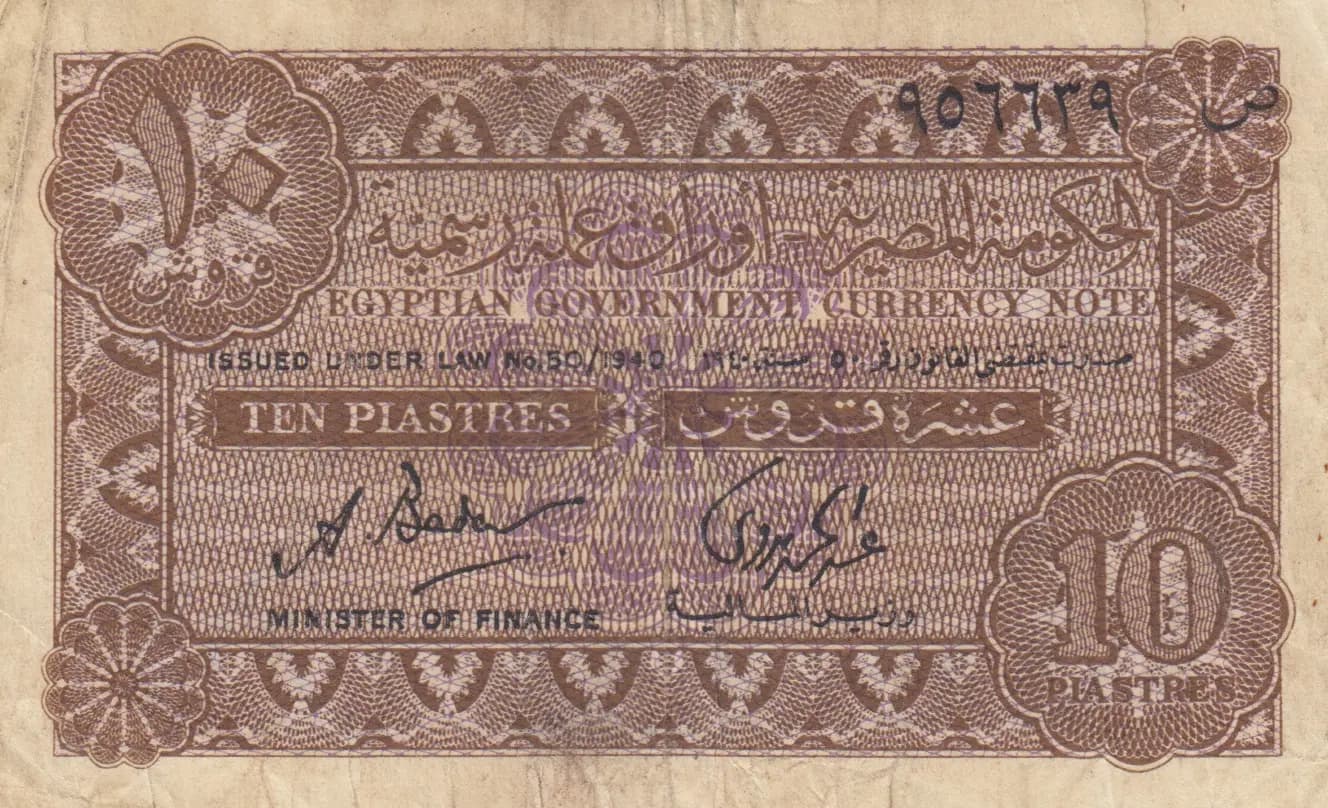
FRONT SIDE: Arabic header reads "البنك الاهلى المصرى - اوراق العملة الحكومية" (National Bank of Egypt - Government Currency Notes). A decorative banner states "صدرت بموجب القانون رقم ۱۹٤۰" (Issued under Law No. 1940). Serial number "N° 0775" and denomination "۱۰" (10) appear in their respective positions. BACK SIDE: English inscriptions include "MINISTER OF FINANCE," "ISSUED UNDER LAW No. 50/1940," "10 PIASTRES," "EGYPTIAN CURRENCY NOTE," and "SURVEY OF EGYPT" (the printer). The back also references ministerial authority through signature lines and official seals.
This note was produced using traditional intaglio engraving techniques by the Survey of Egypt, the official printer listed on the reverse. The fine line work visible in the borders, the complex geometric patterns, the detailed architectural rendering of the Temple of Philae vignette, and the delicate floral motifs are characteristic of security printing from this era. The multi-color printing (blue and cream on obverse; green and red/pink on reverse) indicates the use of separate printing plates for each color, a standard security practice of the period.
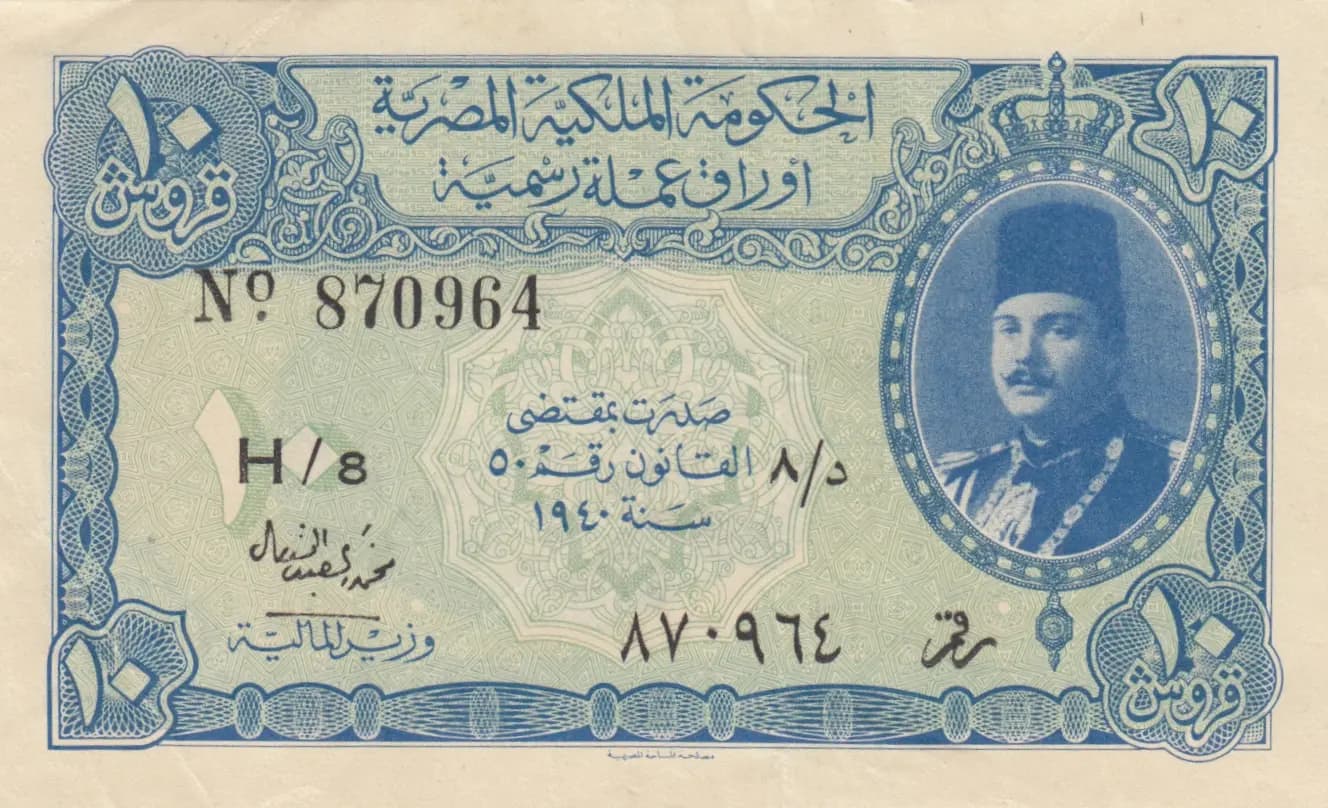
This note is catalogued as P-167a, with a P-167b variant also documented. Based on the visual analysis and community reference data, known varieties include signature varieties and color shading varieties. The back note mentions that "placement of series letter varies" and features "single letter to left of signature," indicating the presence of multiple state variations within this issue. The specific variety observed here (P-167a) with serial number 0775 and the visible signature placement would require comparison with the Pick catalog's detailed variety listings to precisely identify which state this example represents. No overprints or unusual markings are visible in the provided images.