10 piastres 1940
Market Prices
43 salesAbout This Note
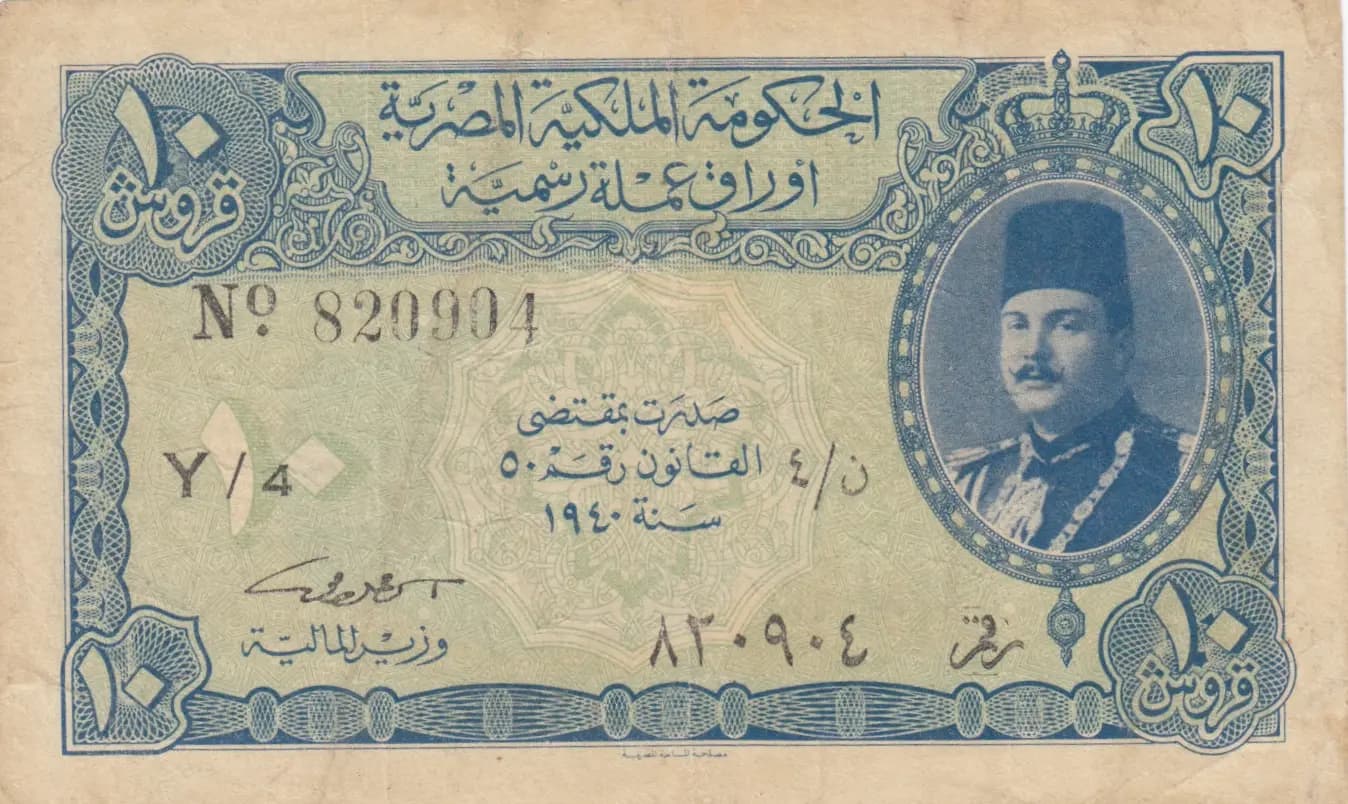
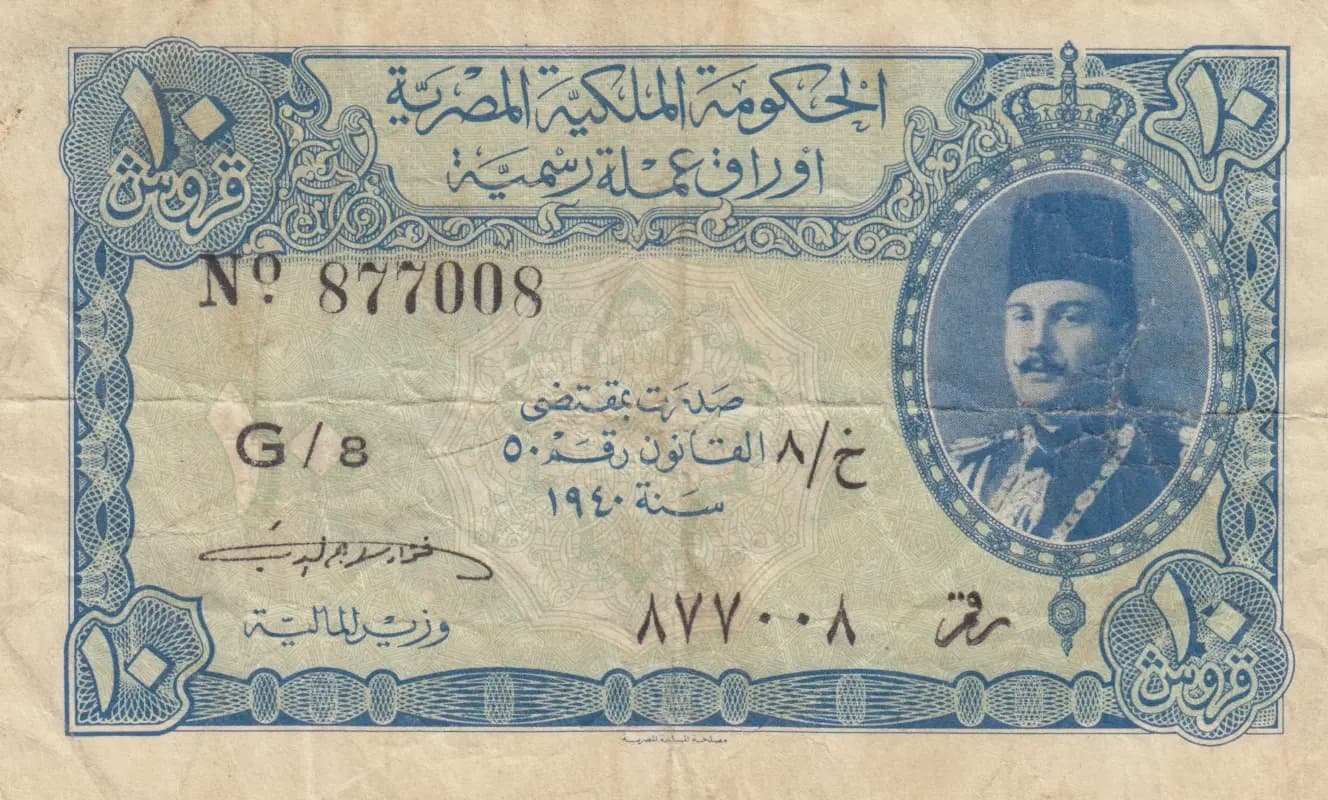
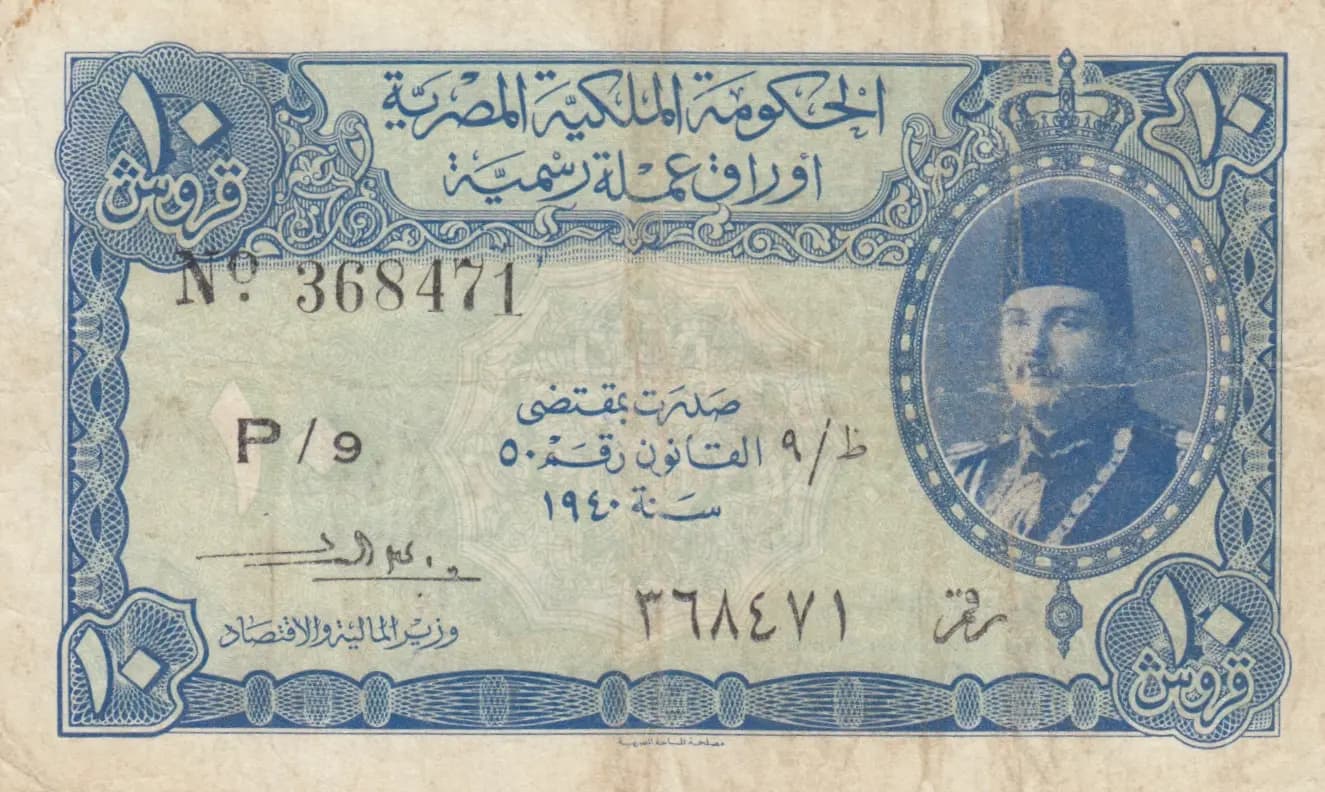
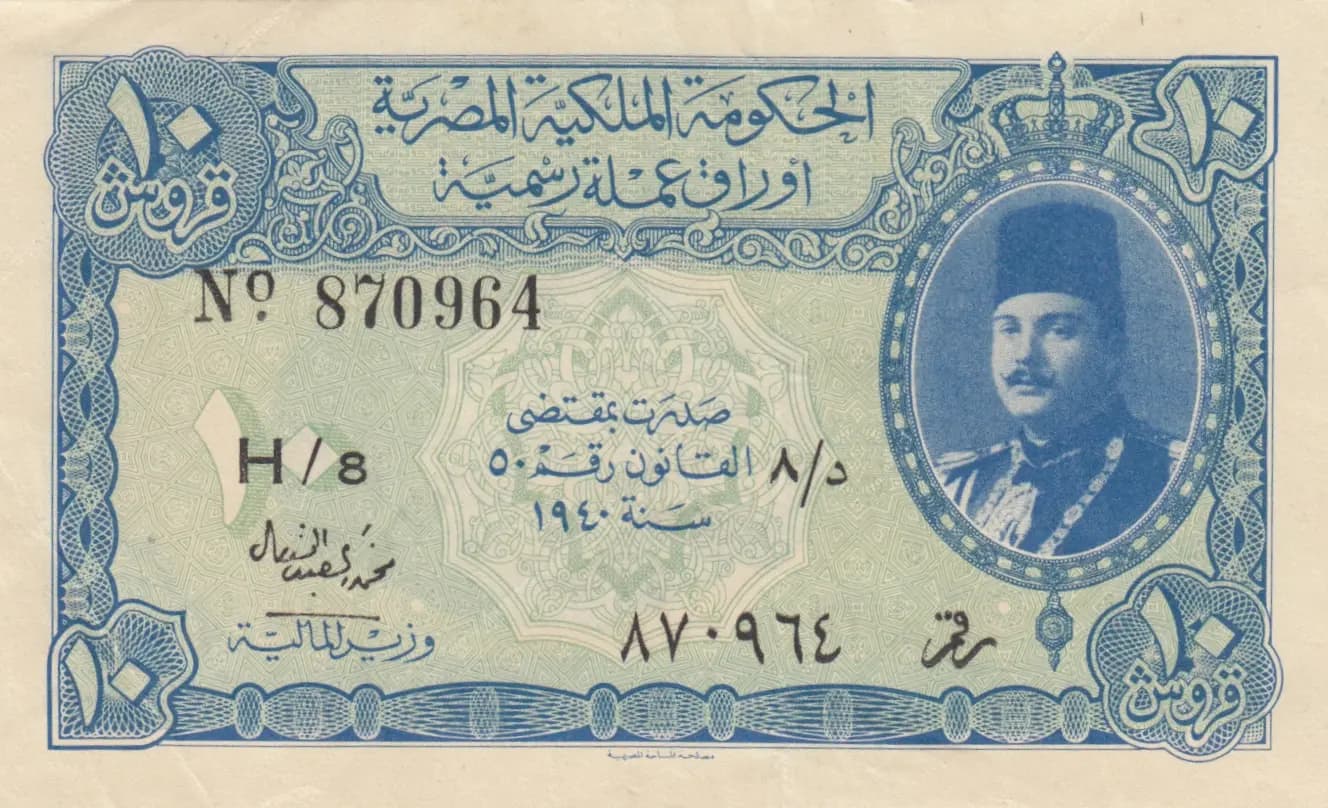
This is an Egyptian 10 Piastres note from 1940 (Pick P-168a), issued under Law No. 50/1940 by the Royal Egyptian Government. The note features a portrait of King Farouk I in profile within an ornamental circular frame on the obverse, rendered in blue on a cream underprint with intricate geometric and floral borders. In Very Fine condition, the note displays age-appropriate patina and moderate circulation wear consistent with an 1940s-era banknote, making it a representative example of Egypt's early modern currency period.
Common. eBay market data shows consistent sales activity across multiple condition grades from 2009-2026, with VF-graded examples regularly selling in the $19.50-$56 range, indicating robust collector demand but no scarcity premium. The catalog value for VF ($200 in 2016) reflects collector interest, but the frequency and volume of sales at substantially lower realized prices ($19.50-$56) indicate this is a regularly available note. No evidence of low print run, recall, or restricted availability.
This note was issued during the reign of King Farouk I (1922-1952), a formative period in modern Egyptian history when Egypt was asserting greater independence from British control. The inscription 'The Royal Egyptian Government' and the formal portrait of the young King reflect Egypt's status as a constitutional monarchy at the time. The note's issue under Law No. 50/1940 represents the Egyptian Government's efforts to establish a modern, standardized currency system during this transitional period in the nation's development.
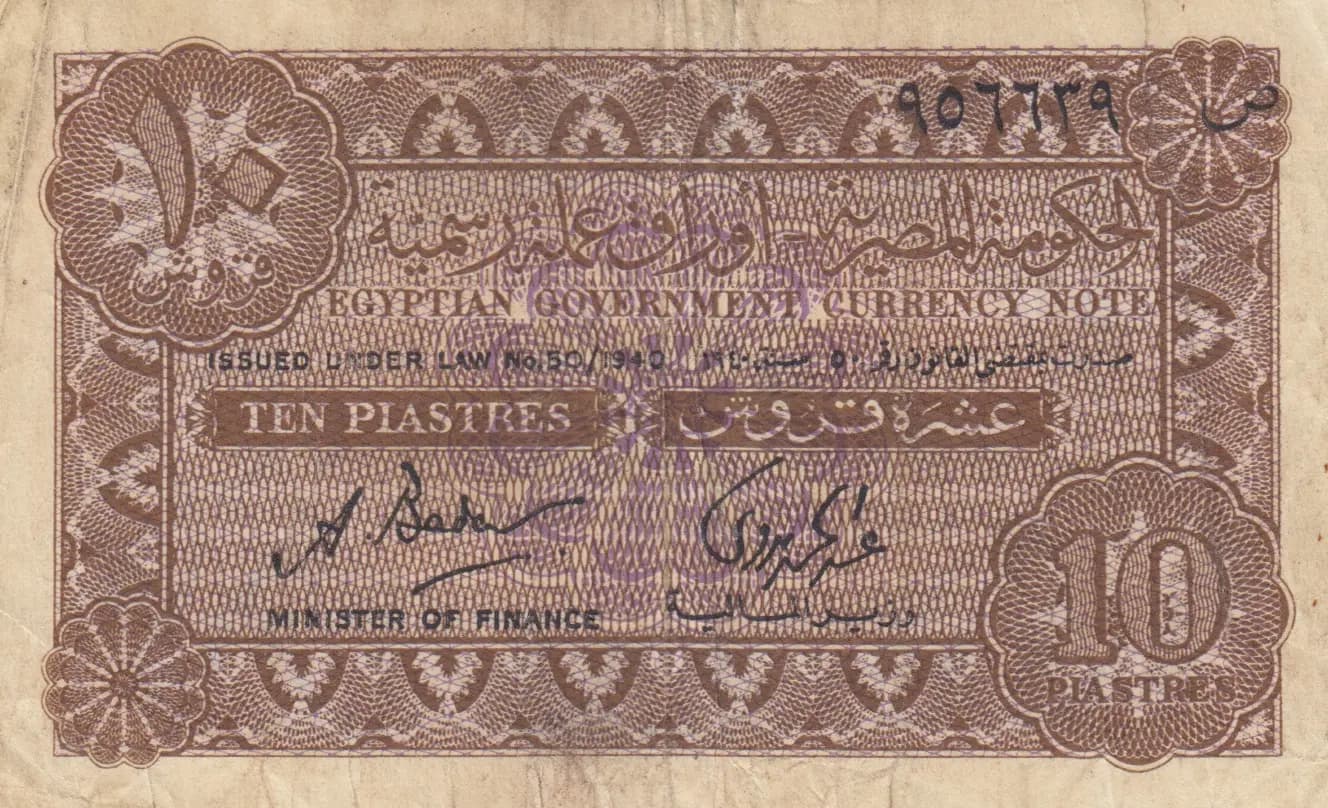
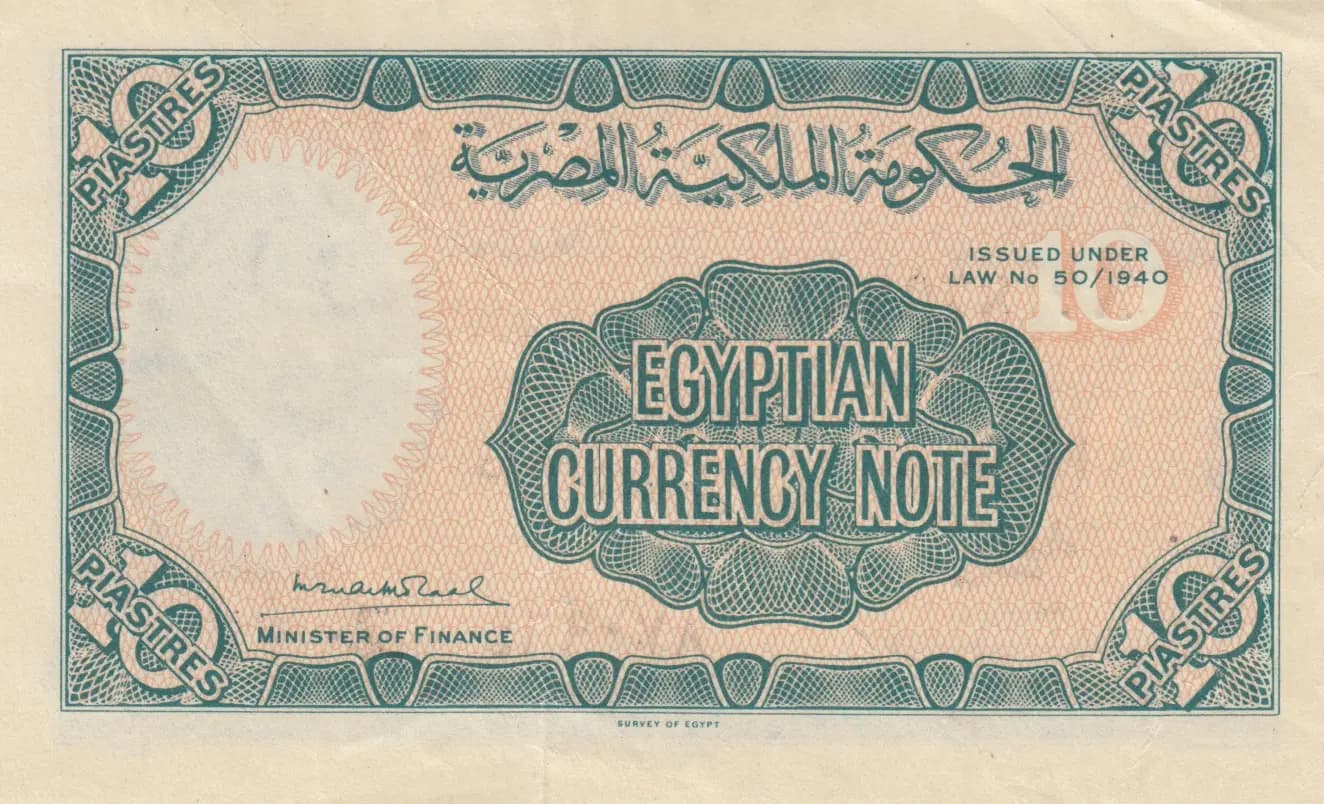
The obverse features a formal portrait of King Farouk I depicted in profile facing left, positioned in the upper right within a circular ornamental frame with decorative border work. The note is dominated by an elaborate geometric and floral border design in blue with cream/beige background. The cartouche at top contains Arabic text identifying the issuing authority. The reverse presents a symmetrical design with 'EGYPTIAN CURRENCY NOTE' prominently displayed within an elaborate ornamental cartouche frame, with teal/green geometric patterns on a cream/pink background. Both sides incorporate fine line engraving throughout with decorative corner elements. The bilateral bilingual (Arabic/English) inscription scheme reflects the dual administrative nature of Egypt during the 1940 period.
FRONT SIDE: الحكومة الملكية المصرية = 'The Royal Egyptian Government'; أوراق نقدية رسمية = 'Official Currency Notes'; صك الدولة = 'Government Bond/Security'; د/8 الاسترليني 1940 = 'Sterling 1940'; Serial number 'No 870964' and denomination marking 'H/8'. BACK SIDE: الحكومة الملكية المصرية = 'The Royal Egyptian Government'; 'EGYPTIAN CURRENCY NOTE'; 'ISSUED UNDER LAW No 50/1940'; 'MINISTER OF FINANCE'; 'PAISTRE' (Piastre, the currency unit); 'SURVEY OF EGYPT' (printer attribution).
Intaglio engraving (line engraving), as evidenced by the fine line work, intricate geometric patterns, and detailed border designs visible throughout both sides. The note was printed by the Survey of Egypt, the official printer credited on the reverse. The precision of the circular portrait frame, geometric borders, and ornamental cartouches are consistent with high-quality intaglio production methods employed for security currency printing of that era.
This note is cataloged as Pick P-168a, with a known variant P-168b also existing for the 10 Piastres denomination. The visual analysis shows signature variety notation ('H/8' marking visible on obverse), which is typical for this issue as multiple signature combinations exist depending on the official signatories serving as Minister of Finance. The serial number 'No 870964' is specific to this individual specimen. Without additional comparative examples visible, the exact signature variety cannot be definitively determined from this image alone, but the 'H/8' marking may indicate a specific signature series.