10 piastres 1940
Market Prices
23 salesAbout This Note
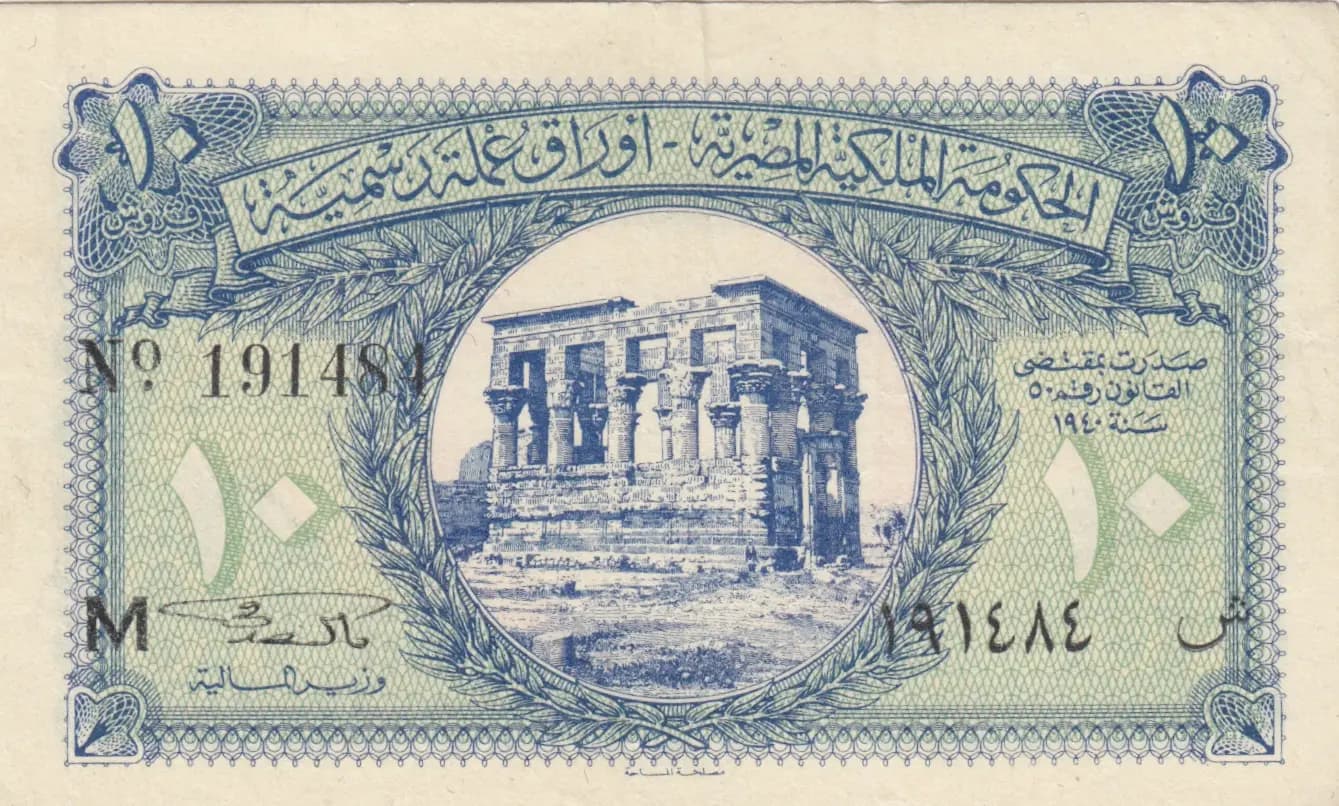
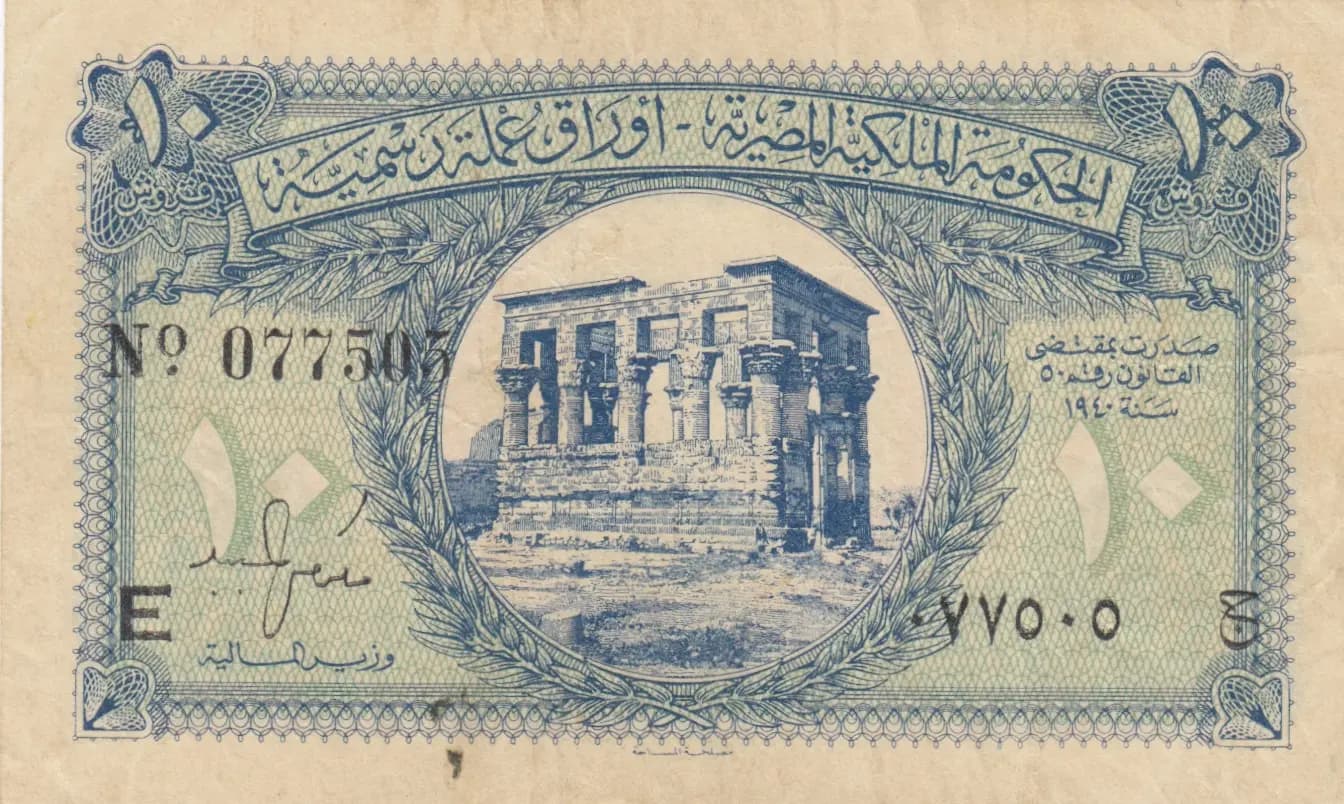
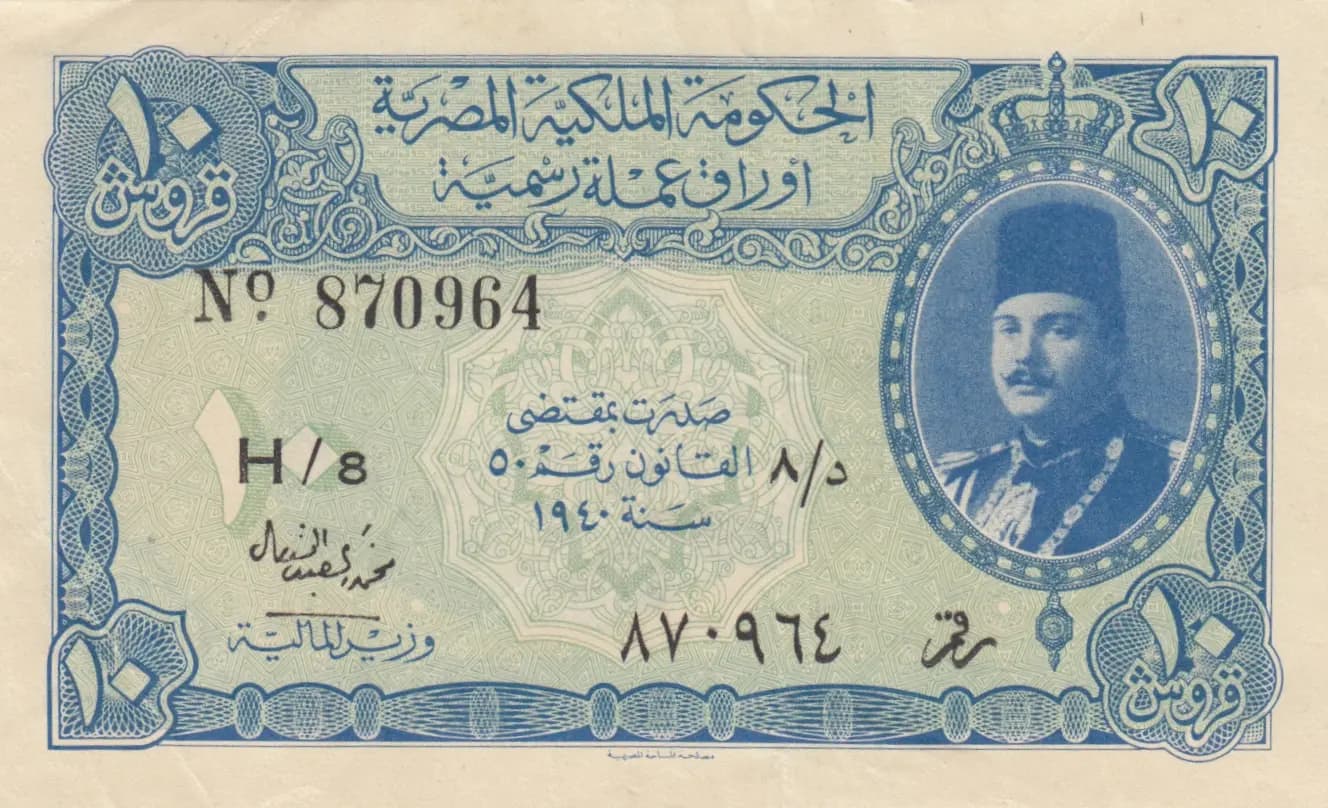
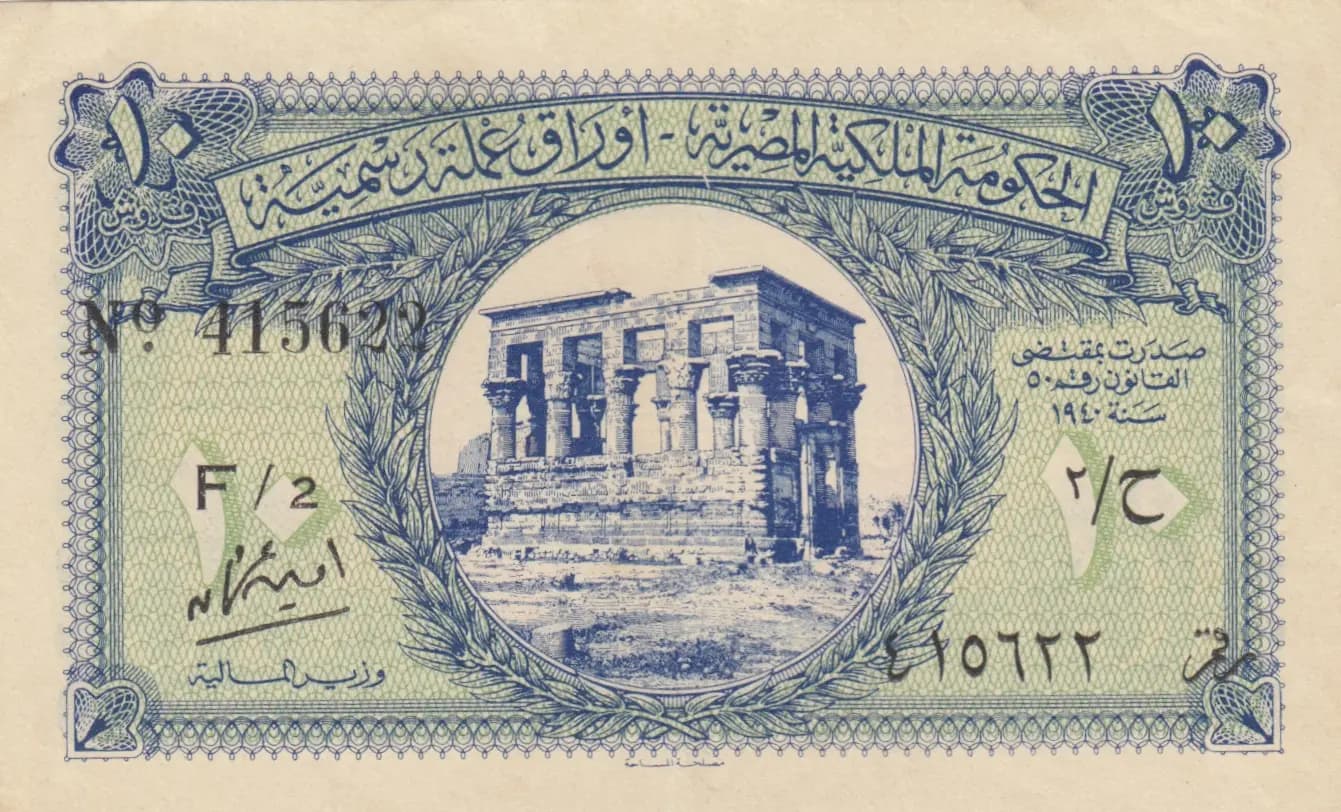
This is an Egyptian 10 Piastres note from 1940 (Pick P-167b) in VF condition, featuring the iconic Temple of Philae depicted in a circular central vignette surrounded by ornate blue and green decorative borders. The note shows appropriate aging with a cream patina, visible creases from circulation, and clear serial markings, representing a well-preserved example of this early Egyptian Government currency issue. The bilingual inscriptions (Arabic and English) and detailed engraved security features reflect the craftsmanship typical of Survey of Egypt printing from this period.
Common. Secondary market data shows consistent availability with eBay auction prices for VF specimens ranging from $15-$20.50 over the past decade, indicating regular supply and steady demand among collectors. The 2016 catalog valuation of $100 for VF appears inflated relative to actual realized prices. The Pick catalog lists two varieties (P-167a and P-167b), suggesting multiple printings or signature variants, further supporting a common classification. This note does not show the scarcity characteristics typical of rare issues.
Issued under Law No. 50 of 1940 by the Royal Government of Egypt during a pivotal period in Egyptian history, this note represents the currency issued before Egypt's full independence. The prominent depiction of the Temple of Philae, one of Egypt's most significant archaeological monuments, served as a symbol of national heritage and cultural pride. The note's design reflects Egypt's dual administration during this era, with both Arabic and English inscriptions indicating the transitional governmental status of the period.
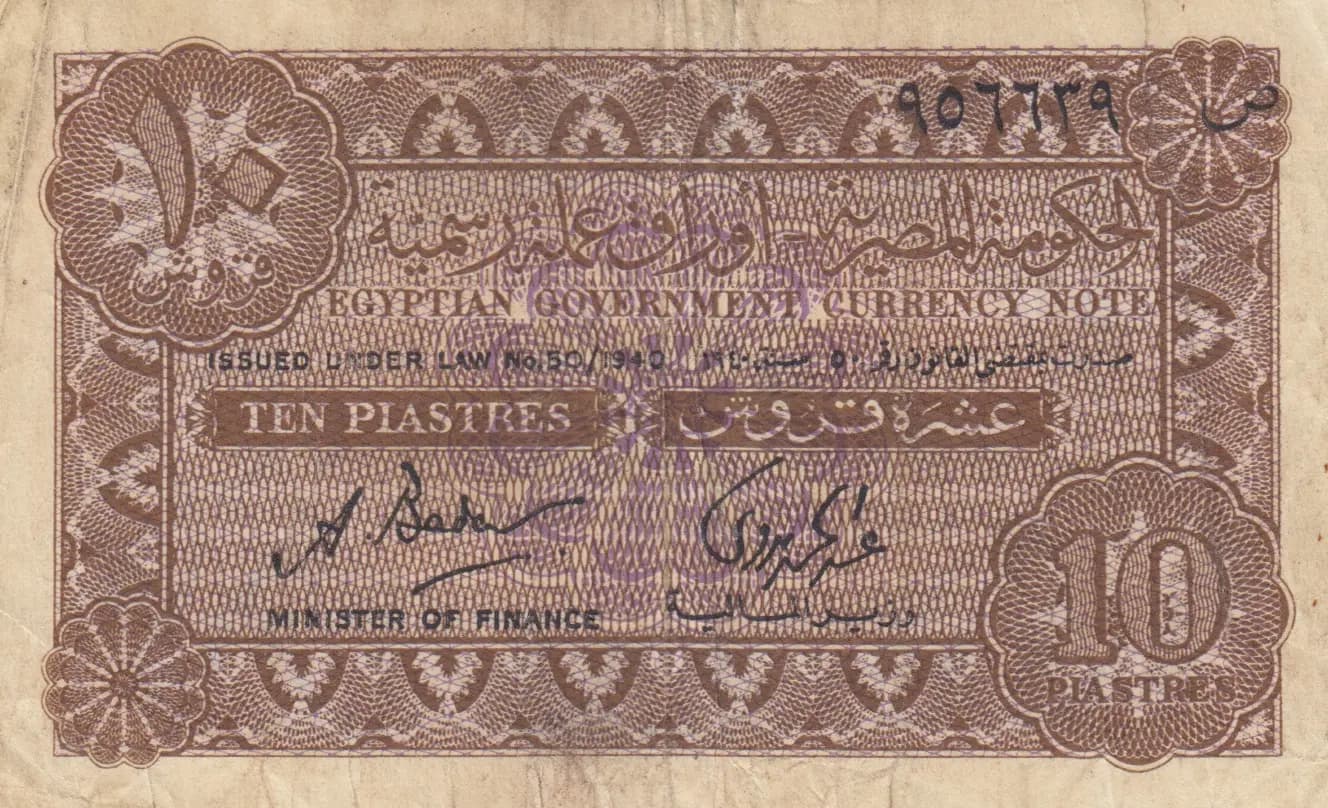
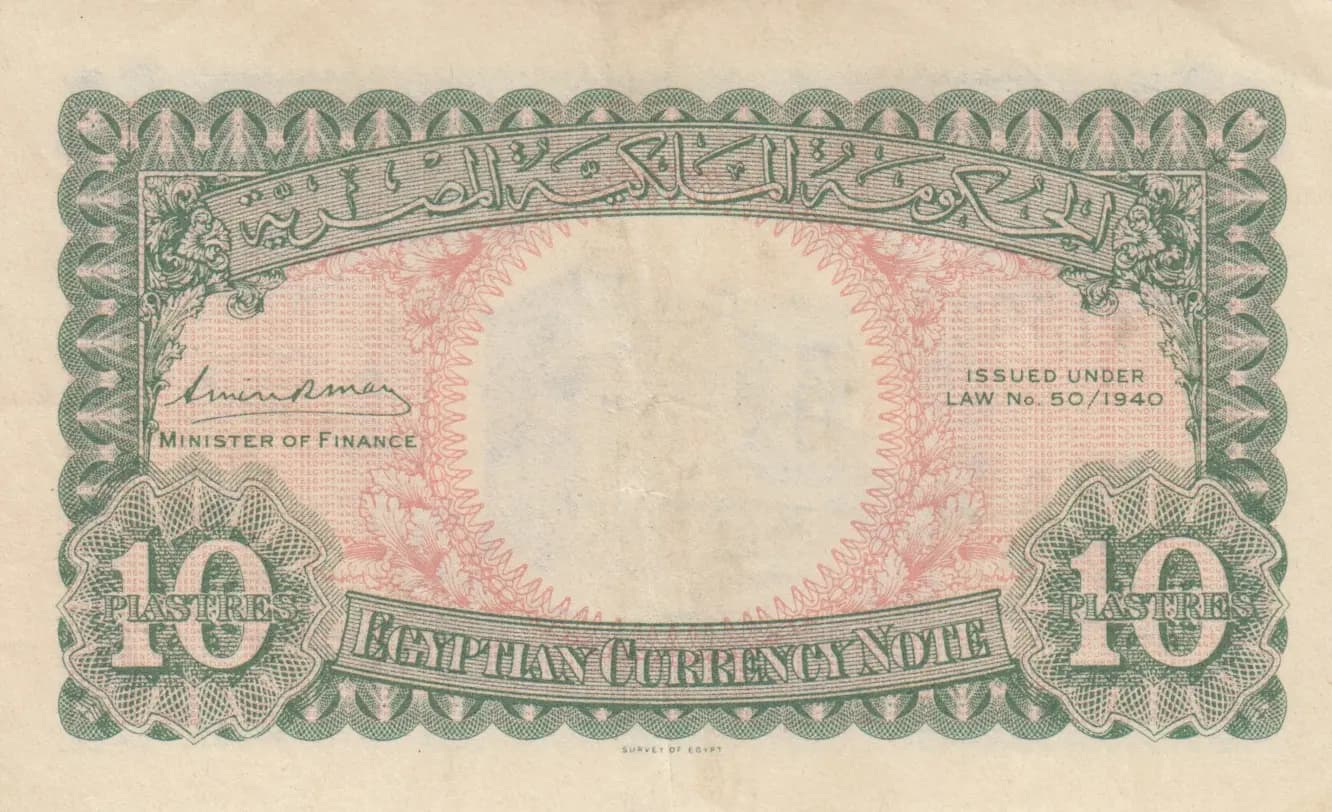
The obverse features the Temple of Philae, the Ptolemaic-era sanctuary dedicated to the goddess Isis, rendered in a classical columned architectural style within a circular vignette. The temple structure displays multiple columns characteristic of Greco-Egyptian architecture. The design is framed by an elaborate ornamental border combining blue and green coloring with intricate geometric and floral patterns, including shell or fish-like motifs in the corners and laurel wreath elements surrounding the central vignette. The reverse maintains the decorative scheme with green and pink/red ornamental borders, corner laurel wreaths, and a large central white circular area. The bilingual presentation reflects official documentation standards of the 1940 period.
FRONT SIDE: Arabic - 'البنك الأهلي المصري - أوراق العملة - الصرافة' (National Bank of Egypt - Currency Notes - Exchange); 'صدرت بموجب القانون رقم 50 لسنة 1940' (Issued under Law No. 50 for the year 1940). Serial markings: F/2, C/2, 4150, 40117, denomination 10. REVERSE SIDE: Arabic - 'البنك الركزي المصري' (Central Bank of Egypt). English - 'ISSUED UNDER LAW No. 50/1940'; '10 PIASTRES'; 'EGYPTIAN CURRENCY NOTE'; 'MINISTER OF FINANCE'; 'SURVEY OF EGYPT'. Signature: Amarsena (Minister of Finance). Denomination: 10.
Intaglio engraving (recess printing), as evidenced by the fine line work, intricate border patterns, ornamental corner medallions, and detailed security features visible throughout both sides. The Survey of Egypt, credited as the printer on the reverse, employed traditional engraved plate printing methods typical of high-security currency production in this era. The precision of the geometric and floral patterns, along with the depth of the architectural details in the Temple of Philae vignette, confirms professional intaglio engraving technique.
This example is cataloged as Pick P-167b, one of two documented varieties for the 10 Piastres 1940 issue. The visual analysis confirms signature variety ('Amarsena' as Minister of Finance signature), and the catalog references note variations in color shading and signature types. Serial number prefixes (F/2, C/2) may indicate different printing series. The specific signature variety and serial letter placement should be verified against the P-167a variant to confirm this note's P-167b classification, as the catalog notes variable placement of series letters and number positioning above signatures.