1 pound 1976
Market Prices
25 salesAbout This Note
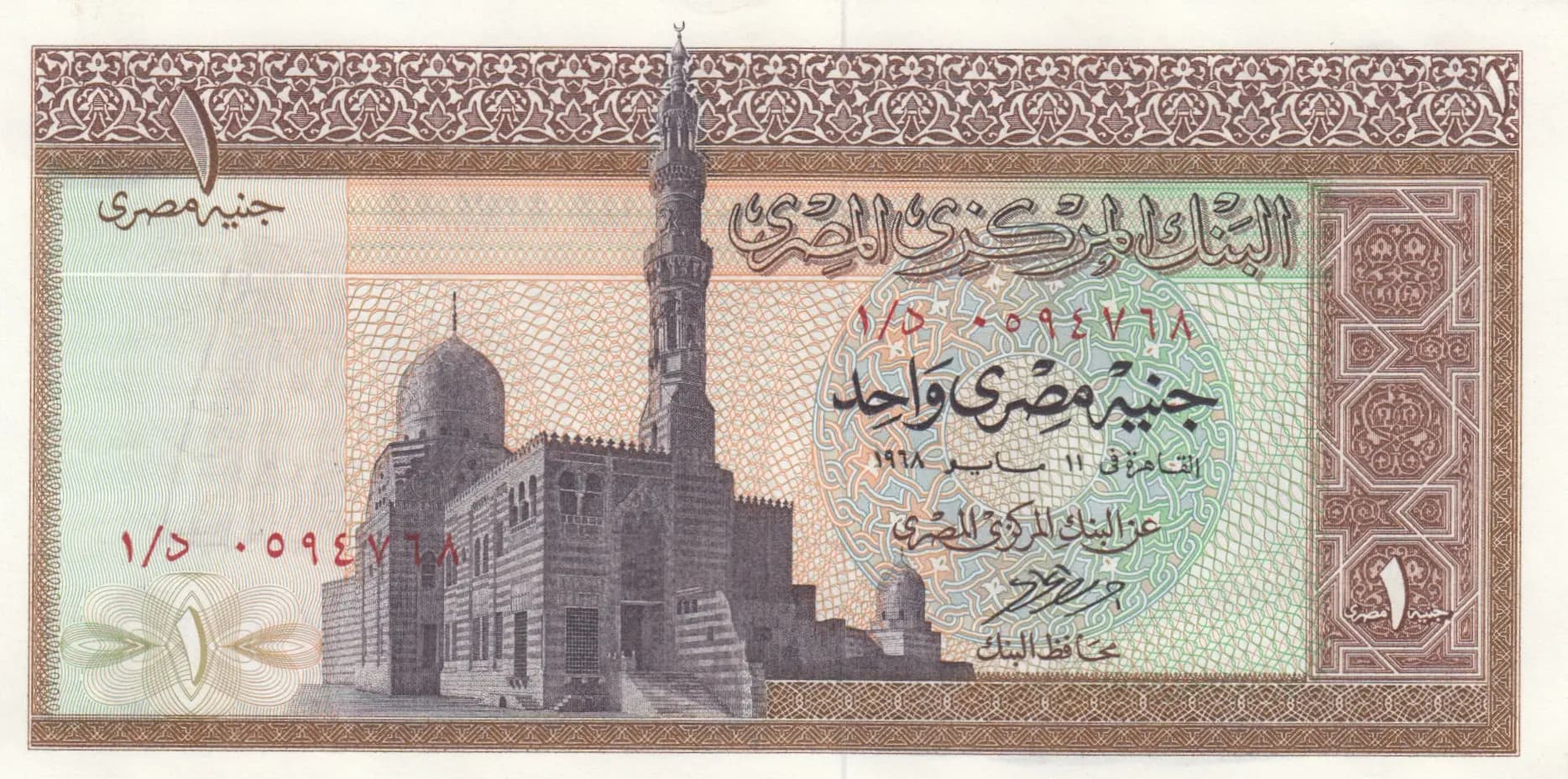
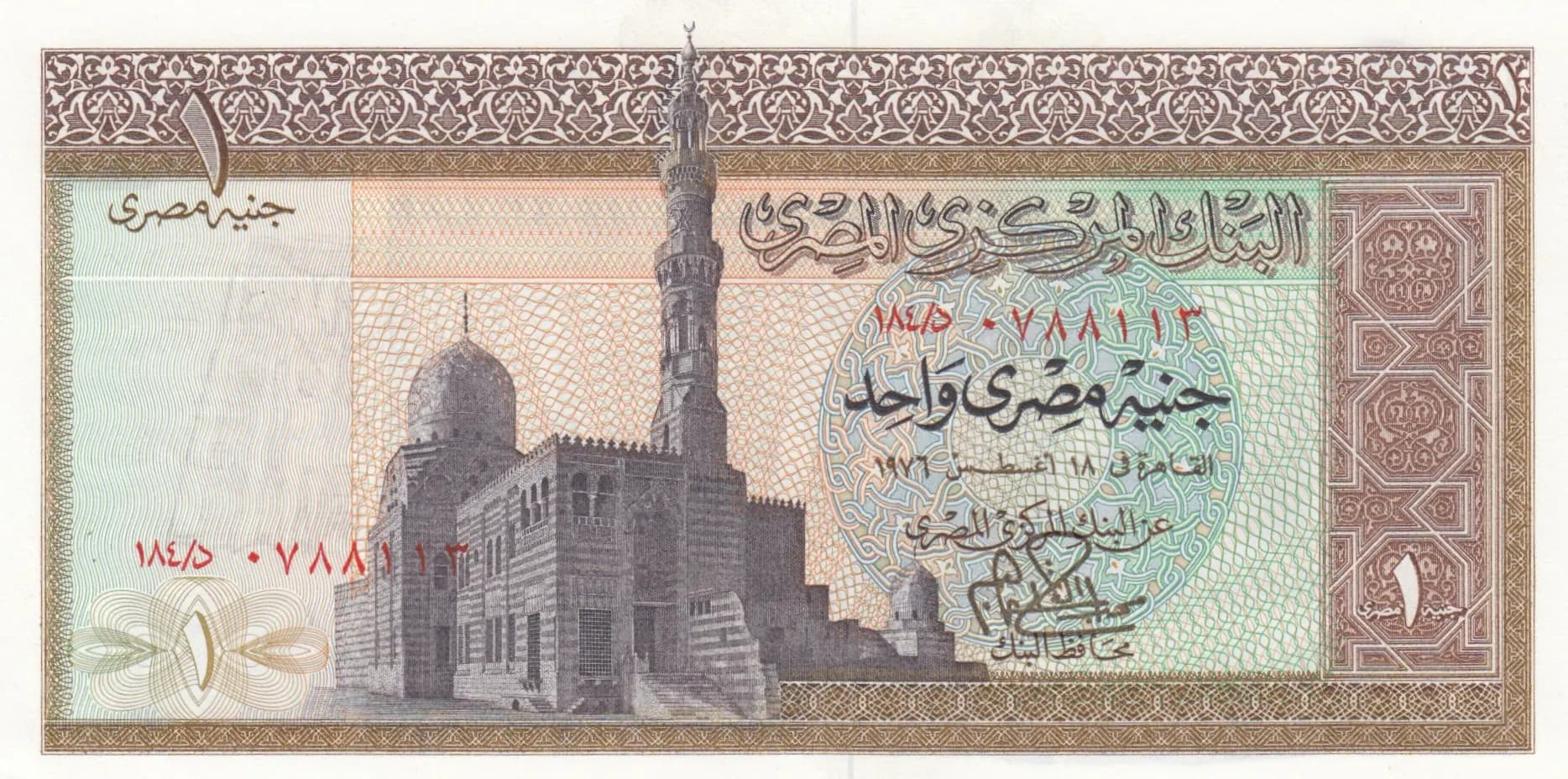
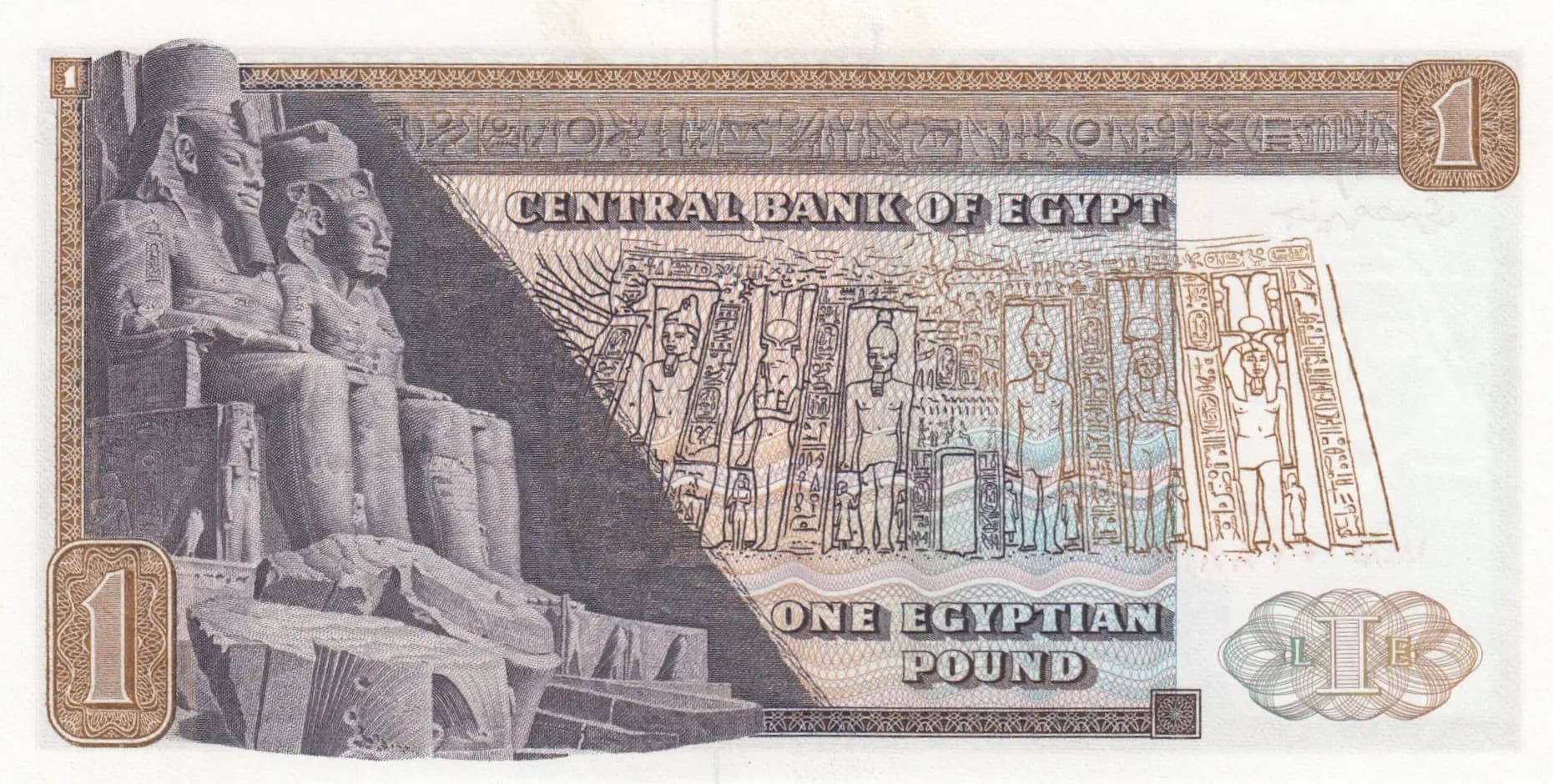
This is an uncirculated 1 Egyptian Pound note from 1976 (Pick P-44c) issued by the Central Bank of Egypt, displaying exceptional preservation with no visible wear, creases, or damage. The obverse features the iconic Sultan Qaitbay Mosque in Cairo rendered in brown and multicolored inks with sophisticated security patterns, while the reverse showcases pharaonic imagery from Abu Simbel's temples in tan and gray tones. As a mid-range denomination from Egypt's 1968-1978 series, this note represents an important period in Egyptian numismatic history and remains collectible despite being relatively common.
Common. The eBay sales data shows consistent trading activity with UNC examples selling for approximately $3.99-$5.00, and graded specimens (PMG 64-67) typically ranging from $12-$45, indicating robust circulation in the collector market. The note was issued during a 10-year period (1968-1978) with substantial print runs to support Egypt's monetary needs. The catalog value assessment of $5 for UNC condition confirms this is a widely available note despite its historical and cultural significance.
This note was issued during a significant period in modern Egyptian history, reflecting the nation's cultural pride through the depiction of both Islamic heritage (Sultan Qaitbay Mosque, one of Cairo's finest examples of Mamluk architecture) and ancient pharaonic legacy (the colossal statues and temple reliefs of Abu Simbel). The 1976 date places this issue in the post-Sadat era, a time of economic stabilization and renewed emphasis on Egypt's multilayered cultural identity spanning Islamic and ancient civilizations. The imagery reinforces Egypt's role as a bridge between historical epochs and modern Arab nationalism.
The obverse features the Sultan Qaitbay Mosque (Masjid al-Ashraf Qaitbay), located in Cairo's historic Islamic district, depicted with its distinctive minaret and dome structure in the center-left composition. The architectural rendering emphasizes the mosque's geometric precision with Islamic arabesques and decorative patterns framing the central image. The reverse displays two major pharaonic monuments from Abu Simbel in southern Egypt: the colossal seated statues representing pharaonic deities or kings on the left side (likely from the Great Temple of Ramesses II), and hieroglyphic relief scenes on the right representing the temple's sculptural program. The overall design integrates English and Arabic inscriptions, blending modern state identification with cultural heritage iconography. Security features throughout include intricate guilloche patterns, fine-line mesh backgrounds, and geometric borders characteristic of Central Bank of Egypt currency design.
FRONT: جمهورية مصر العربية (Arab Republic of Egypt); البنك المركزي المصري (Central Bank of Egypt); جنيه مصري (Egyptian Pound); ١٩٧٦/٧٨٨١ (1976/1881 in Arabic numerals, likely indicating a date reference). BACK: CENTRAL BANK OF EGYPT (English inscription); ONE EGYPTIAN POUND (English inscription); ١ (Arabic numeral 1).
Intaglio (engraved) printing combined with multicolor offset lithography, evidenced by the fine line work in the security patterns, sharp hieroglyphic detail, and precise color separation visible in both architectural and figural elements. The integration of complex guilloche patterns and mesh backgrounds indicates professional security printing standards typical of British or Swiss-influenced Central Bank currency production of the 1970s era.
This note is cataloged as Pick P-44c, indicating it is a variant within the P-44 series. The PMG population report notes that P-44a and P-44s variants exist for this denomination. The visual analysis indicates this is from the 1976/1881 dating variant. Specific variety identification would require examination of signature lines, serial number prefixes, and specific printing characteristics, but the 1976 date marking and UNC condition place it within the standard circulation issue of this series.