1 pound 1957
Market Prices
22 salesAbout This Note
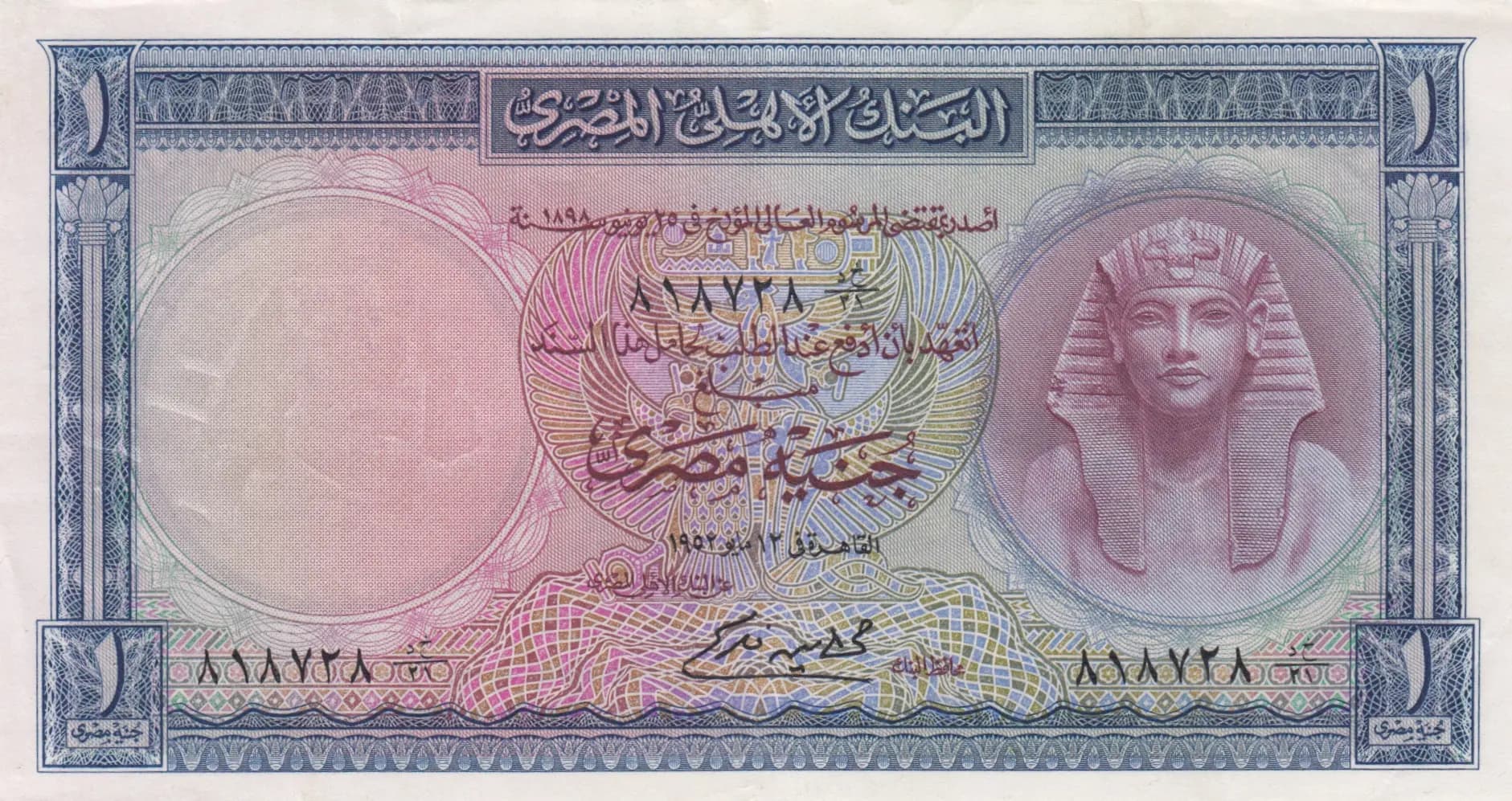
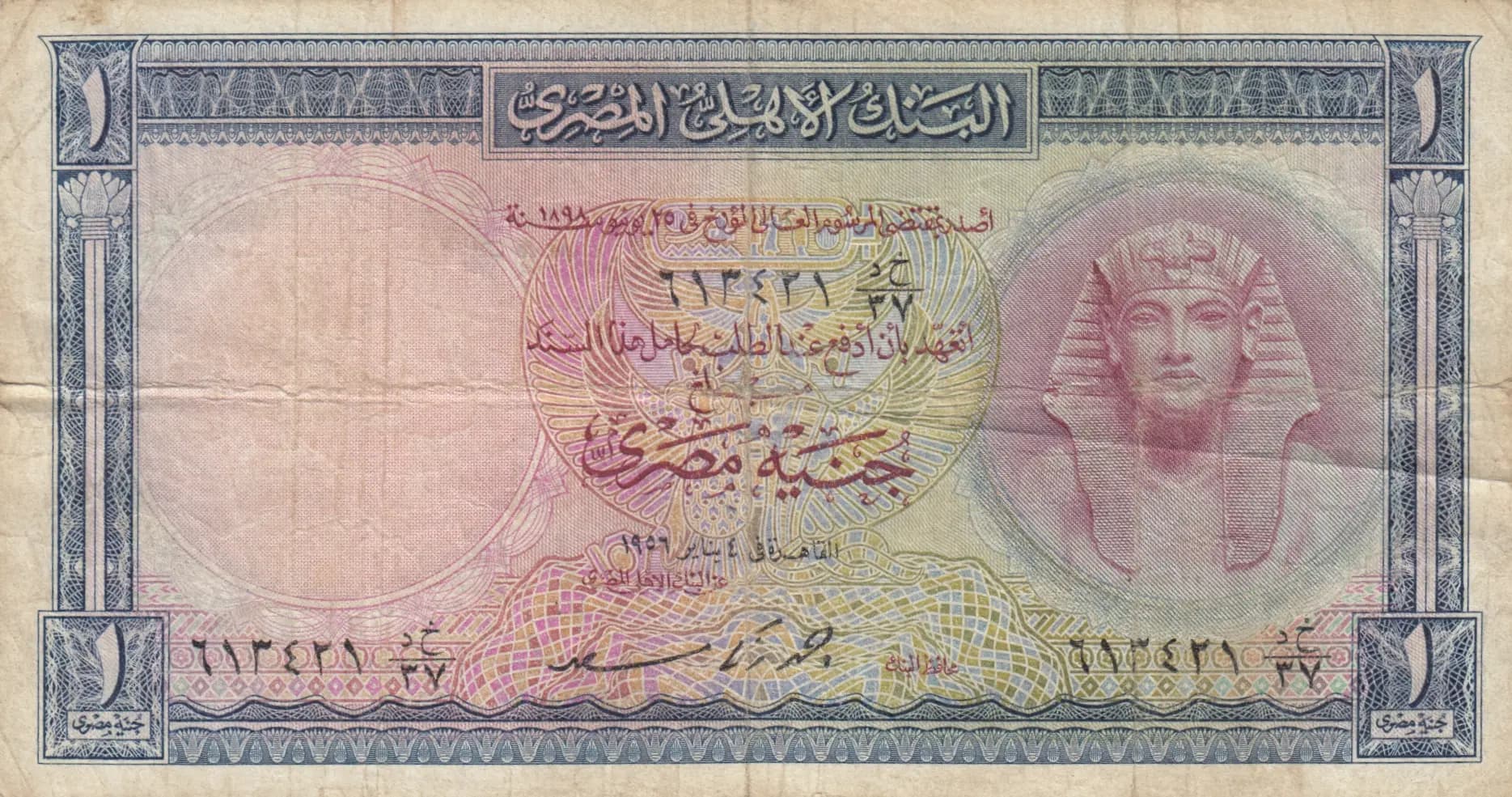
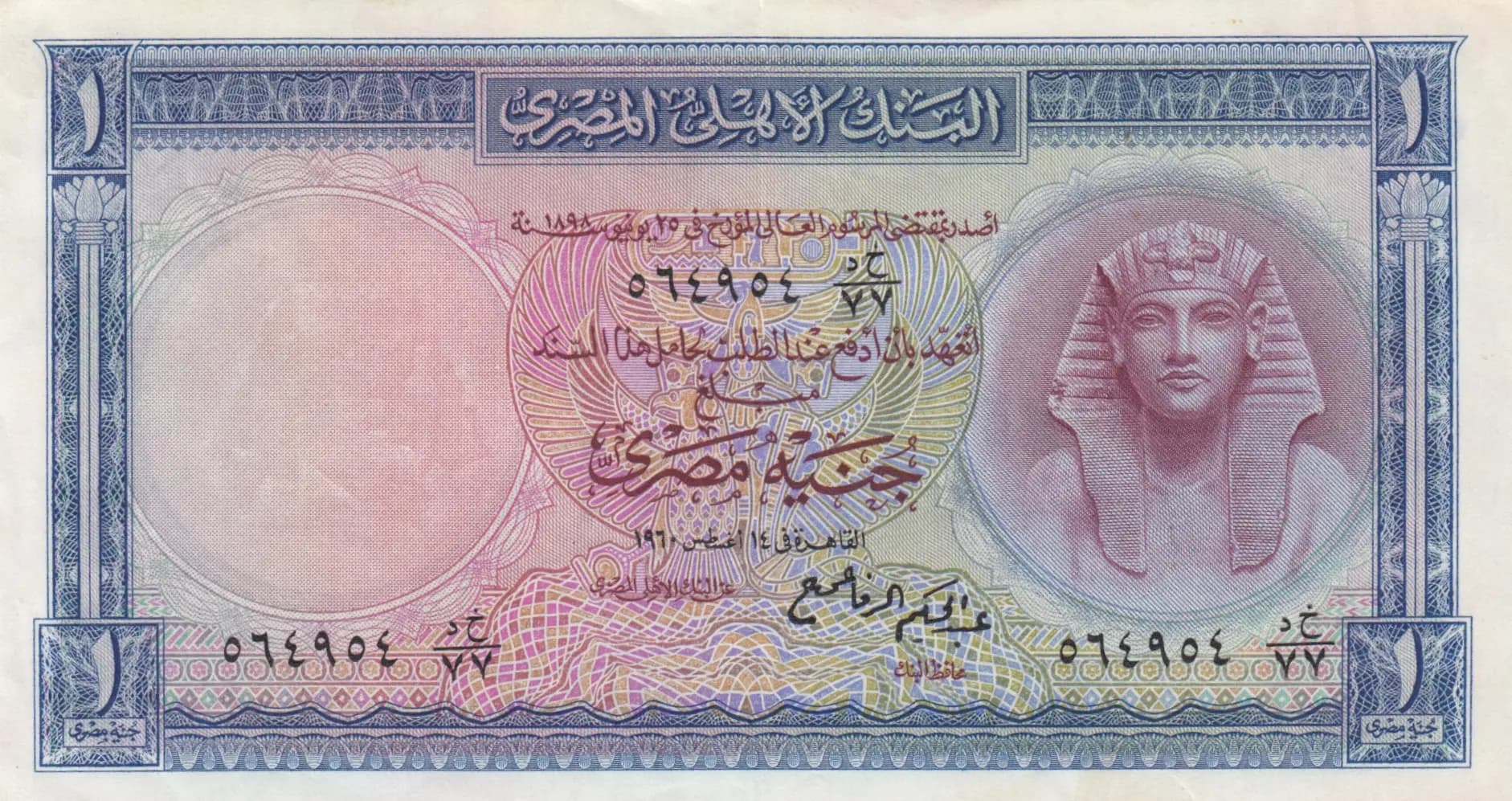
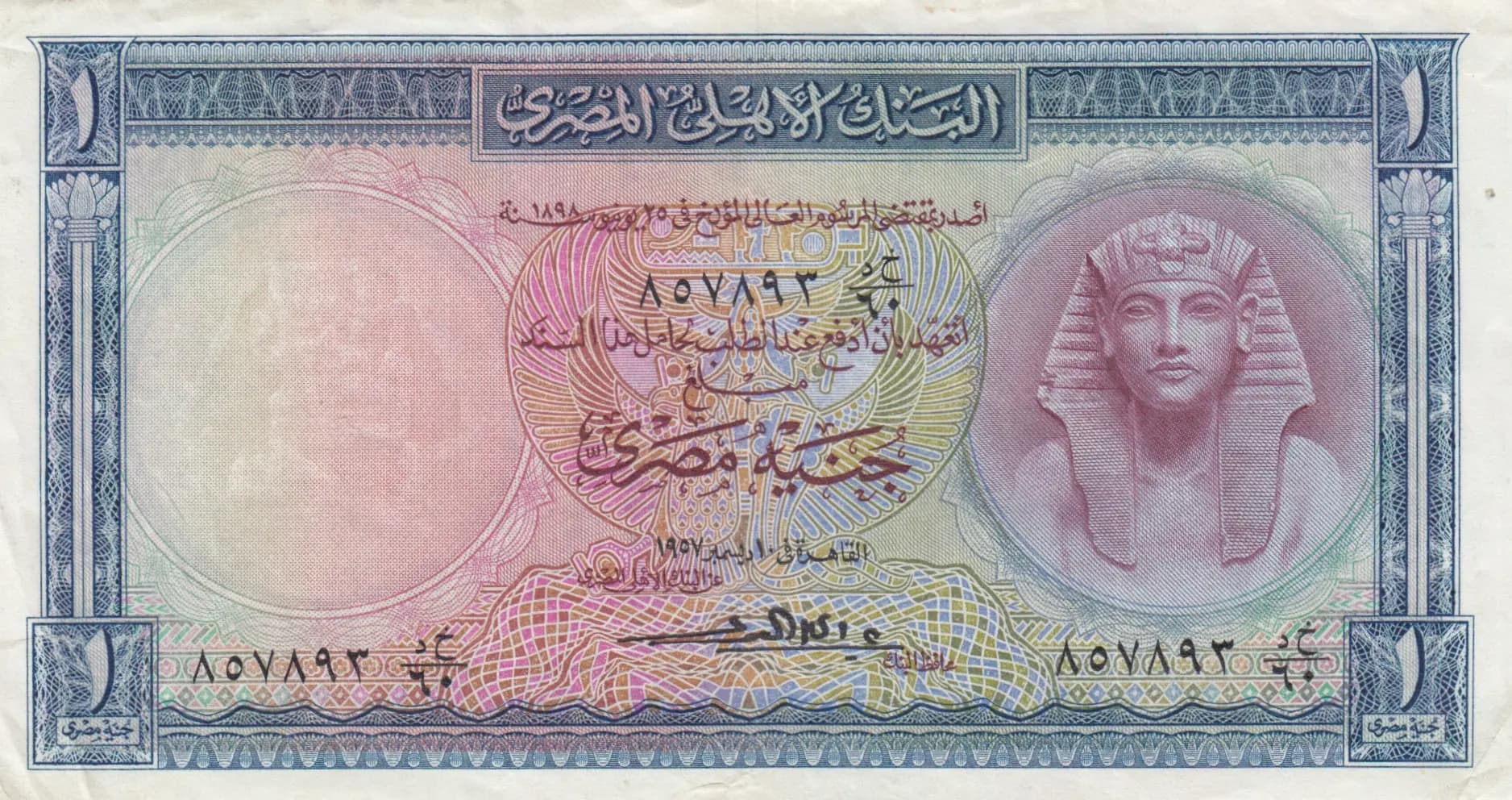
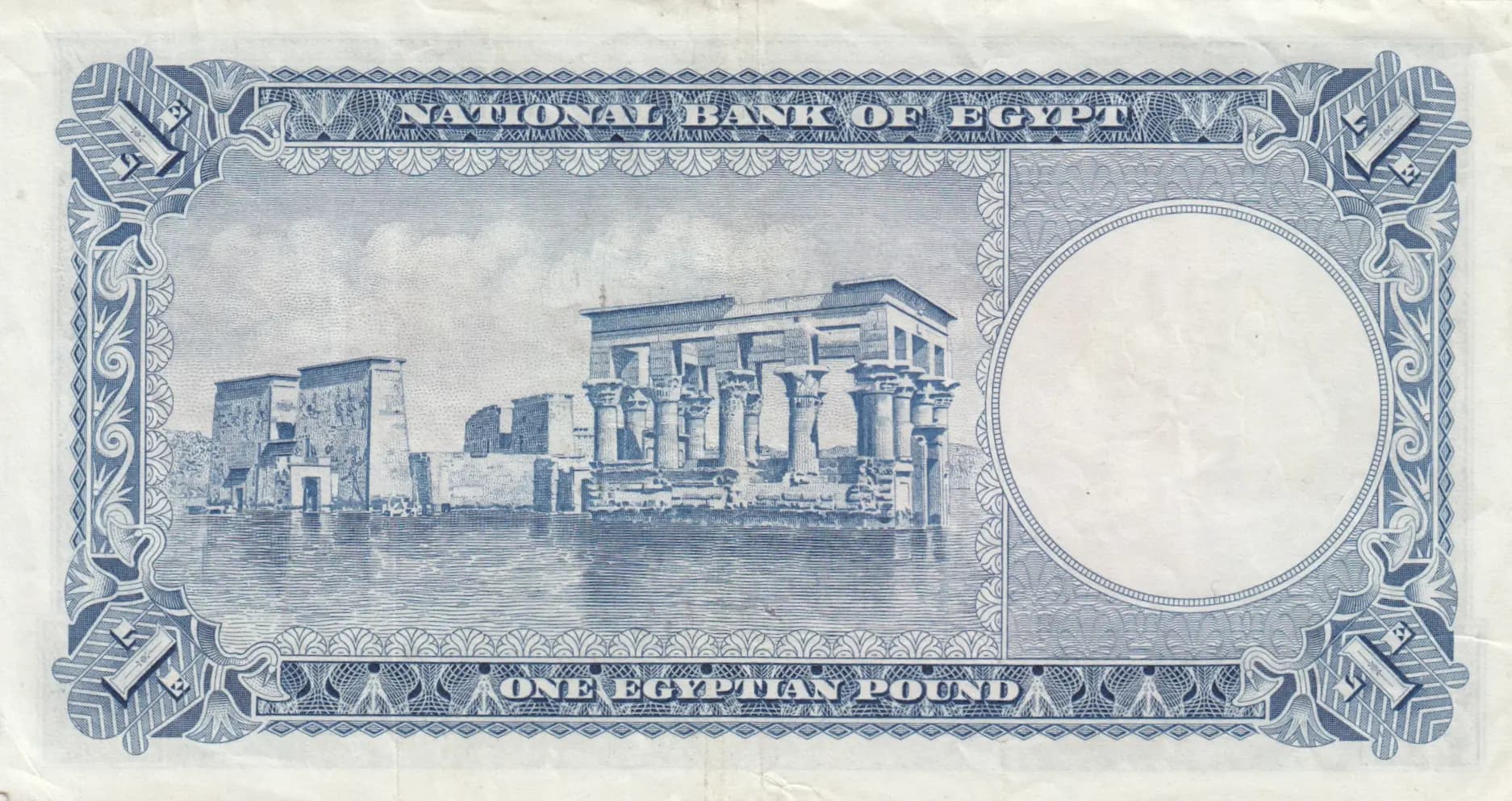
An Egyptian 1 pound note from 1957, issued by the National Bank of Egypt during a significant period of national transformation. This VF-graded example displays the characteristic blue and multi-colored design with pharaonic imagery including royal portrait heads and a winged scarab beetle on the obverse, while the reverse features an ancient Egyptian temple with classical columns reflected in water. The note shows honest wear consistent with age, with visible creasing and aged patina, representing a desirable mid-grade example of this popular historical issue.
Common. This is a regular-issue note from a 9-year series (1952-1960) with presumably substantial print runs to serve Egypt's monetary needs during a period of economic activity. eBay market data confirms common status, with consistent sales in the $8-16 range for VF and EF conditions over the 2013-2019 period, and catalogue values of only $5 for VF grade as of 2016. The widespread availability and modest pricing indicate this note was printed in large quantities.
This note was issued in 1957, two years after the Egyptian Revolution of 1952 that established the modern Egyptian Republic under Gamal Abdel Nasser. The imagery celebrating Tutankhamen and ancient Egyptian temples reflects the post-colonial nation's embrace of pharaonic heritage as a symbol of national identity and continuity. The artistic design incorporating classical Egyptian motifs represented both cultural pride and the modernization efforts of the newly independent state.
The obverse features a symmetrical design with two profile portraits of Egyptian pharaohs wearing traditional nemes headdresses, positioned on either side of a central winged scarab beetle—a powerful symbol of rebirth and protection in ancient Egyptian mythology. The scarab is flanked by royal cartouches and decorative lotus or floral motifs. The reverse depicts the Temple of Philae (or similar Ptolemaic temple structure), shown with its characteristic columned facade reflected in water below, rendered in fine blue monochrome engraving. Both sides are framed by ornate geometric and floral border patterns in the corners, typical of the security printing aesthetic of the 1950s.
Front side: 'البنك الاهلي المصري' (National Bank of Egypt); 'جنيه مصري' (Egyptian pound); dates showing 1496 (Islamic calendar) and 1957 (Gregorian calendar). Back side: 'NATIONAL BANK OF EGYPT' and 'ONE EGYPTIAN POUND' in English. The dual-language presentation reflects Egypt's transition period and international banking practices of the era.
Intaglio engraving (copperplate), evidenced by the fine line work, detailed shading through parallel lines, and the intricate security patterns visible throughout. The complex border work and architectural detail rendering are consistent with high-quality bank note engraving produced for the National Bank of Egypt during this period, likely executed by an established European security printer such as Bradbury, Wilkinson & Co. or similar firms contracted by the NBE.
The Pick catalog identifies this as P-30, with the vision analysis confirming the 1957 date variant within the broader 1952-1960 series. The visual inspection shows characteristics consistent with the standard Tutankhamen/Philae temple design. No significant variety information (such as signature variants or serial number prefix variations) is evident from the provided data. This appears to be a standard circulation example of the regular issue.