1 pound 1956
Market Prices
22 salesAbout This Note
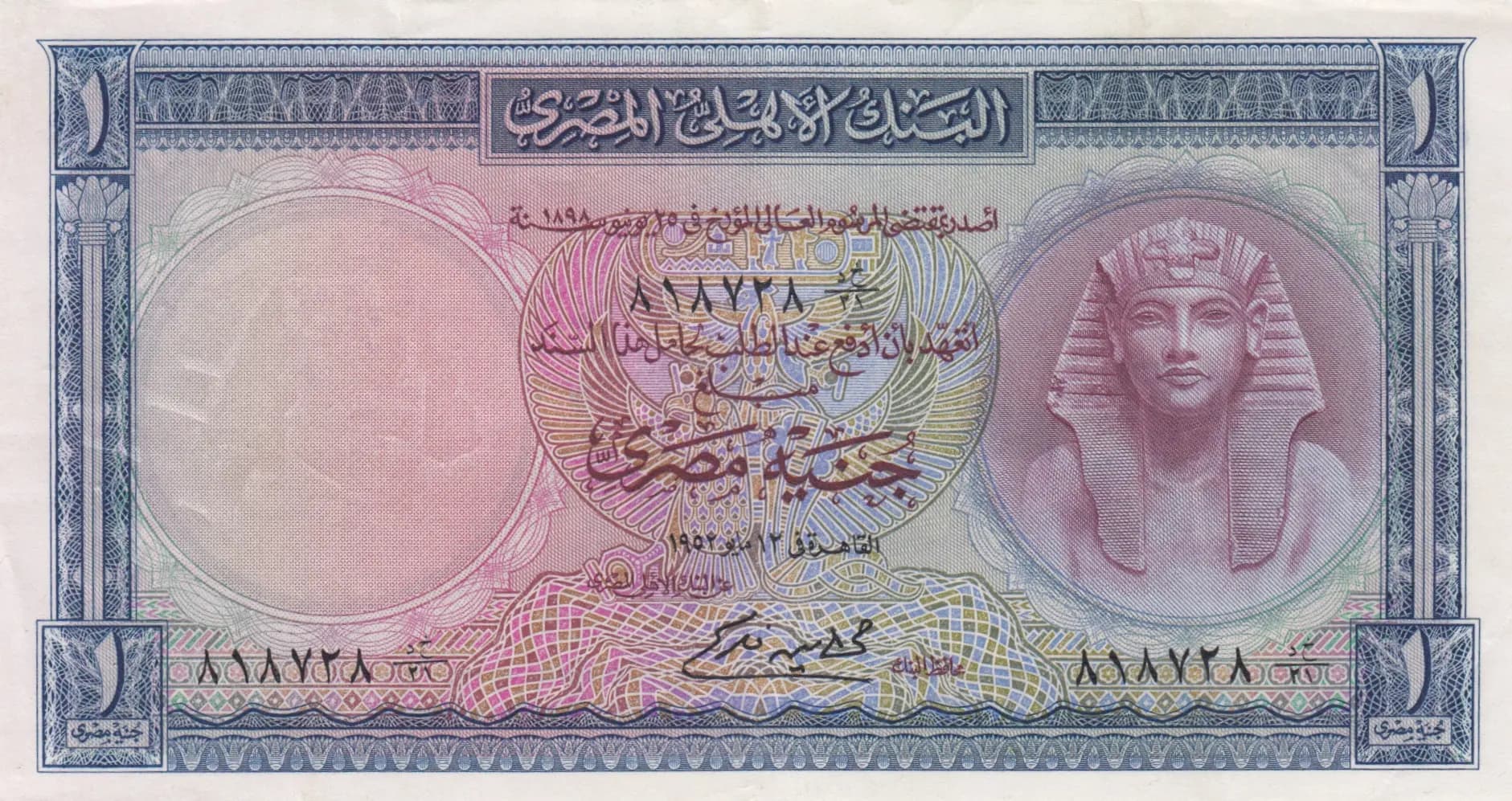
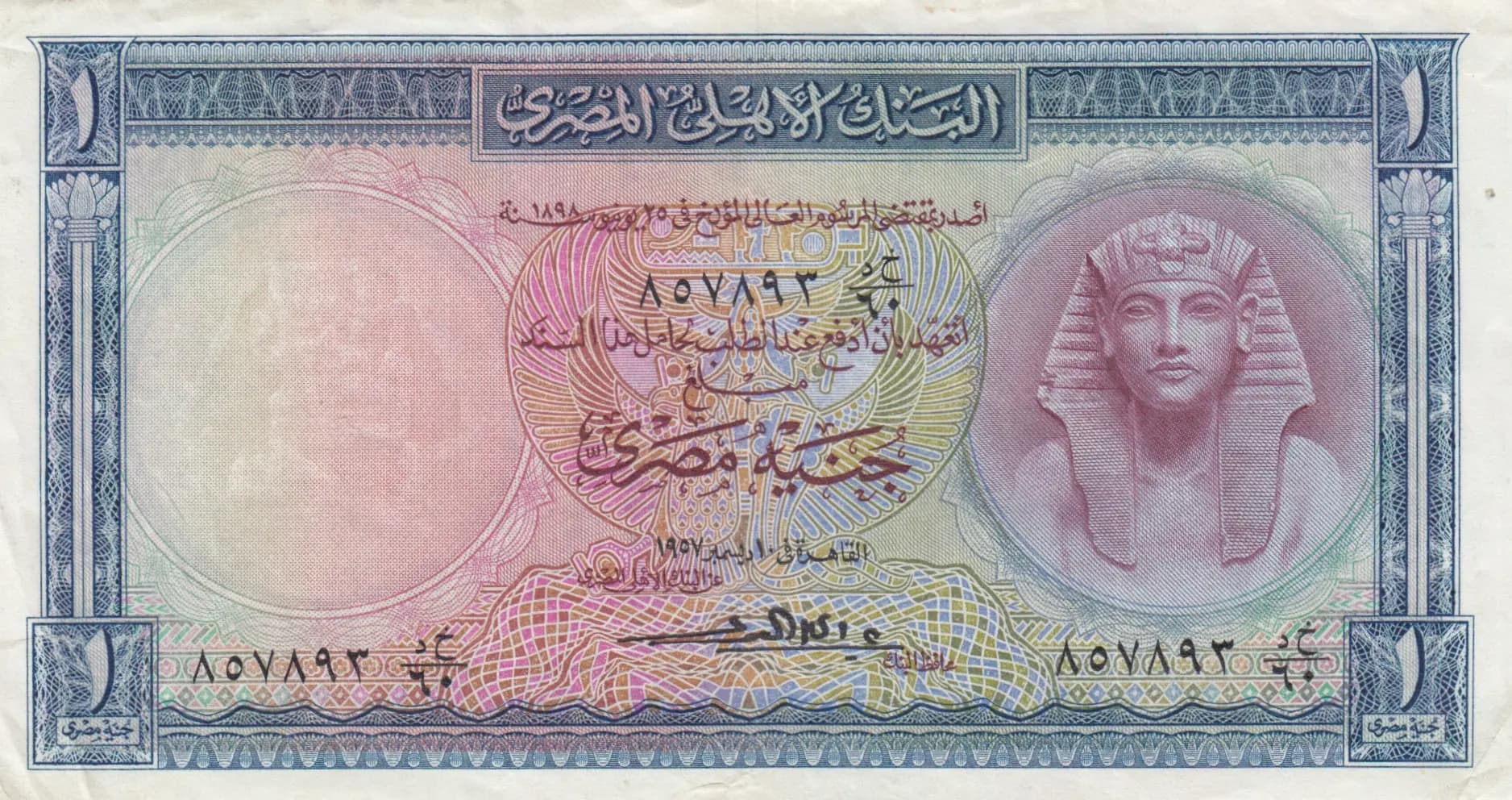
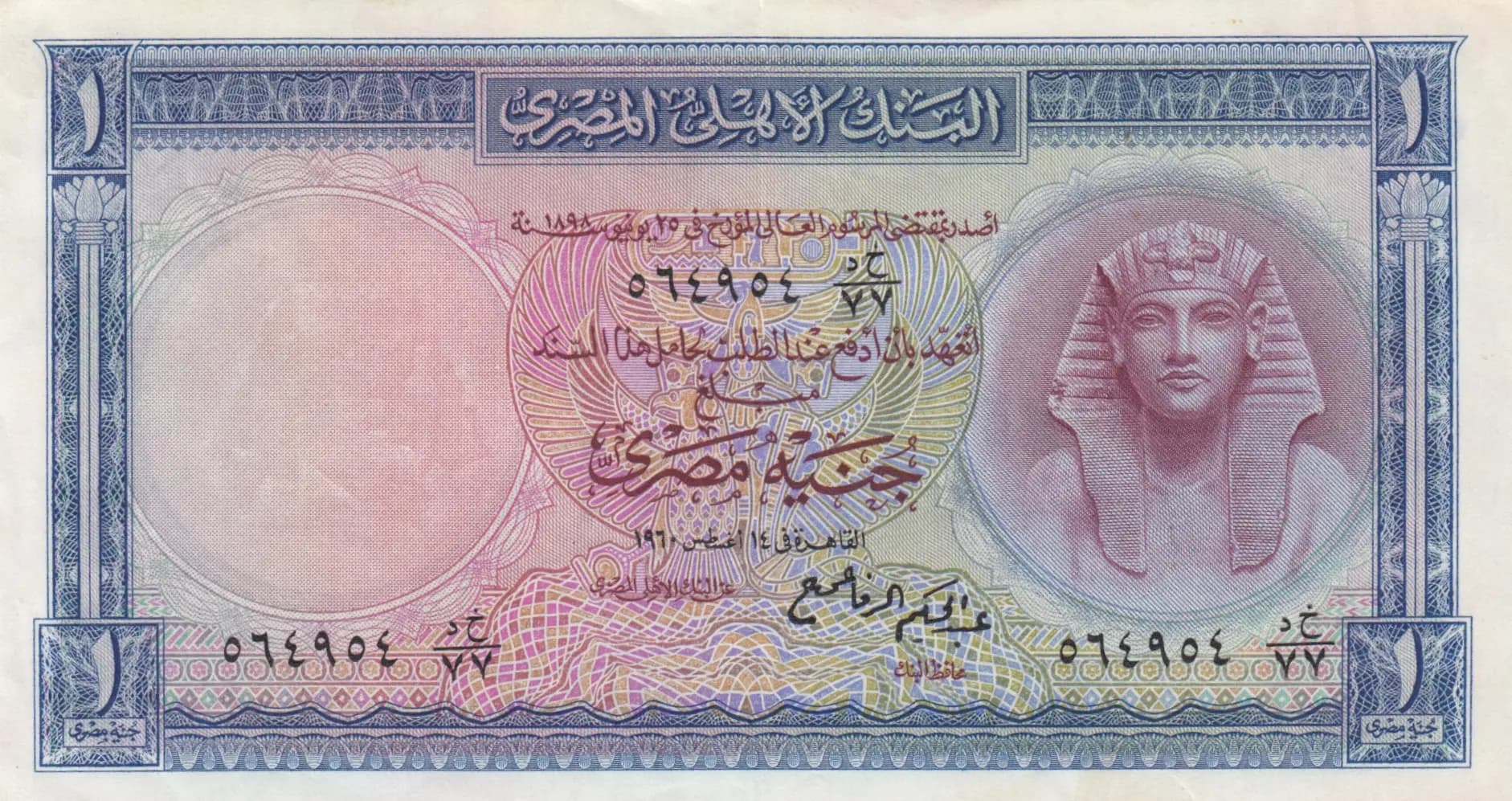
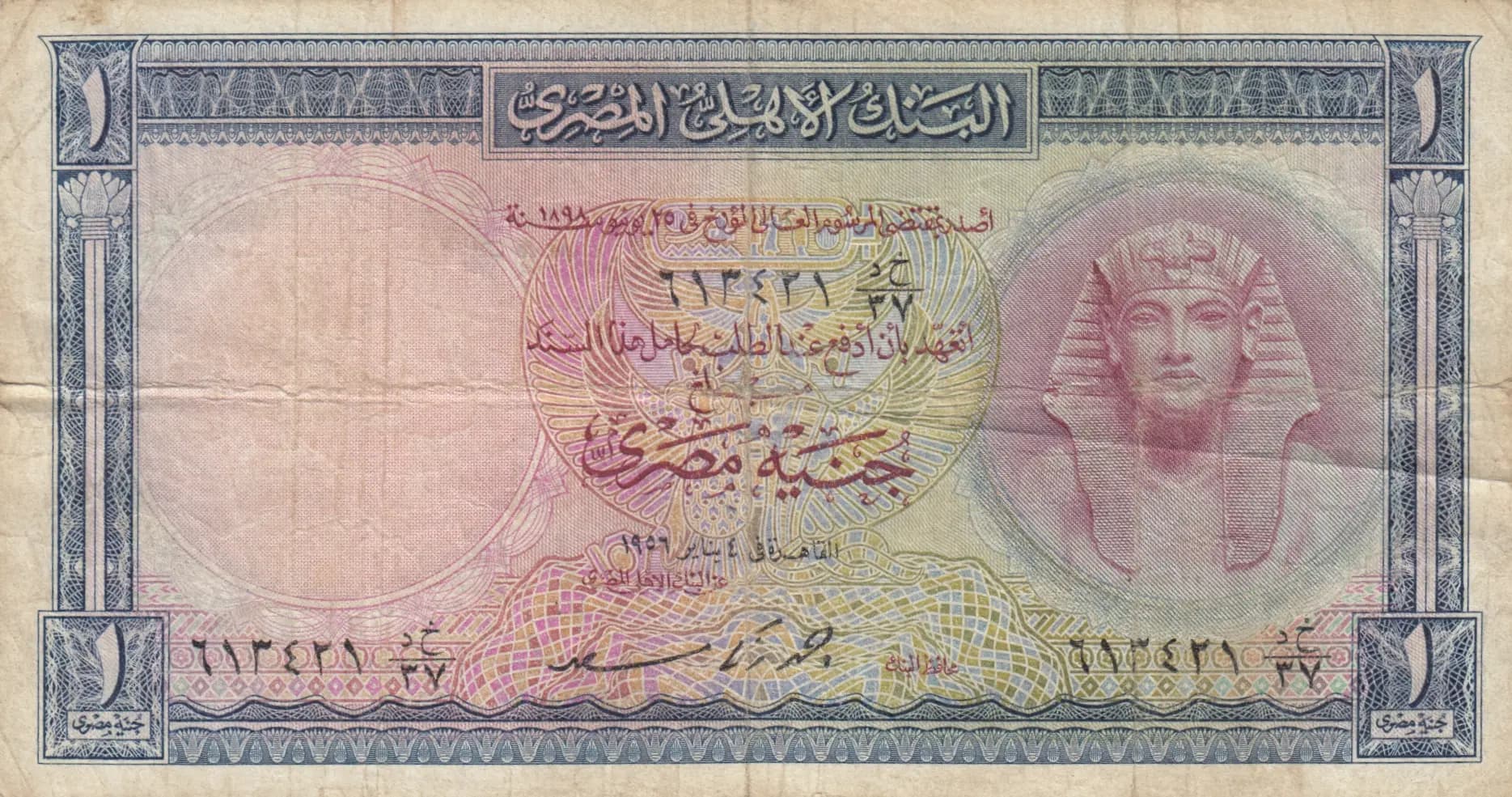
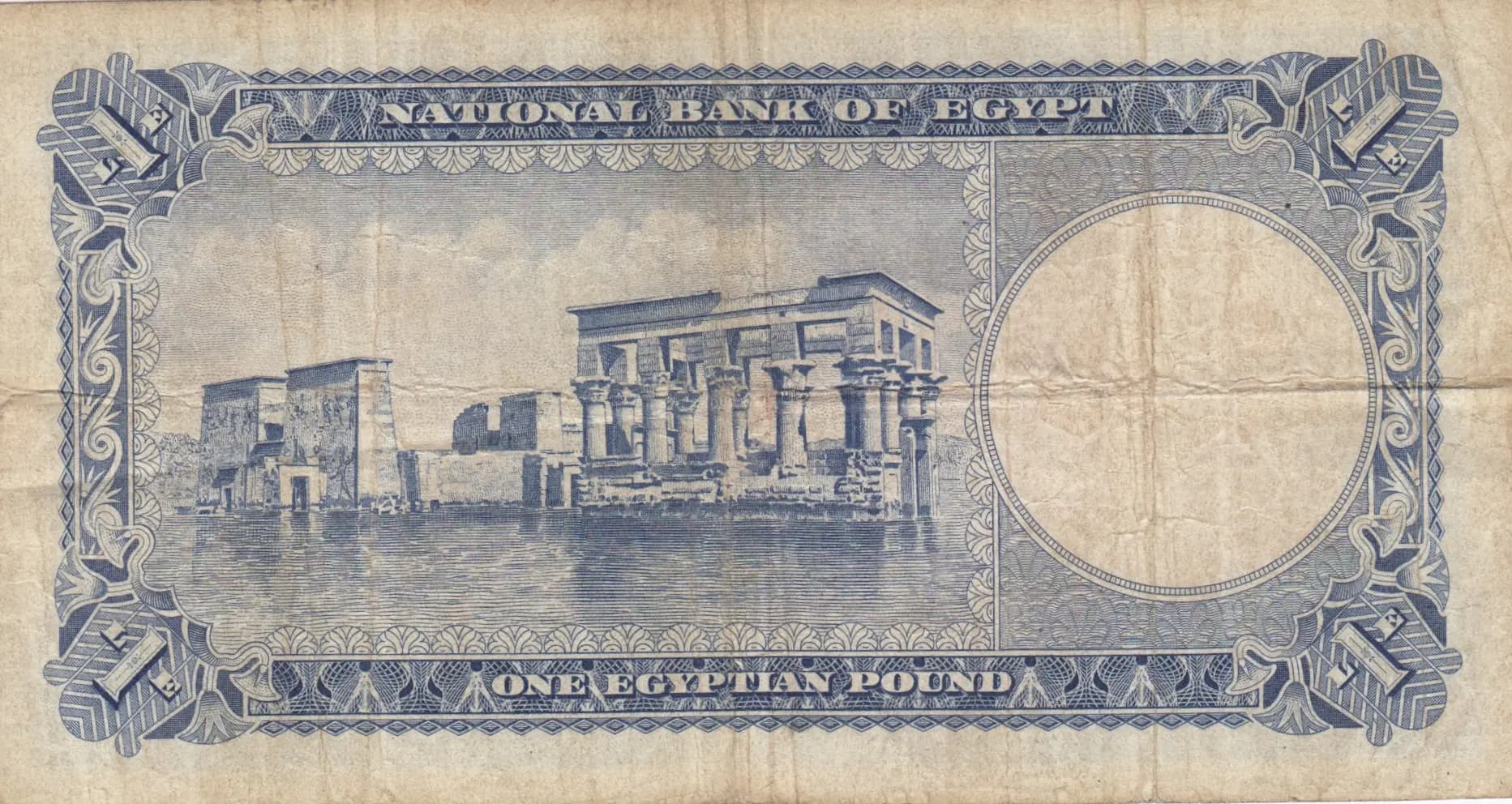
This Egyptian 1 pound note from 1956 features the iconic portrait of Tutankhamen in profile on the obverse, rendered in blue and pink tones with elaborate pharaonic iconography including winged scarab motifs and hieroglyphic-style ornamentation. The reverse displays a finely engraved image of the Temple of Philae with its distinctive Corinthian columns reflected in water. In Fair (F) condition, the note shows visible circulation wear with multiple folds and creases, slight discoloration, and aging consistent with its 70-year history, making it an affordable entry point for collectors interested in mid-20th century Egyptian numismatics.
Common. This is a standard regular issue from a 9-year production run (1952-1960) with no indication of limited print run or special circumstances. eBay auction data provided shows consistent sales across multiple condition grades ranging from $3.25 to $85, with Fair condition examples selling in the $6-15 range, which is typical for common circulated banknotes. The 2016 catalog valuation of $1 in VG, $5 in VF, and $40 in UNC further confirms this as a widely available note. The PMG population report lists only one cataloged variant, indicating no scarce sub-varieties. Despite its historical significance and attractive design, the large issued quantity and steady market availability place this firmly in the common category.
Issued in 1956 during a transformative period in Egyptian history under President Gamal Abdel Nasser, this banknote reflects Egypt's connection to its pharaonic heritage through the depiction of Tutankhamen, the young 18th Dynasty pharaoh. The reverse's image of the Temple of Philae—one of Egypt's most significant archaeological monuments—celebrates the nation's cultural legacy at a time of political modernization and assertion of Egyptian national identity. The design choices demonstrate how mid-20th century currency served as a vehicle for emphasizing continuity between ancient Egyptian civilization and the contemporary Egyptian state.
The obverse features a classical profile portrait of Tutankhamen (identified as such in the catalog reference) positioned on the right side, rendered in finely detailed engraving with pink facial tones against a grey-blue background. The left side displays a circular design element typical of Egyptian currency from this period, likely representing a decorative cartouche or medallion. The central composition incorporates winged scarab beetle motifs and hieroglyphic-style ornamental patterns in pink, yellow-gold, and green, referencing ancient Egyptian symbolic language. The entire design is framed by an ornate blue-grey border with intricate geometric scrollwork. The reverse depicts the Temple of Philae, specifically its characteristic Corinthian columns and multi-tiered structures as they appear reflected in the waters of the Nile, rendered as a detailed architectural engraving framed by decorative blue scrollwork borders. The design employs the symbolism of pharaonic continuity and architectural grandeur to reinforce national identity.
Front side: 'البنك الاهلى المصرى' (National Bank of Egypt) and 'مصر' (Egypt) in Arabic. Back side: 'NATIONAL BANK OF EGYPT' and 'ONE EGYPTIAN POUND' in English. The dual-language inscriptions reflect Egypt's bilingual currency conventions of this period, with Arabic serving the domestic audience and English reflecting international banking conventions.
Intaglio engraving (copperplate or steel plate), the standard method for high-security banknote production in this era. The fine linework, detailed portraiture, and intricate ornamental patterns visible throughout both sides are characteristic of intaglio printing. The National Bank of Egypt employed established European security printers for this series; notes from this period were typically produced by firms such as Waterlow & Sons or De La Rue. The consistent fine detail and absence of photographic halftone screening confirm traditional engraved plate production rather than lithography.
The Pick catalog identifies this as P-30, with no variants noted in the PMG population report. Without visible serial number prefixes, date varieties, or signature combinations clearly identifiable in the provided images, specific variety determination requires additional inspection of the note's serial number range and signature bloc. Standard 1952-1960 issue period notes of this type do not typically exhibit significant cataloged varieties, though notes from different years within the production window may exist. The visual condition and wear patterns are consistent with authentic examples from this series.