1 pound 1952
Market Prices
22 salesAbout This Note
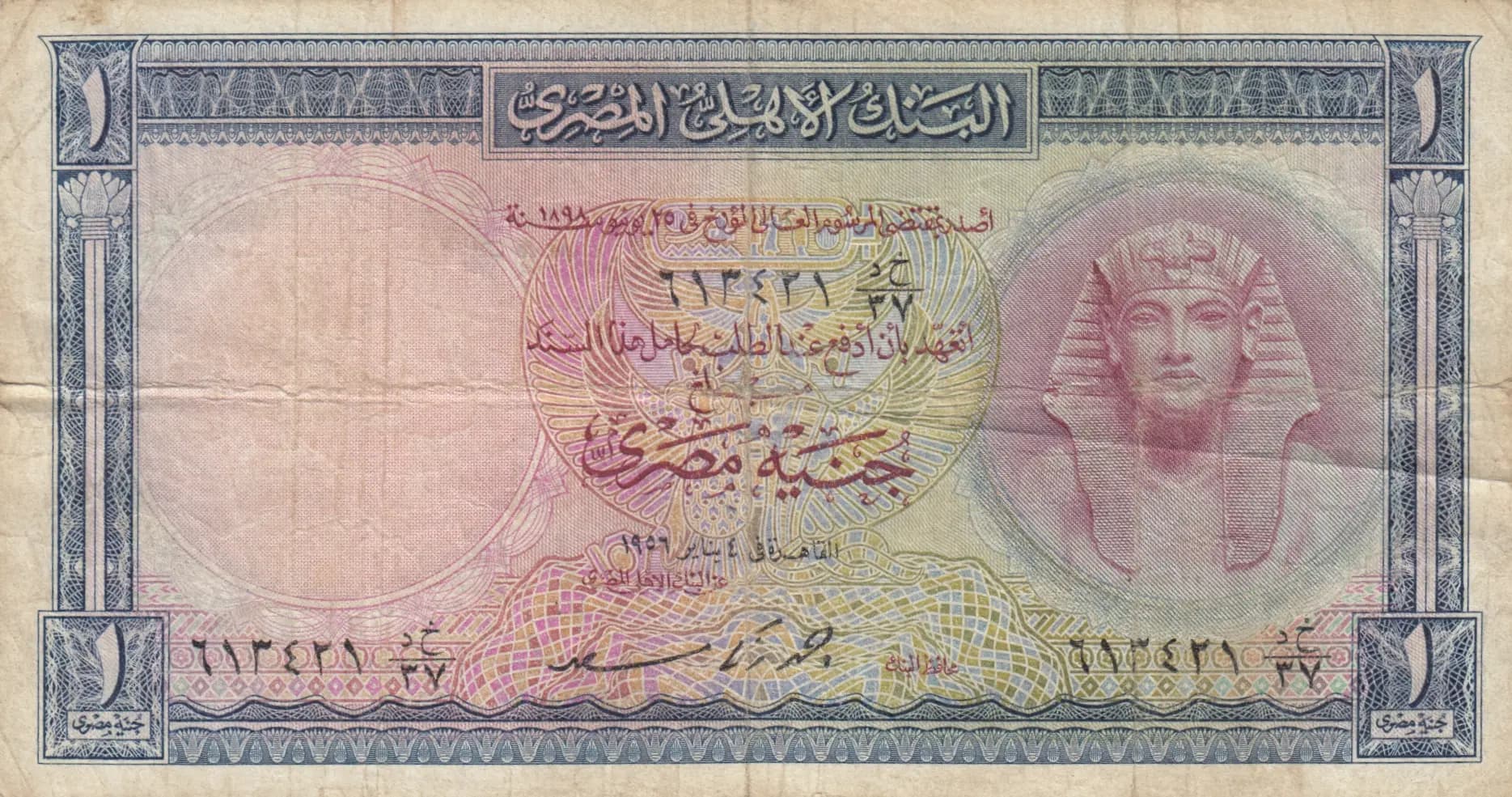
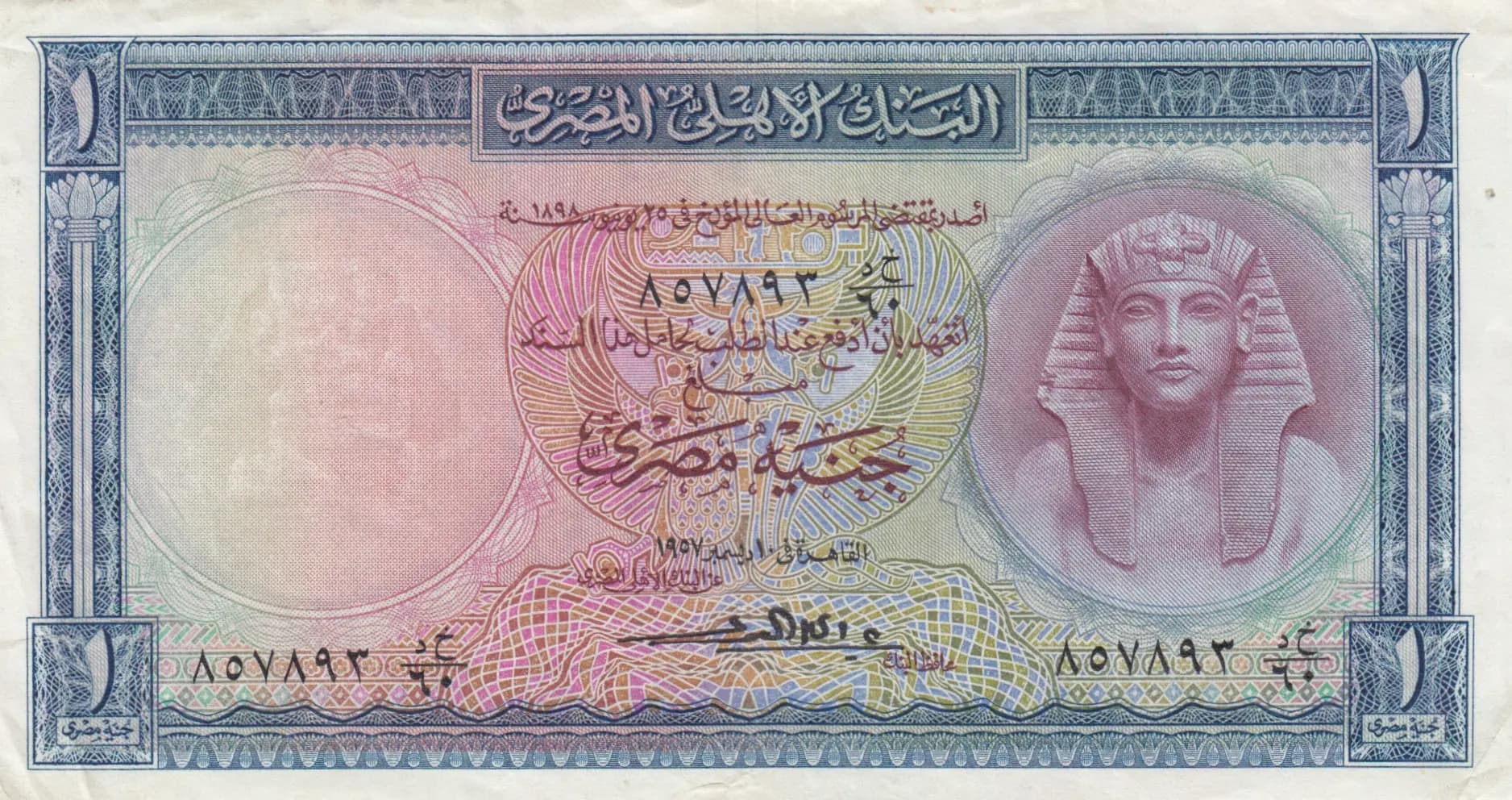
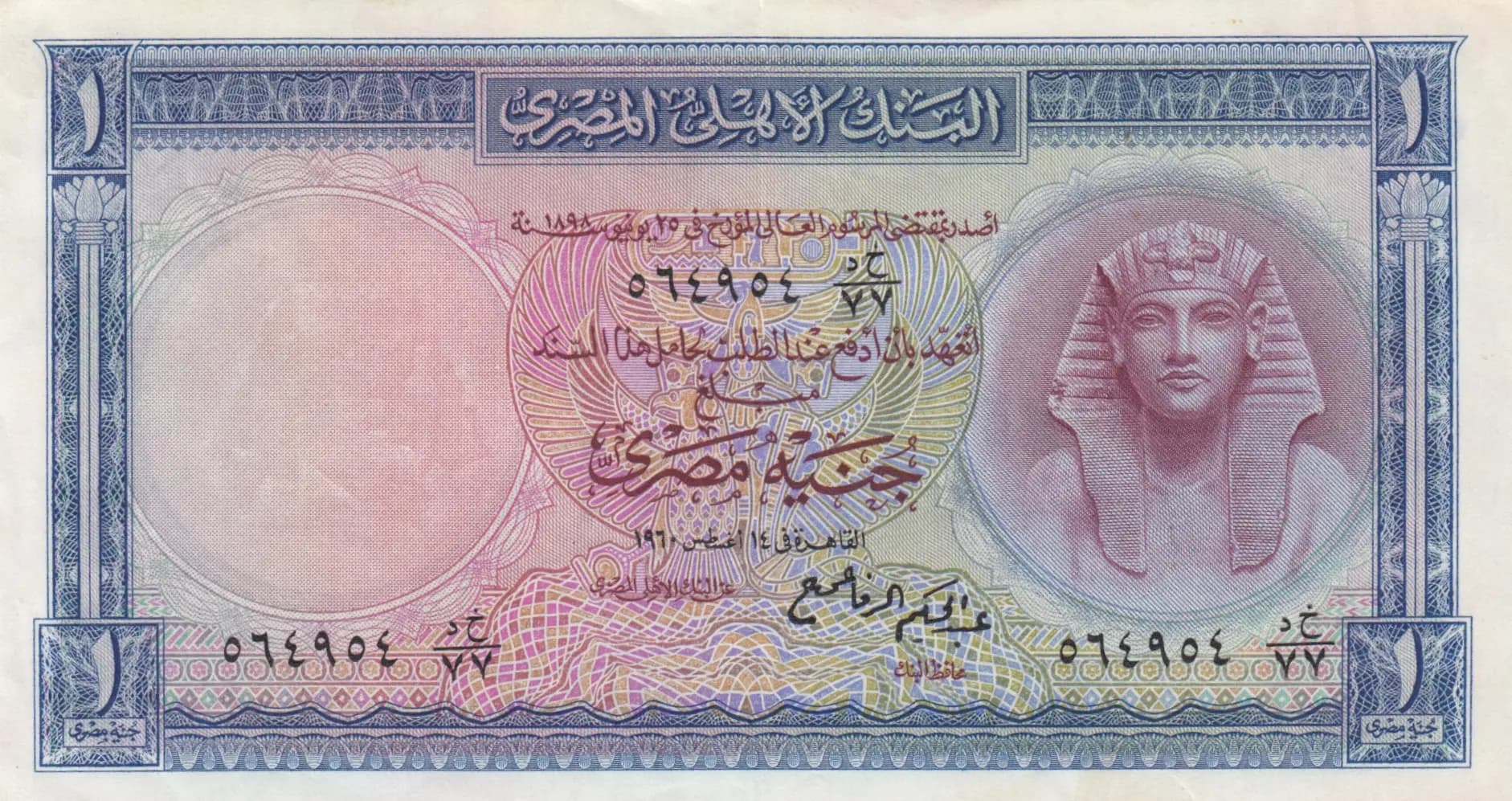
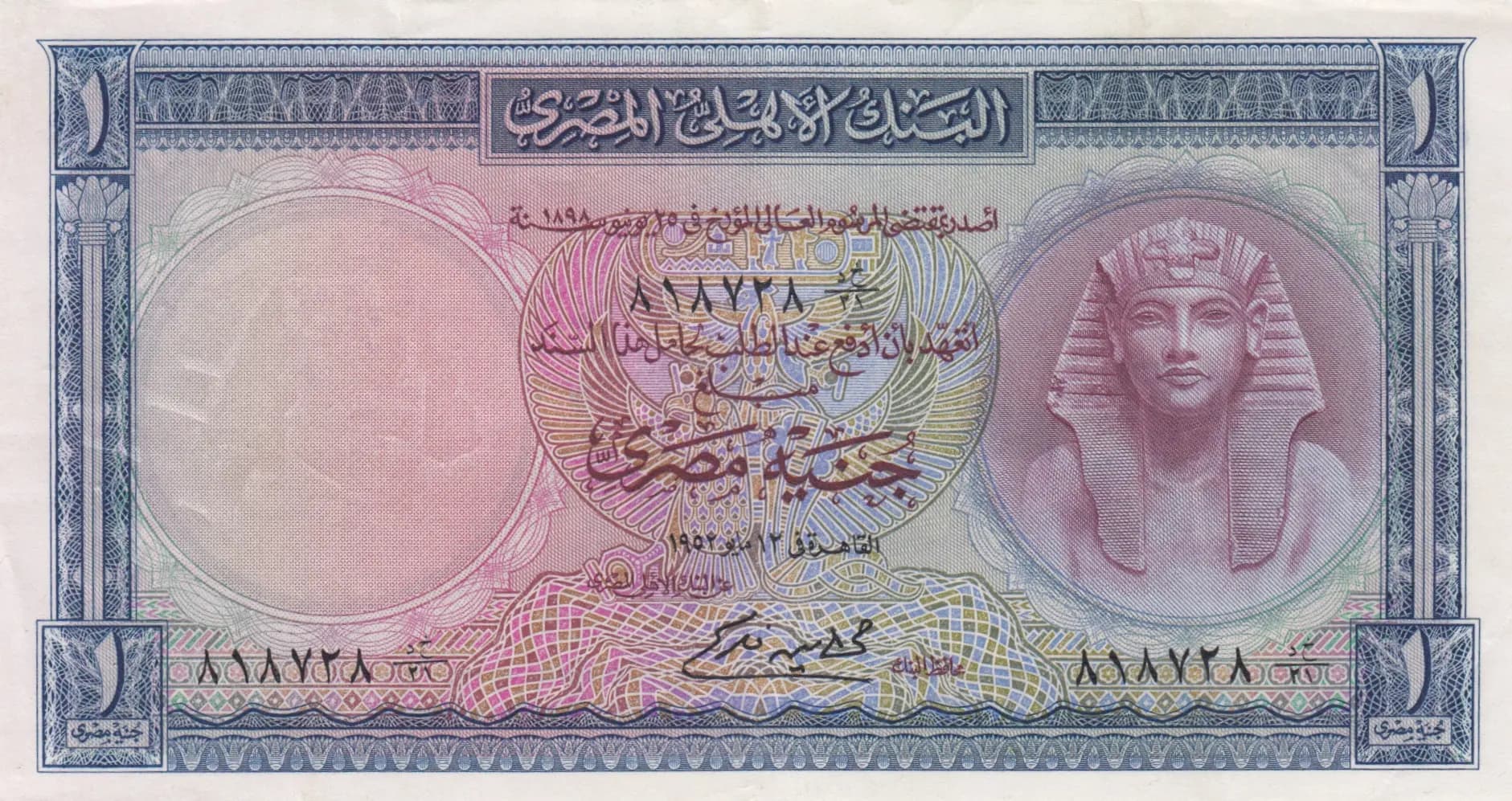
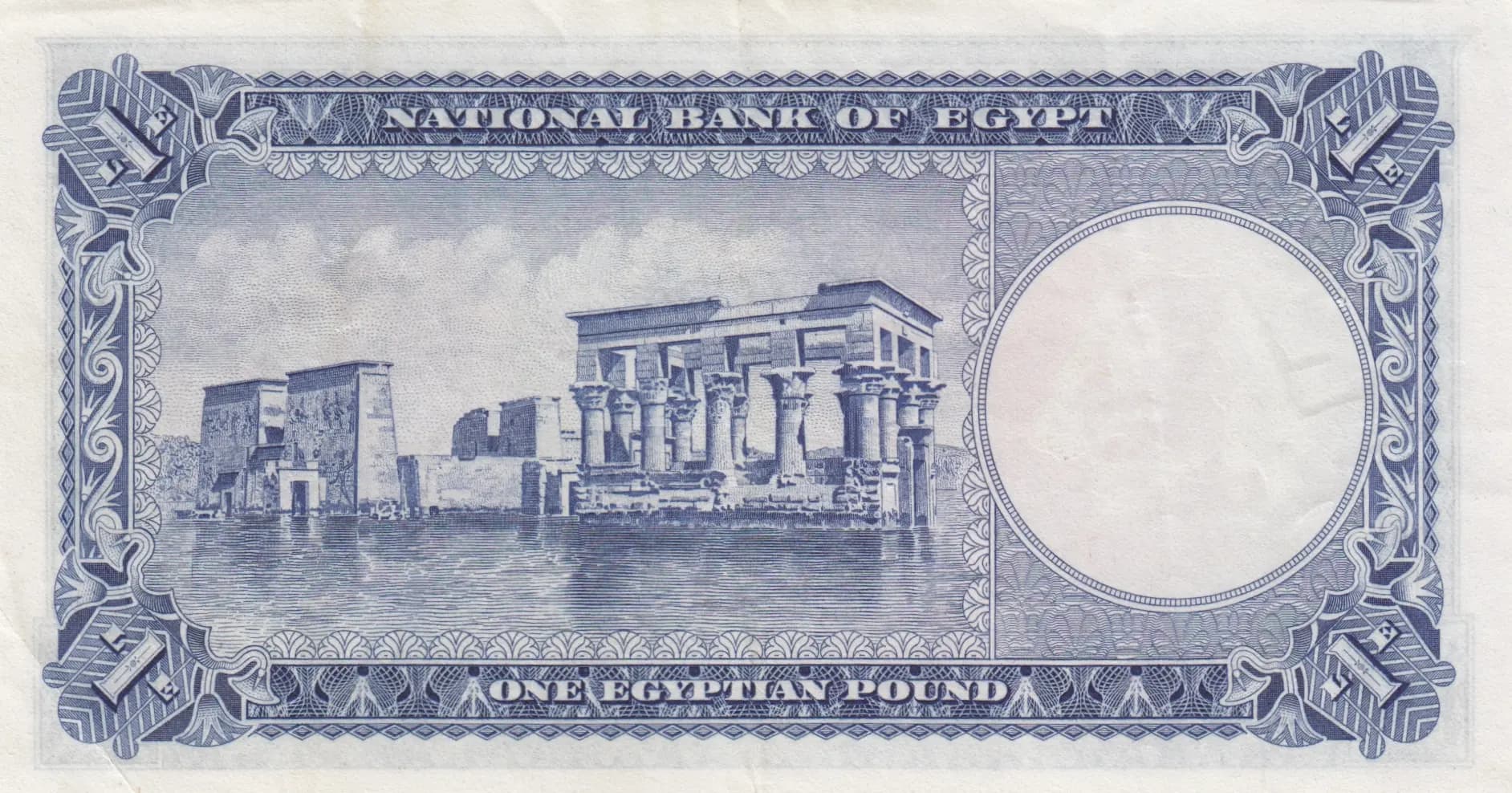
This is an Egyptian 1 pound note from 1952, issued by the National Bank of Egypt (Pick P-30), presented in Very Fine condition. The obverse features a striking profile portrait of Tutankhamen in traditional pharaonic regalia on the right side, with ornate blue borders and pink/mauve central area decorated with lotus flowers and Egyptian royal symbolism. The reverse displays an elegant classical temple scene in blue engraving, likely depicting Philae temple with columned architecture reflected in water, all framed by intricate decorative scrollwork. This historically significant note captures post-independence Egypt's connection to its ancient heritage during the early years of the modern Egyptian state.
Common. The 1952-1960 issue series was produced in substantial quantities as Egypt's standard circulating currency during this period. eBay market data shows consistent sales activity with notes in VF condition selling for approximately $8-15, and even UNC examples reaching only $14.99-$32.10, indicating robust availability. The catalog value for VF condition is listed as $5, confirming this as an accessible collector note rather than a scarce variety.
Issued in 1952, this note commemorates a pivotal year in Egypt—the Egyptian Revolution of 1952 that led to the Free Officers' Movement and the establishment of the Egyptian Republic. The obverse's portrayal of Tutankhamen and the reverse's depiction of Philae temple reflect Egypt's deliberate emphasis on its pharaonic heritage as a symbol of national identity and continuity during the post-colonial period. The National Bank of Egypt's issuance of currency featuring these ancient monuments was part of a broader effort to reconnect modern Egypt with its illustrious historical past while asserting sovereignty.
The obverse features King Tutankhamen's profile portrait rendered in classical engraving style, positioned on the right, wearing the traditional nemes headdress with uraeus cobra symbol. The left side displays a large circular area suggesting watermark placement or additional security portraiture. Ornate blue borders frame the composition with fine lotus flower motifs and Egyptian royal cartouche designs. The dominant pink/mauve central field is filled with decorative Arabic text and geometric patterns typical of Egyptian royal symbolism. The reverse depicts Philae temple (Temple of Isis), one of Egypt's most iconic Ptolemaic monuments, rendered in detailed blue-line engraving with its characteristic columned pylons and architectural elements reflected in water. The entire back is bordered with scrollwork and traditional Egyptian design elements in cream and blue tones. Both sides showcase the exceptional craftsmanship of intaglio engraving characteristic of mid-20th century currency production.
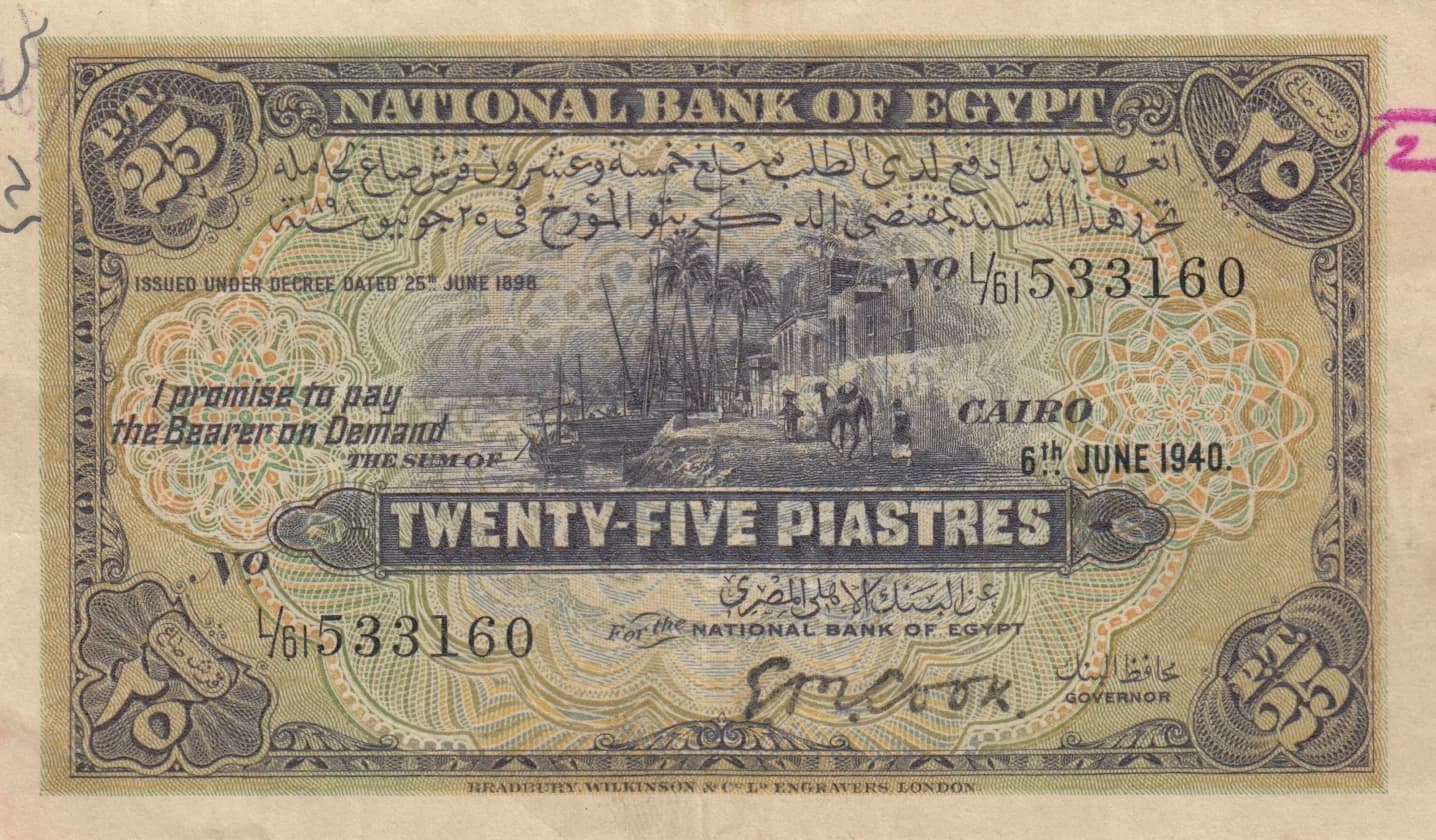
Front side: 'البنك الأهلي المصري' (National Bank of Egypt) and reference to the Egyptian Kingdom. Back side: 'NATIONAL BANK OF EGYPT' and 'ONE POUND' in English. The bilingual presentation (Arabic on obverse, English on reverse) reflects Egypt's transitional status in 1952, balancing traditional Egyptian identity with international banking practices.
Intaglio engraving (recess printing), the standard method for high-security banknotes of this era. The fine line work, sharp detail in the temple architecture, and intricate border designs visible in the visual analysis are characteristic of engraved plates. The note was produced by a specialized currency printer; National Bank of Egypt notes from this period were typically printed by established security printers such as Thomas De La Rue or Waterlow & Sons, though specific attribution requires additional documentation.
This note represents the standard 1952-1960 issue of Pick P-30, featuring Tutankhamen on the obverse and Philae temple on the reverse. Varieties within this series may include different signature combinations of National Bank officials and potentially subtle variations in serial number prefixes or overprints, but no major variants have been documented in the PMG population report, which lists only one catalogued variant for this Pick number. Detailed examination of the serial number prefixes and signatures would be required to identify the specific variety within the broader 1952-1960 issue period.