50 centimes 1919
About This Note
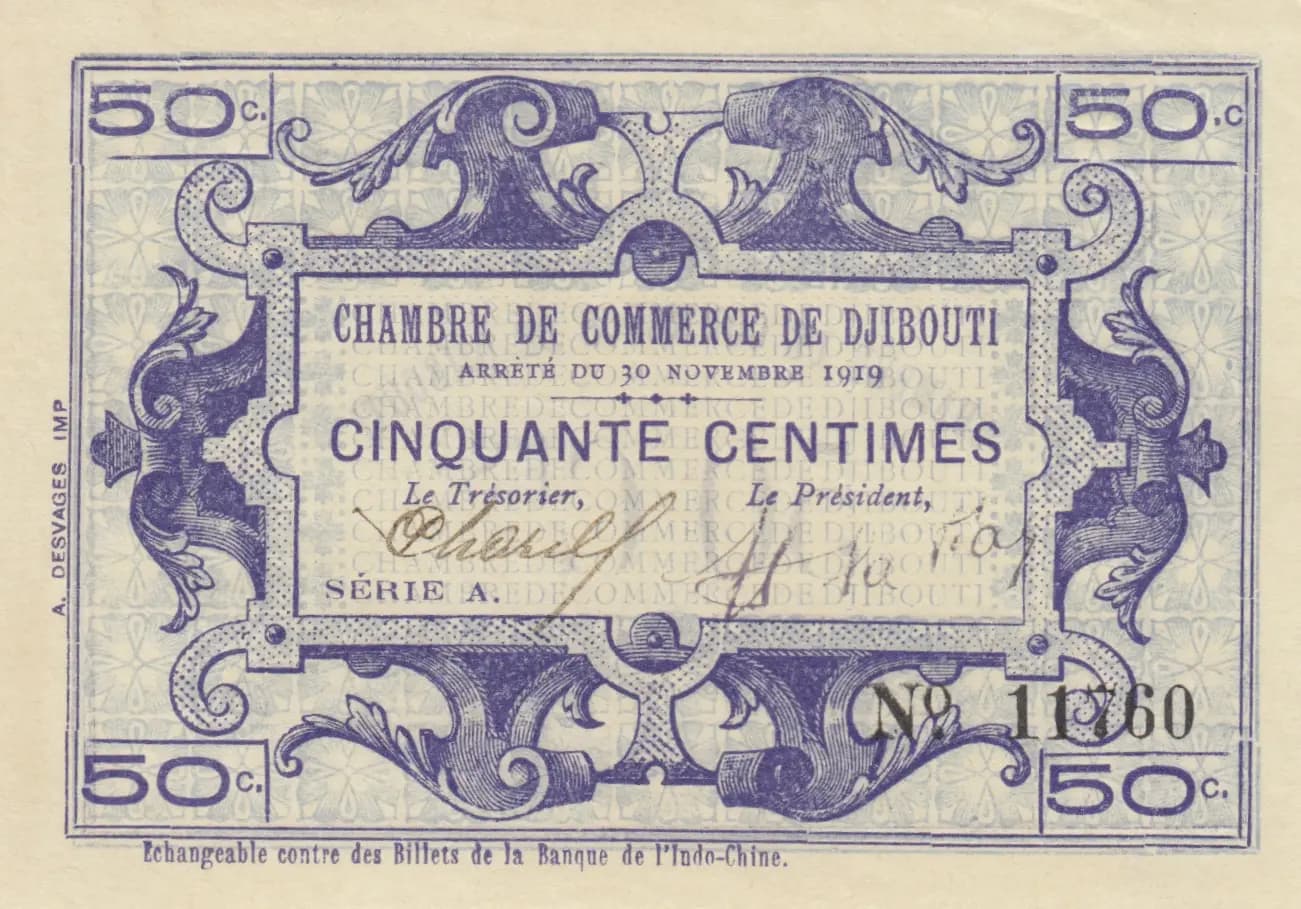
This is an exceptionally well-preserved example of the 1919 Chambre de Commerce de Djibouti 50 centimes emergency currency (Pick P-23), graded AU. The note features exquisite ornate purple and blue engraving with symmetrical mythological figures and elaborate scrollwork borders, characteristic of Belle Époque emergency scrip design. The presence of original ink signatures from the Treasurer and President, combined with the crisp printing and aged cream patina, indicates this is an authentic specimen from the post-WWI period when Djibouti required supplementary currency.
Common. Emergency scrip issued by the Chambre de Commerce de Djibouti in 1919 was produced in sufficient quantities for circulation purposes, and this note represents a standard denomination from a straightforward single-decree series. While colonial-era Djibouti currency is not heavily trafficked in modern numismatic markets, the AU grade and original signatures do not indicate extreme scarcity—rather, this specimen reflects an adequately preserved example from a stable issue. The Pick catalog assigns it Pick P-23, a standardized designation indicating it is a recognized but not particularly rare variety. No evidence suggests a limited print run, early recall, or unusual survival circumstances that would elevate it beyond common status.
Issued under decree of November 30, 1919, by the Chambre de Commerce de Djibouti, this note represents the emergency currency requirements of French colonial East Africa following World War I. The engraved decorative figures and filigree patterns reflect the ornamental banking aesthetic of the Belle Époque era, while the inscription guaranteeing exchangeability for Bank of Indochina notes demonstrates Djibouti's monetary integration within the broader French colonial economic sphere. The 50 centimes denomination was essential for everyday commerce in this Red Sea port during the post-war period when official Bank of Indochina notes were in short supply.
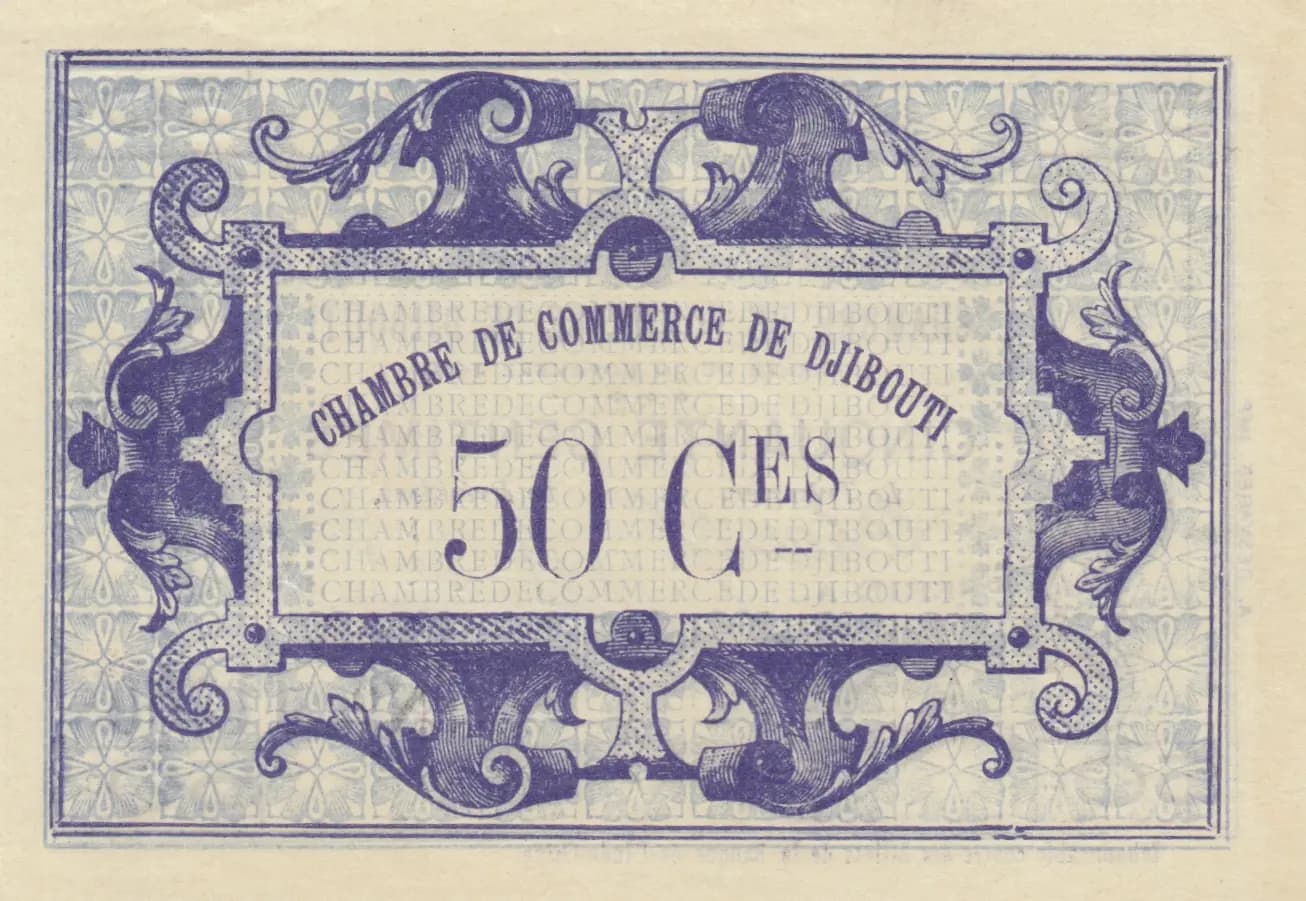
Both sides of this banknote display identical ornate border designs composed of elaborate rococo-style scrollwork, filigree patterns, and floral motifs executed in fine line engraving. The dominant design element consists of two mirrored heraldic or mythological figures with prominent curled tails positioned at the top center of each side—these appear to be stylized dragons or lions, common in late 19th/early 20th century French commercial currency. The background features a repeating watermark pattern of daisy or floral designs interspersed with text reading 'CHAMBRE DE COMMERCE DE DJIBOUTI,' visible in the cream-colored paper stock. The front side is text-heavy with denomination, issuing authority, legal decree information, printer attribution, and redemption guarantee, while the back side maintains the decorative border but presents a cleaner, more minimal central field. The color palette of purple and blue inks on cream background is typical of this era's emergency scrip, providing modest security through color complexity while remaining economical to produce.
{"front":{"primary":"CHAMBRE DE COMMERCE DE DJIBOUTI (Chamber of Commerce of Djibouti)","denomination":"50 C. / CINQUANTE CENTIMES (50 Centimes / Fifty Centimes)","authority":"ARRÊTÉ DU 30 NOVEMBRE 1919 (Decree of November 30, 1919)","signatures":"Le Président, / Le Trésorier, (The President, / The Treasurer,)","identification":"SÉRIE A. / N° 11360 (Series A / Number 11360)","printer":"A DÉSVALES IMP (A. Desvales Printer)","redeemability":"Échangeable contre des Billets de la Banque de l'Indo-Chine. (Exchangeable for notes from the Bank of Indochina.)"},"back":{"issuer":"CHAMBRE DE COMMERCE DE DJIBOUTI (Chamber of Commerce of Djibouti)","denomination":"50 C.-- (50 Centimes)"}}
Intaglio engraving (line engraving/steel engraving), as evidenced by the fine, precise linework in the borders, scrollwork, and filigree patterns. The watermark pattern visible throughout indicates watermarked paper stock was used. Printer A. Desvales (also recorded as 'A. Désvales') produced this note using traditional engraved steel plates, with the purple and blue inks applied through the intaglio process. The quality of line definition and consistency across both sides indicates professional commercial bank note printing of the period, though the relatively simple security features (no tint patterns, minimal anti-counterfeiting measures beyond watermark and fine engraving) reflect the temporary nature of emergency chamber of commerce currency.
Series A, serial number 11360. The visual analysis confirms signatures by both the Treasurer and President in original ink on the front face, which is a standard feature of this issue rather than a significant variety. The printer attribution 'A. DÉSVALES IMP' appears consistent with the cataloged printer 'A. Desvages' (noting possible variance in historical spelling/transcription of the printer's name). No obvious overprints, date variations, or serial number prefix variations are apparent from the observed images. This appears to be a standard production specimen from the initial authorized series.