20 gulden 1937
About This Note
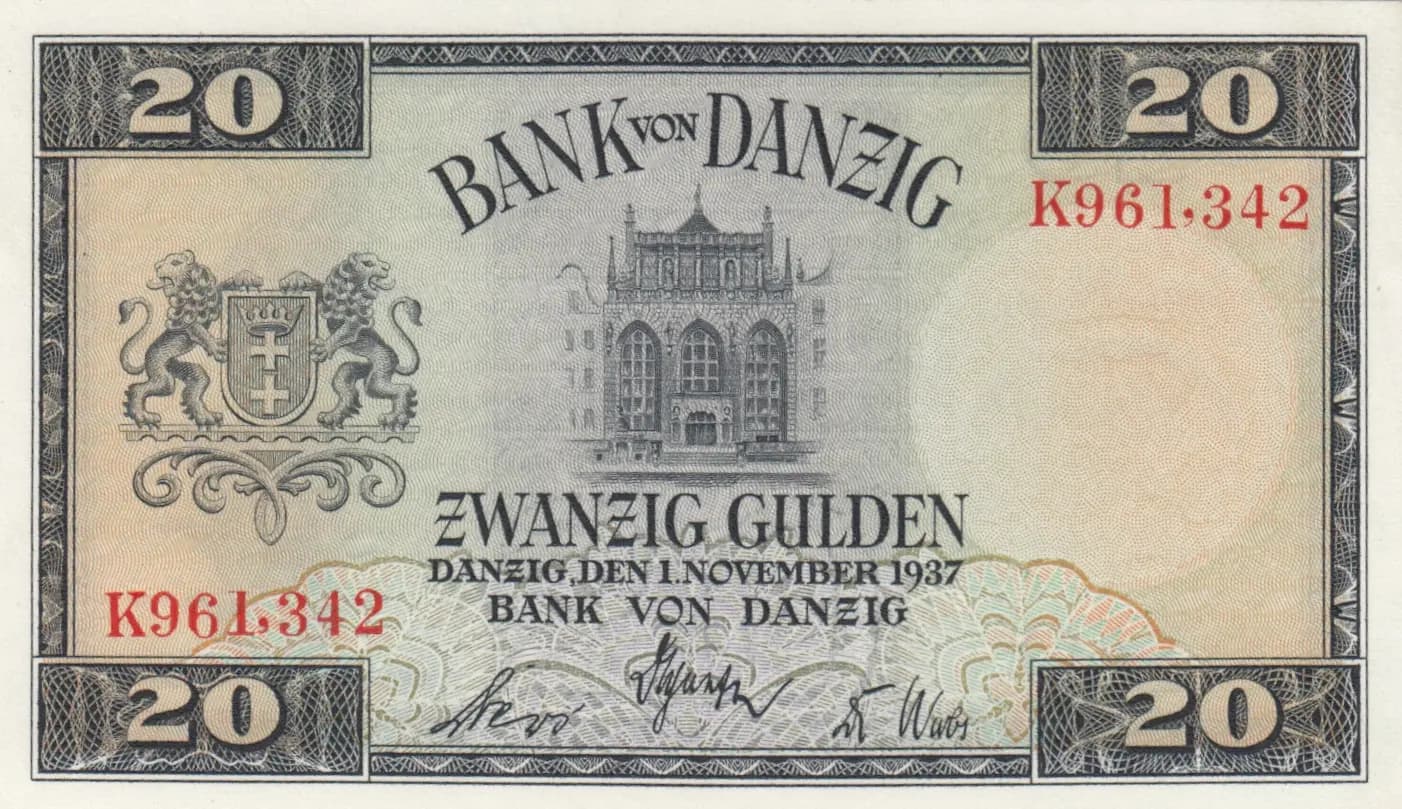
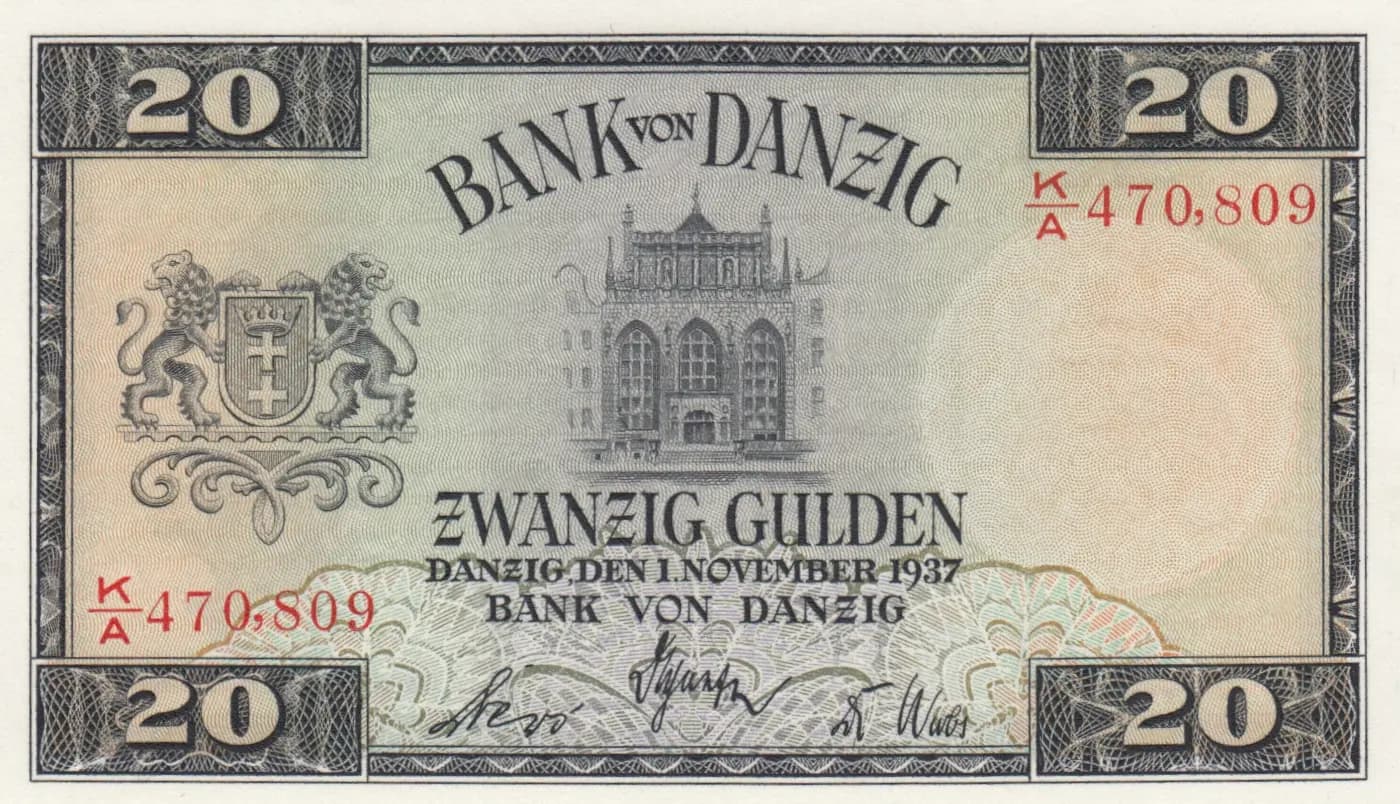
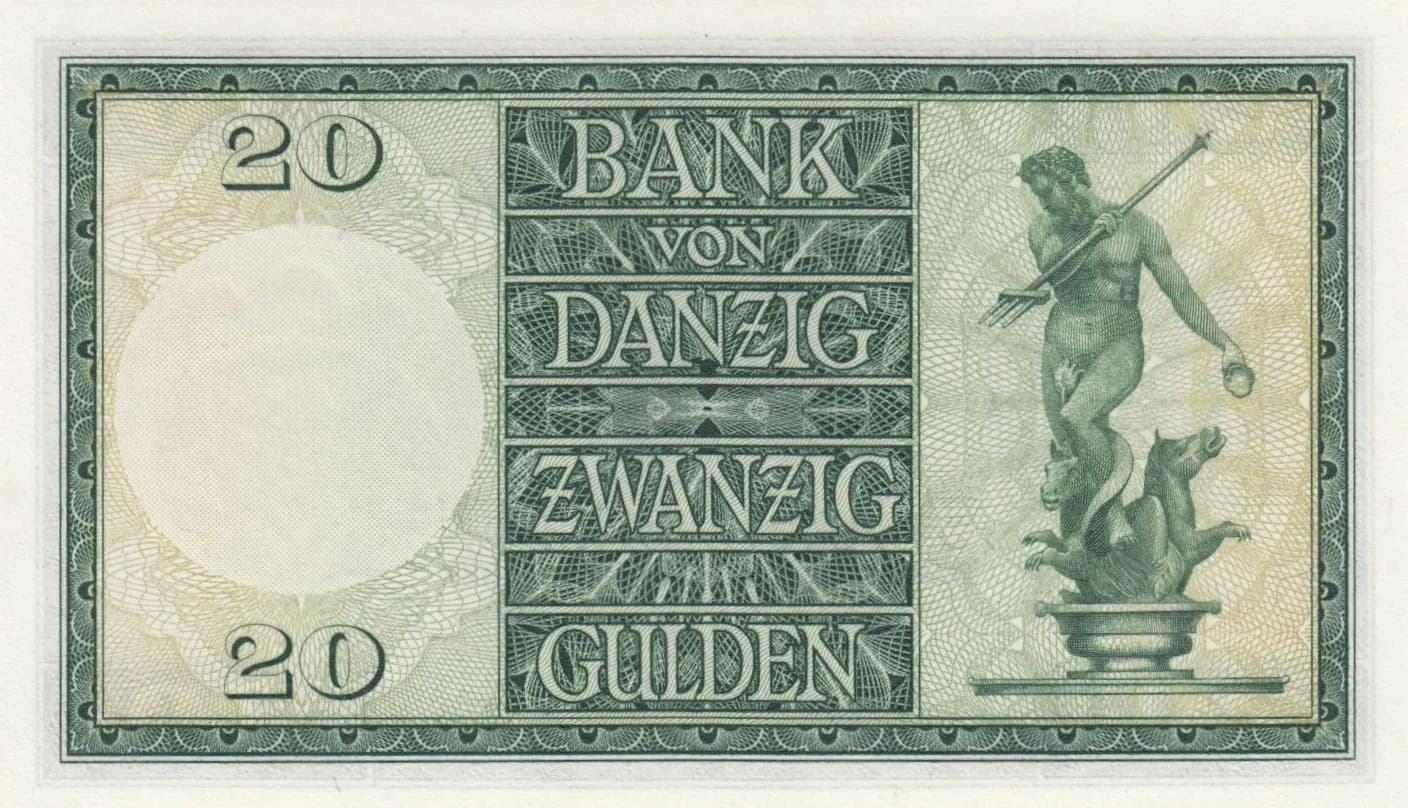
This is an exceptional uncirculated example of the Bank von Danzig's 20 Gulden note from November 1, 1937, featuring the bank's coat of arms with heraldic lion supporters on the obverse and a classical Neptune figure with trident on the reverse. The note displays pristine condition with sharp, crisp printing throughout, no visible wear or handling marks, and exhibits the fine engraving work characteristic of interwar German-zone currency. This note represents an important piece of Danzig's brief autonomous period before World War II, making it historically significant to collectors of German and European numismatics.
Common. The Bank von Danzig's 20 Gulden notes from 1937 were produced in substantial quantities as part of regular currency circulation in the Free City. While Danzig currency is certainly collected and has historical interest, this particular denomination and date represent standard commercial production rather than a limited or emergency issue. The uncirculated condition is less common than circulated examples, but the note itself is not rare, and substantial quantities have survived to the present day.
The Bank von Danzig issued this 20 Gulden note during Danzig's existence as the Free City of Danzig (Freie Stadt Danzig), an autonomous city-state under League of Nations protection between 1920 and 1939. The heraldic coat of arms and civic iconography on the front, along with the classical Neptune imagery symbolizing Danzig's important maritime commerce and Baltic port status, reflect the city's proud independent identity and economic significance. By 1937, the note's date, Danzig was increasingly under pressure from Nazi Germany, making this currency issue one of the final autonomous emissions before the city's incorporation into the Reich in 1939.
The obverse features the official coat of arms of the Free City of Danzig centered on the left, with two heraldic lions in a rampant pose serving as supporters flanking a shield, beneath which ornate scrollwork provides decorative framing. The central architectural element is the Marienkirche (Church of Saint Mary), Danzig's iconic Gothic-style church with characteristic arched windows and turret, symbolizing the city's historical religious and civic importance. The reverse depicts Neptune (Poseidon), the classical god of the sea, rendered as a muscular male figure holding his traditional trident, accompanied by a sea creature or mythological beast, emphasizing Danzig's identity as a major Baltic port and maritime trading center. The color scheme transitions from beige, gray, and black tones on the obverse to green and cream tones on the reverse, with consistent fine line engraving throughout.
FRONT SIDE: 'Bank von Danzig' (Bank of Danzig), 'Zwanzig Gulden' (Twenty Gulden), '20' (twenty), 'Danzig den 1. November 1937' (Danzig, November 1, 1937), serial number 'A 470.809' (appears twice). BACK SIDE: 'Bank von Danzig' (Bank of Danzig), 'Zwanzig Gulden' (Twenty Gulden), '20' (twenty) appears multiple times as denomination markers.
Intaglio (engraved steel plate) printing, the standard security printing method for German-zone banknotes of this era. The fine line work, cross-hatching patterns, and intricate engraving details visible throughout both sides are characteristic of high-security intaglio production. The note was likely produced by a major German security printer such as Giesecke+Devrient or similar firm contracted by the Bank von Danzig, though specific printer attribution would require archival research on the Bank von Danzig's production records.
Serial number A 470.809 indicates this is from the 'A' series production run. Pick catalog number P-63(2) designates this as the second type/variety of the 20 Gulden 1937 issue. Known varieties of Danzig's 1937 gulden notes may include different serial number prefixes and potentially different signature combinations, though detailed variety information for this specific Pick number would require consultation of specialized Danzig currency catalogs or the Friedberg/SNS references.