20 gulden 1937
About This Note
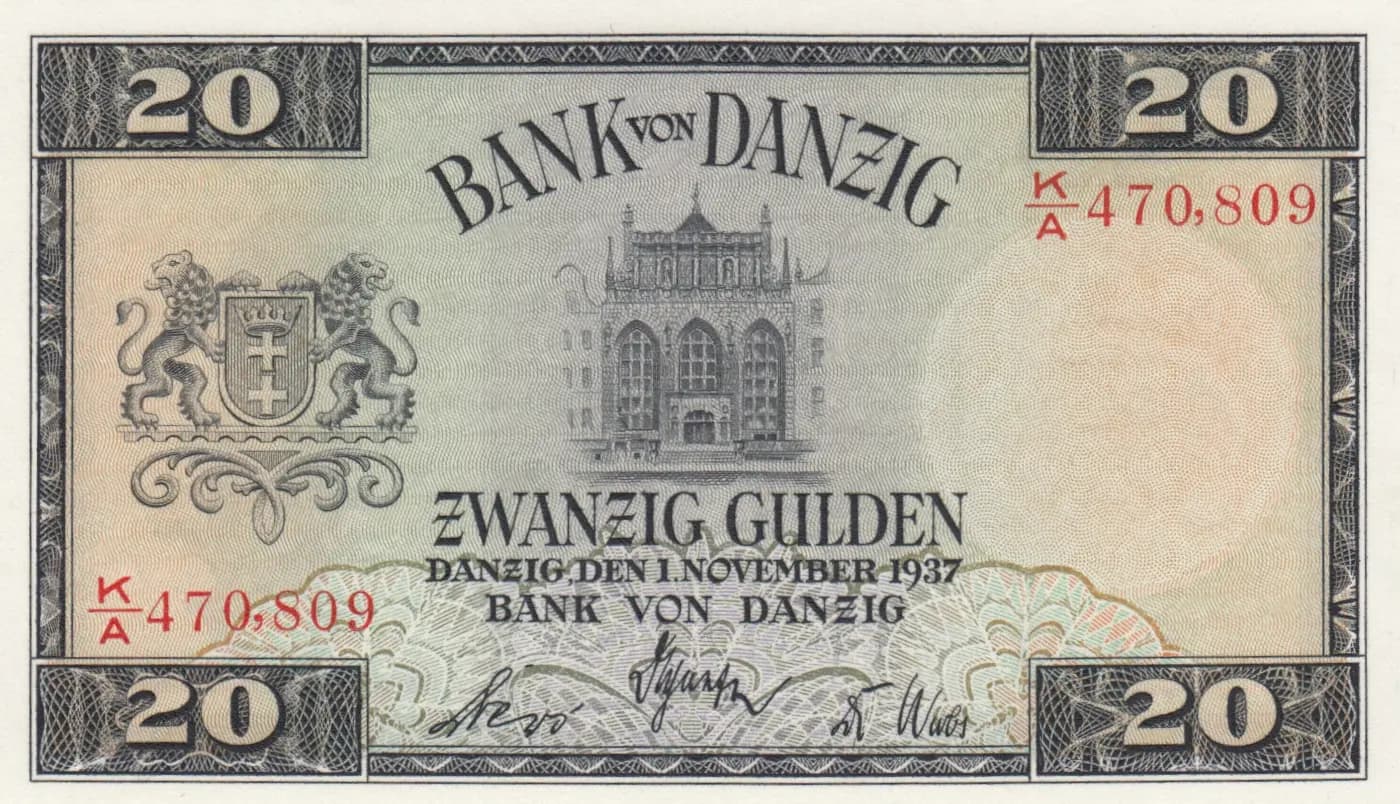
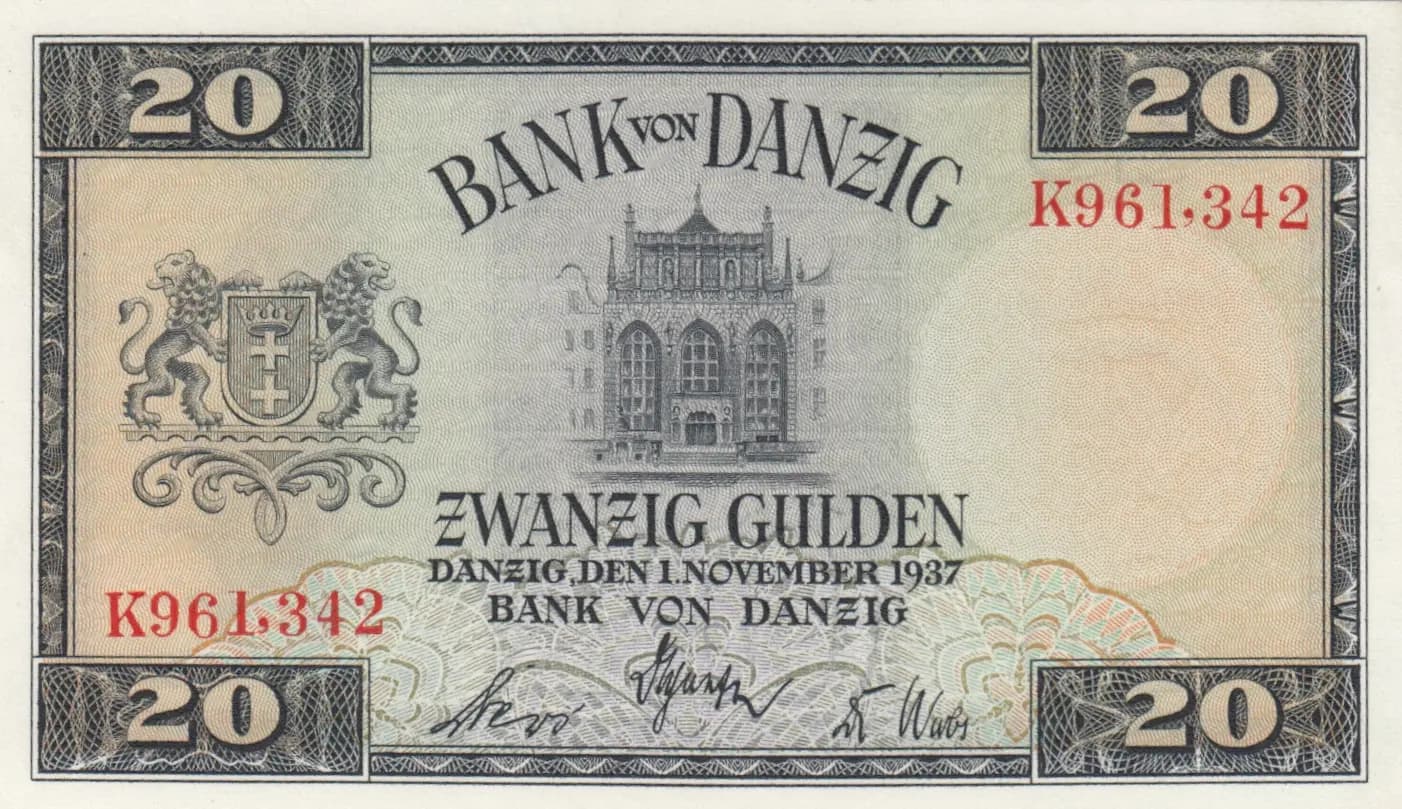
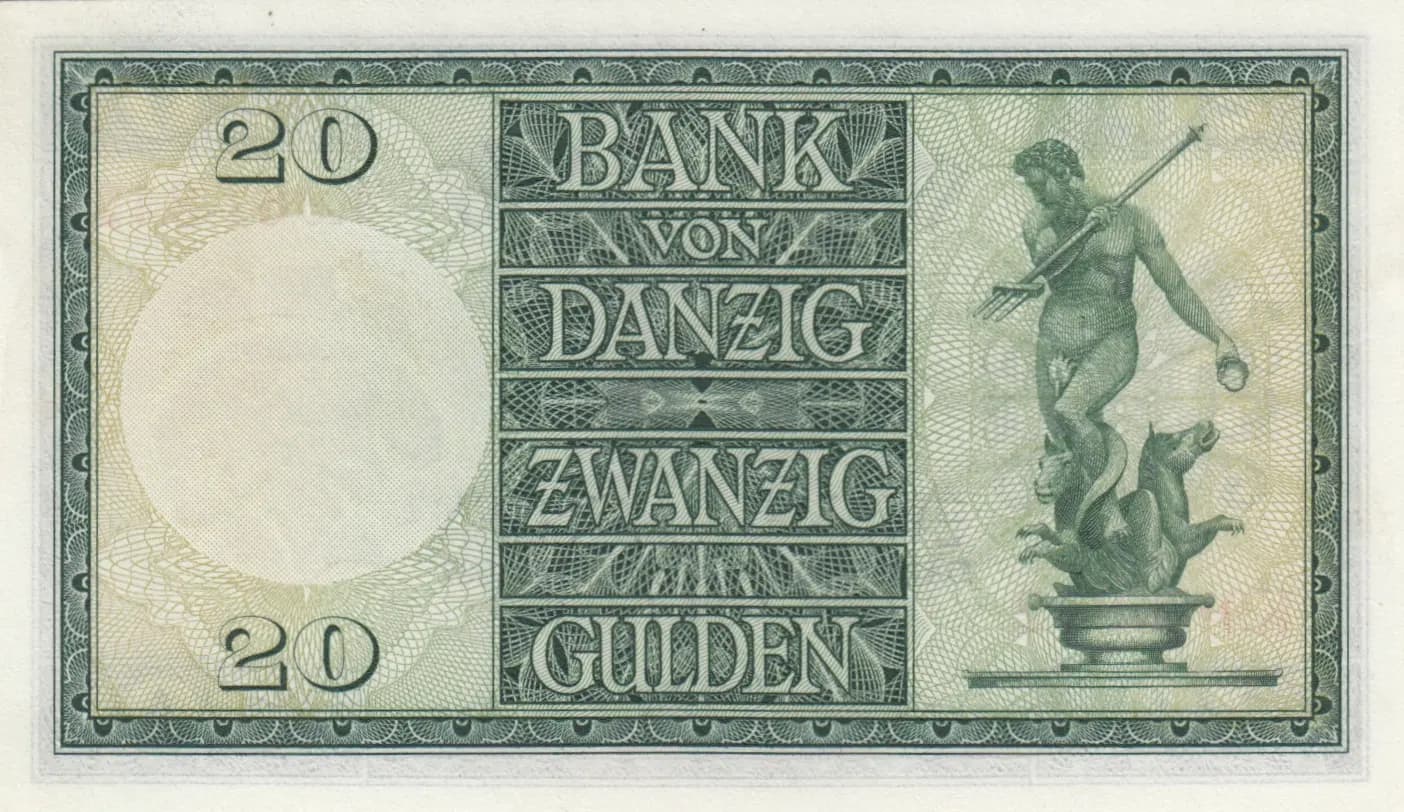
This is an uncirculated 20 Gulden banknote from the Bank von Danzig, dated 1 November 1937, representing the final years of the Free City of Danzig before World War II. The note is rendered in attractive green and beige tones and features remarkable iconographic elements including the Danzig coat of arms with supporting lions on the obverse and a classical cherub figure on the reverse, with fine guilloché detailing throughout. In UNC condition, this note shows only minimal aging consistent with its era, making it an excellent example of interwar Central European currency design.
Common. The Bank von Danzig issued these 20 Gulden notes in substantial quantities during 1937-1939, and this denomination remained in circulation and survived in reasonable numbers post-war. While Danzig currency has historical significance and collector appeal, this particular Pick number in UNC condition, though desirable, is not scarce—multiple examples appear regularly in the market. The UNC grade elevates its value above circulated specimens, but the note itself should not be considered rare.
The Free City of Danzig (Freie Stadt Danzig) issued this currency during a tumultuous period in European history, just two years before the German invasion that would end the city-state's independence. The coat of arms featuring two lions and a fortress design reflects Danzig's proud maritime and mercantile heritage dating back to the Hanseatic League, while the Gothic cathedral depicted in the center speaks to the city's architectural and cultural significance. By 1937, as Nazi Germany increasingly pressured the Free City, this banknote represented one of the final expressions of Danzig's autonomous monetary authority before absorption into the Third Reich.
The obverse features the coat of arms of the Free City of Danzig prominently displayed on the left, supported by two heraldic lions flanking a shield bearing the fortress/gateway emblem central to Danzig's identity. The dominant central image is the Marienkirche (St. Mary's Church), Danzig's most iconic Gothic cathedral with its distinctive pointed arches and soaring spire, rendered in fine detail. The reverse depicts a classical sculptural cherub or putto in the allegorical tradition, seated on an ornamental pedestal, symbolizing prosperity or commerce. The entire composition is framed with ornamental borders and decorative guilloché patterns characteristic of high-quality banknote engraving of the period.
Front side: '20' (denomination), 'BANK VON DANZIG' (Bank of Danzig), 'ZWANZIG GULDEN' (Twenty Gulden), 'DANZIG, DEN 1. NOVEMBER 1937' (Danzig, 1st November 1937), serial number 'K961.342'. Back side: '20' (denomination), 'BANK VON DANZIG' (Bank of Danzig), 'ZWANZIG GULDEN' (Twenty Gulden), '20' (denomination repeated).
Intaglio engraving (recess printing) with multiple color pass lithography, typical of European central bank currency production in the 1930s. The fine line work, guilloché patterns, and sharp detail visible in the architectural and heraldic elements are characteristic of steel plate engraving. The Bank von Danzig's banknotes were typically produced by German security printers; the technical quality and execution suggest production by a premier Central European security printing establishment, likely Giesecke+Devrient or similar facility contracted by the German banking authorities overseeing Danzig currency.
This specimen bears the serial number K961.342 printed in red, which is consistent with the standard 1937 issue. The 'K' prefix in the serial number is typical for this printing. Pick P-63(1) denotes the first variety/printing of this 20 Gulden denomination. Collectors should note that later printings and different serial number prefixes may exist, and signature varieties on the issuing authorities' representatives should be verified against specialist references for the complete typology of this note.