50 pfennig 1919
Market Prices
26 salesAbout This Note
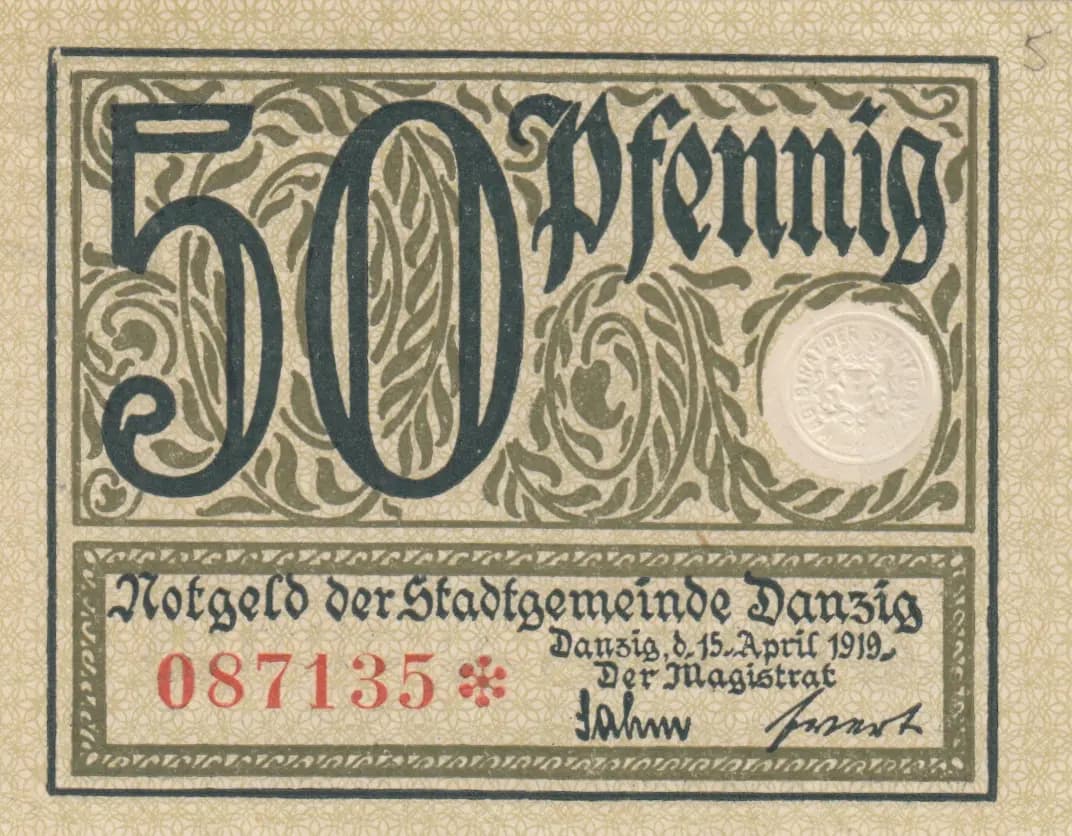
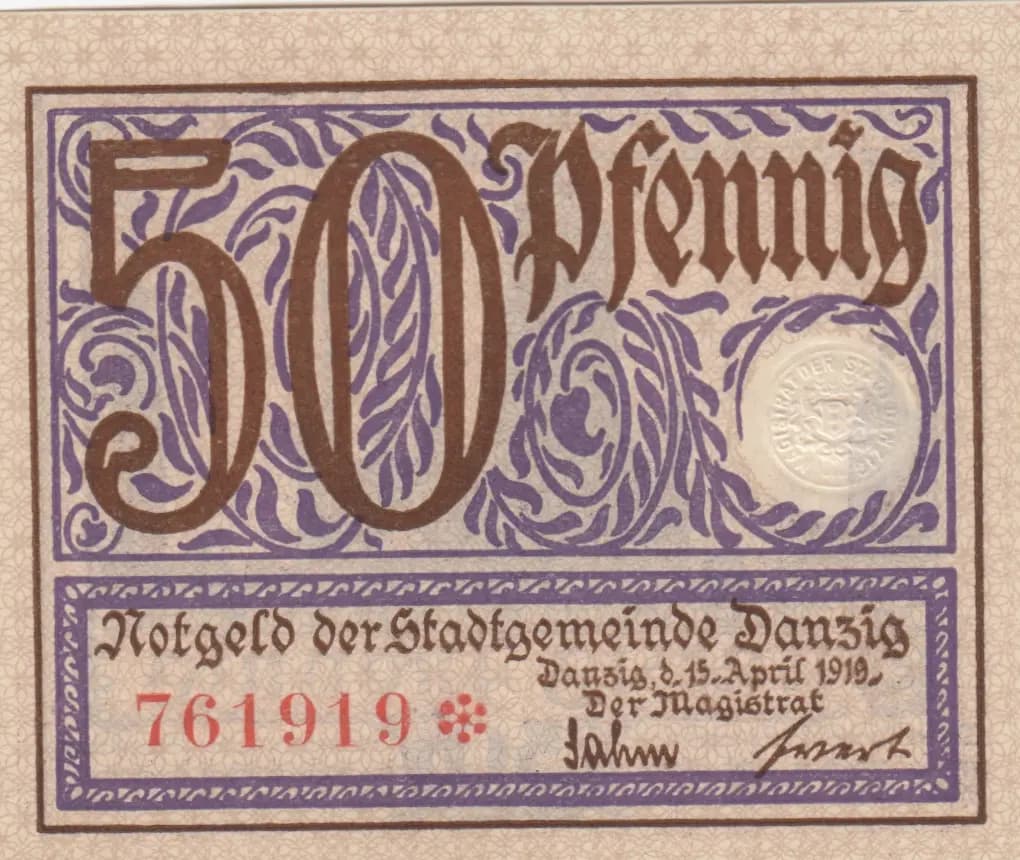
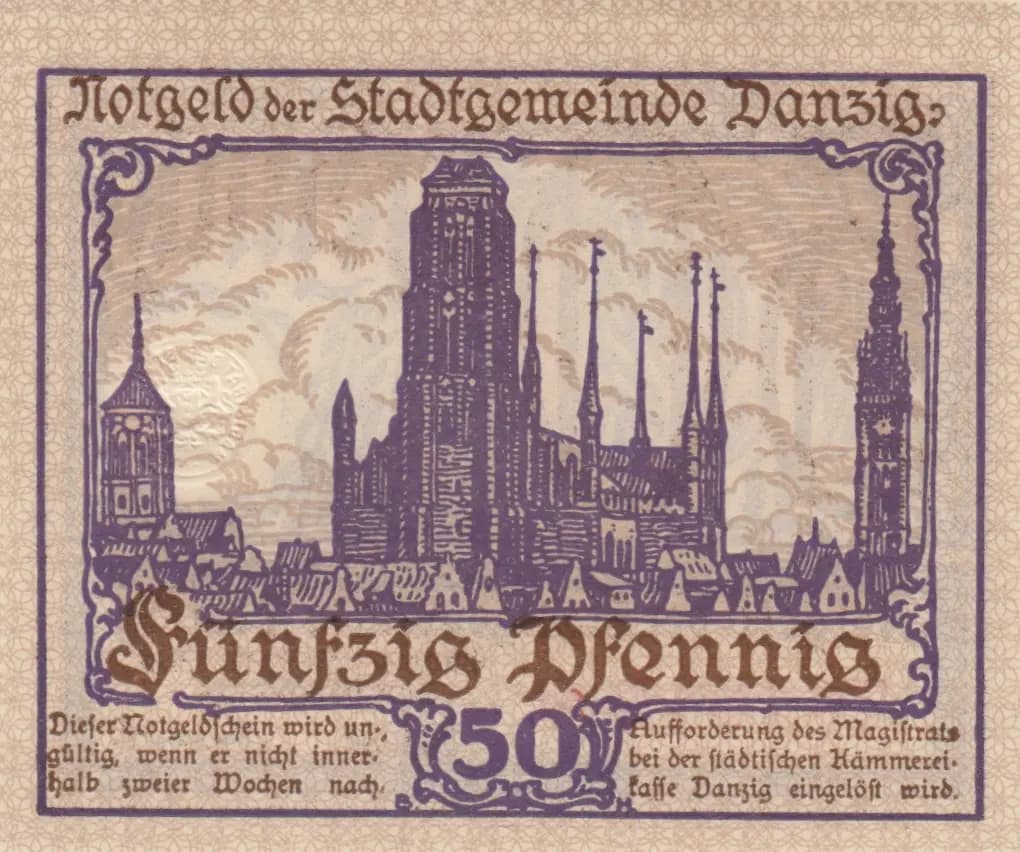
This 50 Pfennig Notgeld from Danzig (1919) is an exceptional example of post-WWI emergency currency issued by the city magistrate on April 13, 1919. The note displays the characteristic purple, brown, and cream color scheme typical of Danzig emergency issues, with ornate typography and a municipal seal on the obverse, while the reverse features a detailed engraved cityscape of medieval Danzig's skyline. In UNC condition, this note exhibits minimal aging with only light foxing consistent with 104-year-old paper, making it a well-preserved specimen of this historically significant emergency currency.
Common. eBay market data shows consistent sales across a wide price range ($16–$138.50) depending on grade, with UNC examples selling in the $19–$70 range over the past decade. The catalog value for UNC is listed at $70, and multiple UNC sales have occurred below $50. The wide distribution of graded examples in the PMG population report and frequent appearance on the secondary market indicate a healthy circulation of survivors. This Pick number appears to have had a reasonable print run typical of municipal Notgeld issues, and no specific rarity factors (such as short-lived issuer status, recalls, or extreme scarcity) apply to elevate this note beyond common status.
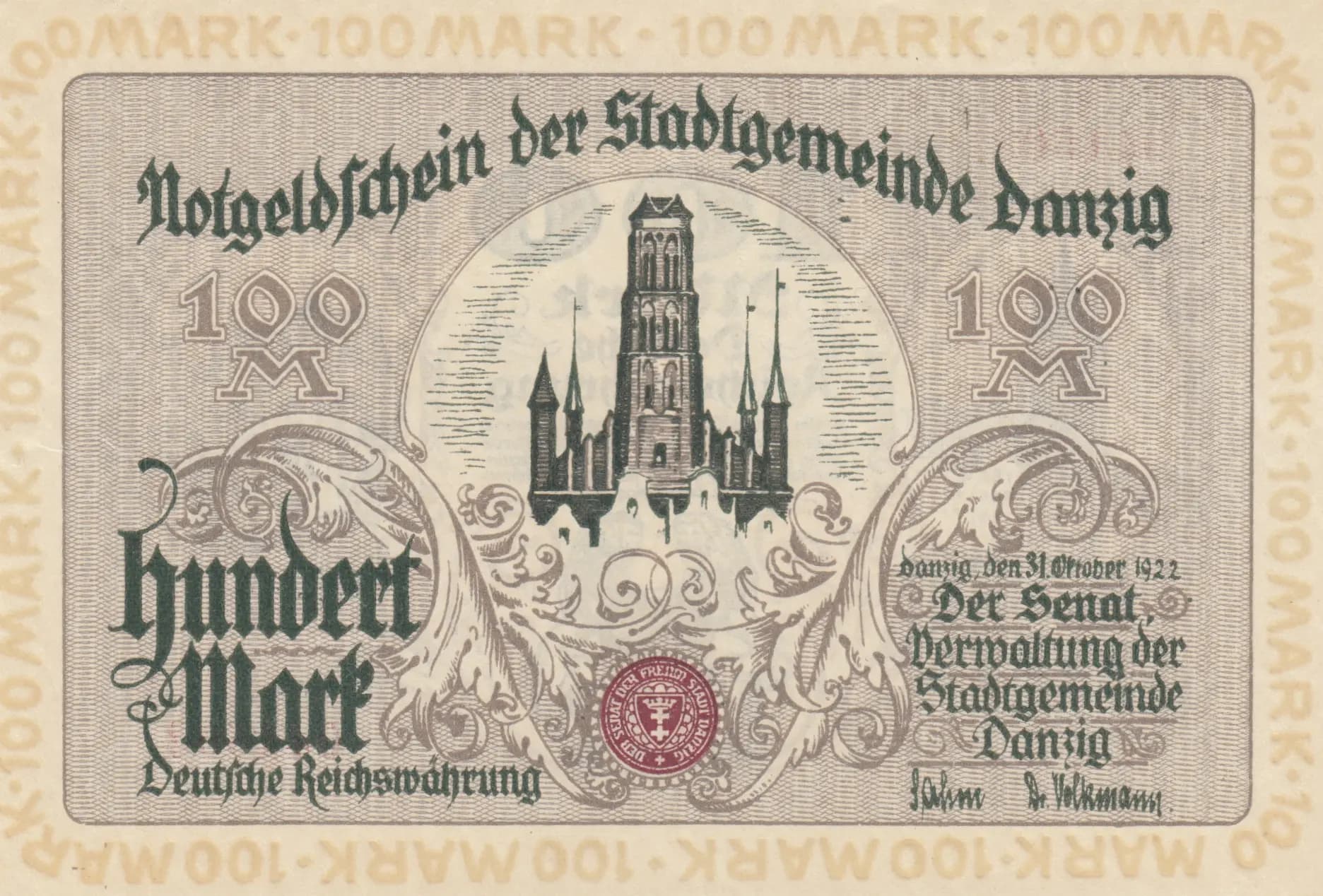
Danzig issued this emergency money (Notgeld) during the chaotic period following World War I, when the city was transitioning to the status of a Free City under League of Nations administration (formalized in 1920). The ornate cityscape depicted on the reverse—showing the distinctive medieval church spires and civic architecture—represents Danzig's proud historical identity at a moment of profound political uncertainty. The magistrate's authority to issue such currency reflects the decentralized monetary conditions in post-war Germany and the Baltic region, where municipalities frequently created emergency money to address severe cash shortages.
The obverse features a formally composed layout with the denomination '50 Pfennig' rendered in large, ornate brown numerals set against a purple and cream background with decorative scrollwork. A circular municipal seal or heraldic emblem appears on the right side, representing Danzig's civic authority. The magistrate's issuing information and dated authority line occupy the lower portion. The reverse displays an engraved cityscape illustration of Danzig's medieval skyline, prominently featuring the characteristic church spires of St. Mary's Church (Marienkirche) and other civic towers that dominate the city's iconic silhouette, rendered in purple and brown line work. The illustration is framed by ornamental borders with decorative corner flourishes. Redemption conditions appear as explanatory text, emphasizing the temporary nature of this emergency currency. The overall design reflects early 20th-century German municipal security printing practices, with emphasis on civic identity and institutional authority rather than portraiture.
FRONT: '50 Pfennig' (Fifty Pfennig - denomination); 'Notgeld der Stadtgemeinde Danzig' (Emergency money of the City Municipality of Danzig); 'Danzig, d. 13. April 1919' (Danzig, April 13, 1919 - issue date); 'Der Magistrat' (The Magistrate - issuing authority); '761919' (serial number in red). BACK: 'Notgeld der Stadtgemeinde Danzig' (Emergency money of the City Municipality of Danzig); 'Fünfzig Pfennig' (Fifty Pfennig - denomination in words); 'Dieser Notgeldschein wird ungültig, wenn er nicht innerhalb zweier Wochen nach Aufforderung des Magistrats bei der städtischen Kämmereitkasse Danzig eingelsöst wird.' (This emergency money note becomes invalid if it is not redeemed within two weeks of the magistrate's request at the municipal treasury office of Danzig - redemption warning); '50' (denomination numeral).
The note was produced using engraved intaglio printing, evidenced by the finely detailed line work visible in the cityscape illustration and the ornate denomination numerals. The decorative borders, corner flourishes, and the municipal seal all show characteristics of line engraving. The color scheme—purple, brown, and cream—was achieved through multi-pass printing typical of early Notgeld production. The clarity and definition of the architectural details in the skyline illustration, combined with the crisp registration of text and numerical elements, indicates professional security printing rather than local emergency typography, suggesting production by an established German security printer serving municipal issuers during the Notgeld period.
The specific variety for this Pick number is identified by the issue date of April 13, 1919, and the serial number prefix '76' observed on this example (serial 761919). The PMG population report indicates one catalogued variant for P-11. Notable features specific to this note include the municipal seal design and the precise rendering of the Danzig skyline. The redemption clause printed on the reverse ('valid for two weeks after magistrate's request') is a defining characteristic of the issue. Collectors should note that variations in serial number prefixes and minor printing differences may exist across the emission, though the overall design remained consistent for this denomination and issue date.