1000 korun 1945 specimen
Market Prices
16 salesAbout This Note
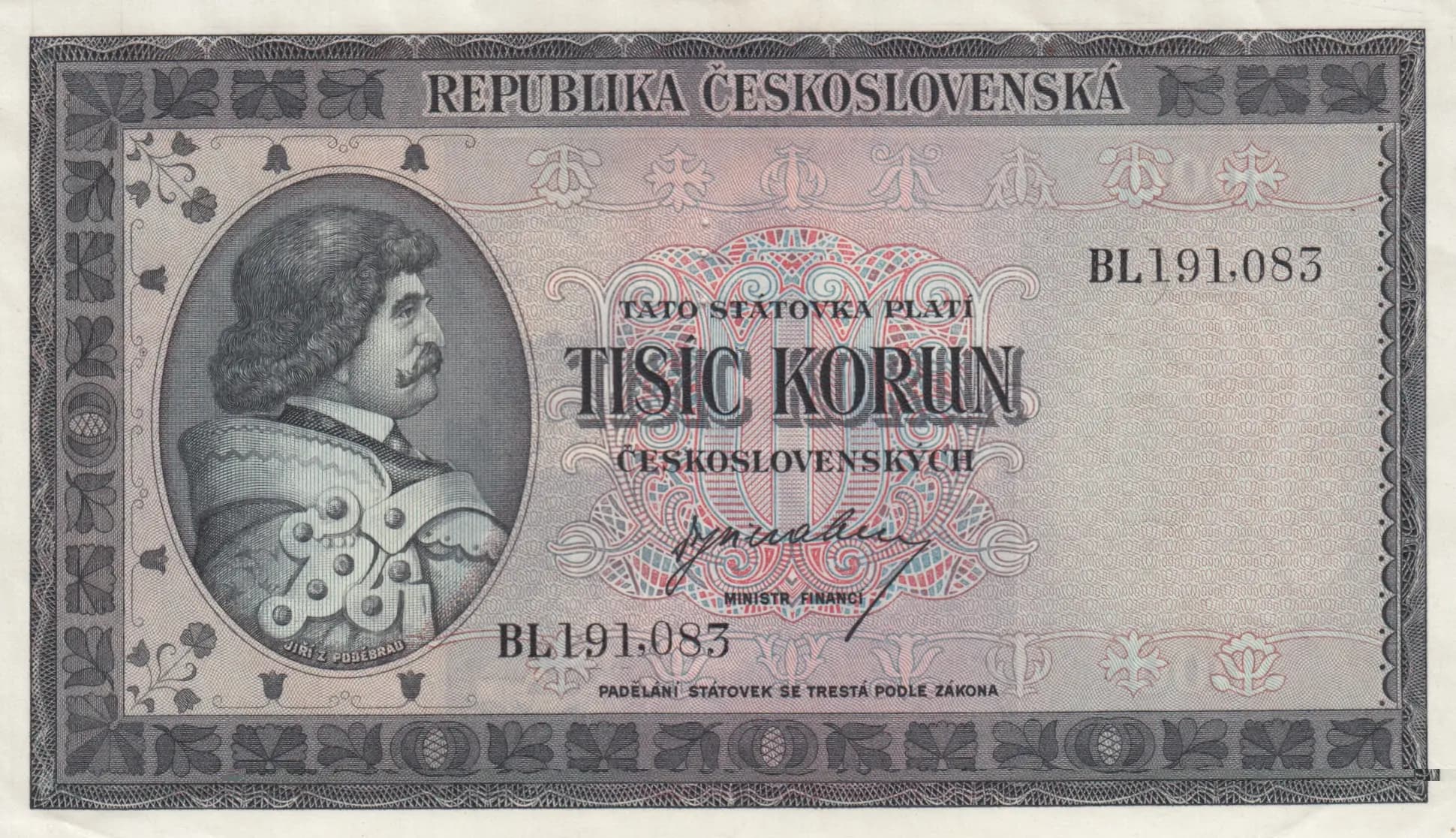
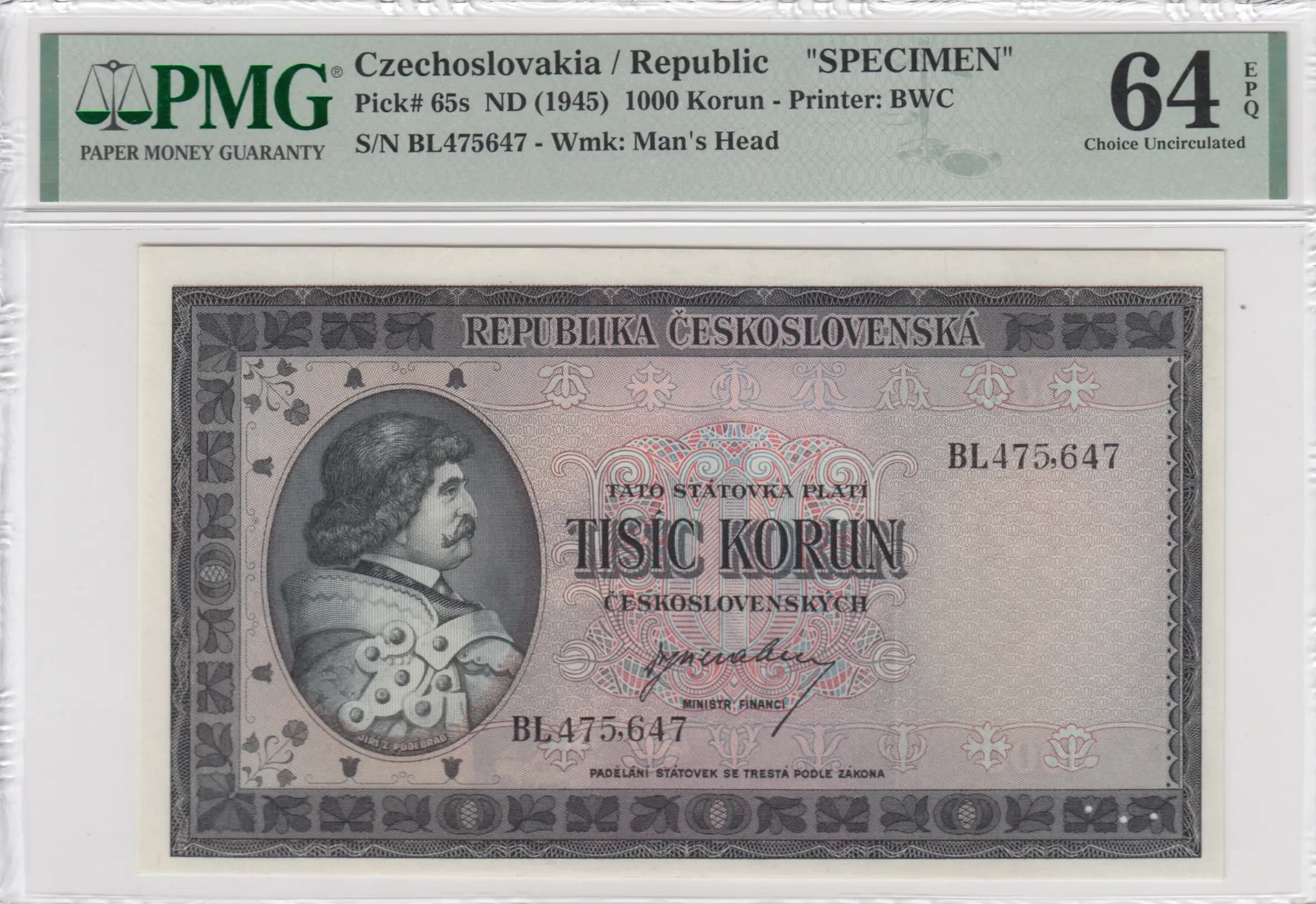
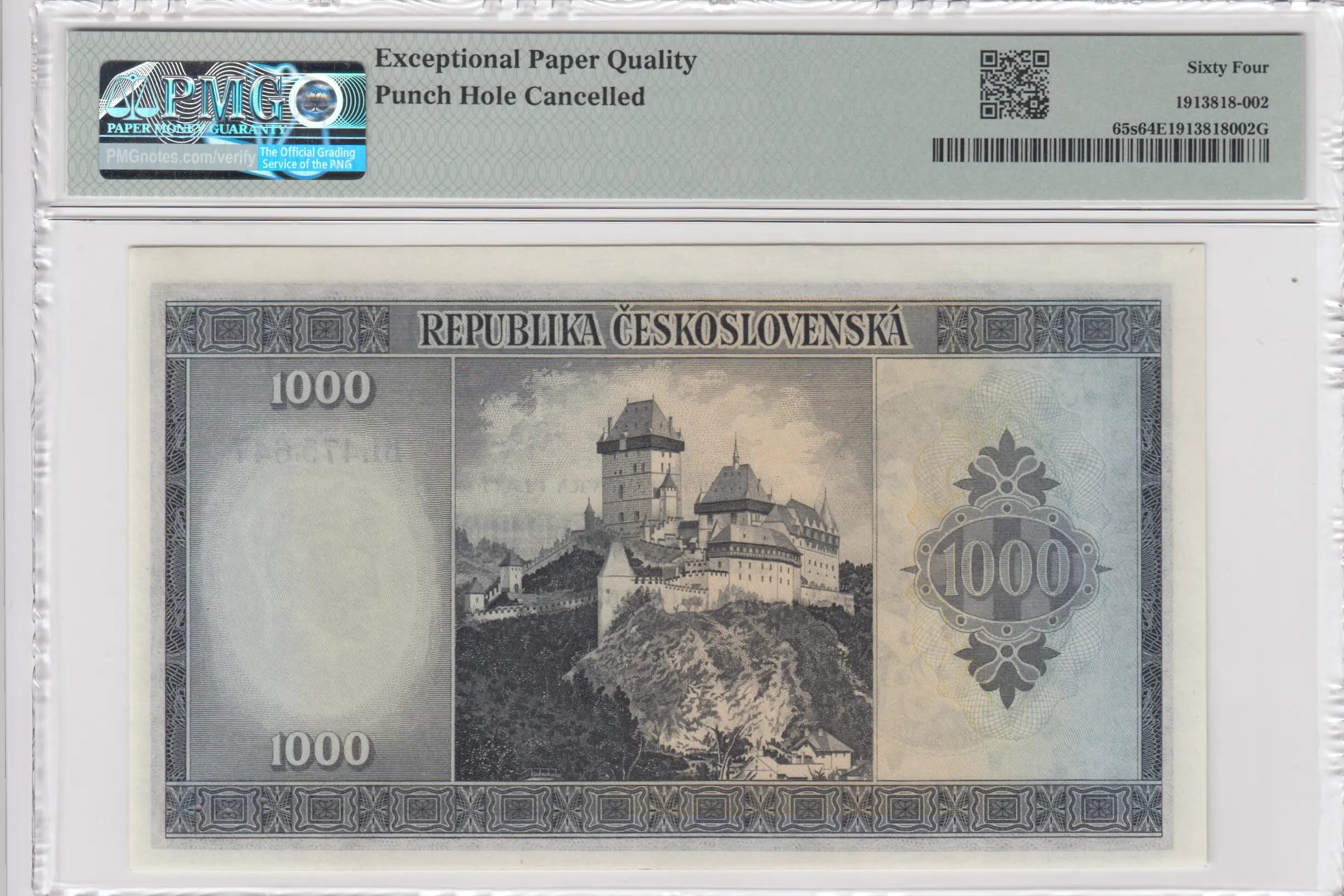
This is a stunning 1945 Czechoslovak 1000 Korun specimen note graded PMG 64 EPQ, representing an important post-war monetary issue from the newly restored Czechoslovak Republic. The note features a beautifully engraved portrait of King Jiří z Poděbrad on the obverse and Karlštejn Castle on the reverse, both rendered in fine detail with pink/mauve tones on the front and sepia-gray tones on the back. As a specimen note with characteristic punch hole cancellation, it exhibits exceptional preservation with no visible wear, creases, or damage—a premium example of this historically significant denomination.
Common. Market data from realbanknotes.com shows consistent eBay sales ranging from $10 to $325 across multiple condition grades over recent years, with most uncirculated examples selling in the $35–$60 range and PMG-graded specimens in the $74–$112.50 range. The 2016 catalogue value of $9 for UNC notes and the frequency of sales indicate this is a widely available note in the collector market. While the specimen variety (P-65s) is less common than the regular issue (P-65a), the specimen designation and regular availability across multiple grading levels confirm it remains an accessible note for collectors rather than a scarce or rare item.
Issued in 1945 following the restoration of Czechoslovak independence after World War II, this 1000 Korun note commemorates national symbols of Czech heritage. The portrait of King Jiří z Poděbrad honors a 15th-century Hussite king central to Czech national identity, while Karlštejn Castle—the iconic fortress built by Emperor Charles IV—represents the architectural and cultural pride of the Czech lands. The specimen note's punch hole cancellation indicates it was prepared for official distribution to banks and governmental institutions rather than for general circulation.
The obverse features a left-facing oval portrait of King Jiří z Poděbrad (r. 1457–1471), a significant figure in Czech Hussite history, rendered in fine engraved detail wearing period royal vestments with decorative buttons. The background showcases an ornate mauve-pink color with intricate floral and geometric decorative patterns throughout, framed by an elaborate border of scrollwork and embellishments. The reverse depicts Karlštejn Castle, the fortress near Prague built by Holy Roman Emperor Charles IV in the 14th century, shown as a detailed architectural engraving set on a hilltop landscape with multiple distinctive towers and ramparts. Both sides employ decorative circular and geometric ornamental frames containing the denomination '1000,' with the castle rendered in fine sepia and gray tones contrasting against white paper. The overall design exemplifies the high-quality security printing standards of the Bradbury Wilkinson firm.
Front: 'Republika Československá' (Czechoslovak Republic), 'Tisíc Korun Československých' (One Thousand Czechoslovak Korun), 'Tato Státovka Platí' (This state note is valid), 'Padesáti Státovek Se Třeba Podle Zákona' (Fifty state notes must be according to law), 'Ministr. Financí' (Ministry of Finance), serial number 'BL475.647'. Back: 'Republika Československá' (Czechoslovak Republic), denomination marking '1000' appearing on both left and right sides.
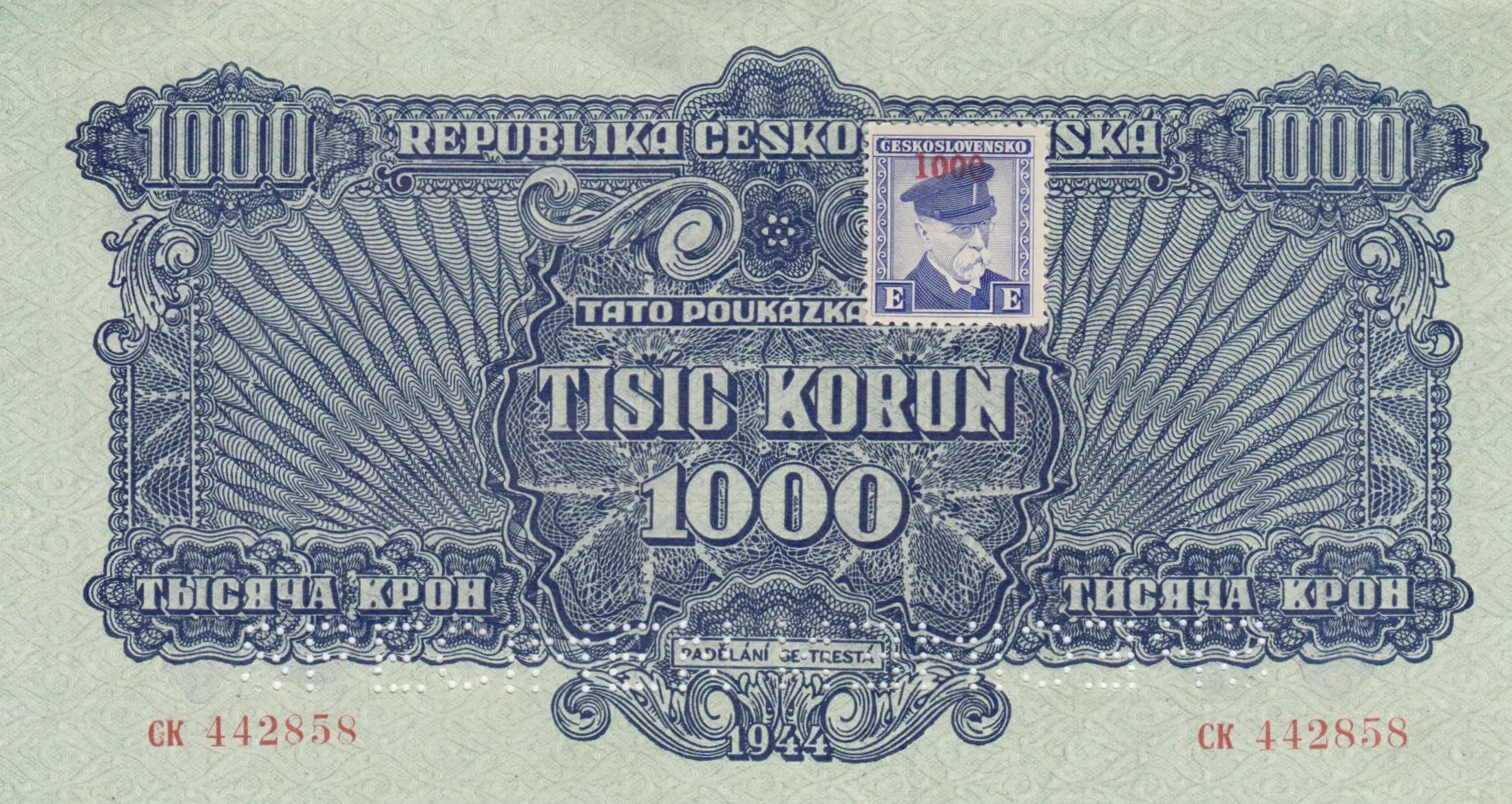
Intaglio engraving executed by Bradbury Wilkinson & Co. (BWC), New Malden, Surrey—one of the world's premier security printers. The fine line work visible in the background patterns, detailed portrait rendering, and complex architectural engraving of the castle are characteristic of high-quality intaglio production. The note employs multiple colored inks (black on multicolor underprint) with ornate engraved border patterns and fine line anti-counterfeiting designs throughout. As a specimen note, it bears characteristic punch hole cancellation perforations to prevent accidental circulation.
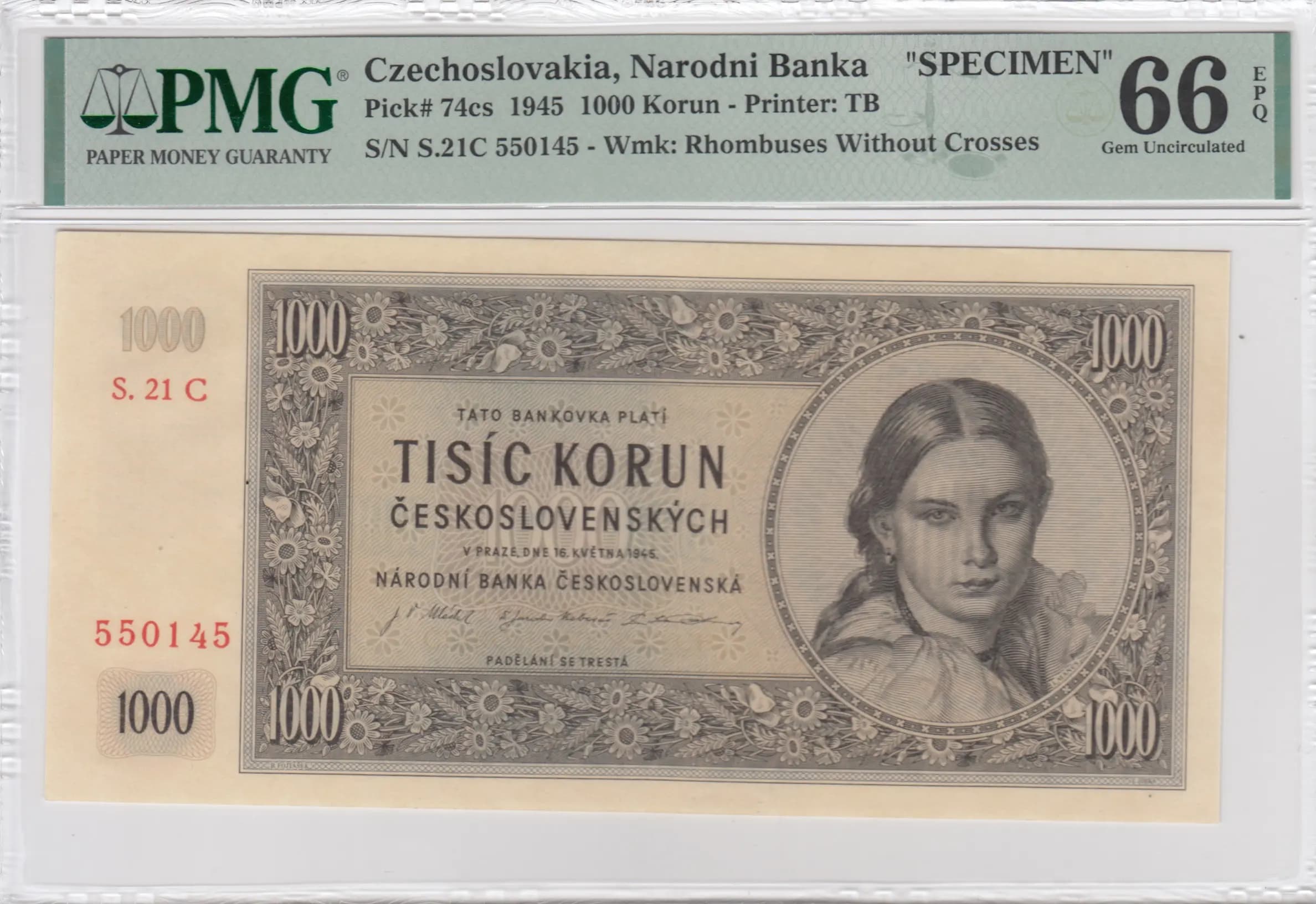
This is the specimen variety (P-65s) as indicated by the PMG holder label and punch hole cancellation pattern visible on both obverse and reverse. The Pick catalog distinguishes between P-65a (regular issue) and P-65s (specimen). The note displays the Bradbury Wilkinson printer imprint variant without additional overprints. Serial number BL475.647 is documented on the obverse. The specimen perforation pattern (3 holes or 'S' marking) is consistent with standard BWC specimen production protocols for this period.