1000 korun 1945 specimen
Market Prices
7 salesAbout This Note
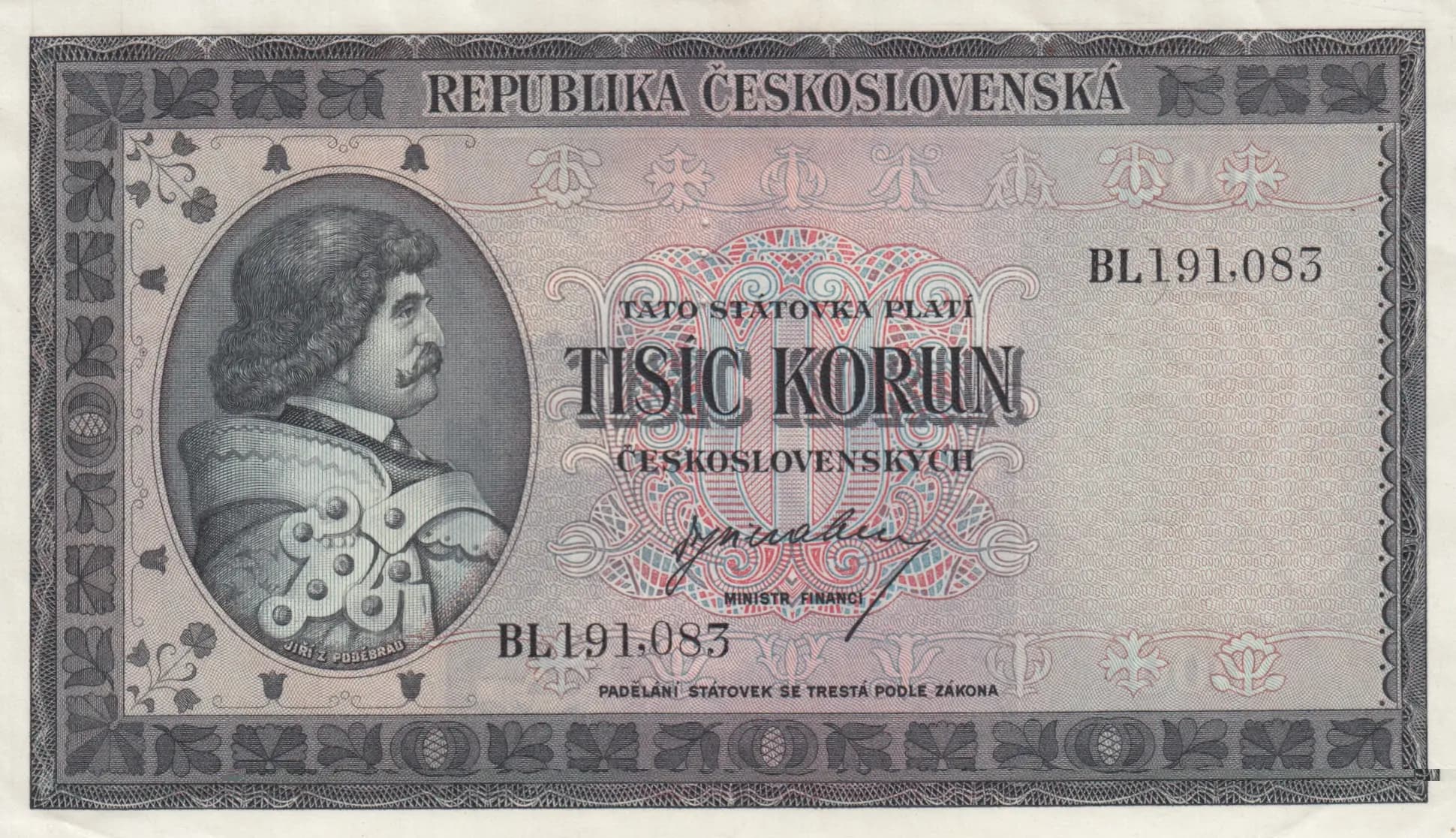
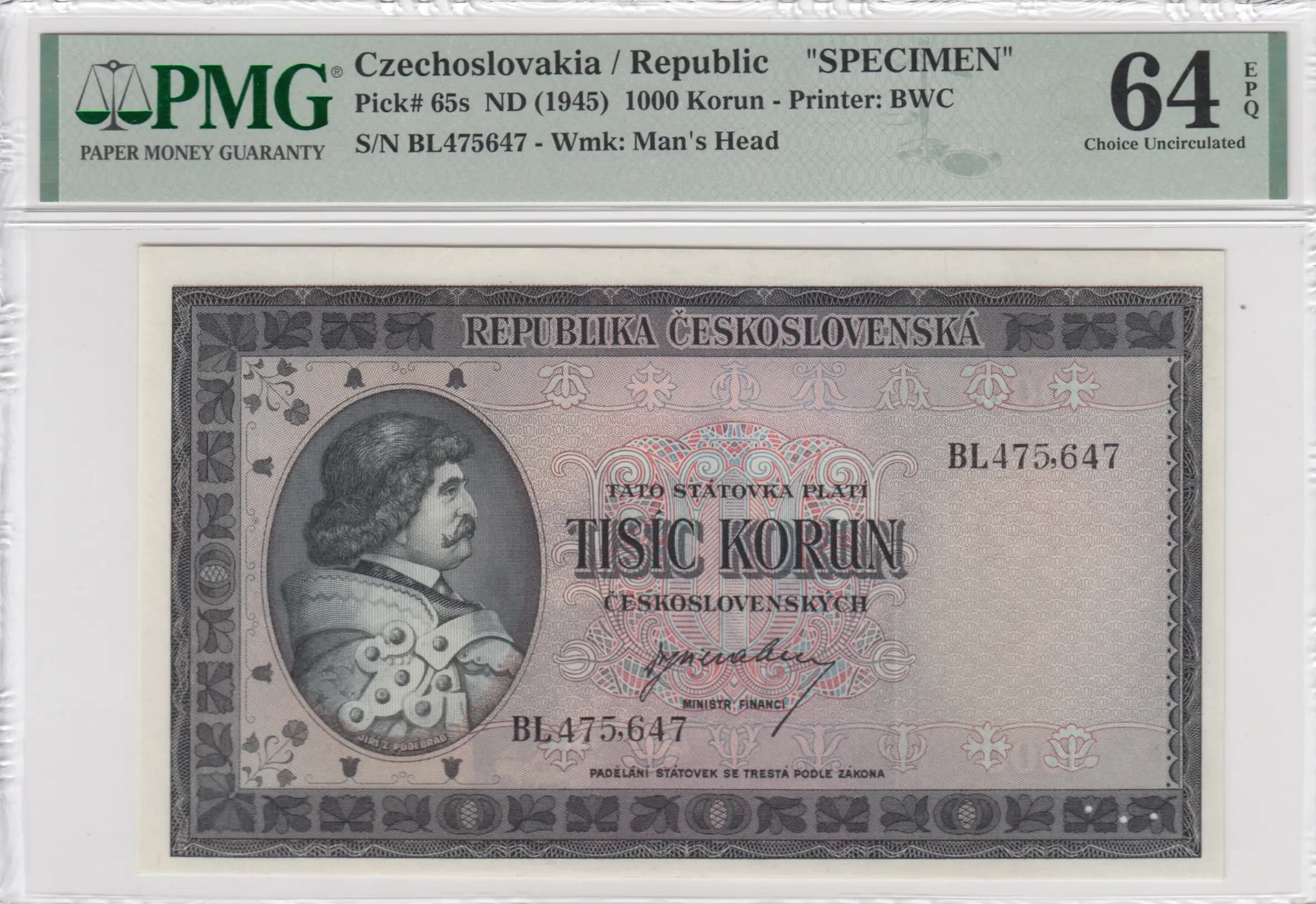
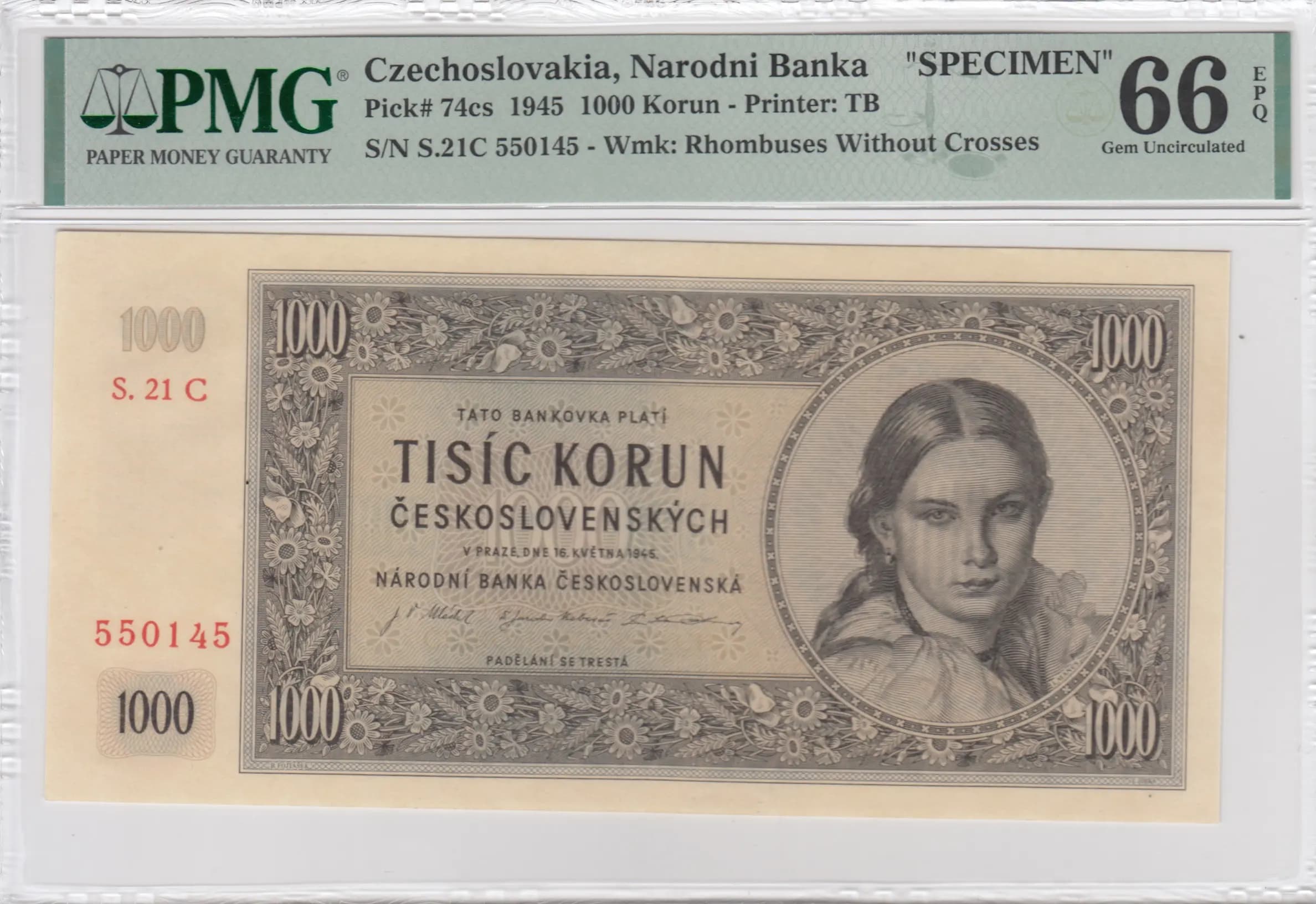
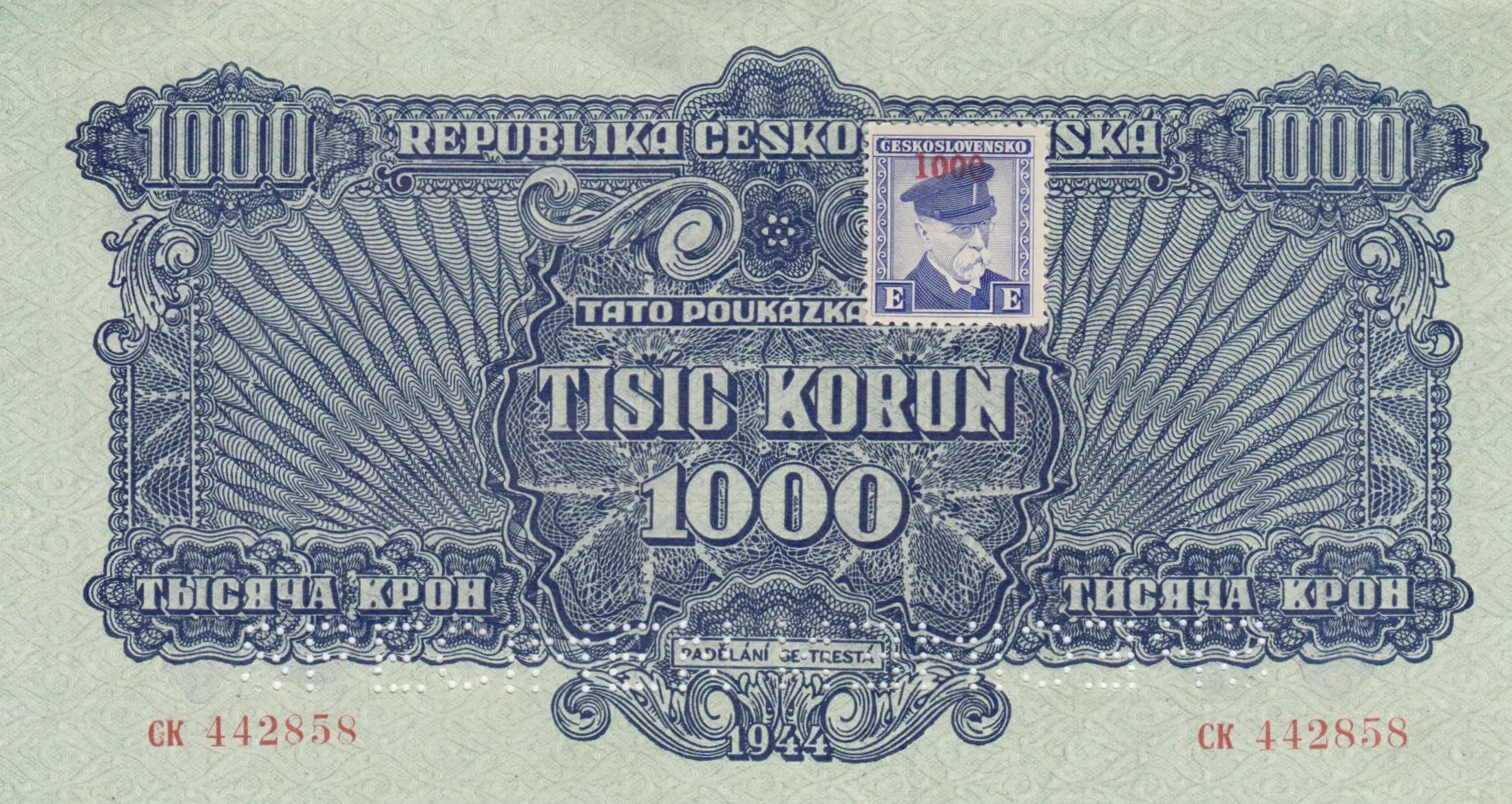
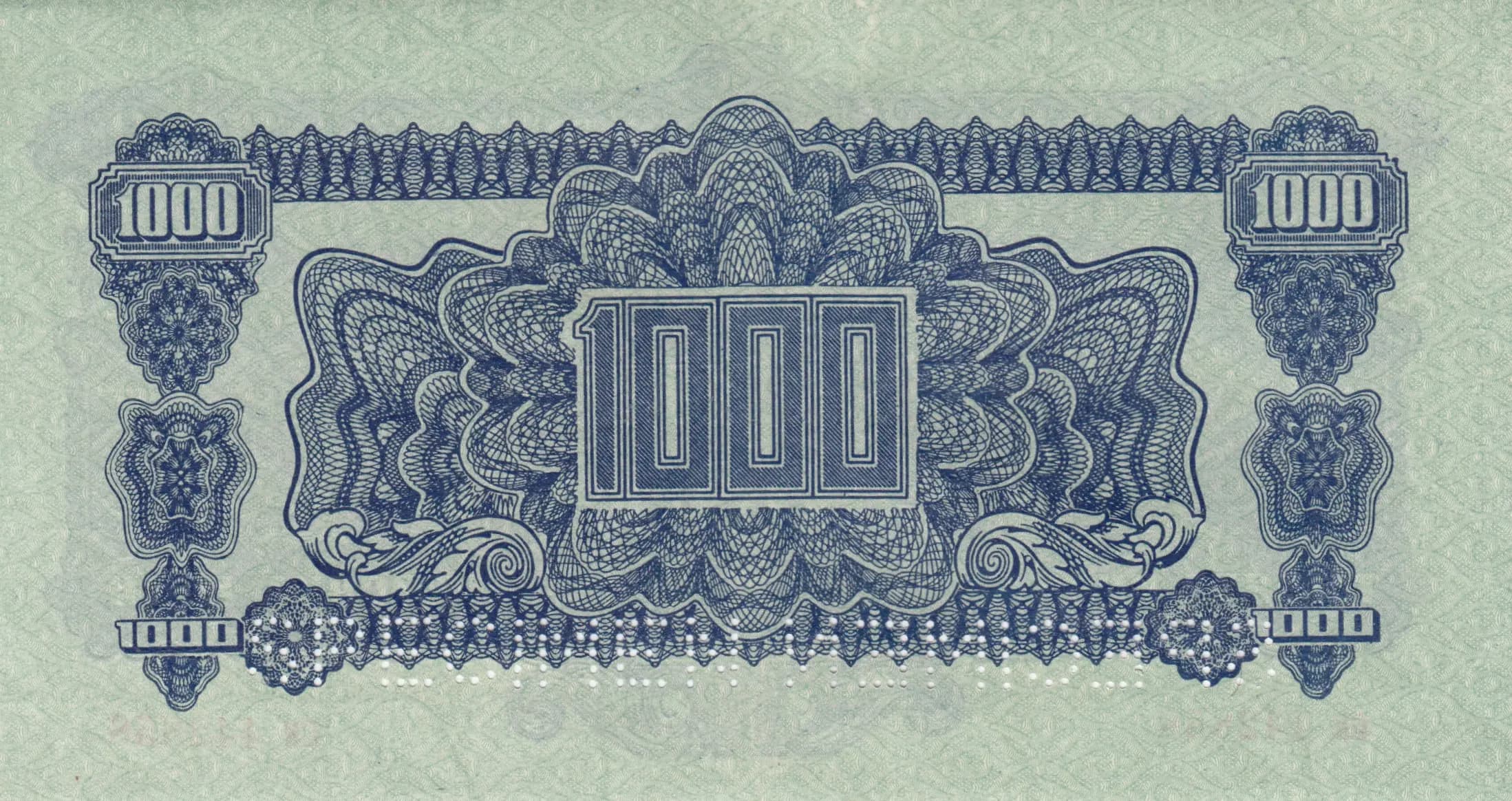
This is a 1000 Koruna specimen note from the Czechoslovak Republic dated 1945, graded AU. The note features elegant Art Deco-influenced design with intricate navy blue intaglio engraving on a cream-greenish paper stock, displaying elaborate ornamental borders, geometric patterns, and a central portrait inset on the obverse. As a specimen note marked 'TATO DOUKÁZKA' (This specimen), it represents an important transitional currency from the immediate post-WWII period and exhibits exceptional preservation with no visible wear, creases, or tears.
Common. The eBay market data shows consistent sales in the $7.75-$29 range for various grades over multiple years, with AUNC specimens selling for approximately $9.50-$29. Catalog values from 2016 show UNC at $35. These price points and the volume of sales data indicate this is a readily available specimen note in the collector market. The 1000 Koruna specimen from 1945 does not appear to have been a limited issue; multiple examples have passed through market channels regularly. No evidence exists of print run restrictions, recalls, or scarcity factors that would elevate rarity status.
The 1000 Koruna note was issued by the restored Czechoslovak Republic in 1945 following the liberation from Nazi occupation and the end of World War II. The design reflects the Art Deco aesthetic prevalent in interwar Czechoslovak currency, with the formal inscription 'REPUBLIKA ČESKOSLOVENSKÁ' emphasizing the reestablishment of the independent nation. This specimen note was likely produced by the Soviet state printer Goznak in Moscow during the early postwar period when Czechoslovak currency was being reintroduced under Soviet influence, representing a critical moment in the country's monetary reconstruction.
The obverse features a formal portrait in profile of a male figure wearing a military cap or formal hat, rendered in an inset stamp format in the upper center, symbolic of Czechoslovak state authority in the postwar period. The reverse presents a dominant ornate cartouche with shell or floral motif in the center, containing the large denomination numeral '1000' in thick outlined lettering. Both sides employ elaborate classical scrollwork, filigree patterns, and geometric repeating borders characteristic of security printing of the era. The extensive use of fine-line intaglio engraving, crosshatching, and mesh patterns throughout the design creates a complex visual field intended to prevent counterfeiting. The color scheme of navy blue on cream-greenish paper provides strong contrast typical of Central European currency design of this period.
Front: 'REPUBLIKA ČESKOSLOVENSKÁ' (Czechoslovak Republic) - top center; 'ČESKOSLOVENSKO' (Czechoslovakia) - secondary inscription; 'TATO DOUKÁZKA' (This Specimen/Proof) - specimen designation; 'TISÍC KORUN' (One Thousand Koruna) - denomination text appearing multiple times; '1000' - numeral denomination in all four corners and center cartouche; 'CK 442858' - serial number (appearing twice in red); '1945' - date of issue. Back: '1000' - large numeral in center cartouche and in all four corner rectangles.
Intaglio engraving (steel plate/copperplate printing), as evidenced by the fine line work, detailed crosshatching, and dimensional quality of the ornamental patterns visible throughout both sides. The printer was Goznak, Moscow (the Soviet state security printing facility), though without imprint markings on this specimen. The complexity of the geometric security patterns and the crisp reproduction of fine detail are consistent with high-quality intaglio production standards of major security printers of the 1940s era.
This note is cataloged as P-57s, where the 's' designation indicates this is a specimen/proof version of the regular issue (P-57). The serial number observed is 'CK 442858' in red printing. PMG records indicate a single main variant for this Pick number. The specimen designation 'TATO DOUKÁZKA' and the specimen markings distinguish this from the regular circulation issue. No other significant varieties (such as signature varieties or overprint differences) are apparent from the visual analysis, though the specimen status itself constitutes the primary variety distinction for collectors.