100 korun 1945 specimen
Market Prices
8 salesAbout This Note
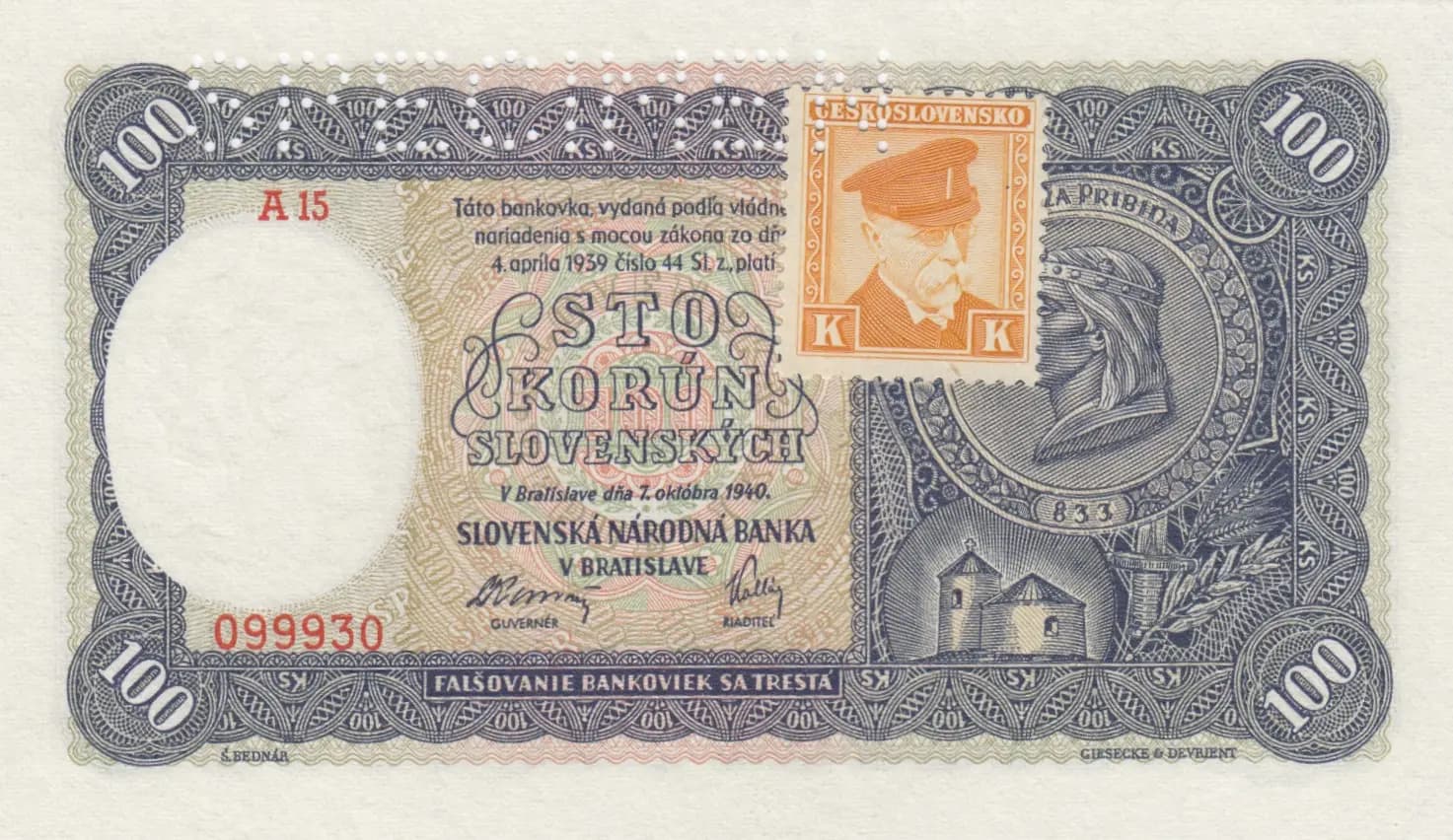
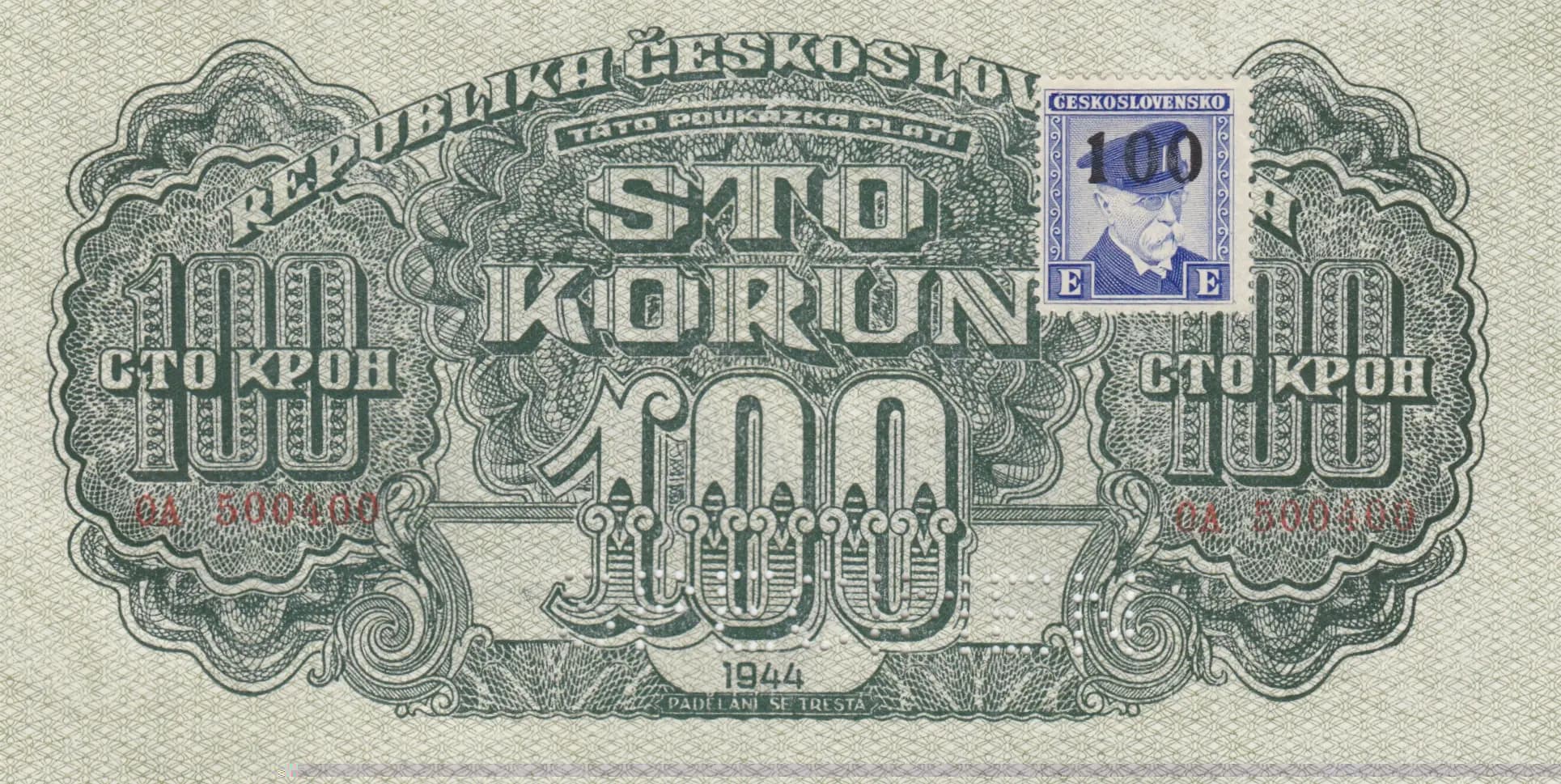
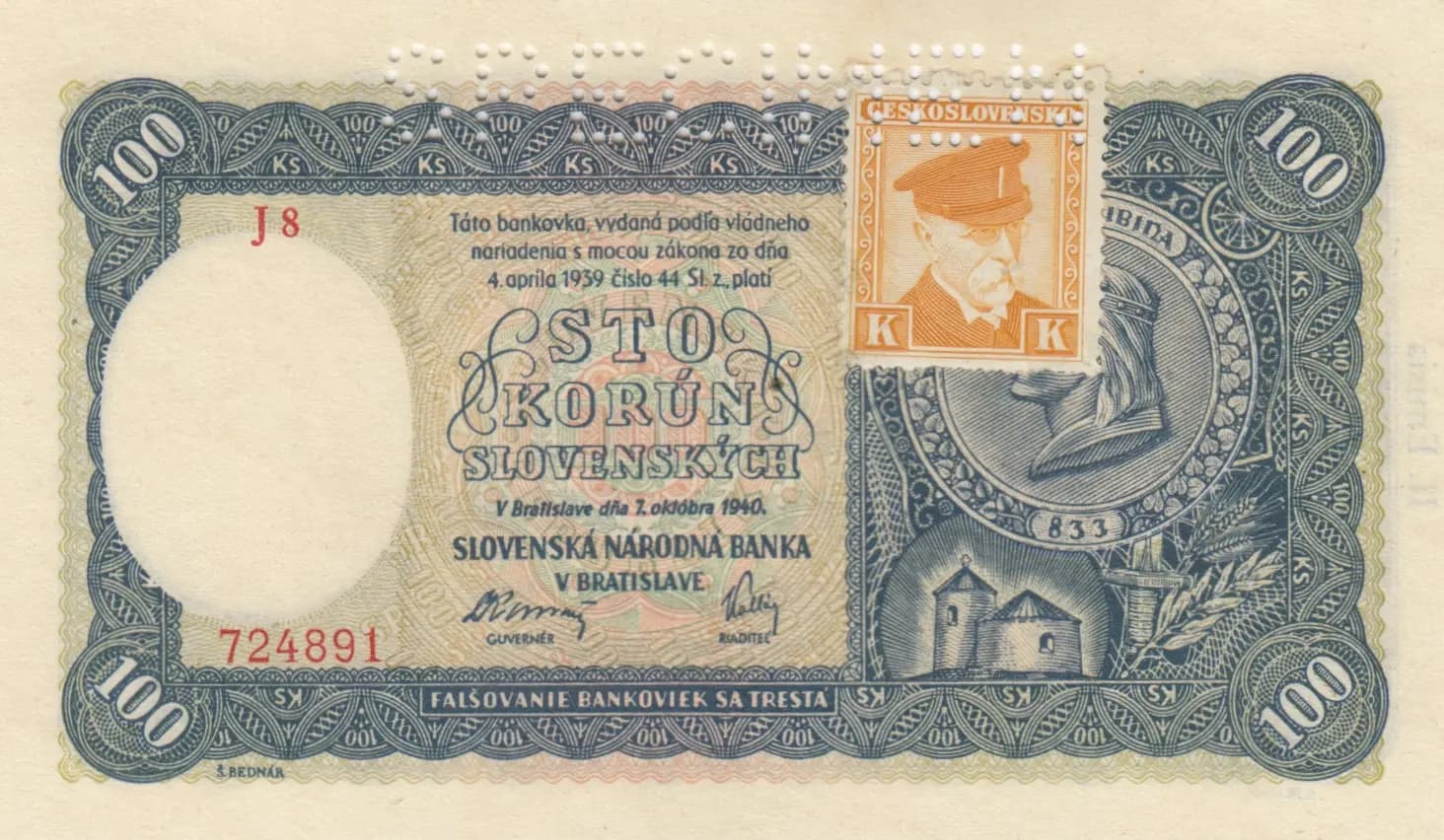
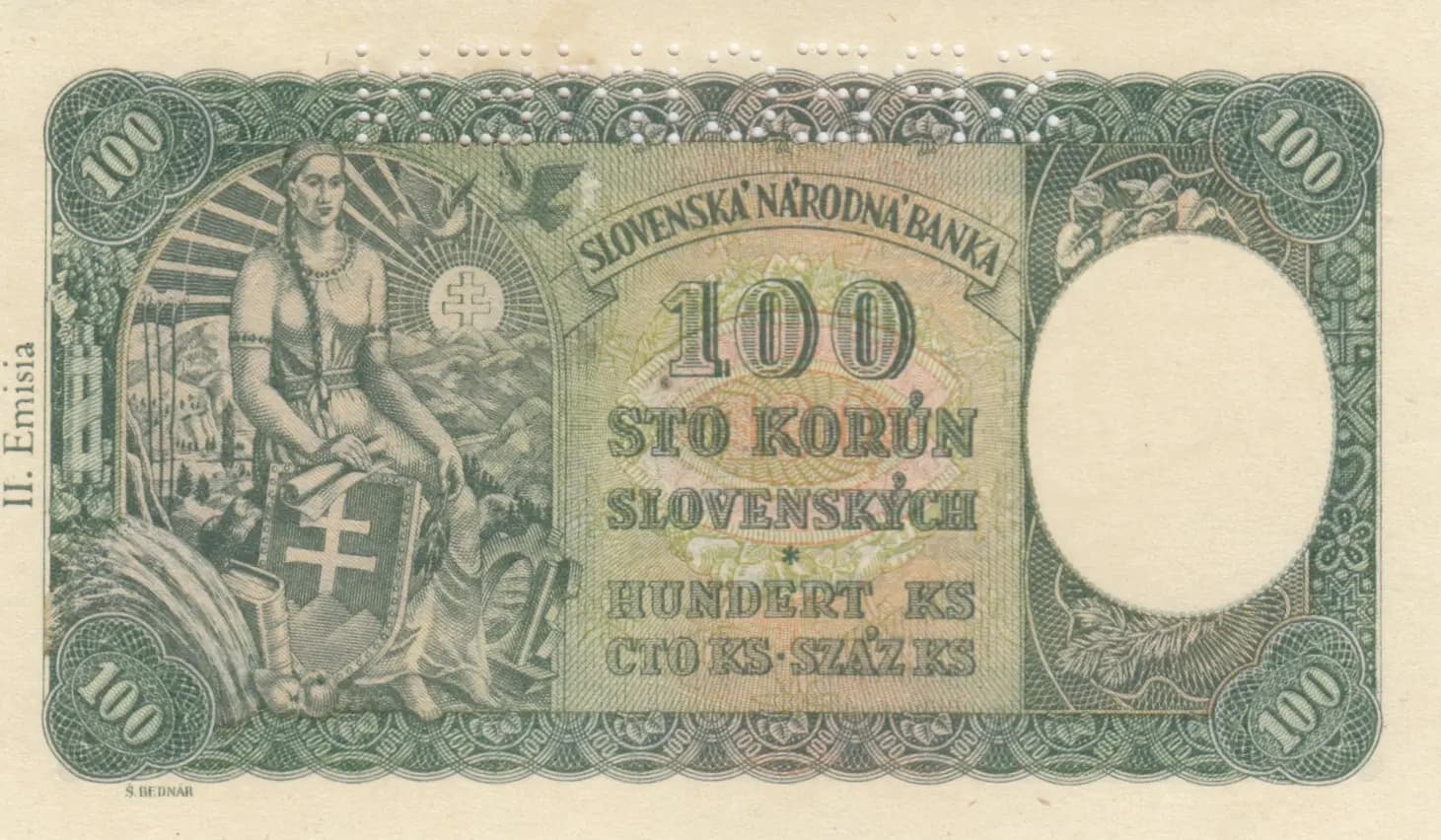
This is a 1945 specimen note of the 100 Korun denomination issued by the Slovak National Bank in Bratislava, a historically significant issue representing the post-WWII monetary system of Czechoslovakia. The note is in uncirculated condition with pristine paper and sharp printing, marked as a specimen with characteristic perforation holes across the top margin. The design features classical allegorical imagery on the reverse—a female figure holding a shield with the Slovak cross—alongside ornate engraved borders in blue-grey and green-grey, making it a notable example of mid-20th century Central European currency design.
Common. This 100 Korun specimen note is a common issue in the collector market. eBay price tracking data shows AUNC and EF examples consistently selling in the $5–$15.50 range from 2014–2018, with UNC catalog values listed at $22.50 in 2016. These modest market prices and consistent availability indicate strong supply relative to collector demand. While specimen notes are technically more limited than regular circulation issues, this particular denomination and issuer did not have a restricted print run, and examples remain readily available to collectors. The historical significance is moderate—while connected to post-WWII Czechoslovakia, this was a standard issue rather than an emergency or commemorative note.
This 100 Korun specimen was issued on October 7, 1940, by the Slovak National Bank during a period of significant political upheaval in Czechoslovakia. The note's multilingual text (Slovak, Czech, German, and Hungarian) reflects the Czechoslovak state's multinational character, while the allegorical female figure with the shield and cross symbolizes Slovak national identity and sovereignty. The specimen designation and 1945 dating indicate this note was part of post-war currency stabilization efforts as Czechoslovakia reorganized following the German occupation and the collapse of the Slovak State.
The reverse side features the allegorical personification of Slovakia as a classical female figure in traditional dress, seated and holding a shield emblazoned with the double cross of Slovakia (the heraldic symbol adopted during this period). The figure is surrounded by radiating lines suggesting divine light or national enlightenment, with mountainous landscape visible in the background—a reference to the Carpathian Mountains of Slovak territory. The front side contains a large blank oval space where a portrait would typically appear (Prince Pribina according to catalog data, though not visible in this specimen copy). Both sides feature elaborate engraved borders with geometric patterns, double-headed eagles in corner ornaments (symbolic of the Austro-Hungarian heritage and Central European identity), and the denomination prominently displayed in multiple languages reflecting the multinational Czechoslovak state. The specimen marking via perforations indicates this was never intended for general circulation.
FRONT SIDE: 'STO KORUN SLOVENSKYCH' (100 Slovak Korun) / 'Republika Československá' (Czechoslovak Republic) / 'SLOVENSKÁ NÁRODNA BANKA V BRATISLAVE' (Slovak National Bank in Bratislava) / 'V Bratislave dňa 7.októbra 1940.' (In Bratislava on October 7, 1940) / 'Toto bankovka, vydaná podľa vlídného nariadenia s mocou zákona zo dňa 4.aprila 1939 číslo 44 Sl.z., platí' (This banknote, issued according to the gracious decree with the force of law from April 4, 1939 No. 44 Sl.z., is valid) / 'FALŠOVANIE BANKOVIEK SA TRESTÁ' (Counterfeiting banknotes is punished) / Serial number: 724891 / Serial prefix: J8. REVERSE SIDE: 'ČESKOSLOVENSKIK' (Czechoslovak) / 'SLOVENSKÁ NÁRODNA BANKA' (Slovak National Bank) / '100 STO KORUN SLOVENSKYCH' (100 Slovak Korun) / 'HUNDERT KS' (German: 100 Korun) / 'CIO KS SZÁZ KS' (Hungarian/mixed: 100 Korun) / 'II Emisia' (Second Edition) / 'S.BEDNÁR' (engraver/printer name).
This note was produced using intaglio (engraved) printing on banknote paper, characteristic of high-security currency production of the 1940s era. The sharp, fine line work visible throughout the design, particularly in the decorative borders, allegorical figure details, and text, demonstrates the precision of engraved plate printing. The multi-color printing (blue-grey on front, green-grey on back, with orange specimen stamps) was achieved through successive runs of different colored inks. S. Bednár is credited as the engraver. The security features include the ornate engraved border design and the perforation specimen marking applied post-printing.
This is catalogued as P-52s (the 's' suffix designating specimen status). The note is identified as 'II Emisia' (Second Edition) on the reverse, indicating it belongs to a later printing series of the 100 Korun denomination. The serial number 724891 with prefix J8 is visible on this particular example. PMG has catalogued this Pick number with one main variant, reflecting the specimen designation. The note's 1945 dating in the visual analysis combined with the October 7, 1940 legal date represents the standard reissue pattern for Czechoslovak currency during the post-war period when earlier 1940 notes were put back into circulation with specimen markings for official or archival purposes.