100 korun 1945 specimen
Market Prices
22 salesAbout This Note
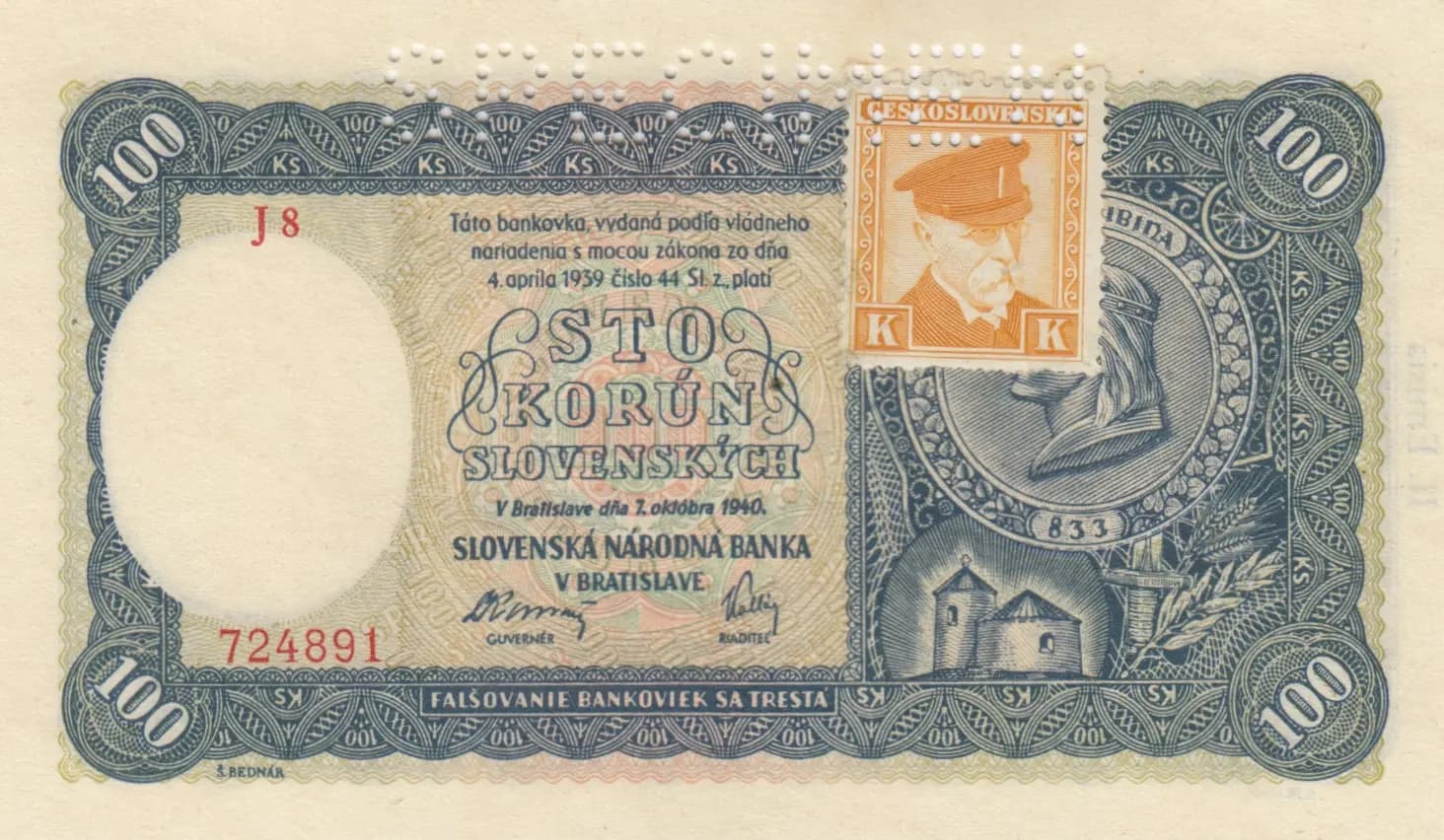
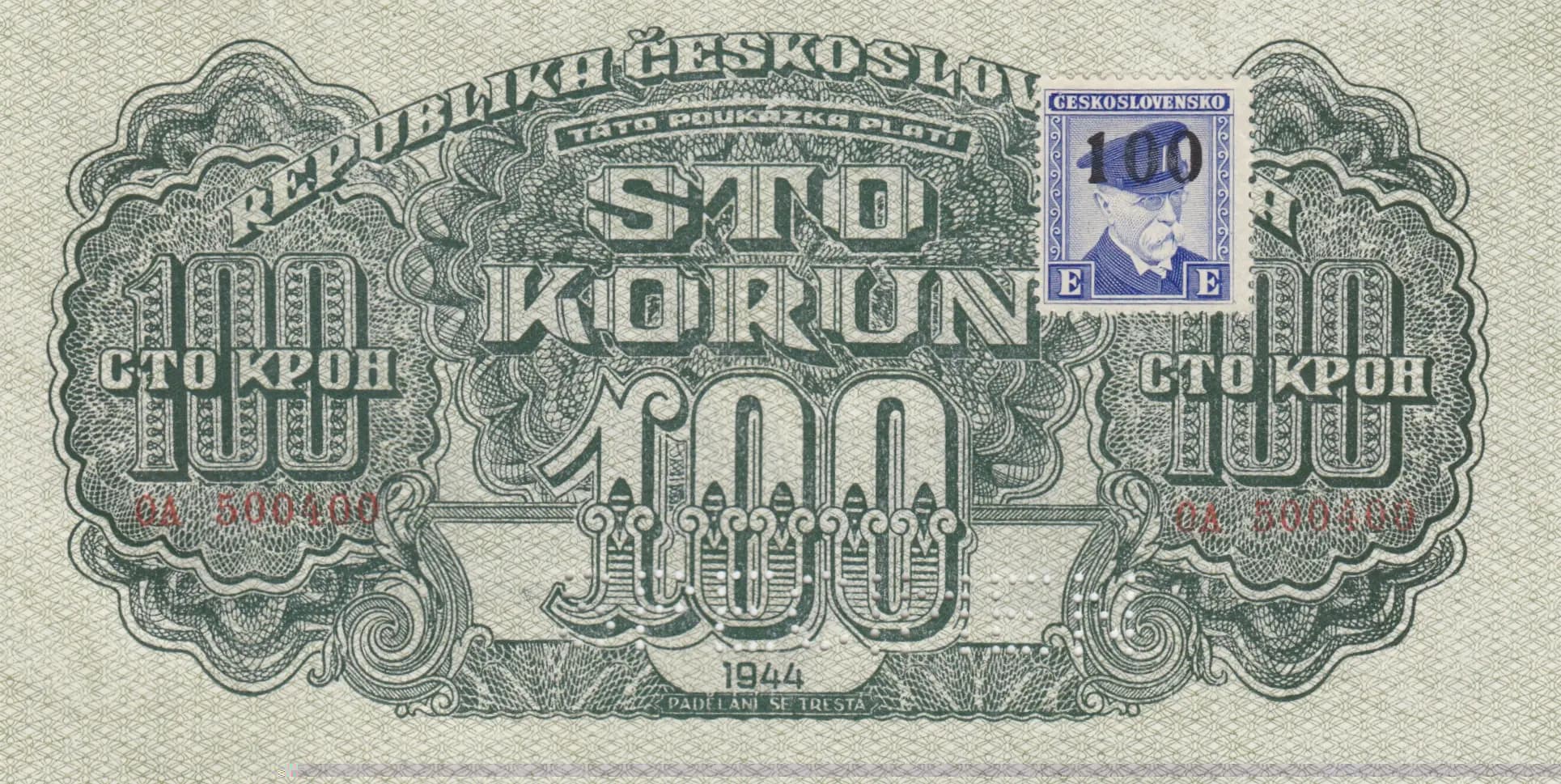
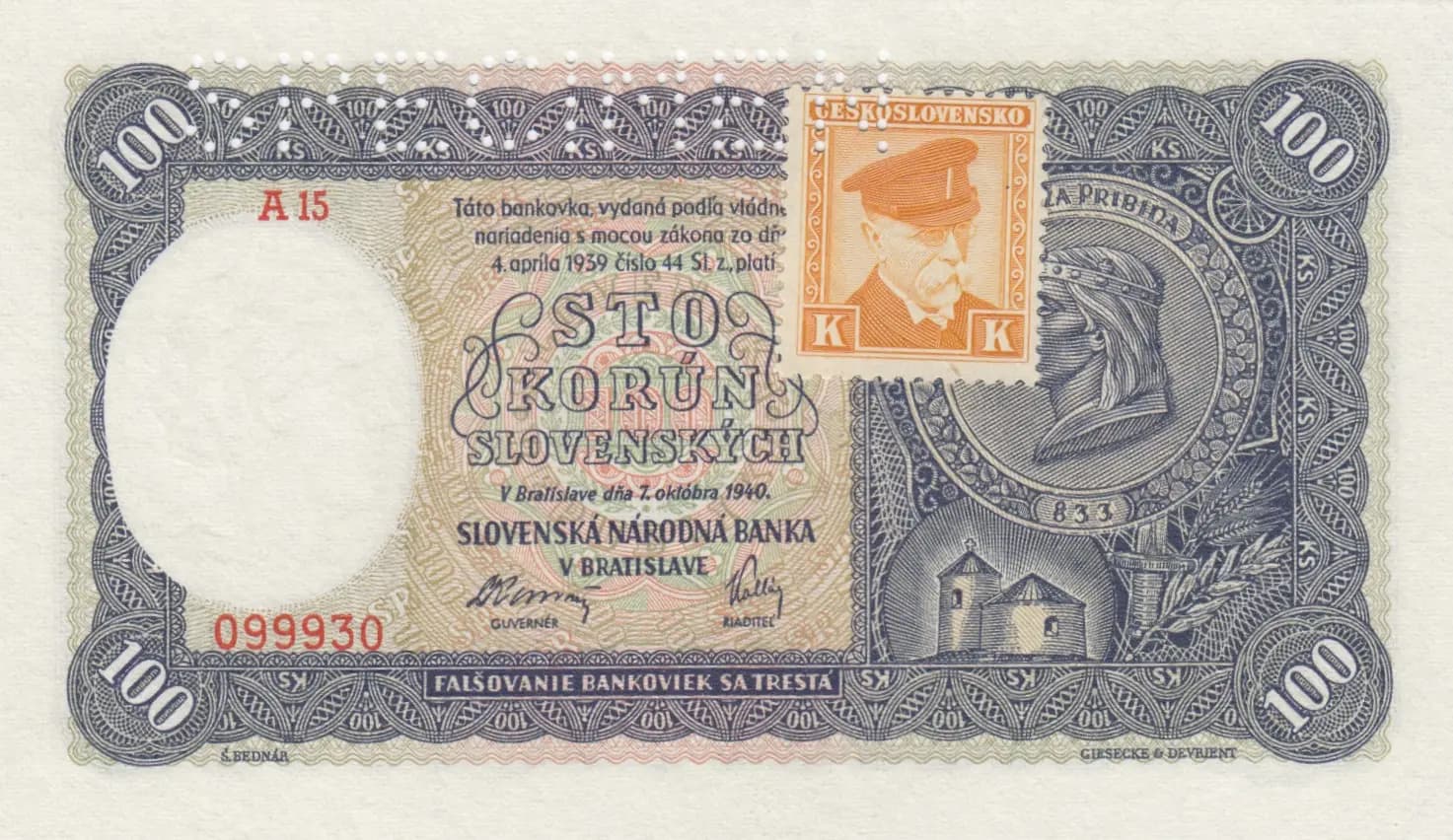
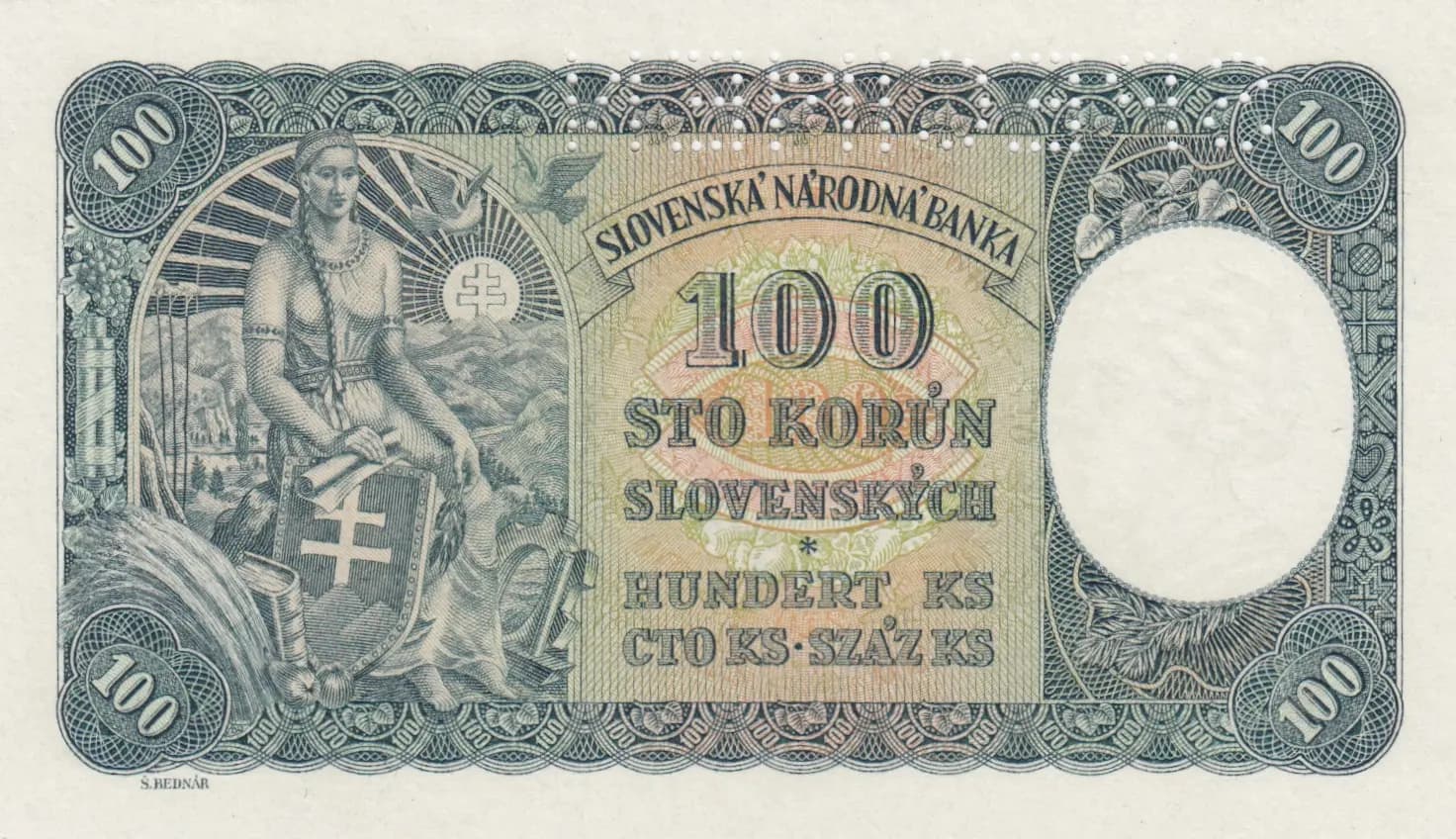
This is a 1945 specimen note of the 100 Korún Československých, Pick P-51s, presented in uncirculated condition. The note features distinctive ornate dark blue borders with intricate geometric patterns, a portrait of a military-capped figure on the obverse, and an allegorical seated male figure on the reverse. As a specimen note, it displays characteristic blank oval watermark areas on both sides and bears the official 'ČESKOSLOVENSKO' postage stamp overlay, making it particularly interesting to collectors of Central European currency and specimen numismatics.
Common. The eBay market data shows consistent sales at modest prices ranging from $3.80 to $62, with most uncirculated examples selling in the $10-$20 range. The 2016 catalog value of $3 UNC further confirms common status. Historical print runs for this denomination during the 1945 period were substantial, and specimens remain readily available in the collector market. The denomination and issuing period were not marked by scarcity or recall.
This banknote was issued during the complex period of Czechoslovak history, specifically bearing a Slovak National Bank designation in Bratislava dated October 1, 1940, though the specimen variant shown here dates to 1945. The note reflects the multilingual character of the Czechoslovak state, with inscriptions in Slovak, Czech, and German, and depicts symbolic figures representing Slovak national identity and Slavic heritage. The allegorical imagery on the reverse, featuring a muscular figure associated with Slavic cross symbolism and mountain landscapes, reinforces the nationalist themes prevalent in Central European currency design of this era.
The obverse features a portrait identified as Prince Pribina (a 9th-century Slavic ruler), depicted wearing a military or formal peaked cap, rendered in orange-tan tones on the left side of the note, with a small architectural structure (chapel or church with domed towers) visible below. The reverse displays an allegorical figure representing Slovak national identity—a muscular, partially draped male figure seated and associated with a shield bearing a Slavic cross emblem, set against a forested or mountainous landscape. The figure has a radiating sun or halo effect behind the head, symbolizing enlightenment and national awakening. Both sides feature elaborate decorative borders with intricate geometric and floral patterns in dark blue, characteristic of Giesecke & Devrient security printing. The large blank oval areas on both obverse (left) and reverse (right) are typical specimen features, indicating this was an archival or demonstration example never intended for circulation.
FRONT SIDE: 'STO KORUN SLOVENSKÝCH' (One Hundred Crowns Slovak) / 'Republika Československá' (Czechoslovak Republic) / 'Toto bankovka, vydaná podľa vládneho nariadenia s mocou zákona za dňa 4. apríla 1939 číslo 44 Sl. z.' (This banknote is issued pursuant to a decree with the force of law of April 4, 1939 No. 44 Coll.) / 'V Bratislave dňa 1. októbra 1940' (In Bratislava on October 1, 1940) / 'SLOVENSKÁ NÁRODNÁ BANKA V BRATISLAVE' (Slovak National Bank in Bratislava) / 'GUVERNÉR' (Governor) / 'RIADITEĽ' (Director) / 'FALŠOVANIE BANKOVIEK SA TRESTÁ' (Counterfeiting Banknotes is Punished) / Serial: 099930 / Reference mark: A 15. BACK SIDE: 'STO KORUN SLOVENSKÝCH' (One Hundred Crowns Slovak) / 'SLOVENSKÁ NÁRODNÁ BANKA' (Slovak National Bank) / 'HUNDERT KS' (One Hundred KS in German) / 'S. BEDNÁR' (designer/engraver signature) / 'GIESECKE & DEVRIENT' (printer) / Corner denominations: '100' repeated in all four corners.
This note was produced using intaglio (engraved line) printing, the standard security printing method for banknotes of this period. The fine-line engraving throughout, intricate border patterns, and detailed portraiture are characteristic of intaglio work. The printer is identified as Giesecke & Devrient (German security printer), as noted on the reverse. The specimen variant is indicated by the characteristic blank oval watermark areas, postage stamp overlay, and archival presentation, which were intentionally omitted from circulation examples.
This note is catalogued as Pick P-51s (specimen variant), with Pick P-51a representing the regular circulation issue. The 'S' designation indicates specimen status, confirmed by the blank oval watermark areas on both sides and postage stamp overlay on the obverse. The serial number visible (099930) and designer signature 'S. BEDNÁR' are consistent with documented production records. No additional varieties (such as different signatures, date variants, or overprints) are apparent on this example.