10 korun 1945
Market Prices
23 salesAbout This Note
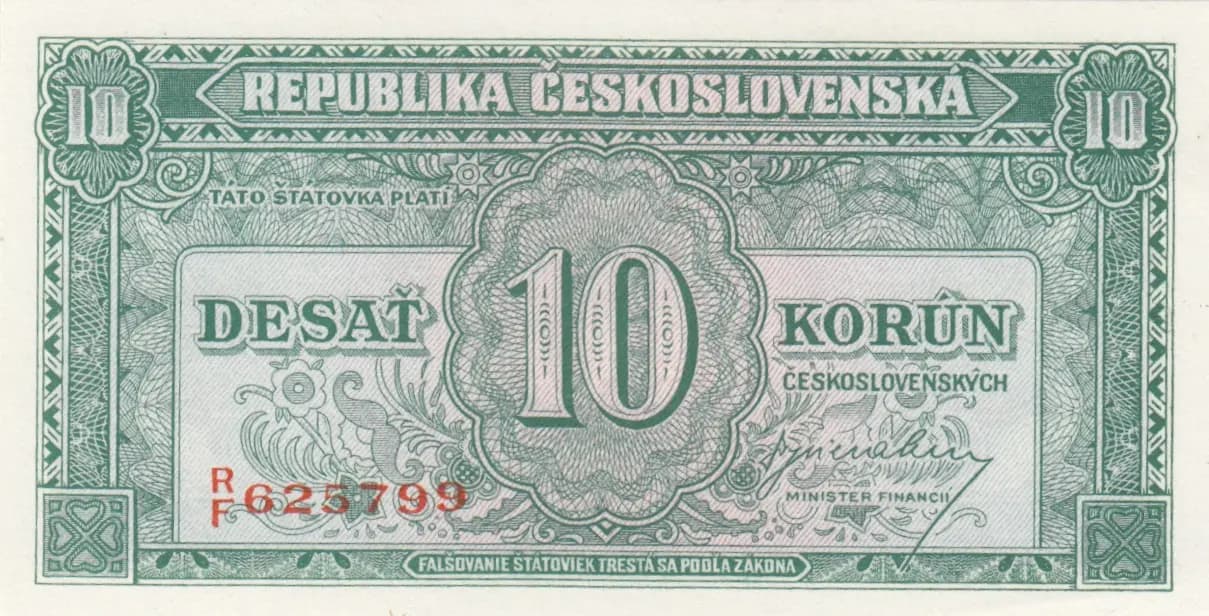
This is a striking 10 Korún note from Československá Republika (Czechoslovakia) issued in 1945, printed by the prestigious Thomas de la Rue in London. The note displays excellent condition consistent with AU grading, featuring pristine green and light green coloring with elaborate ornamental designs and no visible wear, creases, or damage. The detailed engraved patterns and ornate floral frames around the denominations showcase the security printing craftsmanship of the era, making this an attractive example of post-WWII Czechoslovak currency.
Common. This note trades actively on the secondary market with consistent eBay sales data spanning from 2012 to 2021, with prices ranging from $1.04 to $12.51 depending on condition. The 2016 catalog valuation of $12.50 for UNC and $1.25 for VF further confirms this is a readily available note. The AU condition example presented here typically achieves $4–$6 in auction, well within the range of common banknotes. The print run was substantial, and the note was not subject to recall or withdrawal.
This 1945 issue represents Czechoslovakia's currency in the immediate aftermath of World War II, when the nation was re-establishing its independence and monetary sovereignty following liberation. The ornate classical design with floral and geometric motifs reflects the formal, decorative aesthetic typical of interwar and early post-war European banknote design. The printing by London's Thomas de la Rue (TDLR) demonstrates that even in the post-war period, Czechoslovak authorities commissioned work from one of the world's premier security printers to ensure confidence in the restored currency.
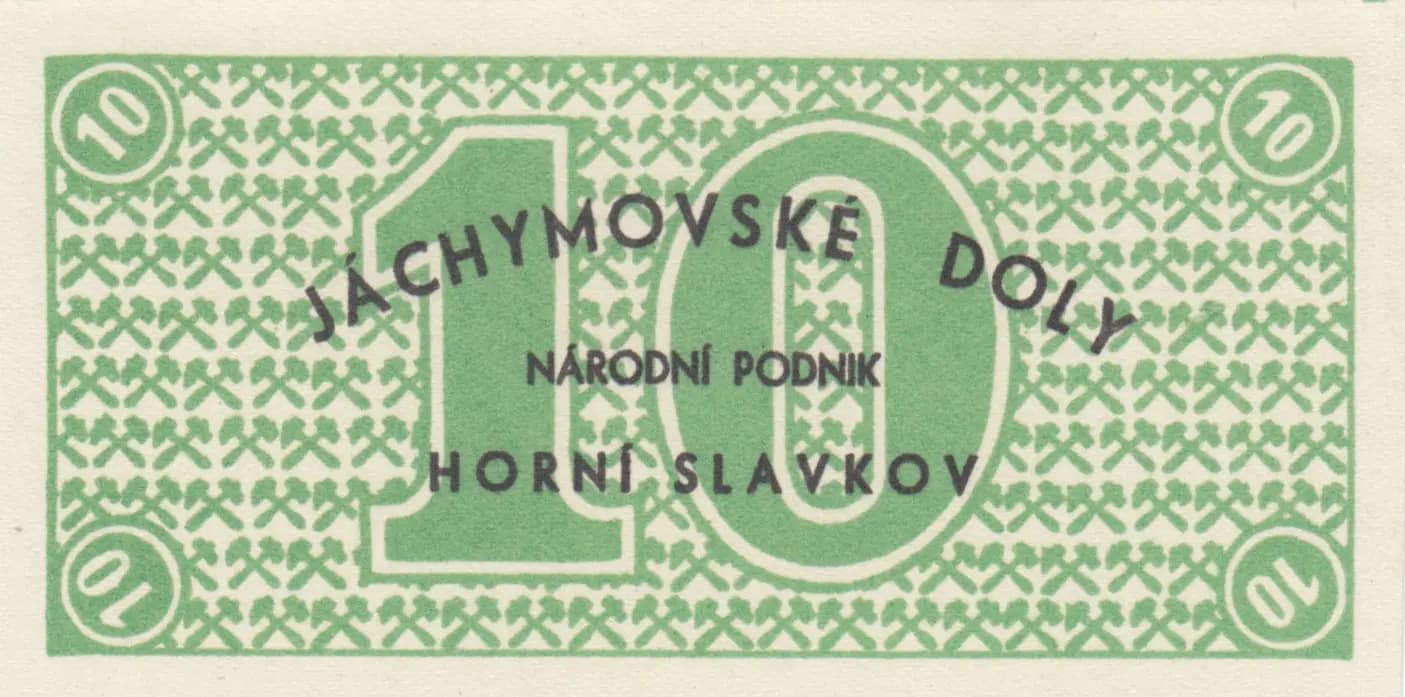
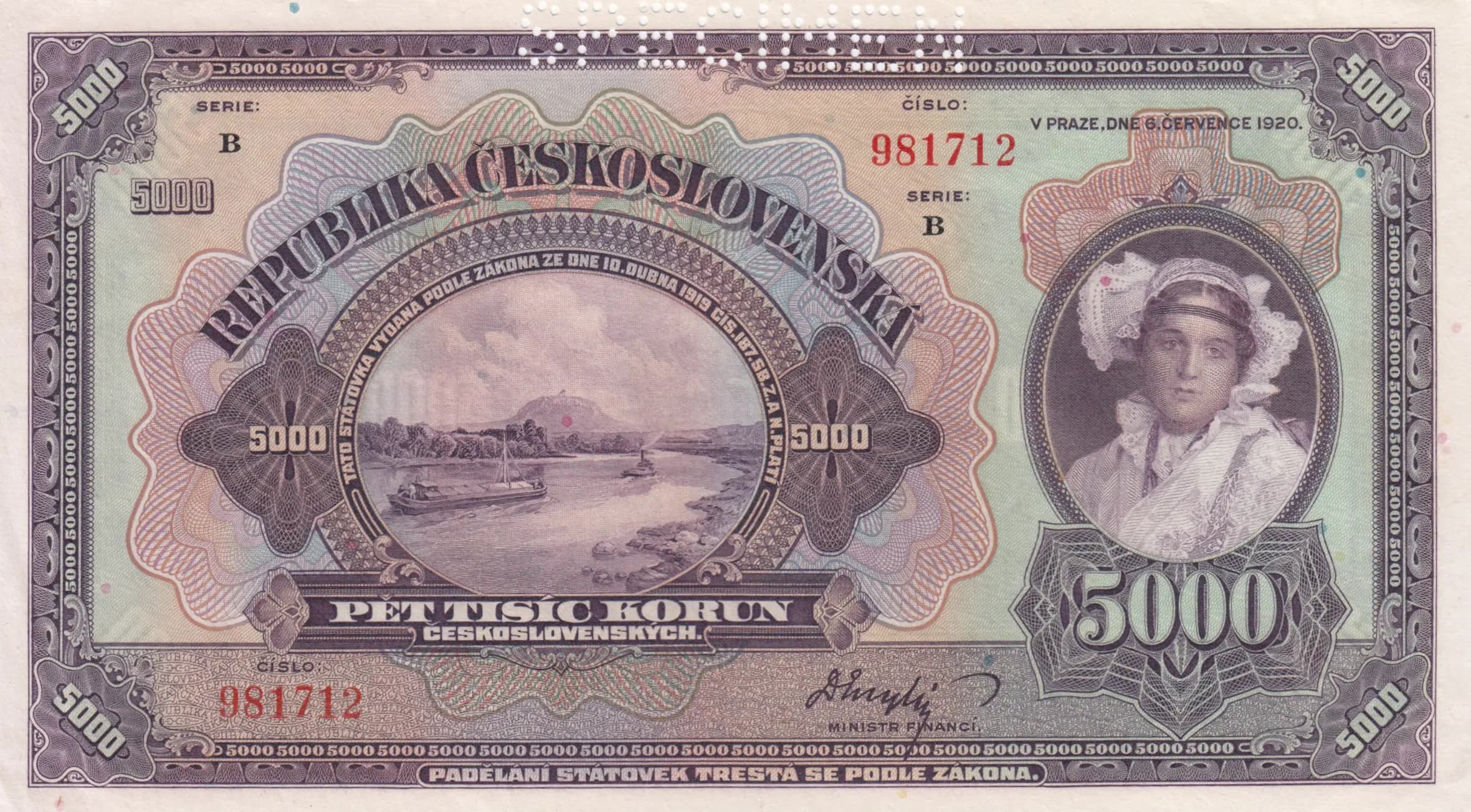
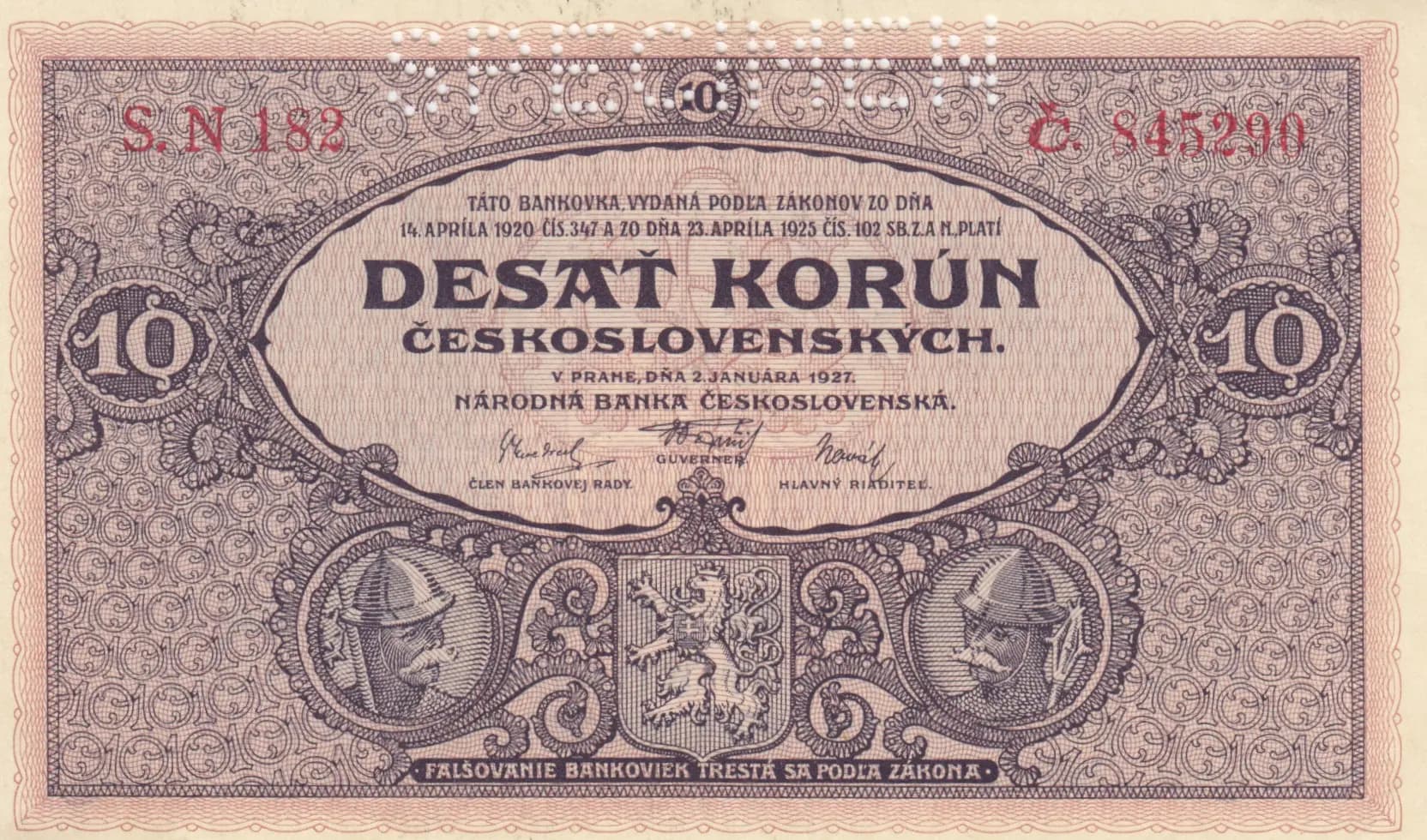
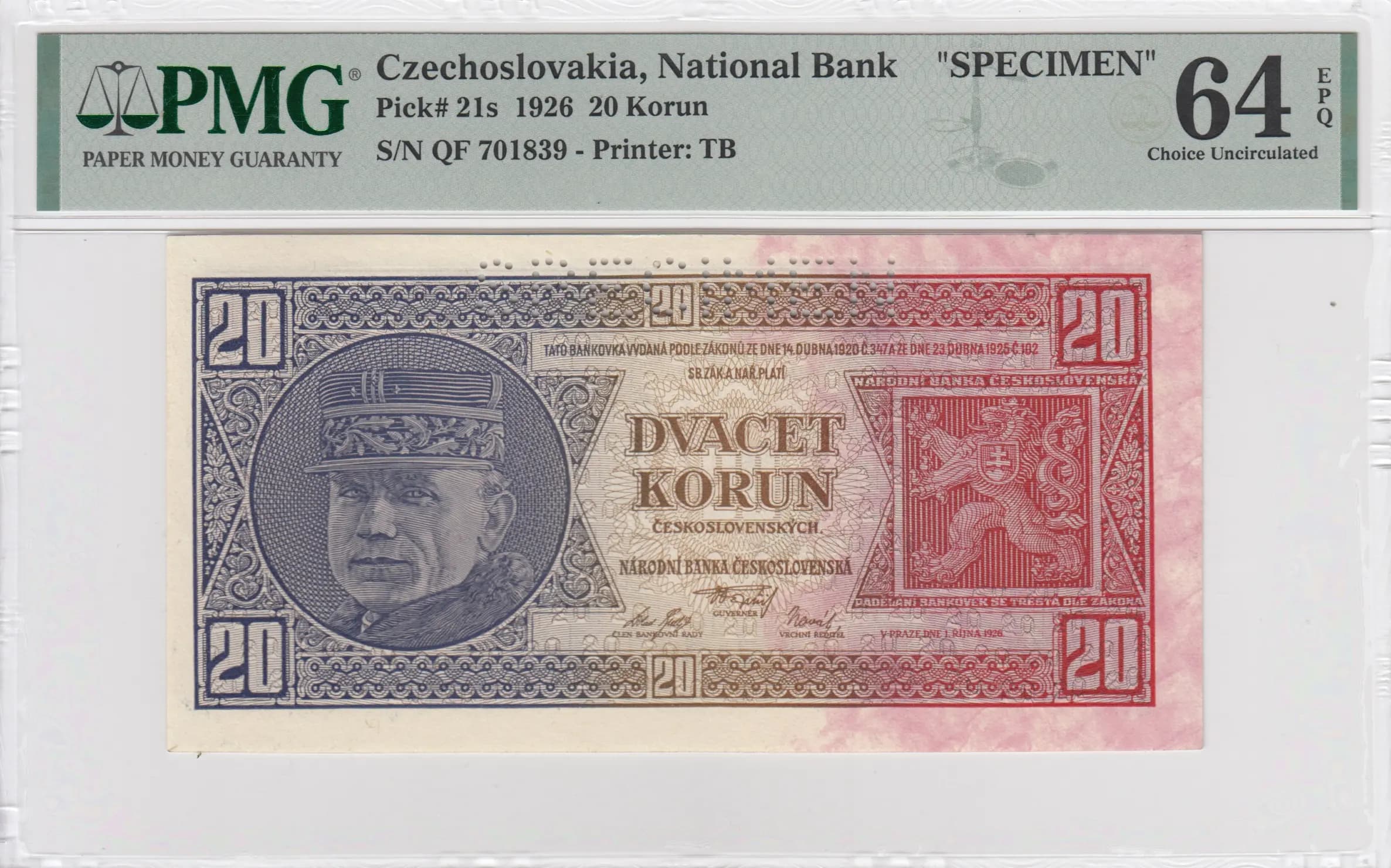
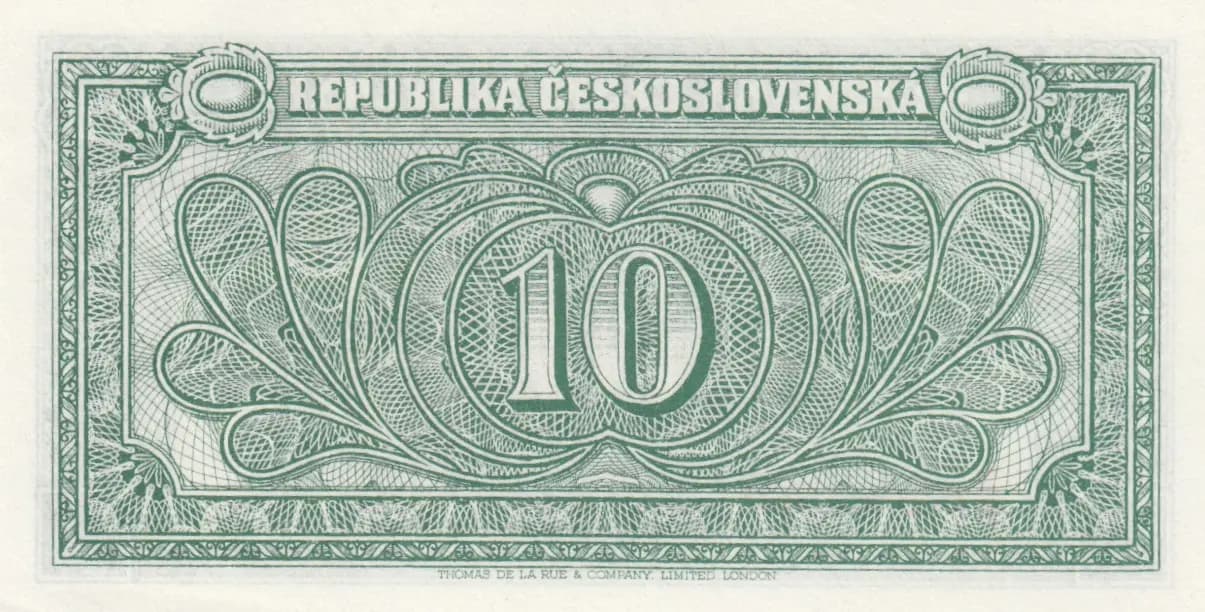
The 10 Korún note features a highly symmetrical, classical design centered on ornamental denomination frames. The front displays the numeral '10' prominently within an elaborate floral and shell-shaped decorative frame, flanked by 'DESÁT' and 'KORÚN ČESKOSLOVENSKÝCH' text. The reverse presents a similar but more expansive ornamental composition with the denomination centered in an even more elaborate frame featuring elaborate leaf and floral motifs. No portraits or landmarks are depicted; instead, the design relies entirely on intricate engraved ornamental patterns, geometric corner elements, and detailed border work throughout. The color scheme employs green as the dominant hue with light green and white elements creating visual depth and complexity characteristic of high-security banknote design.
FRONT SIDE: 'REPUBLIKA ČESKOSLOVENSKÁ' (Czechoslovak Republic) — country of issue; 'DESÁT' (Ten) — denomination in words; 'KORÚN ČESKOSLOVENSKÝCH' (Czechoslovak Koruna) — currency unit; 'TATO STÁTOVKA PLATÍ' (This banknote is legal tender) — legal tender declaration; 'STÁTOVKA TŘESTÁ SA PODLE ZÁKONA' (Banknote issued according to law) — regulatory statement; 'MINISTER FINANCIÍ' (Minister of Finance) — authorizing official; 'R 6625799' — serial number. BACK SIDE: 'REPUBLIKA ČESKOSLOVENSKÁ' (Czechoslovak Republic); 'THOMAS DE LA RUE & COMPANY LIMITED LONDON' (printer information).
Intaglio engraving (recess printing), the primary method employed by Thomas de la Rue for security banknotes of this era. The detailed fine-line work, complex ornamental patterns, and sharp clarity of all design elements visible in both the front and back images confirm the use of steel plate engraving. The ornate floral frames, geometric patterns, and fine border details are characteristic of skilled intaglio craftsmanship. Thomas de la Rue's signature appears on the reverse, confirming this world-class security printer's involvement.
This note is cataloged as Pick P-60, with PMG records indicating two variants exist: P-60a and P-60s. Based on the visual analysis showing a serial number prefix 'R' and the absence of specimen overprint markings, this appears to be a regular P-60a circulation issue. The serial number 'R 6625799' in red ink is consistent with standard issue characteristics. No overprints, special markings, or signature variations are evident that would indicate a specimen note (P-60s variant).