10 pesos 1896
Market Prices
10 salesAbout This Note
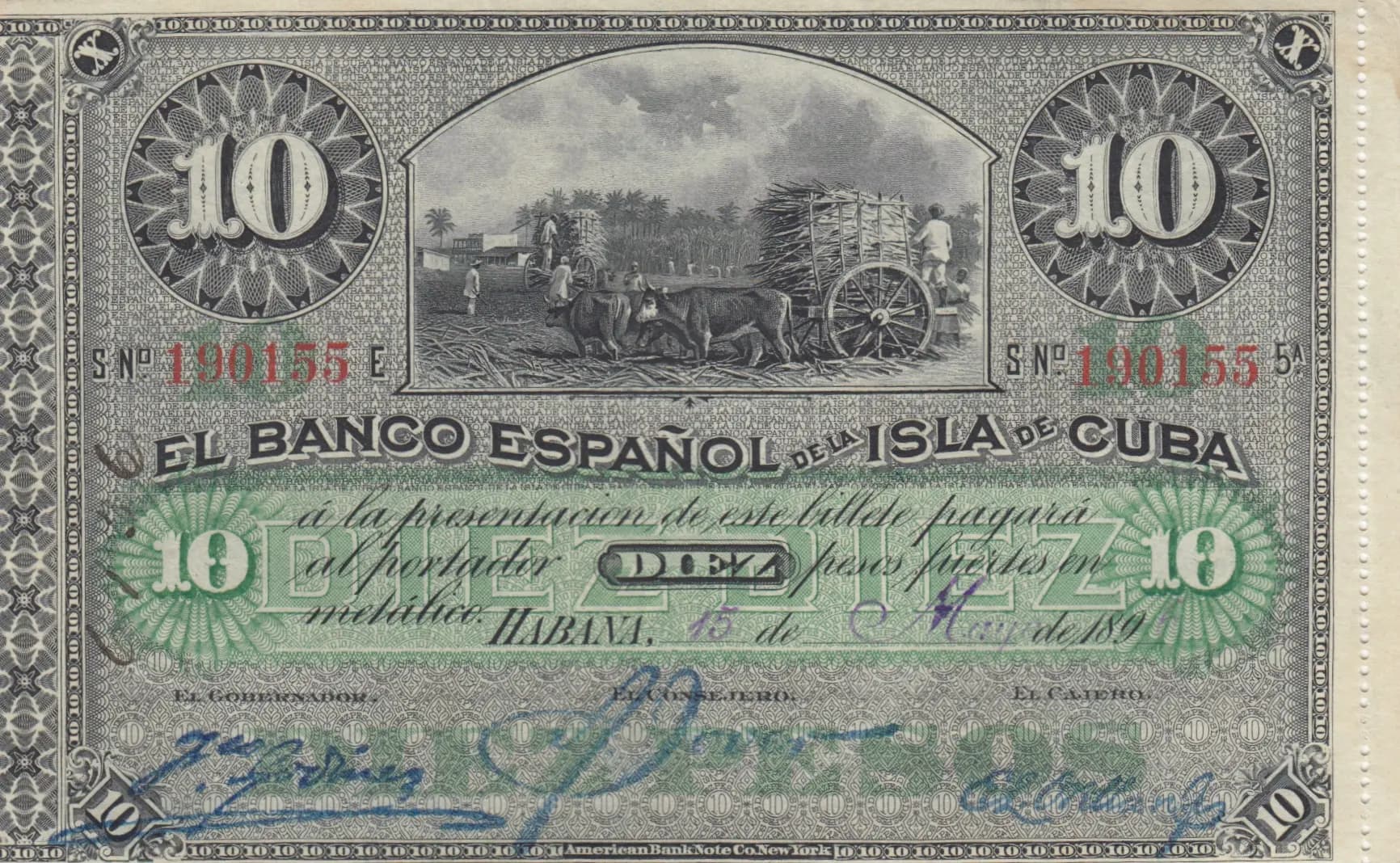
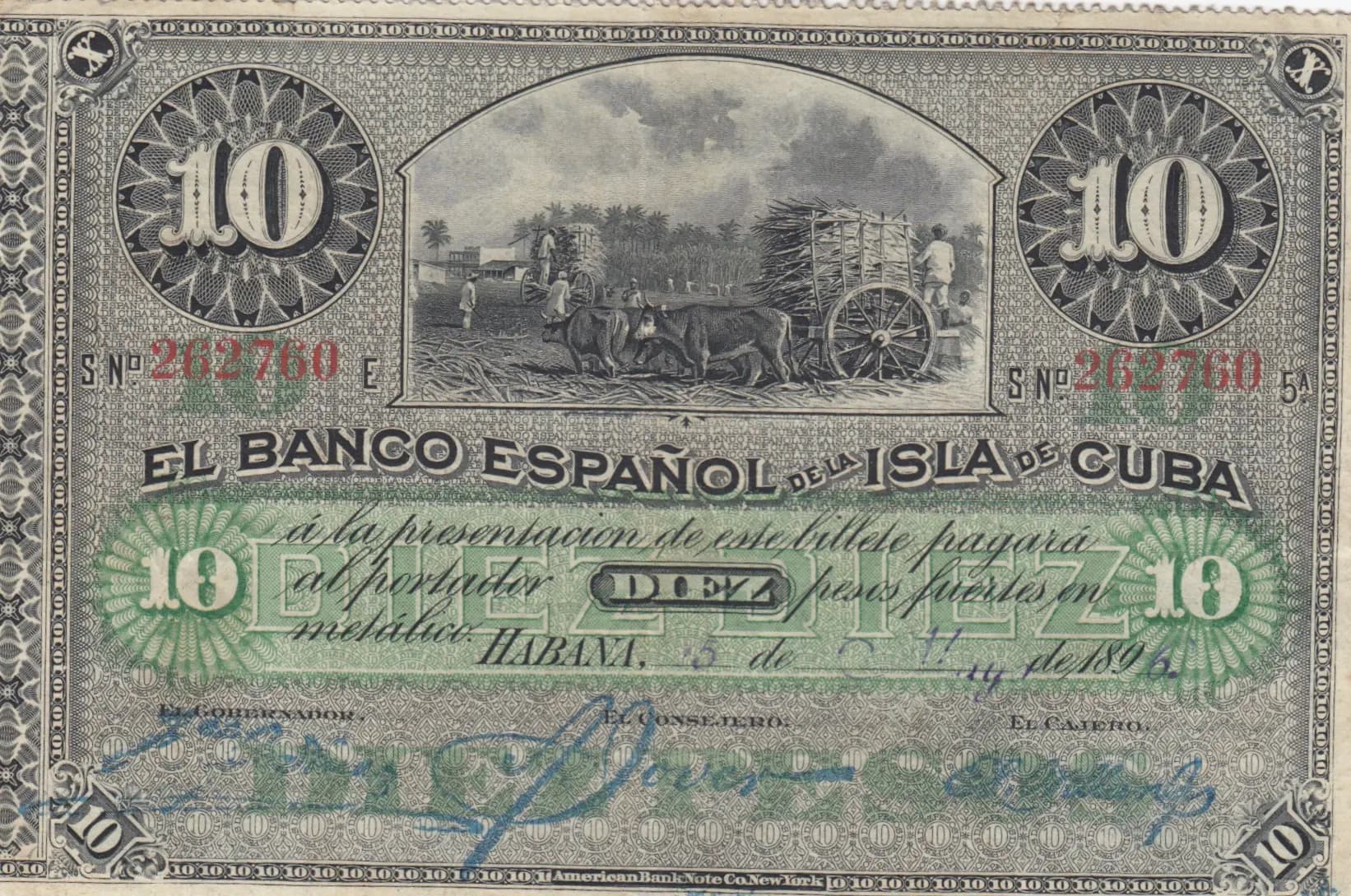
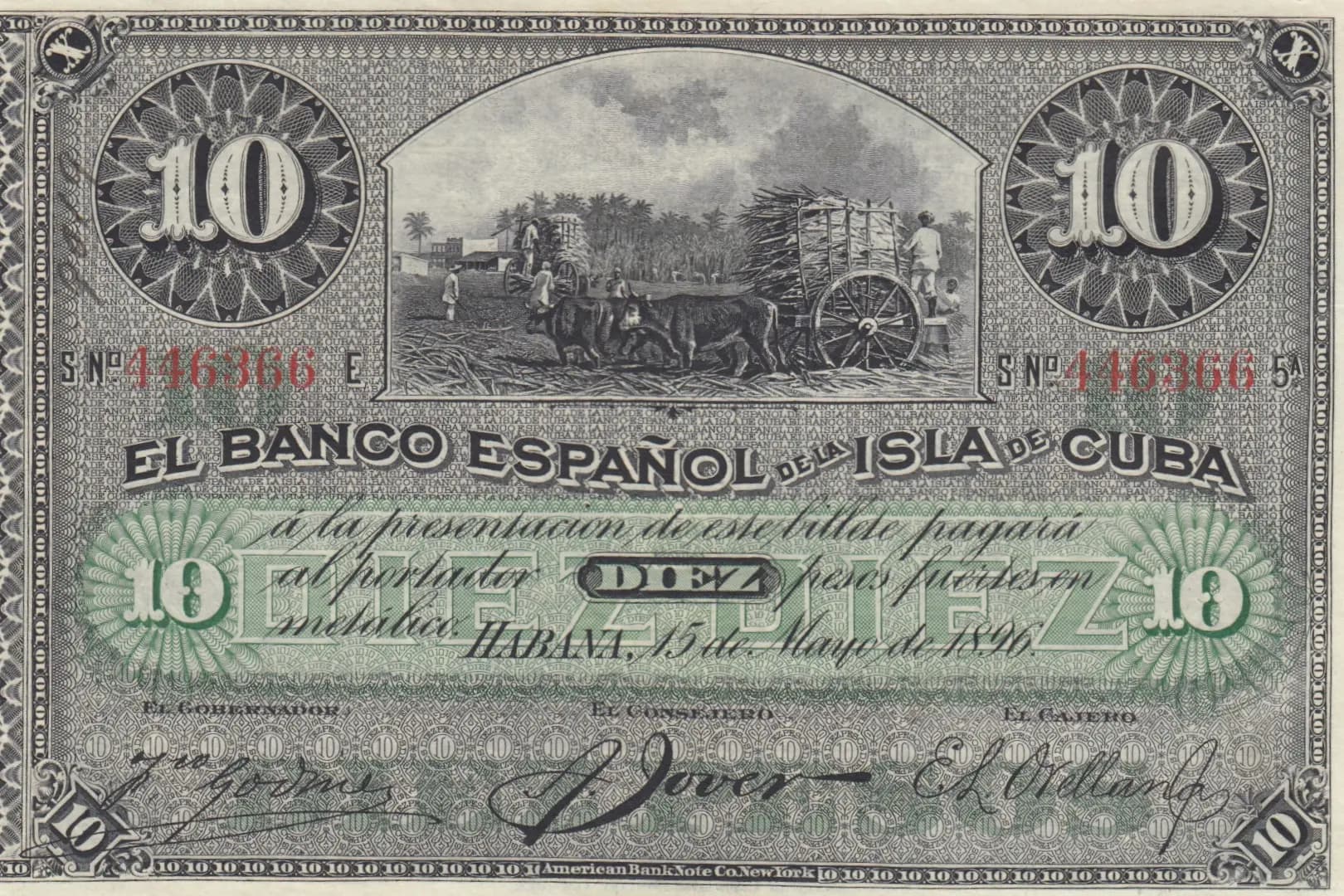
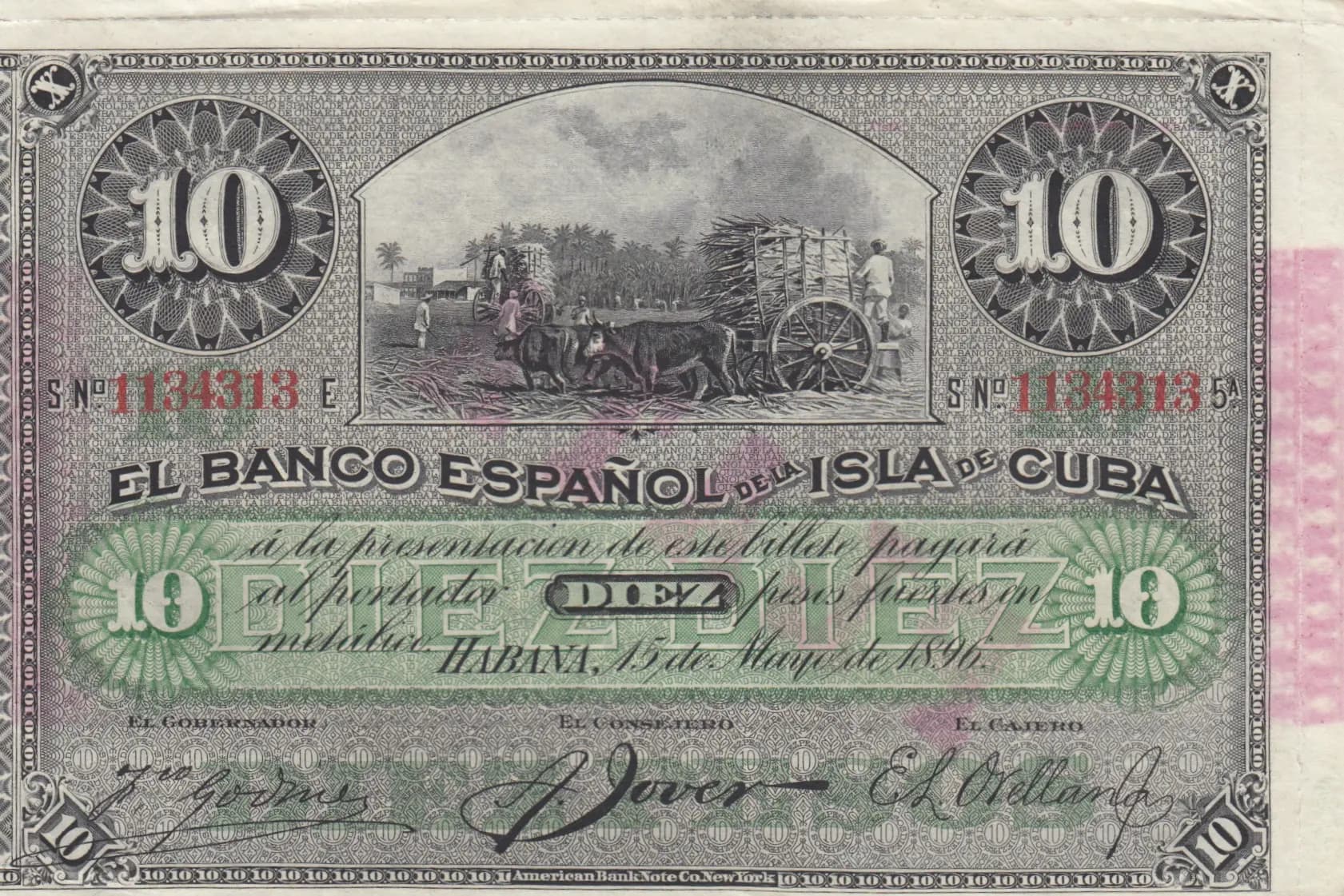
This is an AU-graded 10 Pesos banknote from El Banco Español de la Isla de Cuba, dated 1896, representing a significant piece of Cuban colonial monetary history. The note features an exceptionally well-rendered central vignette depicting an ox cart laden with agricultural products in a tropical setting—a quintessential image of Cuba's sugar-based economy during Spanish colonial rule. Despite red cancellation stamps marking it as 'CANCELADA' (removed from circulation), the note displays excellent preservation with only minor age-related discoloration and no significant tears, making it an attractive example for collectors of Caribbean or Spanish colonial currency.
Common. eBay market data shows consistent trading activity across multiple condition grades (2014-2020), with most sales ranging from $8-$56, with the majority in the $10-$15 range even for higher grades like VF and AUNC. Catalog values from 2016 list this note at $5 (VF) and $15 (UNC), indicating steady, modest demand typical of common late 19th-century colonial issues. The large print run by a major security printer and the straightforward design (without rare varieties) support a common classification. While historically interesting as a Cuban colonial piece, it does not command premium prices.
This note was issued during the final years of Spanish colonial rule in Cuba, specifically on May 1, 1896, just two years before the Spanish-American War and Cuban independence. The ox cart vignette was deliberately chosen to represent Cuba's agrarian foundation and colonial economic structure, while the heraldic coat of arms on the reverse symbolized Spanish sovereignty over the island. The bank itself, El Banco Español de la Isla de Cuba, operated under Spanish authority and issued currency backed by the colonial government's promise to pay 'strong pesos' in Havana.
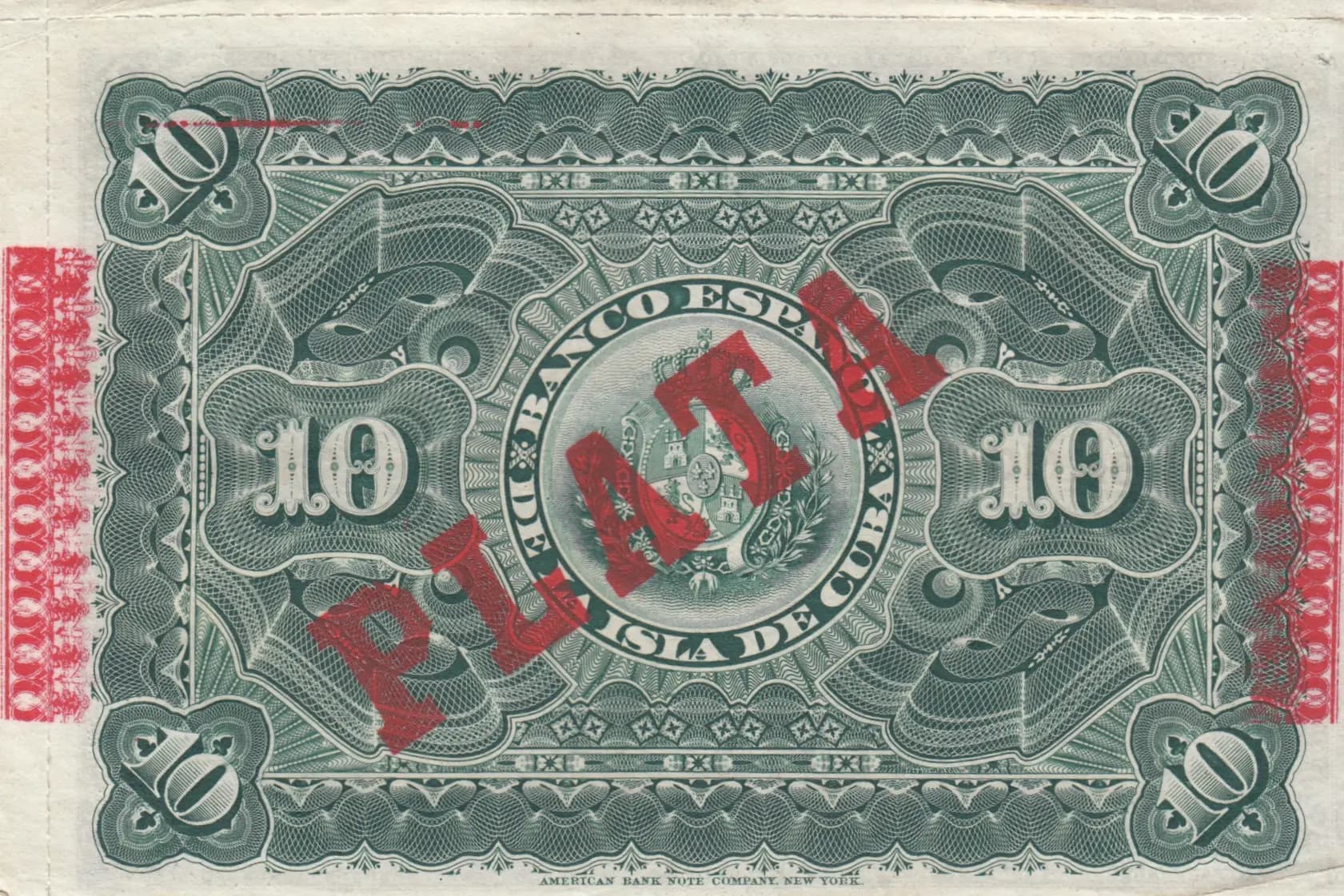
The obverse features an elaborate frame composed of intricate geometric and floral ornamental borders with corner rosettes containing the numeral '10' in decorative circular medallions. The dominant central vignette depicts a scene of colonial agricultural labor: a heavily laden ox cart pulled by oxen, with multiple human laborers visible in the composition, set against a tropical landscape with prominent palm trees and distant buildings. This imagery encapsulates Cuba's role in the Spanish colonial economy as a sugar-producing territory dependent on agricultural exports. The reverse displays a symmetrical ornamental design centered on a circular seal containing the heraldic coat of arms or shield of Spanish Cuba, surrounded by text identifying the issuing bank. Both sides employ fine-line engraving to create protective security features through intricate pattern work. The note is printed in black and green on the obverse with green and black on the reverse, with significant red cancellation markings ('CANCELADA') applied post-issue.
FRONT SIDE: 'EL BANCO ESPAÑOL DE LA ISLA DE CUBA' (The Spanish Bank of the Island of Cuba); 'DIEZ' and '10' (Ten); Serial number 'S.Nº 1134313'; Obligation text: 'a la presentación de este Billete pagará al portador DIEZ pesos fuertes en Habana 1 de Mayo de 1896' (Upon presentation of this Banknote will pay the bearer TEN strong pesos in Havana May 1, 1896); Signature titles: 'El Gobernador' (The Governor), 'El Contador' (The Accountant), 'El Cajero' (The Cashier); 'American Bank Note Co. New York'. BACK SIDE: 'BANCO ESPAÑOL DE CUBA' (Spanish Bank of Cuba); 'ISLA DE CUBA' (Island of Cuba); '10' (denomination); 'CANCELADA' (Cancelled); 'AMERICAN BANK NOTE COMPANY NEW YORK' (printer identification).
This note was produced by the American Bank Note Company of New York, one of the world's premier security printers of the era, using steel engraving and intaglio printing processes. The intricate fine-line borders, detailed vignette work, and ornamental medallions are characteristic of high-security banknote production of the 1890s. The deliberate complexity of the engraved designs—geometric borders, floral patterns, and detailed figures in the central scene—served as an anti-counterfeiting measure. The use of multiple color printing plates (black, green, and red overprints) required precise registration typical of professional currency production.
This example is cataloged as Pick 49d, indicating it is a dated variety from May 1, 1896. The serial number S.Nº 1134313 suggests this particular note was from the mid-range of the production run. The red 'CANCELADA' cancellation stamp indicates post-circulation removal from the banking system, a common practice for archival specimens. No signature varieties or significant overprint variations are evident in this example. Collectors should note that notes of this series are sometimes encountered with manuscript signatures in varying positions, though this example shows the standard printed signature areas.