10 pesos 1896
Market Prices
3 salesAbout This Note
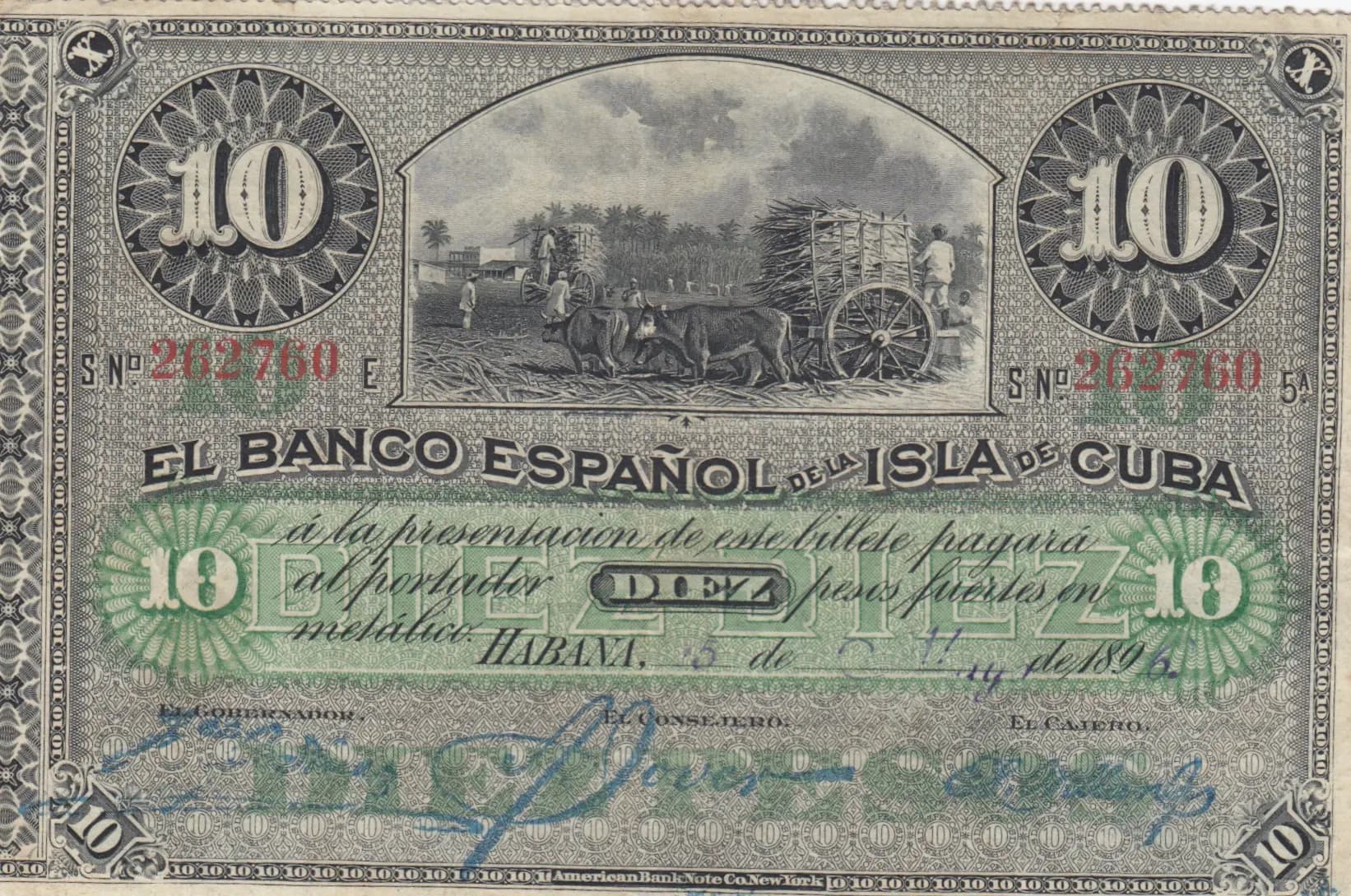
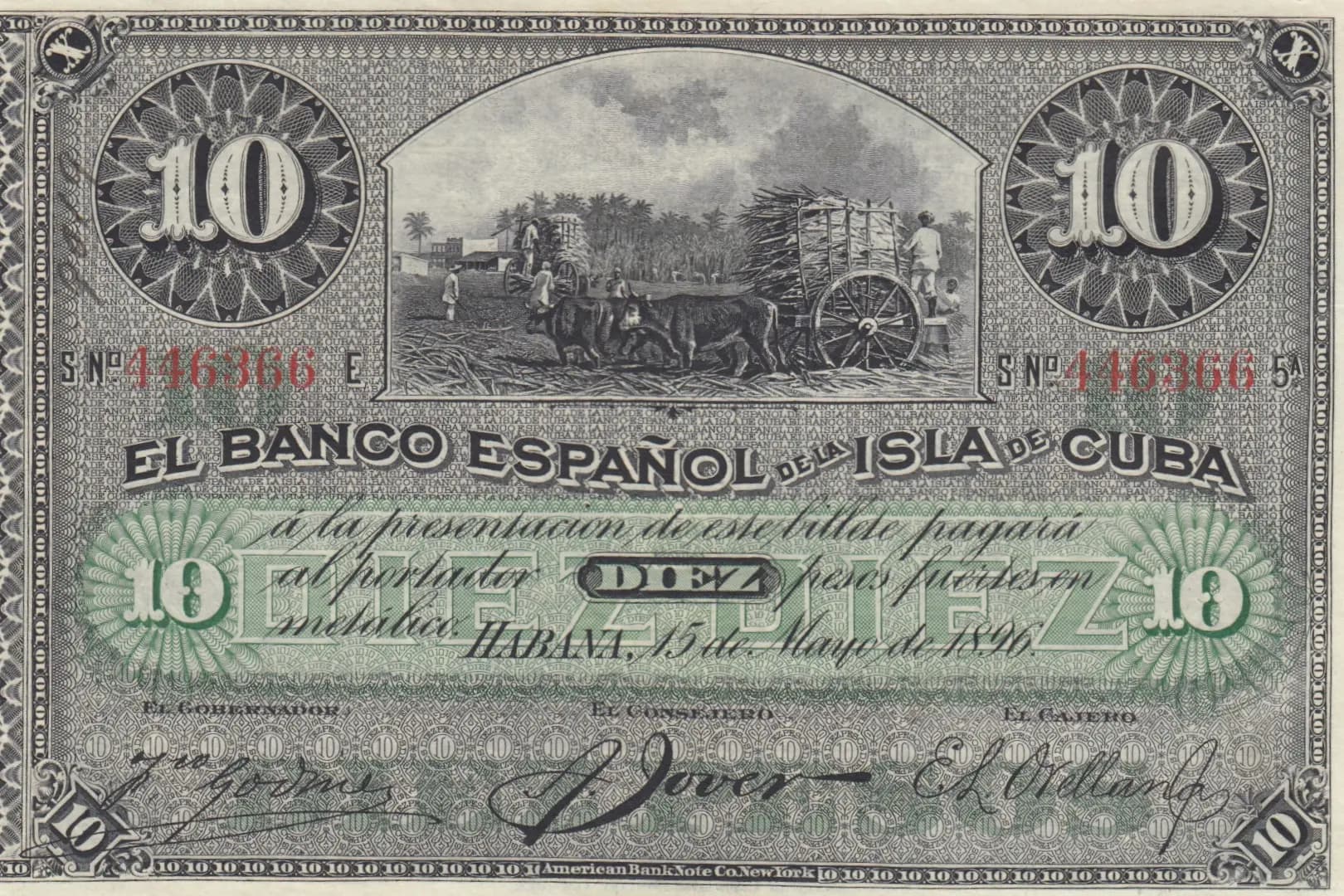
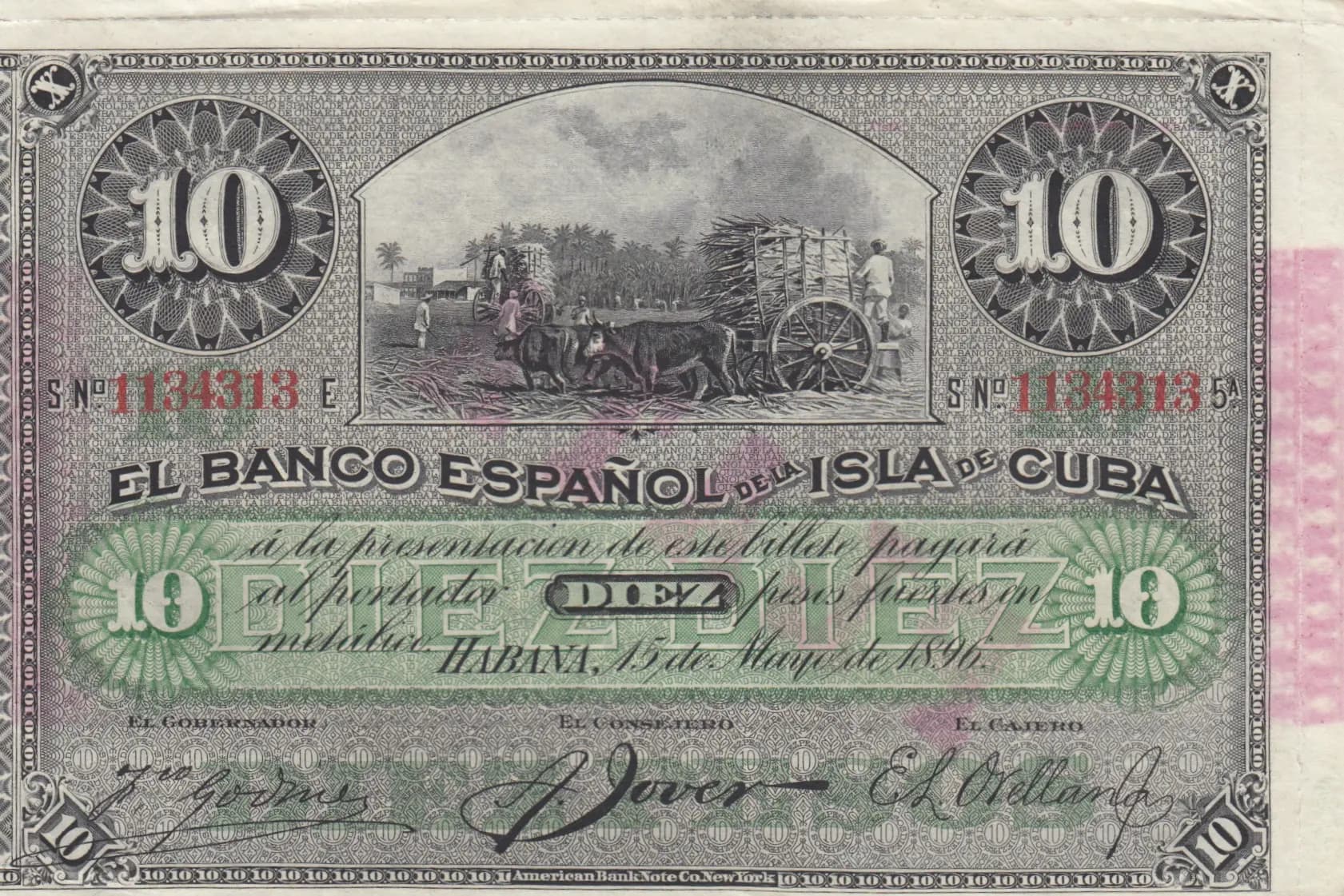
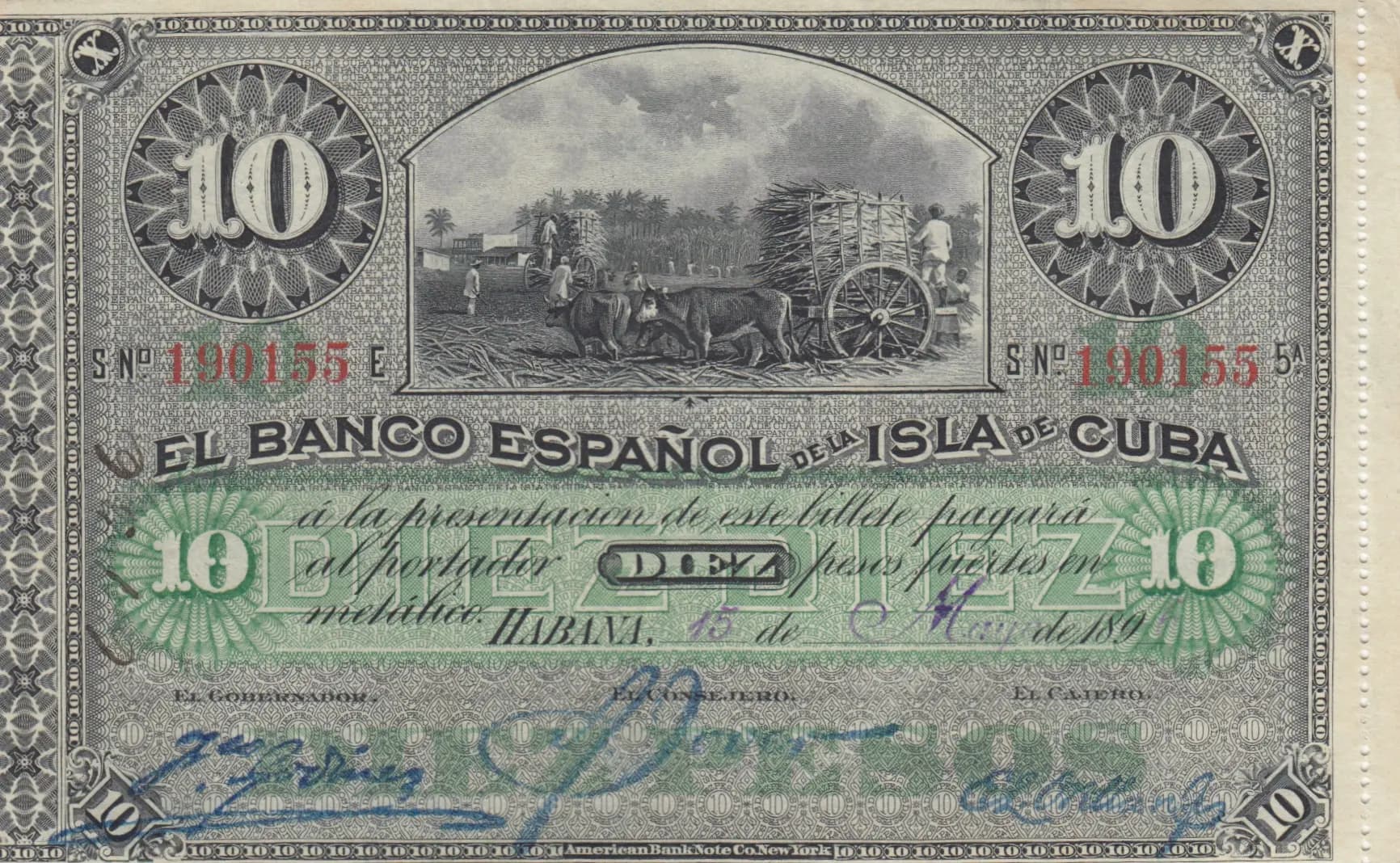
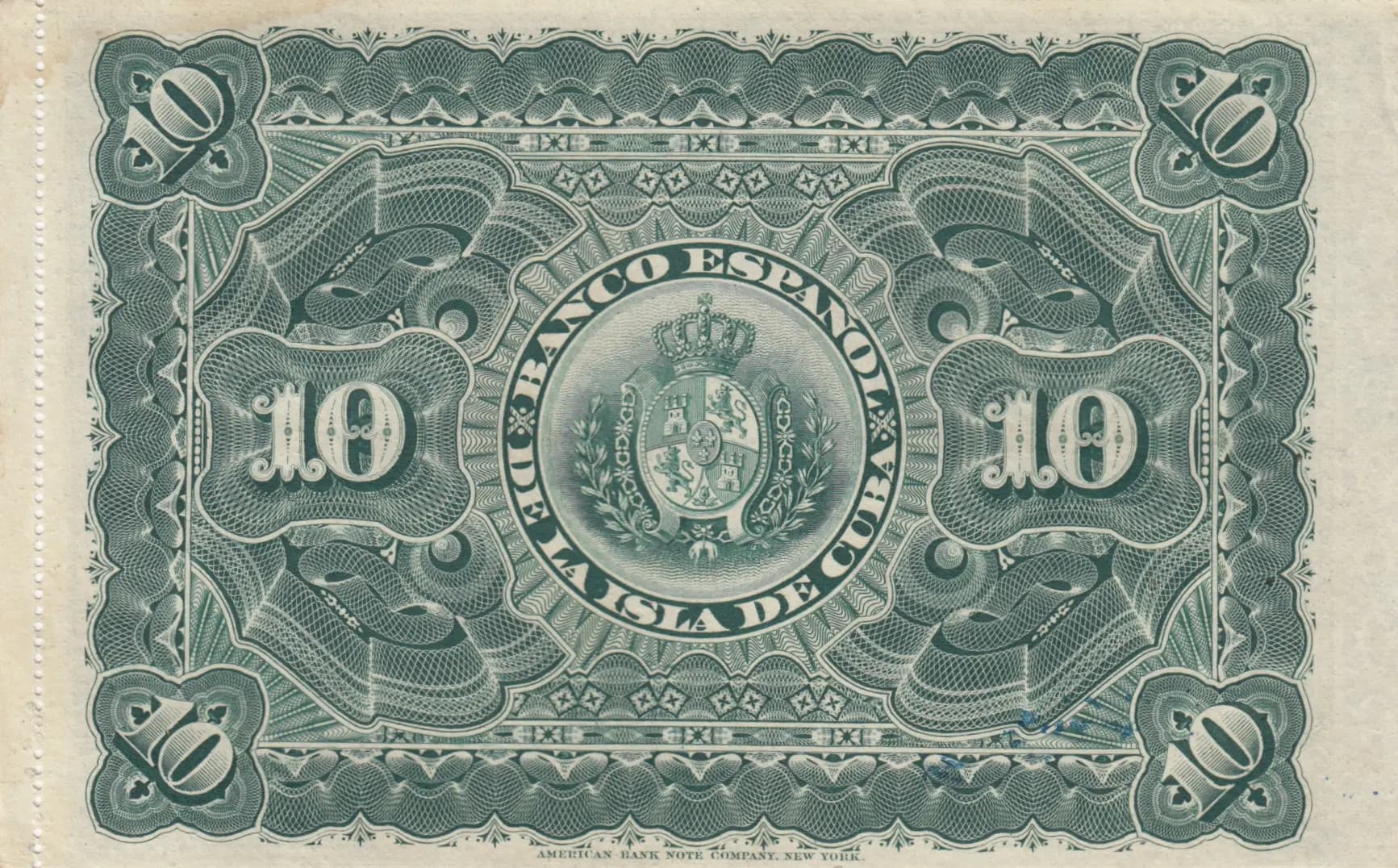
This is a beautiful example of Cuba's 1896 10 Pesos banknote issued by El Banco Español de la Isla de Cuba, printed by the American Bank Note Company. The note displays the iconic ox cart vignette on the obverse against a green underprint, with the Spanish royal coat of arms featured prominently on the reverse in teal/green. Despite showing visible signs of age and historical circulation—including blue pen markings, creasing, and foxing—the note grades AU, preserving excellent detail in the intricate engraved borders and security features that exemplify late 19th-century Cuban banking currency.
Common. While this is a historically significant note from the final years of Spanish colonial Cuba, the eBay market data provided shows comparable examples (VF, EF, AUNC) selling for $5–$20.51 across multiple sales from 2013–2016, with catalog values in 2016 ranging from $1–$17.50 depending on grade. This price range and sales frequency are consistent with common banknotes that are readily available to collectors. The note is not from a short-lived issuer (the bank operated for several decades) and was produced in substantial quantities by the American Bank Note Company.
This note was issued during the final years of Spanish colonial rule in Cuba, a period marked by agricultural prosperity and increasing Spanish financial presence on the island. The ox cart depicted in the center vignette represents the agricultural economy that formed the backbone of Cuban commerce, while the royal Spanish coat of arms on the reverse affirms Spain's political sovereignty over the island. El Banco Español de la Isla de Cuba, as the issuer, was a Spanish financial institution managing currency during a turbulent period that would culminate in Cuban independence just two years later in 1898.
The obverse features an elaborate tropical agricultural vignette at center depicting oxen pulling a laden cart, with colonial-era buildings and palm trees establishing the Cuban landscape. Large circular medallions bearing the numeral '10' flank the vignette on left and right sides. Ornate rosette designs and geometric border patterns frame the entire note in a sophisticated engraved style. The reverse displays the Spanish royal coat of arms—featuring a crown at the apex and a quartered heraldic shield—within an ornate circular seal frame, surrounded by elaborate scrollwork and floral motifs. Large decorative numerals '10' appear in cartouches in the upper corners. The color scheme combines black and gray on the obverse with green underprint, and teal/green on the reverse, typical of 1890s currency design.
Front side: 'EL BANCO ESPAÑOL DE LA ISLA DE CUBA' (The Spanish Bank of the Island of Cuba), 'DIEZ' (Ten), 'a la presentacion de este billete paguara' (At the presentation of this note will pay), 'HABANA' (Havana), 'American Bank Note Co., New York', and serial number 'S Nº 190155'. Back side: 'BANCO ESPAÑOL DE LA ISLA DE CUBA' (Spanish Bank of the Island of Cuba) and 'AMERICAN BANK NOTE COMPANY, NEW YORK'.
Intaglio engraving (steel plate), produced by the American Bank Note Company, New York. The fine line geometric patterns, intricate rosette medallions, complex heraldic designs, and ornate scrollwork visible throughout are characteristic of high-security intaglio work. Security features include the detailed engraved vignettes, fine line border patterns, and serial numbers applied in red ink, all typical of American Bank Note Company's premium currency production methods of the era.
This example shows the handwritten or hand-stamped date characteristic of the 1896 issue, without overprint. The serial number S Nº 190155 is visible in red ink. As Pick 49a, this is the standard variety for this denomination and issuer from the 1896 date. Notable variants of this Pick number may include different date applications or overprints related to later issuances or Spanish colonial administrative changes, but this particular note represents the regular issue type documented in the catalogs cited.