10 pesos 1896
Market Prices
3 salesAbout This Note
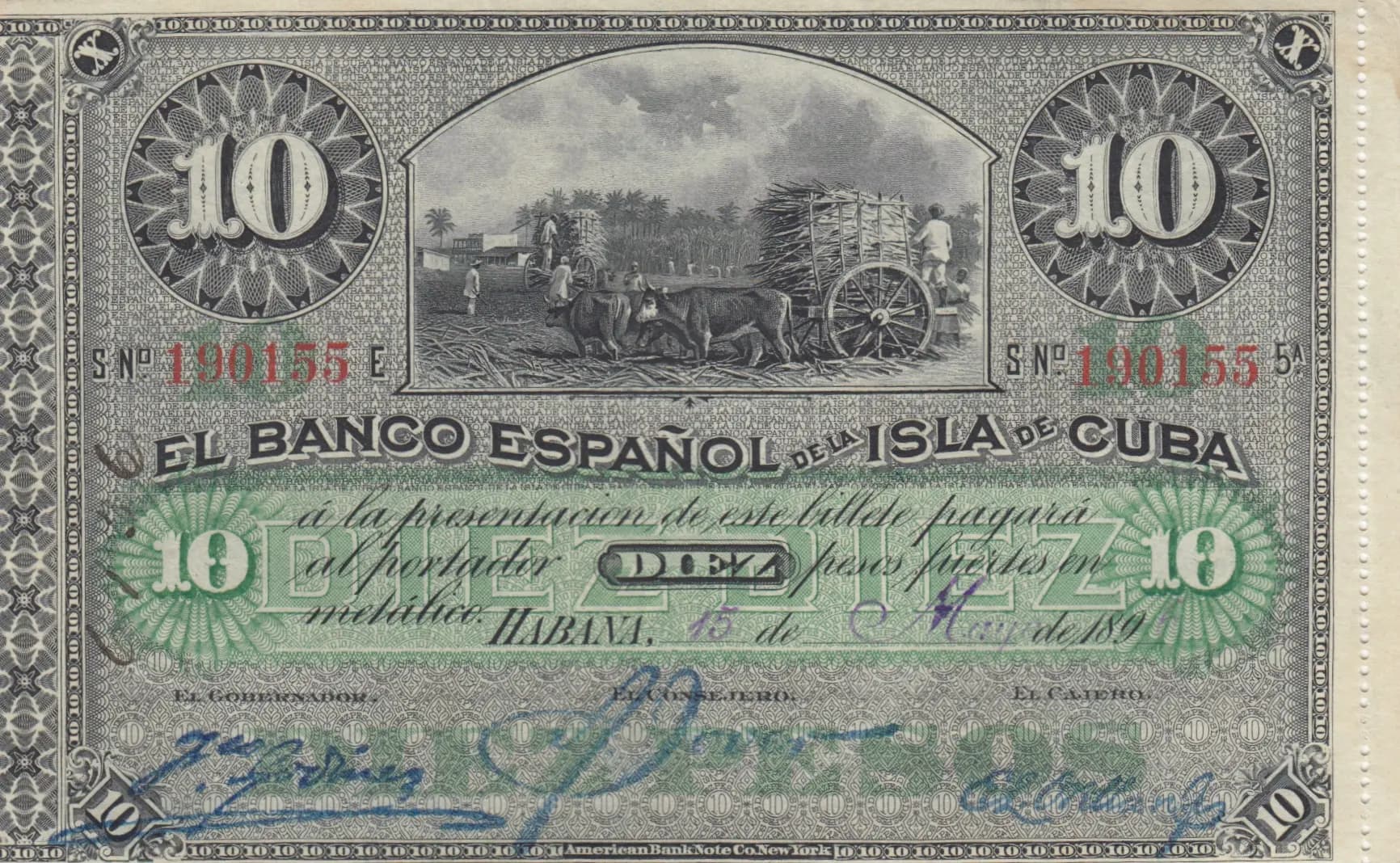
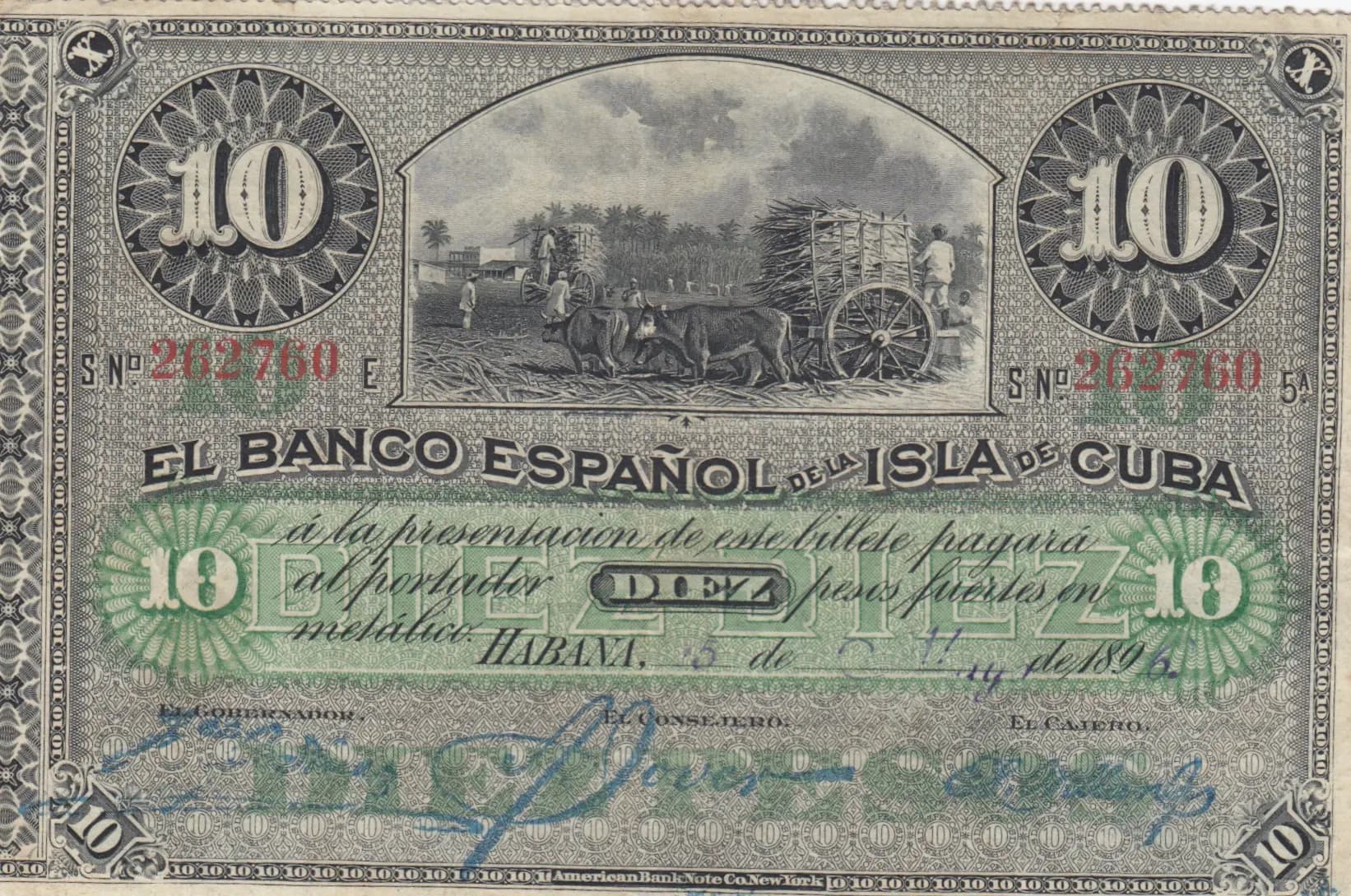
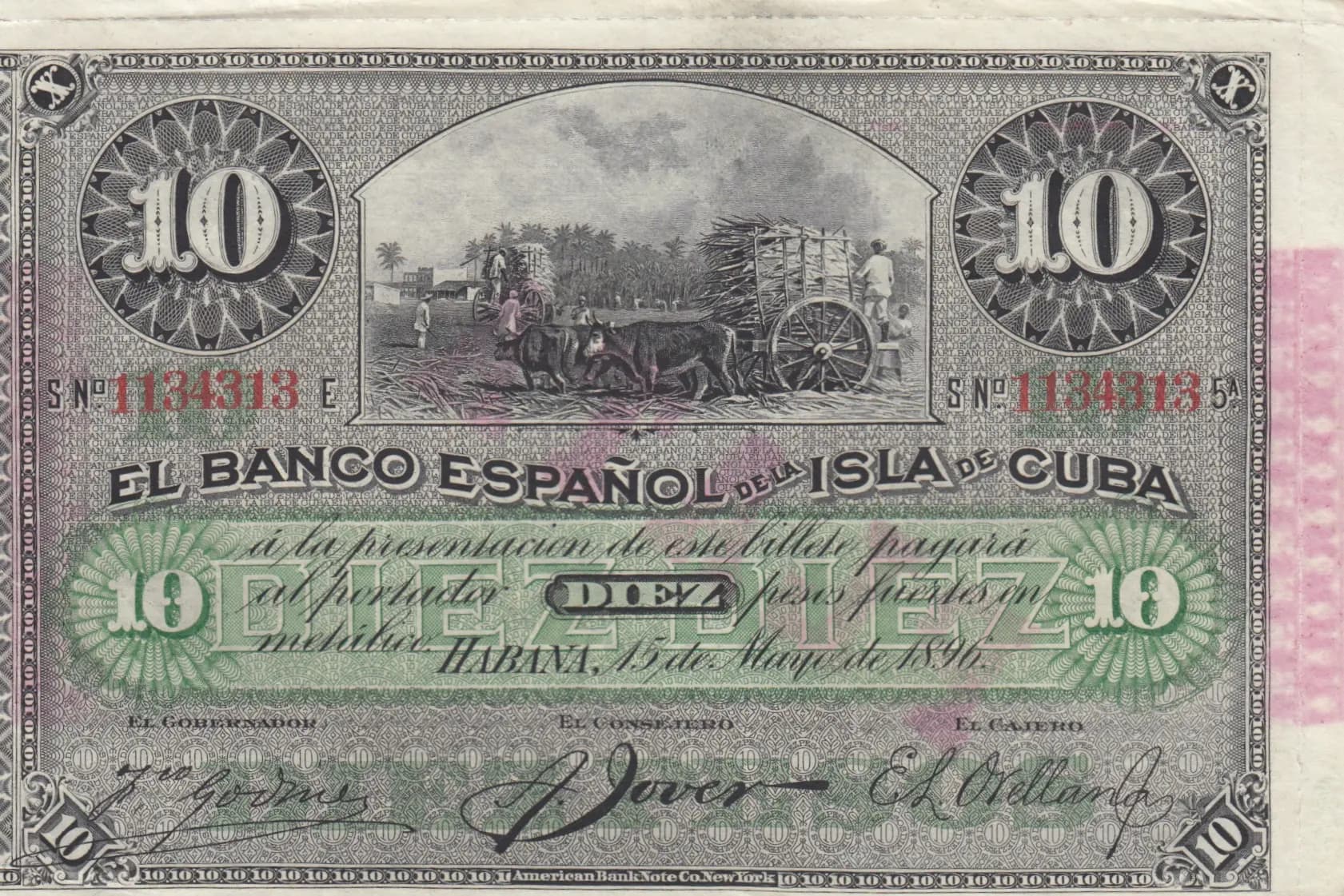
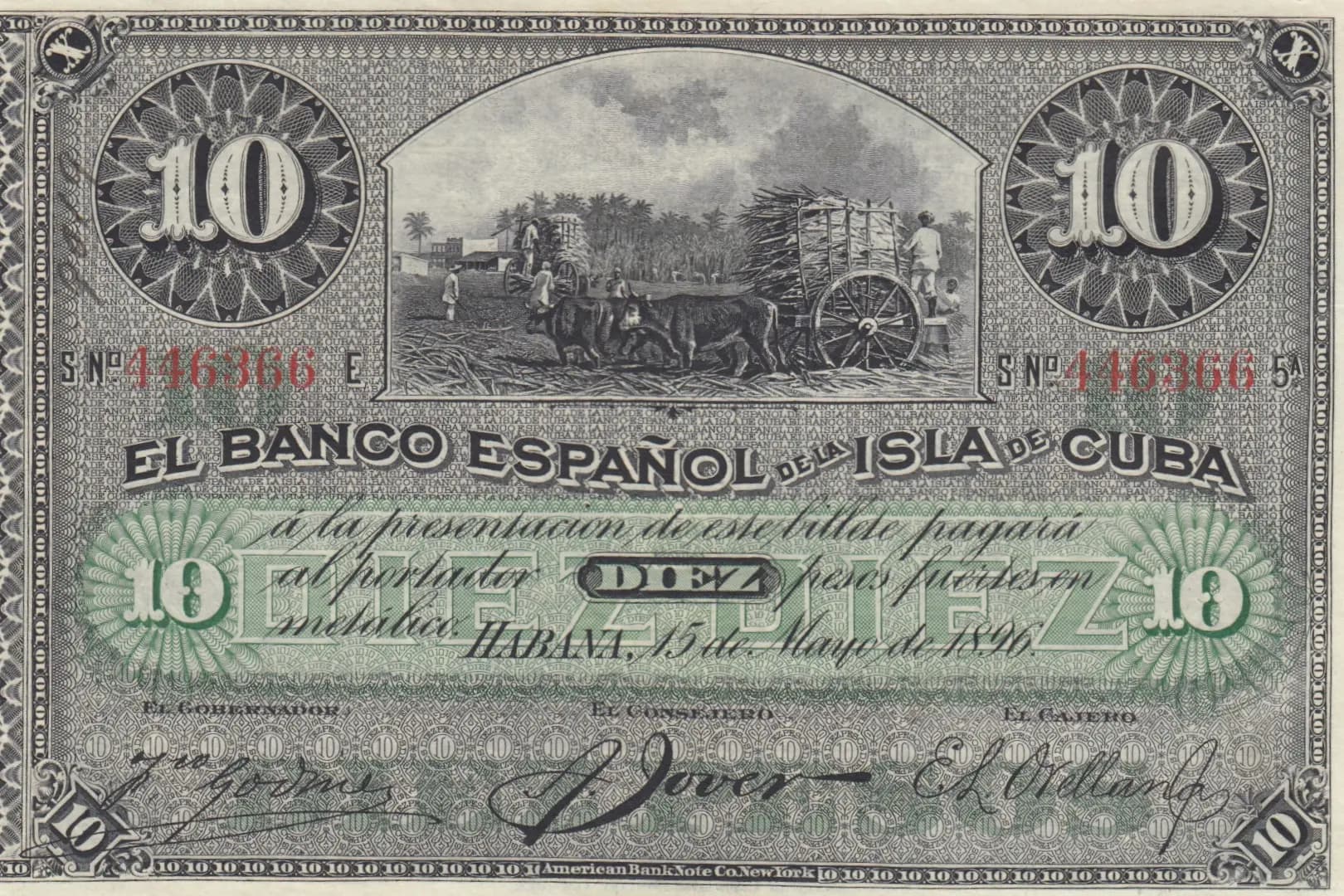
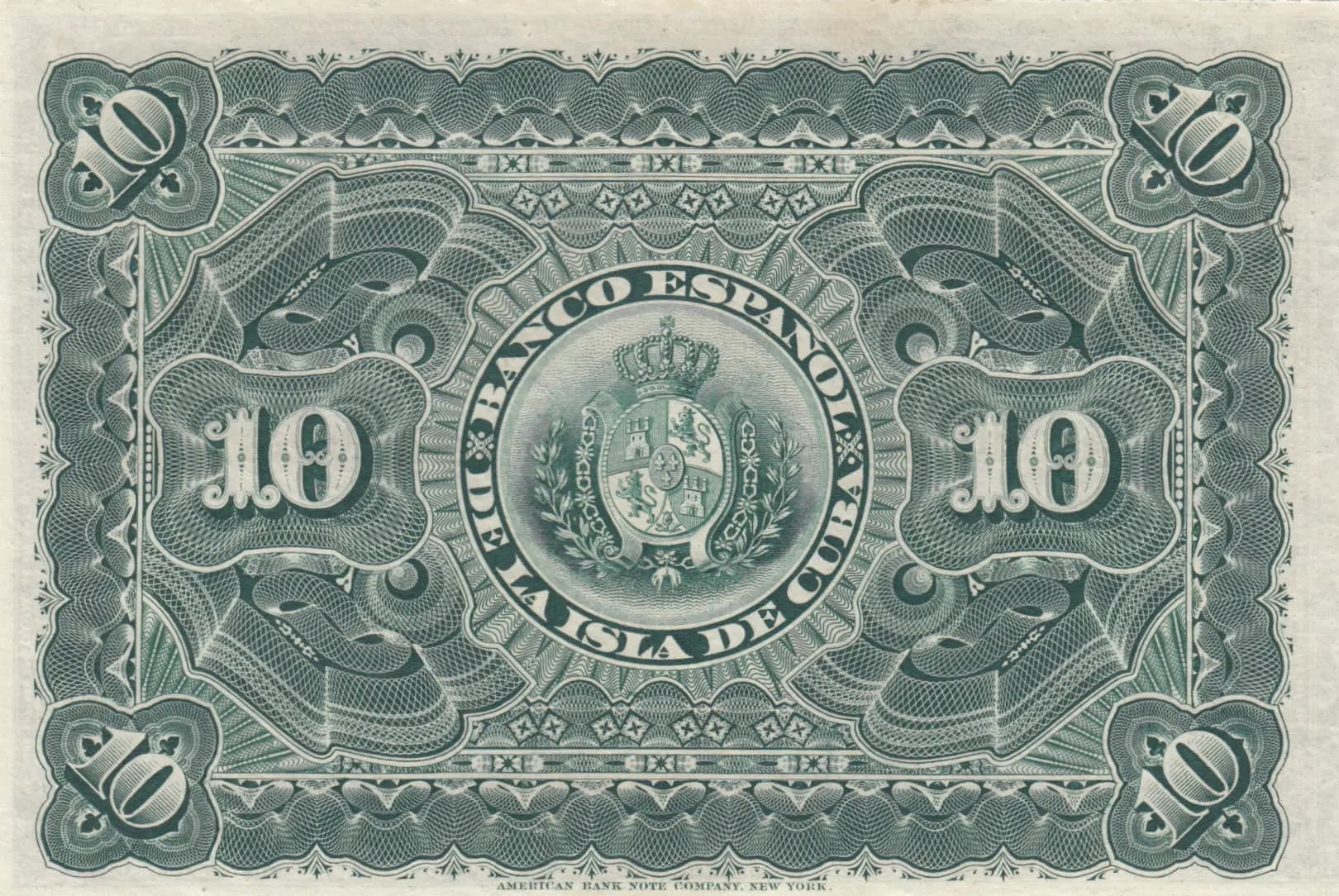
A beautifully preserved example of Cuba's 1896 10 Pesos note issued by El Banco Español de la Isla de Cuba, featuring an iconic vignette of oxen pulling a cart laden with sugarcane—a defining image of 19th-century Cuban agricultural wealth. The front displays intricate ornamental borders with decorative '10' medallions and the reverse showcases an elaborate coat of arms within baroque-style ornamentation. In AU condition, this note exhibits the characteristic aging patina and minor foxing consistent with its age, while retaining sharp engraving detail and strong overall eye appeal.
Common. While an attractive historical note from Spanish colonial Cuba, eBay market data shows consistent sales in the $11-15 range for AUNC/UNC examples, with catalog values (2016) reaching only $12.50 for UNC condition. The regular issue designation, straightforward print history, and ready availability in the secondary market all indicate this note circulated in substantial quantities. AU examples such as this one are neither particularly scarce nor especially difficult to acquire.
Issued just two years before Cuban independence from Spain (1898), this banknote represents the final era of Spanish colonial banking authority in Cuba. The central ox cart vignette symbolizes the sugar economy that dominated Cuban colonial commerce, while the heraldic arms on the reverse reflect the Spanish Crown's authority over the island's financial systems. The May 15, 1896 issue date places this note during the height of the Ten Years' War aftermath, when Cuba's economy and political status remained turbulent.
The obverse features a romanticized rural agricultural scene centered on the iconic Cuban ox cart (characteristic of the period's sugar transport), populated with unidentified laborers and surrounded by tropical palm trees and colonial-era buildings in the background. Ornate decorative borders frame the composition with repeated '10' denominational circles flanking left and right sides, each containing intricate sunburst patterns and ornamental flourishes. The reverse showcases a crowned heraldic shield—the coat of arms of Spanish colonial Cuba—positioned centrally within a circular medallion surrounded by laurel wreaths, embodying classical heraldic tradition. All corners of the reverse display large decorative '10' cartouches rendered in baroque-style ornamentation typical of high-security banknote design.
FRONT: 'EL BANCO ESPAÑOL DE LA ISLA DE CUBA' (The Spanish Bank of the Island of Cuba); 'DIEZ' (Ten); '10' (denomination in Arabic numerals); 'S Nº 116166' (Series Number 116166); 'HABANA, 15 de Mayo de 1896' (Havana, May 15, 1896); 'American Bank Note Co. New York' (printer attribution). BACK: 'BANCO ESPAÑOL DE LA ISLA DE CUBA' (Spanish Bank of the Island of Cuba); '10' (denomination in multiple locations); 'American Bank Note Company, New York' (printer attribution).
Steel engraving on banknote paper, executed by American Bank Note Company of New York—one of the world's premier security printers of the era. The noted characteristics include extremely fine line work, complex geometric guilloché patterns, intricate cross-hatching and fine line shading for tonal effects, and elaborate decorative scrollwork and baroque ornamentation throughout. The multi-color printing (black on green underprint for obverse; green with teal tones on reverse) suggests separate plate impressions typical of late 19th-century banknote production. The high quality and detail level reflect ABNC's reputation as the preferred printer for colonial and Latin American currencies.
Pick P-49c designation confirms this as the third known variety of the 1896 10 Pesos issue. The visual analysis shows a red handwritten serial number overlay (S Nº 116166) applied post-printing, which may indicate this specific note represents a particular series or batch variant. The printed date of 15 de Mayo de 1896 with no overprint matches the standard catalog description for the base issue. No additional security overprints or hand-signatures are visible, consistent with regular circulation issues of this bank and period.