2 kuna 1942
Market Prices
3 salesAbout This Note
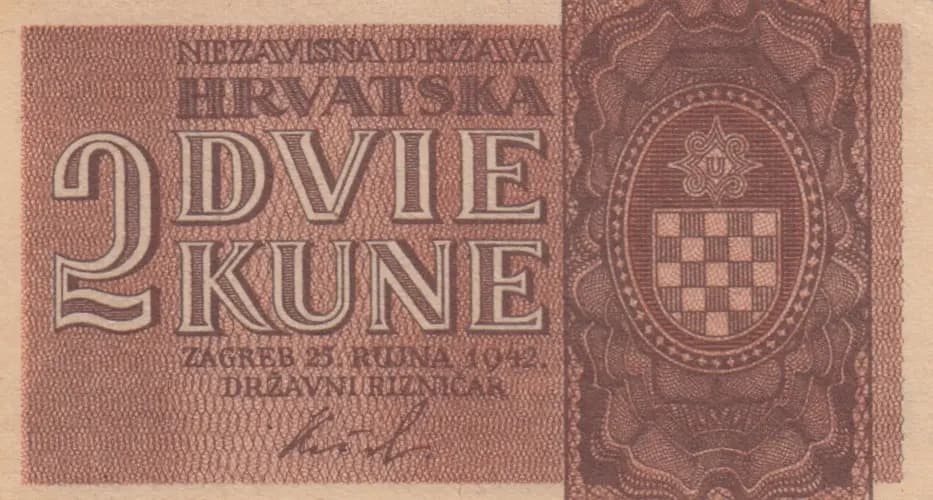
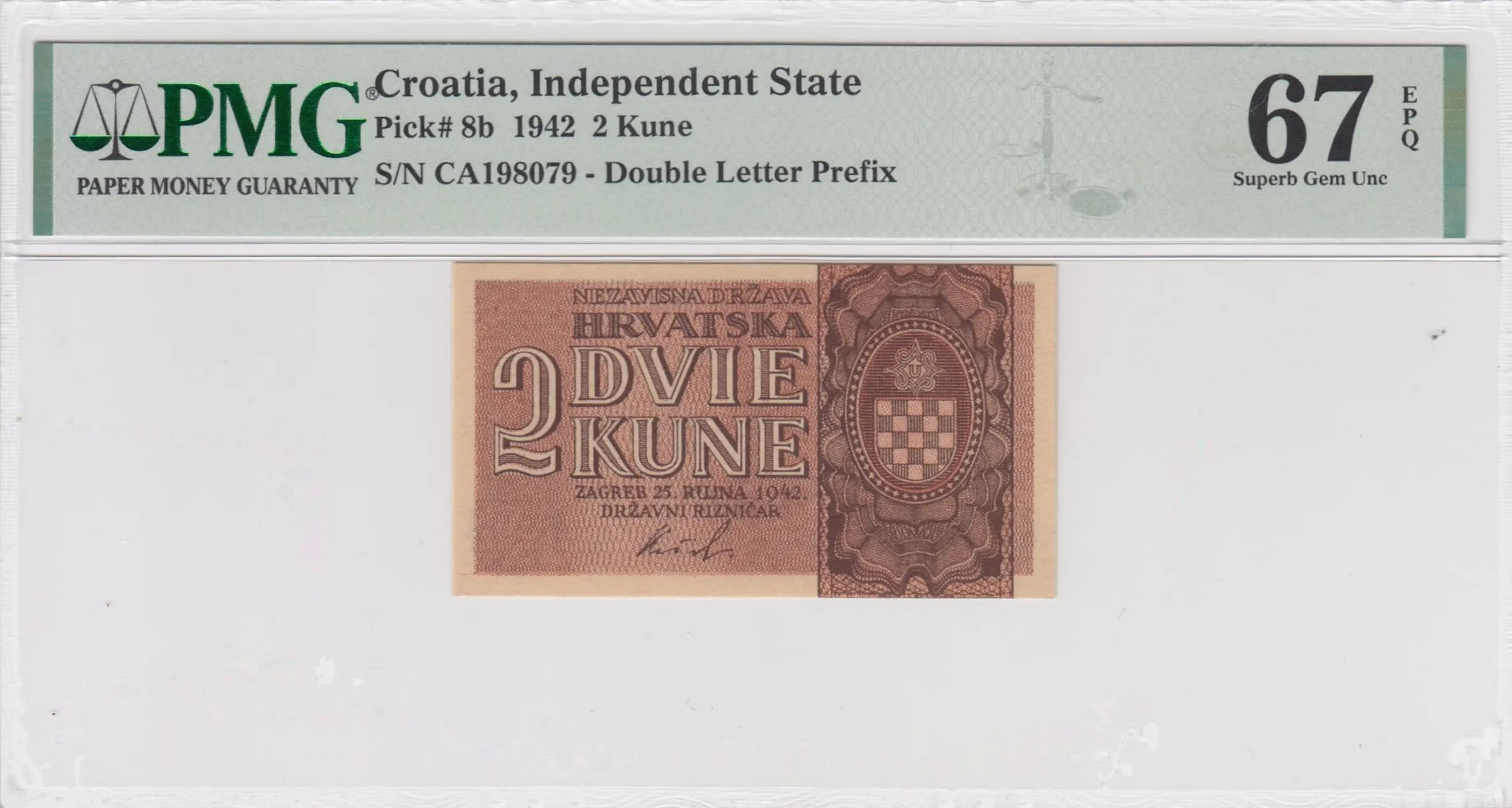
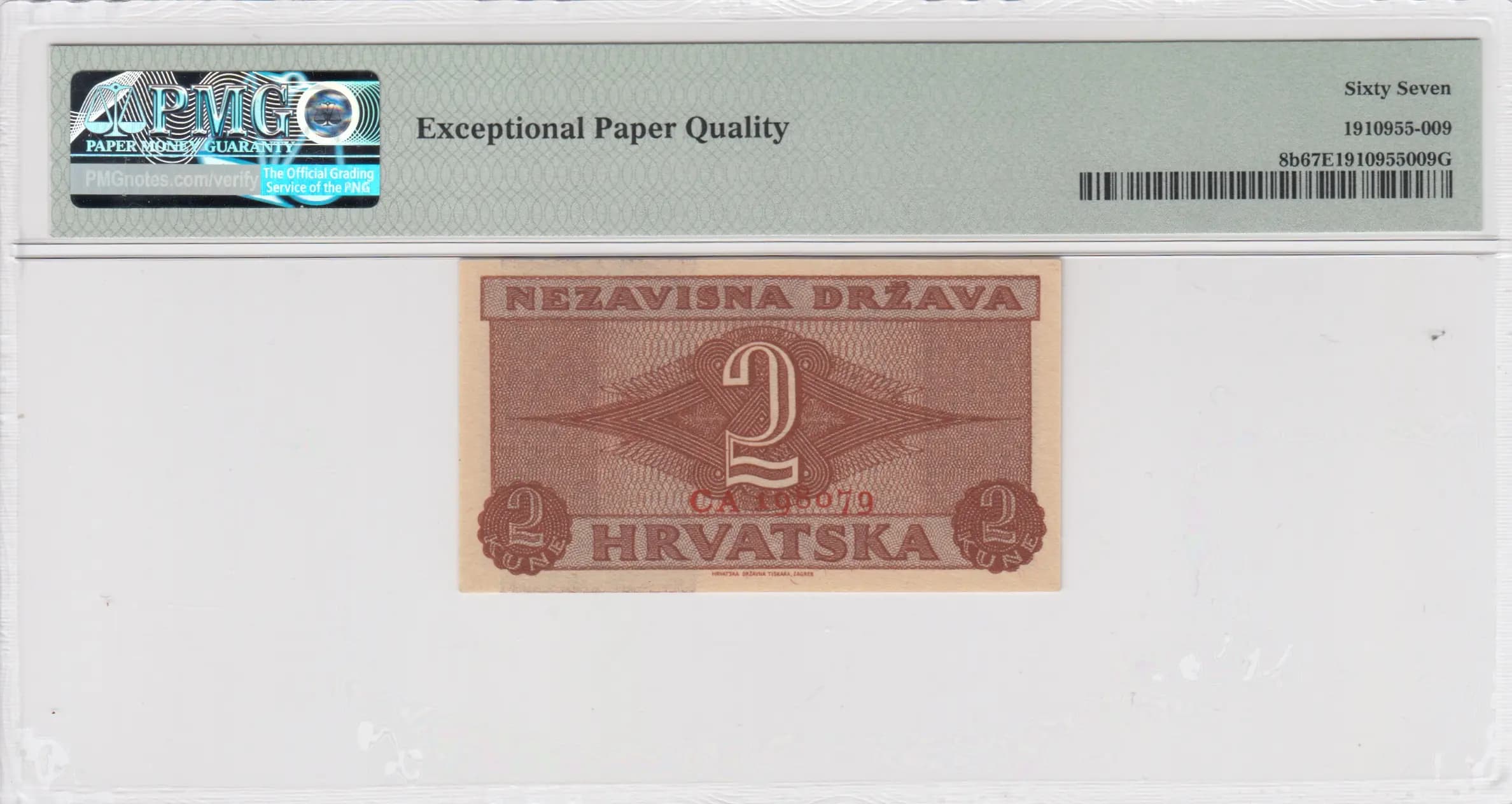
This is an exceptionally well-preserved example of the Croatian 2 Kuna note from 1942, issued by the Nezavisna Država Hrvatska (Independent State of Croatia). Graded PMG 67 EPQ, the note displays vibrant reddish-brown coloring with sharp detail throughout, showing no signs of circulation or wear. The obverse features the prominent Croatian checkered shield (šahovnica) within an ornamental oval frame, while the reverse displays elegant winged ornamental designs flanking a large numeral '2', making this a notable example of WWII-era Croatian numismatic design.
Common. This is a regular issue from 1942 by the Nezavisna Država Hrvatska with no indication of an extremely limited print run or special rarity status. Secondary market data from RealBanknotes shows sales ranging from $5.50 (VF) to $20.50 (UNC) historically, with 2016 catalog values of $0.50–$8 depending on condition. The appearance of multiple copies in the market and modest pricing across condition grades indicates this was a standard circulation note. While WWI-era Croatian notes are historically significant, they remain common in most grades.
Issued on September 25, 1942, this note represents currency from the Nezavisna Država Hrvatska, the World War II-era Independent State of Croatia (NDH), a puppet state of Nazi Germany and Fascist Italy. The prominent display of the Croatian checkered shield (šahovnica) on the obverse reflects the nationalist symbolism of the NDH period. The note's existence and design are artifacts of this complex and controversial historical period in Croatian history, issued under the authority of the State Treasurer (Državni rizničar).
The obverse features a formal, symmetrical design centered on the Croatian coat of arms—specifically the historic checkered shield (šahovnica) in red and white within an ornamental oval frame with fine line work and decorative borders. The denomination 'DVIJE KUNE' appears prominently on the left side in serif lettering, with issuing authority text arranged around the central heraldic element. The reverse presents a classical numismatic design with a large, bold central numeral '2' flanked by symmetrical winged ornamental designs—possibly representing heraldic lions or eagles—with wreath-like decorative elements positioned in the corners. Both sides employ fine line engraving work typical of early 20th-century European currency production, with a consistent reddish-brown color scheme offset by cream and tan borders.
OBVERSE: 'Nezavisna Država Hrvatska' (Independent State of Croatia) / 'Dvije Kune' (Two Kune) / 'Gardner 25, Rijuna 1942' (Zagreb 25, June 1942) / 'Državni Rizničar' (State Treasurer). REVERSE: 'Nezavisna Država Hrvatska' (Independent State of Croatia) / 'Hrvatska' (Croatian) / '2' (denomination numeral) / '2 Čakovca' (appears to reference currency denomination text). Note: The date inscription indicates September 25, 1942 as the official issue date.
This note was produced using intaglio (engraved) printing, evident from the fine line work, intricate ornamental patterns, and the crisp detail visible in the PMG-graded example. The printer was Hrvatska Državna Tiskara (Croatian State Printing House) located in Zagreb, as indicated in catalog records. The security features include fine line work, ornamental frames, and the characteristic depth and clarity achieved through intaglio engraving on quality paper stock.
This note is catalogued as Pick 8b, indicating it is the second identified variety of the 2 Kuna 1942 issue. The Pick catalog recognizes variants 8a and 8b for this denomination and year. Variety distinctions for this issue likely relate to signature variations, date modifications, or minor design adjustments typical of NDH currency production. The specific date inscription of September 25, 1942 ('25.09.1942') and issuing authority signature would be key identifiers for confirming the P-8b attribution.