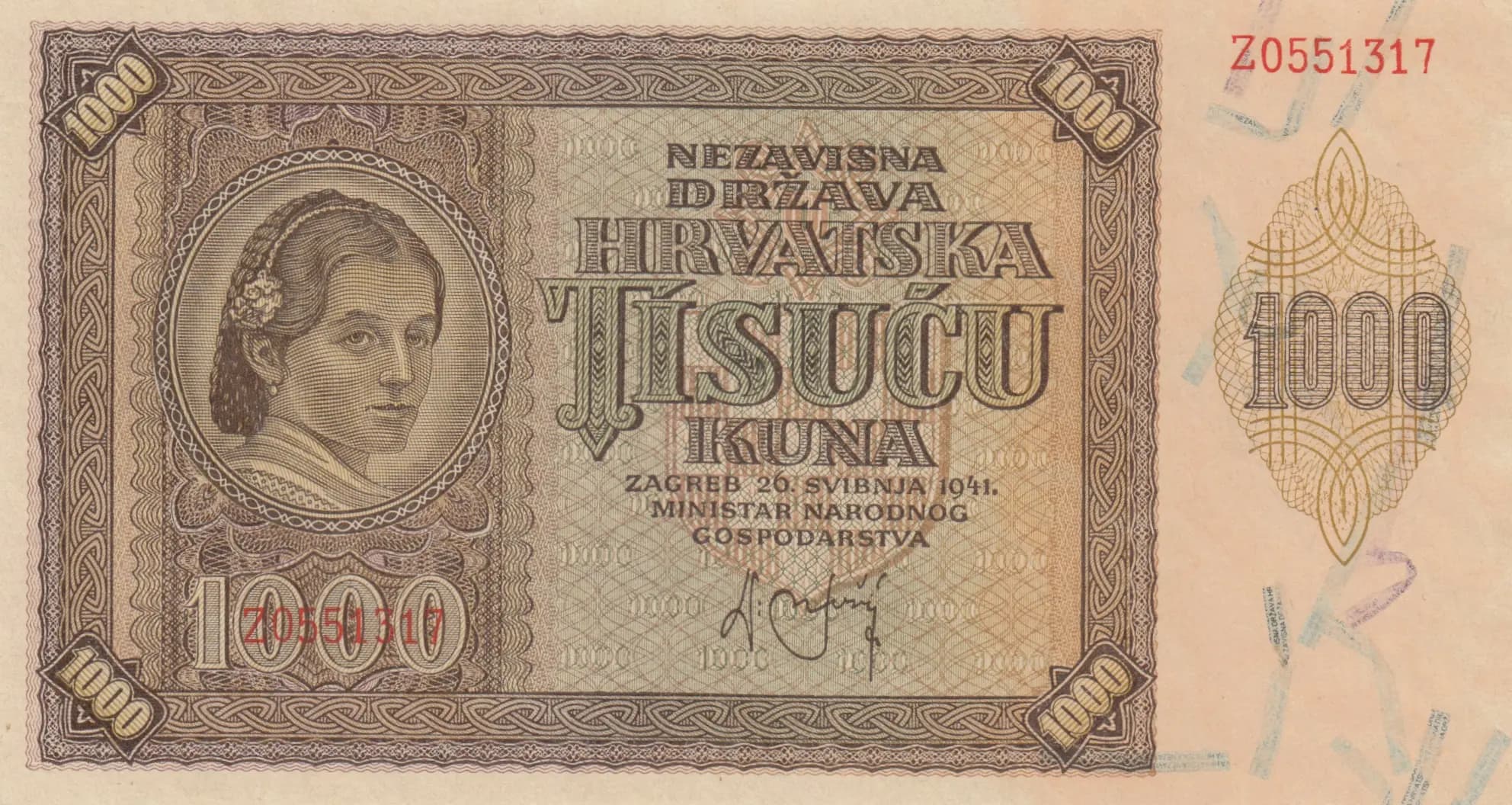
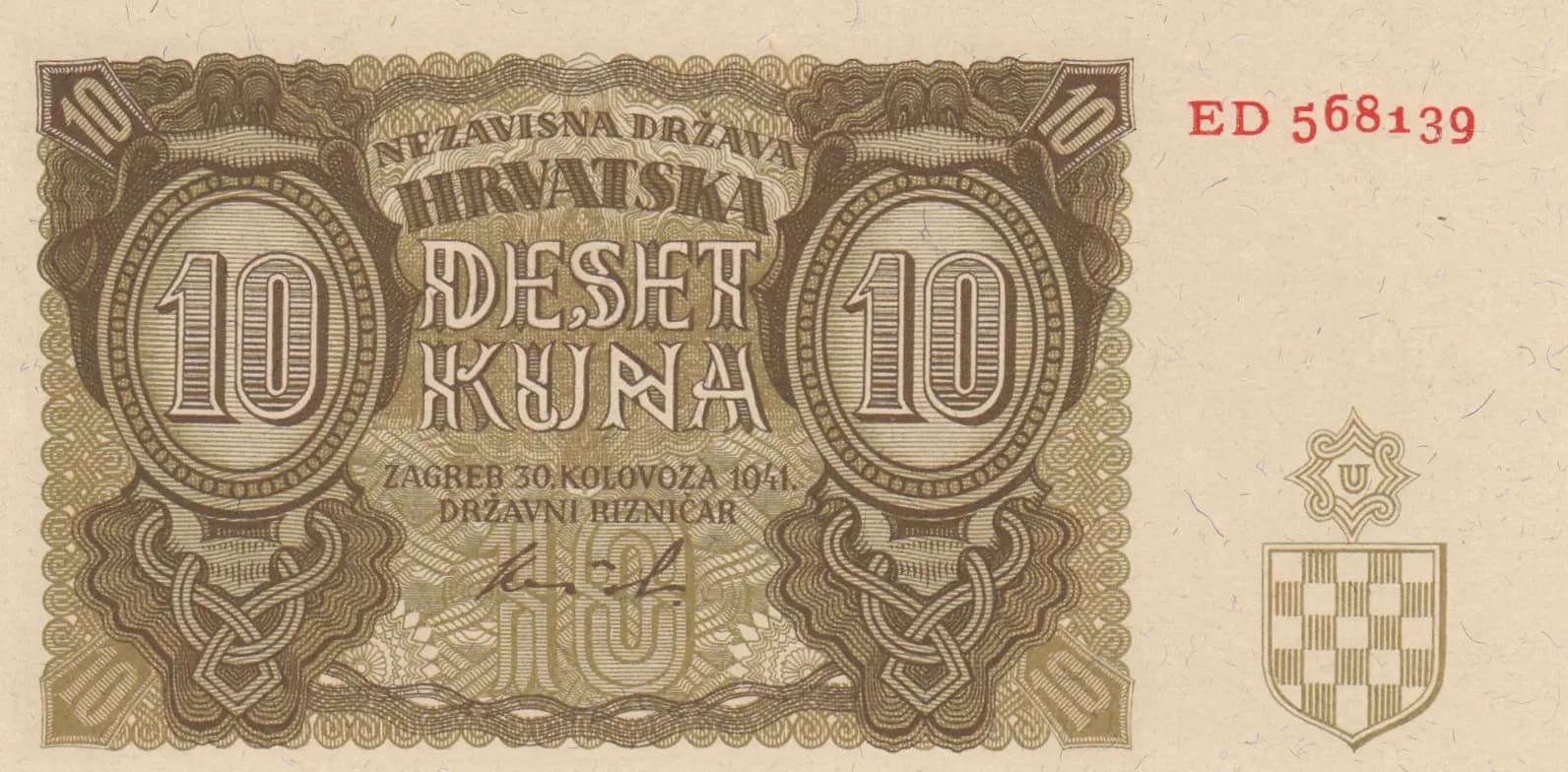
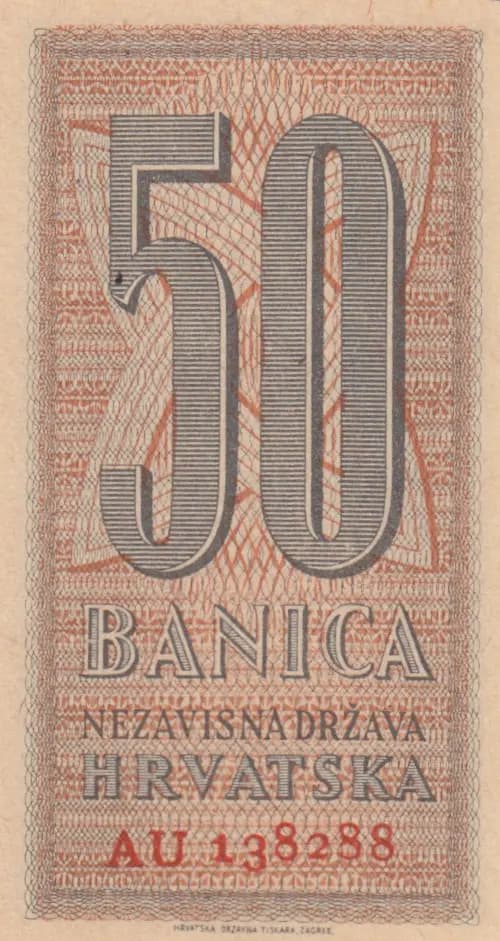
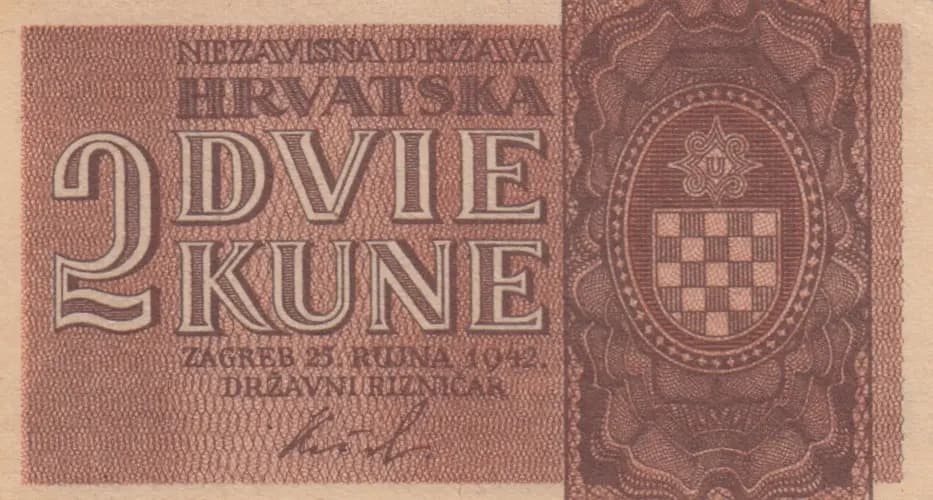
1 kuna 1942
Market Prices
7 salesAbout This Note
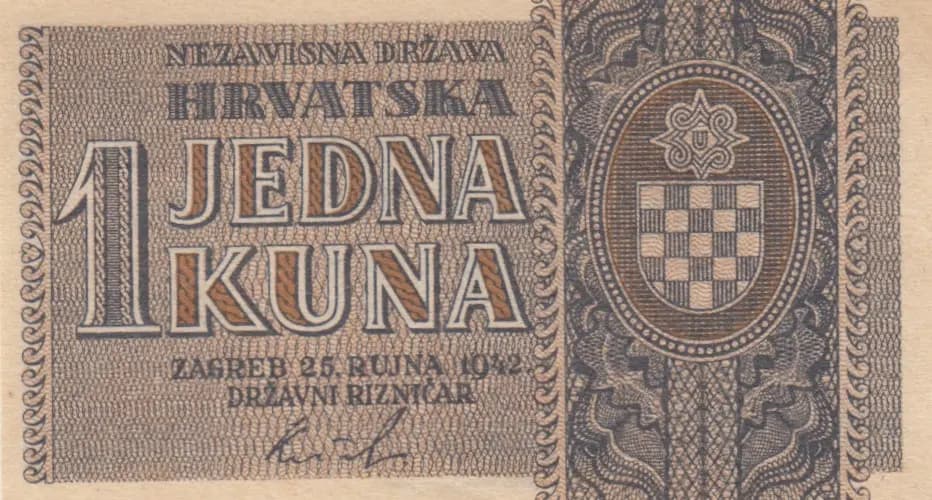
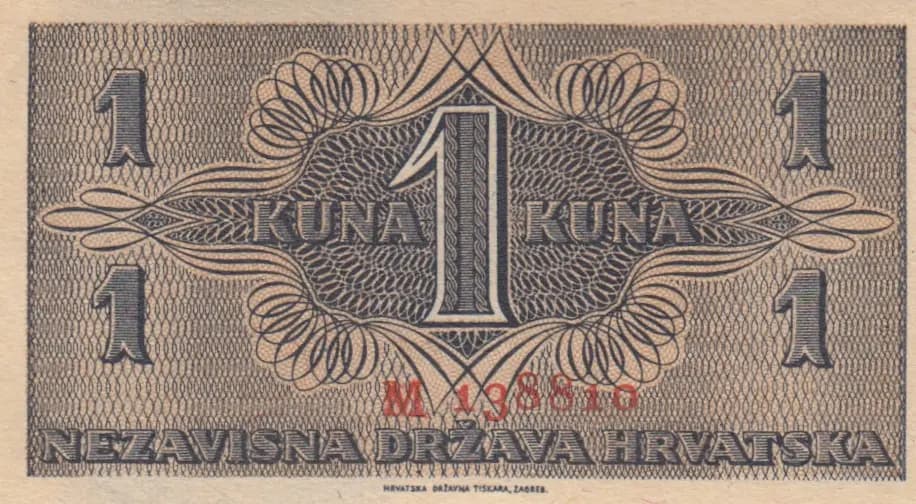
This is a beautiful example of a 1942 Croatian 1 kuna note from the Nezavisna Država Hrvatska (Independent State of Croatia), graded UNC. The note features exceptional engraving quality with intricate guilloché patterns and ornate borders in warm tan and brown tones. The front prominently displays the Croatian coat of arms with its distinctive checkerboard šahovnica shield and crown of smaller shields, while the reverse showcases a symmetrical design centered on a large numeral '1' surrounded by fine botanical ornaments.
Common. Despite its historical significance and the limited lifespan of the issuing authority (1941-1945), this Pick 7a note appears frequently in the numismatic market. eBay pricing data from 2015-2019 shows regular circulation with moderate volumes: notes in Fine condition traded for $2.76–$27.50, while PMG-graded specimens (64-65) sold for $37.60–$47.60. The 2016 catalog value for UNC is listed at $10, indicating ready availability. The relatively high print run of this denomination for the six-year period, combined with its appearance in the current collector market, confirms common status.
This banknote was issued on September 25, 1942, during the World War II era by the Nezavisna Država Hrvatska—the Nazi-aligned Croatian state that existed from 1941 to 1945. The coat of arms depicted on the front, featuring the historic checkerboard shield (šahovnica) and the crown of smaller shields, represents Croatian medieval heraldry and served as a key symbol of national identity during this contested period. The note's inscription 'HRVATSKU DRŽAVNU TISKARA' credits the Croatian State Printing House in Zagreb, reflecting the state's efforts to establish independent financial institutions despite its political circumstances.
The obverse features the coat of arms of Croatia positioned prominently on the right side of the design, consisting of the characteristic red-and-white checkerboard shield (šahovnica) topped with a crown composed of five smaller shields representing the historic regions of Croatia (Dalmatia, Dubrovnik, Istria, Medjimurje, and Croatia proper). The reverse displays a classical, symmetrical design centered on a large denominational numeral '1', flanked by the text 'KUNA' on either side, surrounded by elaborate botanical and floral ornamental flourishes executed in fine line engraving. The entire note employs no portrait imagery, instead relying on heraldic symbolism and decorative engraving to establish authority and aesthetic value. The color scheme throughout is a two-tone composition of tan and brown, creating an elegant and sophisticated appearance characteristic of interwar and WWII-era Central European currency design.
FRONT: 'Nezavisna Država Hrvatska' = 'Independent State of Croatia'; '1 Jedna Kuna' = '1 One Kuna'; 'Zagreb, 25. Rujna 10' = 'Zagreb, 25th September 10' (1942); 'Državni Rizničar' = 'State Treasurer'. BACK: '1' = '1'; 'Kuna' = 'Kuna' (repeated on both sides of the numeral); 'Nezavisna Država Hrvatska' = 'Independent State of Croatia'; 'Hrvatska Državna Tiskara, Zagreb' = 'Croatian State Printing House, Zagreb'; 'M' = Maker's mark or initial (likely a signature or engraver's mark).
This note was produced using traditional intaglio (copperplate) engraving, as evidenced by the fine, crisp line work and detailed guilloché patterns visible throughout both the obverse and reverse. The intricate borders, botanical motifs, and decorative elements exhibit the precision characteristic of hand-engraved dies. The printer was Hrvatska Državna Tiskara (Croatian State Printing House) in Zagreb, as credited on the reverse. No modern security features are present, consistent with 1942 printing standards. The two-tone coloring was achieved through selective inking of the engraved plate.
The observed date 'Zagreb, 25. Rujna 10' (September 25, with '10' likely representing 1942) with the maker's mark 'M' visible on the reverse suggests this is the standard P-7a variety. No visible series letters or serial number prefixes distinguishing major varieties are discernible from the image analysis provided. Future detailed examination of the serial number and any signature variants would be necessary to determine if sub-varieties exist for this Pick number.