10 dollars 1950
Market Prices
1 saleAbout This Note
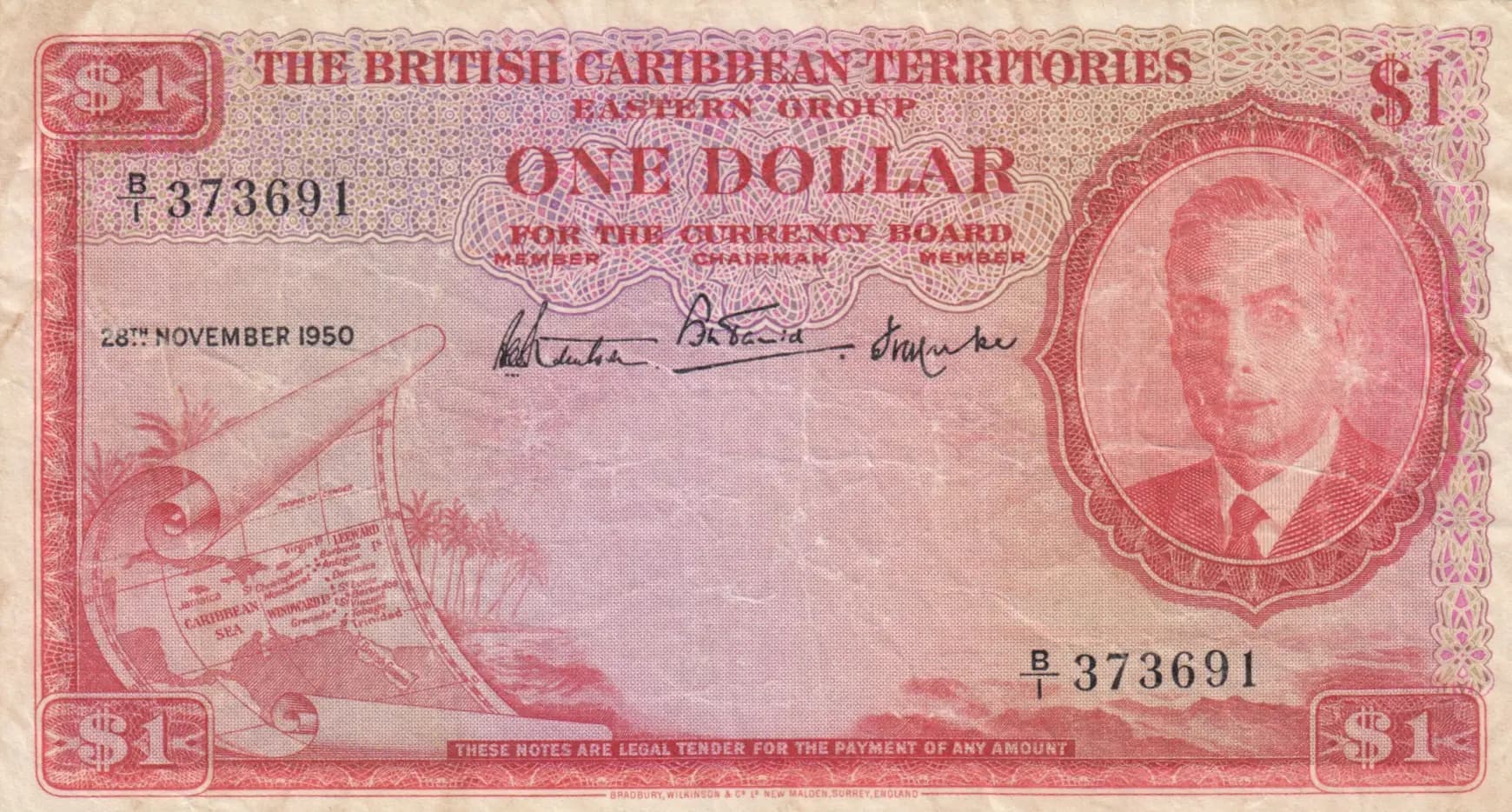
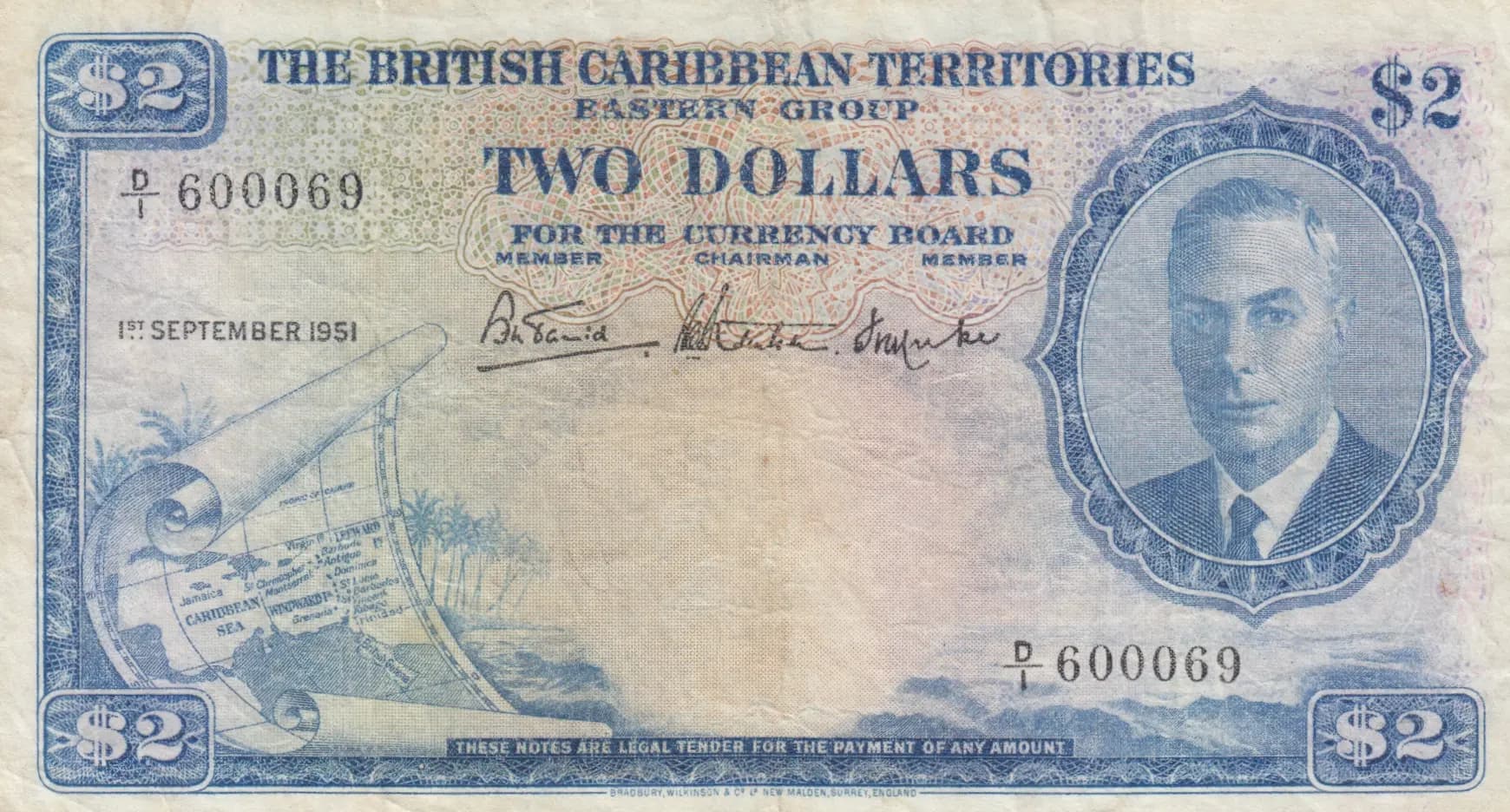
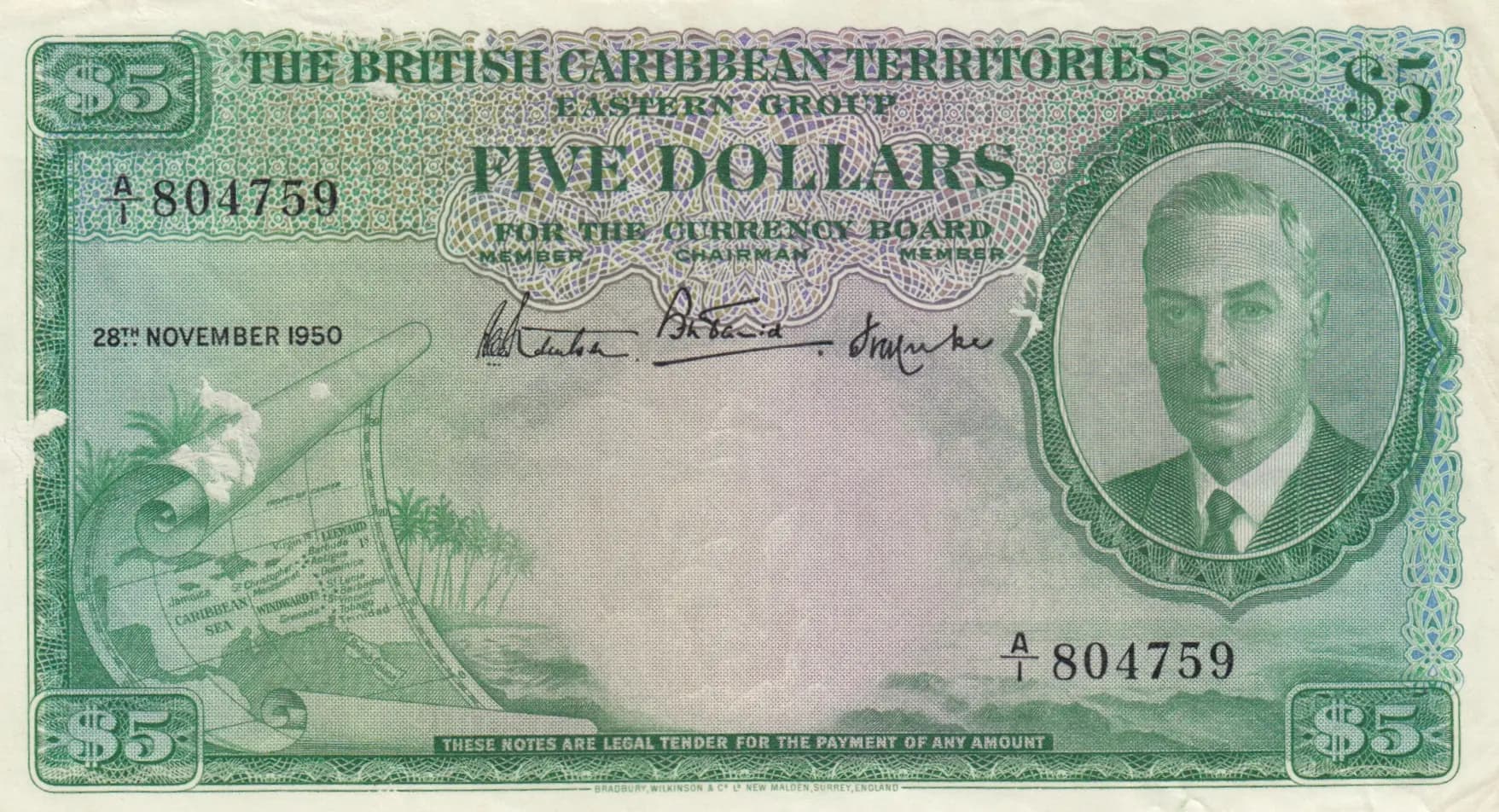
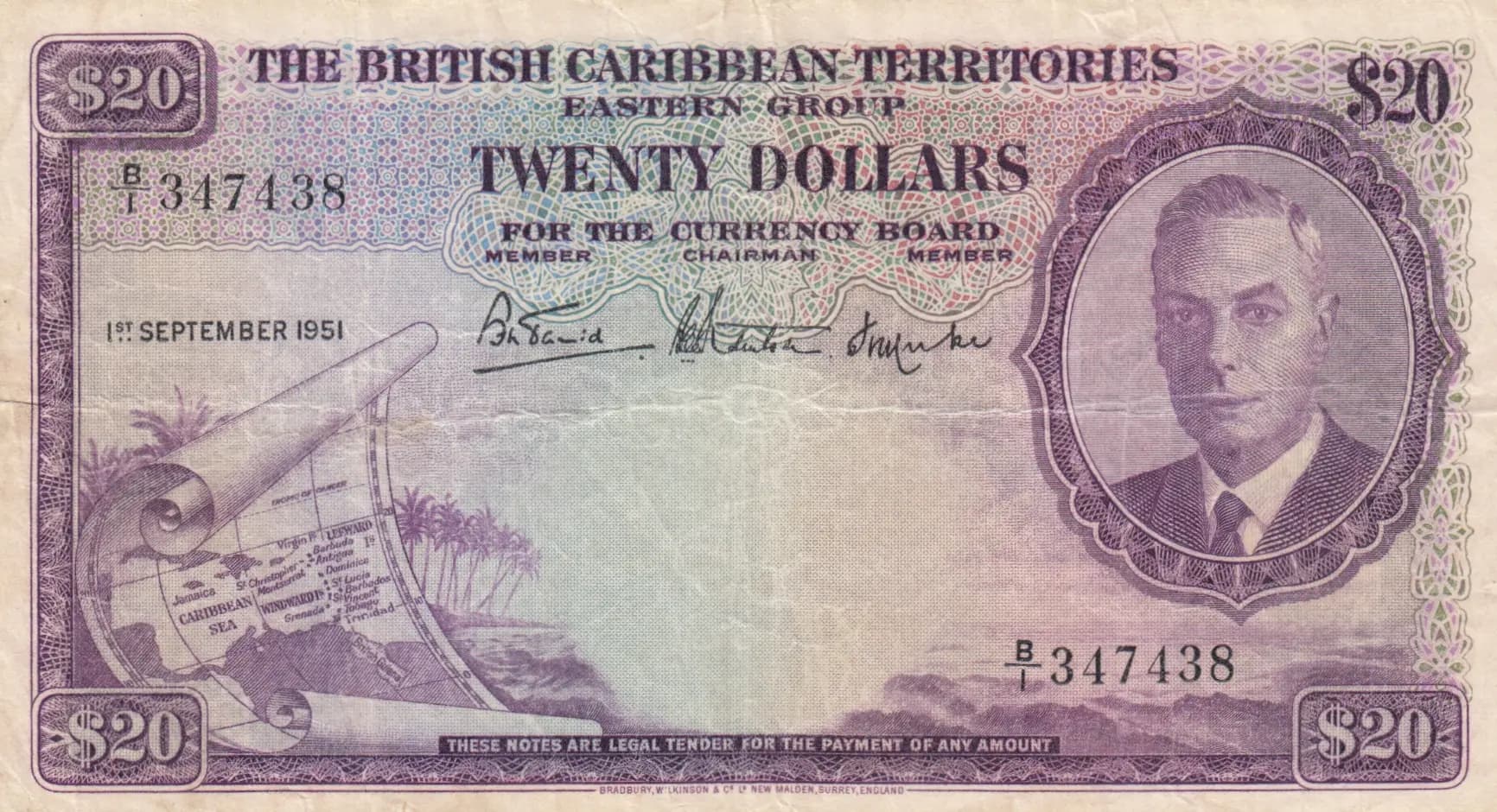
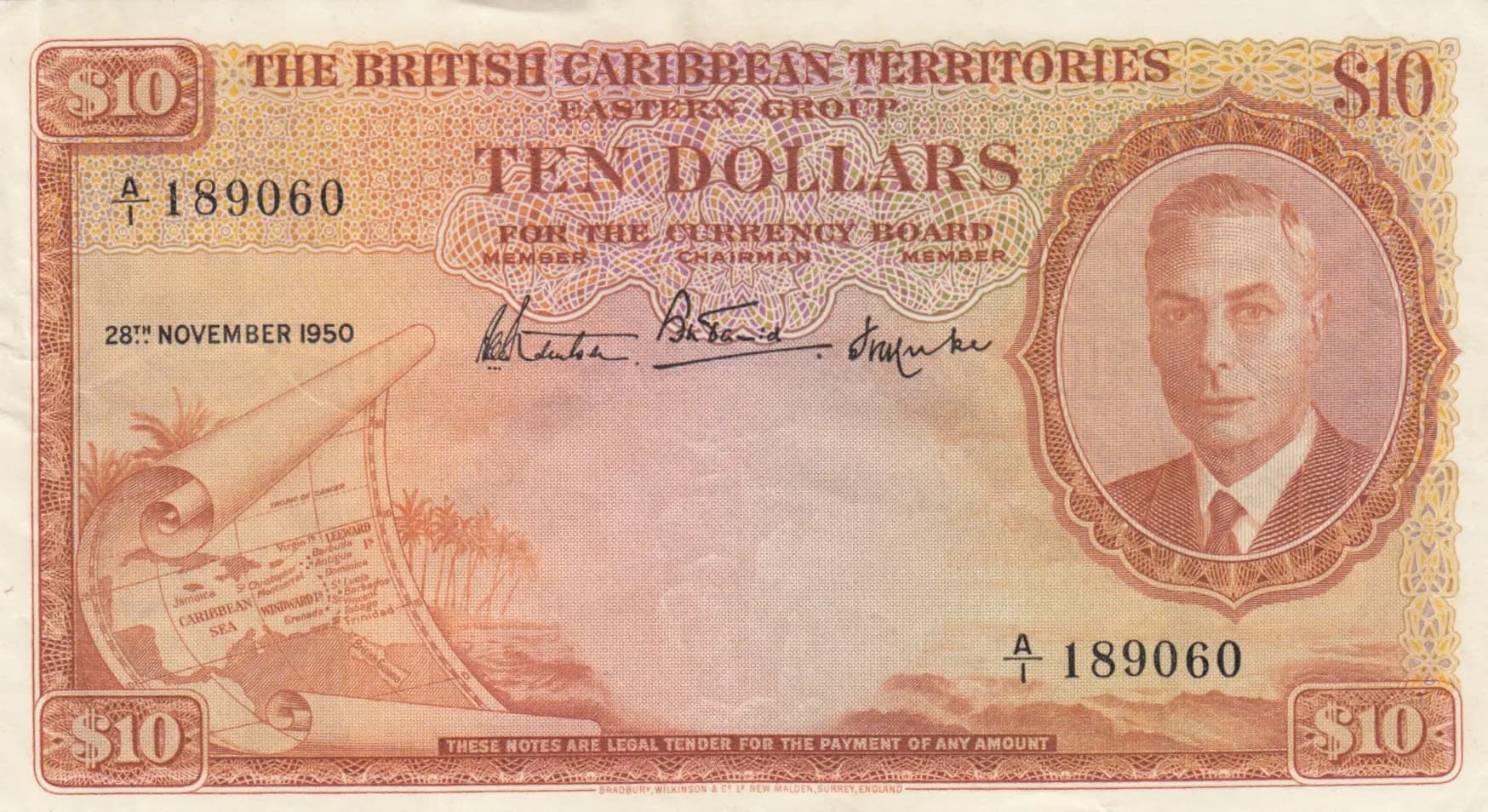
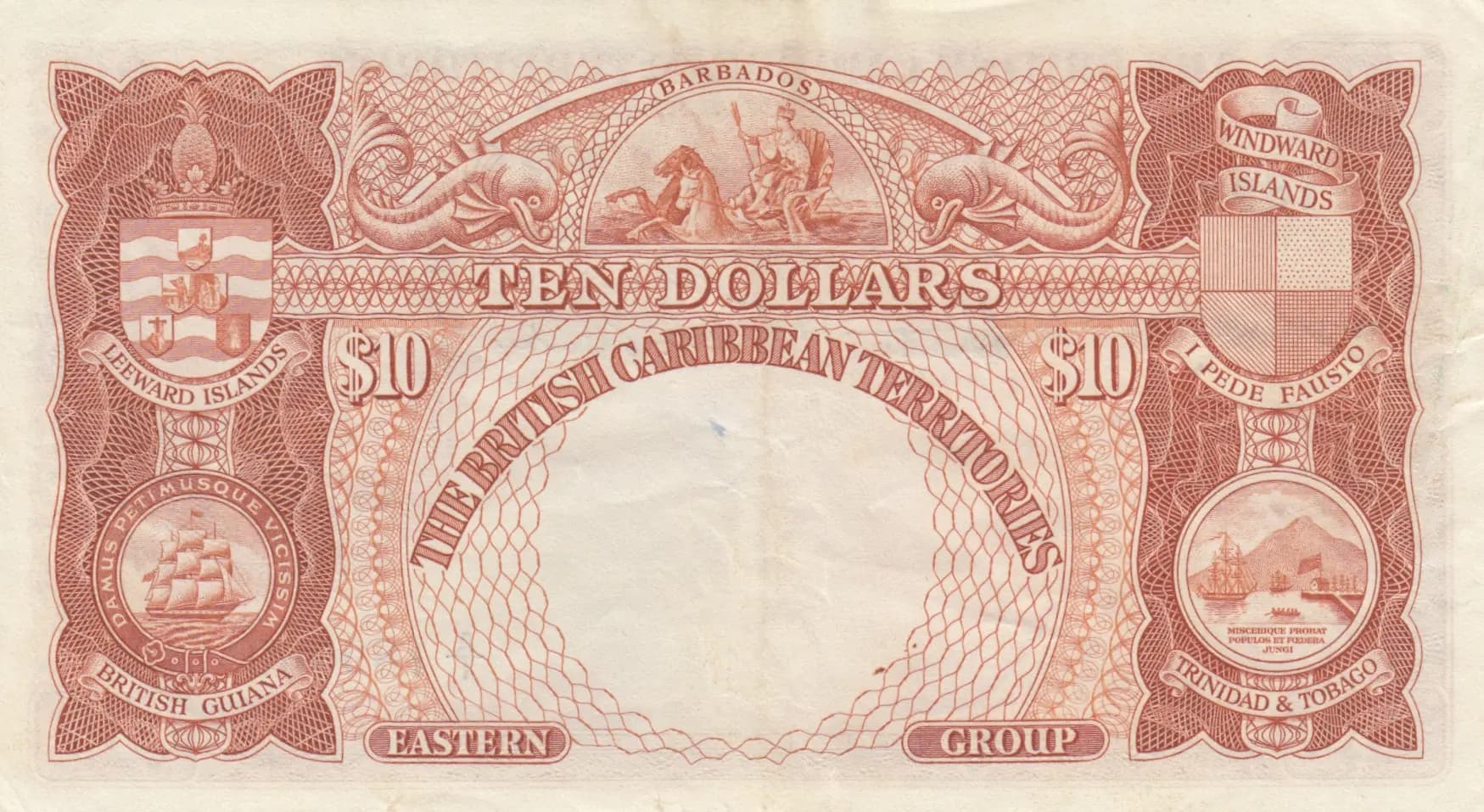
This is a VF-grade 10 Dollar note from the British Caribbean Territories Currency Board, issued in 1950 and printed by Bradbury Wilkinson & Co. The note displays the characteristic coral-salmon color scheme with a formal portrait of King George VI on the obverse and an elaborate heraldic design on the reverse featuring the coats of arms of five constituent territories (British Guiana, Barbados, Leeward Islands, Windward Islands, and Trinidad & Tobago). Despite visible age-related creasing, foxing, and handling marks consistent with circulation, the note remains in readable condition with all design elements and security features clearly discernible.
Common. While this is a collectible banknote from 1950, the catalog valuation data and eBay pricing history indicate it is a relatively common note in the secondary market. A comparable circulated example sold for $26.65 in 2011, and the 2016 catalog value for VF condition is $300—a modest valuation typical of notes with substantial print runs. The British Caribbean Currency Board issued these notes across five territories over several years, indicating a large aggregate circulation. Notes designated as 'rare' or 'very rare' typically command prices in the thousands or are documented with print runs under 100,000 pieces; this note shows no evidence of scarcity. The VF grade adds some collector premium over lower conditions, but the note remains accessible to collectors of British Commonwealth currency.
This banknote represents a significant transitional period in British Caribbean monetary history, issued just as the post-WWII decolonization process was beginning. The 1950 date and featured King George VI mark the late colonial era before Caribbean territories began achieving independence (starting with Jamaica and Trinidad & Tobago in 1962). The reverse design—prominently displaying the five constituent territories under the 'Eastern Group' designation—reflects the Currency Board's attempt to create a unified currency framework across geographically and politically diverse British Caribbean colonies, though this arrangement would prove short-lived as individual territories eventually established their own central banks.
The obverse features a formal portrait of King George VI positioned at right in profile, wearing a suit and tie, rendered in the classical portrait style typical of British Commonwealth currency of the period. The left side displays an ornamental tropical vignette incorporating palm fronds and a coastal maritime scene with a sailing vessel, establishing the Caribbean identity of the currency. The reverse is the more elaborate composition, dominated by a classical allegorical scene in the center depicting maritime and colonial figures, surrounded by five heraldic shields arranged symmetrically. These shields represent: British Guiana (featuring a ship), Barbados, the Leeward Islands, Trinidad & Tobago, and the Windward Islands—each rendered with intricate detail and distinctive heraldic imagery. The entire design is unified by elaborate guilloche patterns, decorative scrollwork, and geometric ornamentation throughout, creating the densely layered aesthetic characteristic of high-security banknote design of this era.
OBVERSE: The British Caribbean Territories (top), TEN DOLLARS (left and center), $10 (denomination), Issue date: 28th November 1950, Serial number: A 189060, Signature lines for Currency Board Member, Chairman, and Member (center), Legal tender inscription: 'THESE NOTES ARE LEGAL TENDER FOR THE PAYMENT OF ANY AMOUNT' (bottom), Printer attribution: 'BRADBURY WILKINSON & CO LTD NEW MALDEN SURREY ENGLAND' (bottom). REVERSE: THE BRITISH CARIBBEAN TERRITORIES (top), EASTERN GROUP (center), TEN DOLLARS / $10 (denomination), Territory names: BRITISH GUIANA, BARBADOS, LEEWARD ISLANDS, WINDWARD ISLANDS, TRINIDAD & TOBAGO (arranged around coat of arms), Heraldic Latin mottos including 'PEDE FAUSTO' (By faithful steps) visible in scrollwork.
This note was produced using intaglio engraving (line engraving), the predominant security printing method for banknotes of this period. The visual analysis reveals characteristic intaglio features including fine line engraving throughout, intricate guilloche pattern backgrounds, complex interlocking design patterns, and the tactile quality evident from detailed vignettes and portraiture. The printer, Bradbury Wilkinson & Co Ltd of New Malden, Surrey, England, was one of the world's leading specialist banknote printers and security printers, renowned for their mastery of the intaglio process. The multicolored underprint mentioned in the catalog data indicates the use of multiple color passes in the intaglio process to achieve the coral-salmon, cream, tan, and gold color palette.
This note is identified as Pick catalog number P-4, specifically the 'Eastern Group' variant (designated P-4 in the PMG population report; a specimen variant P-4s also exists). The observed note displays a signature variety with three signature lines for Currency Board officials. The serial number visible is A 189060, with the prefix 'A' indicating the first series. The catalog data notes that signature varieties exist for this issue. Based on the visual analysis showing the date '28TH NOVEMBER 1950' printed on the note, this represents the initial 1950 issue (as opposed to later overprinted variants dated '1.9.1951' mentioned in the reference data), making it part of the original release series of the British Caribbean Currency Board.