100 korun 1940 specimen
About This Note
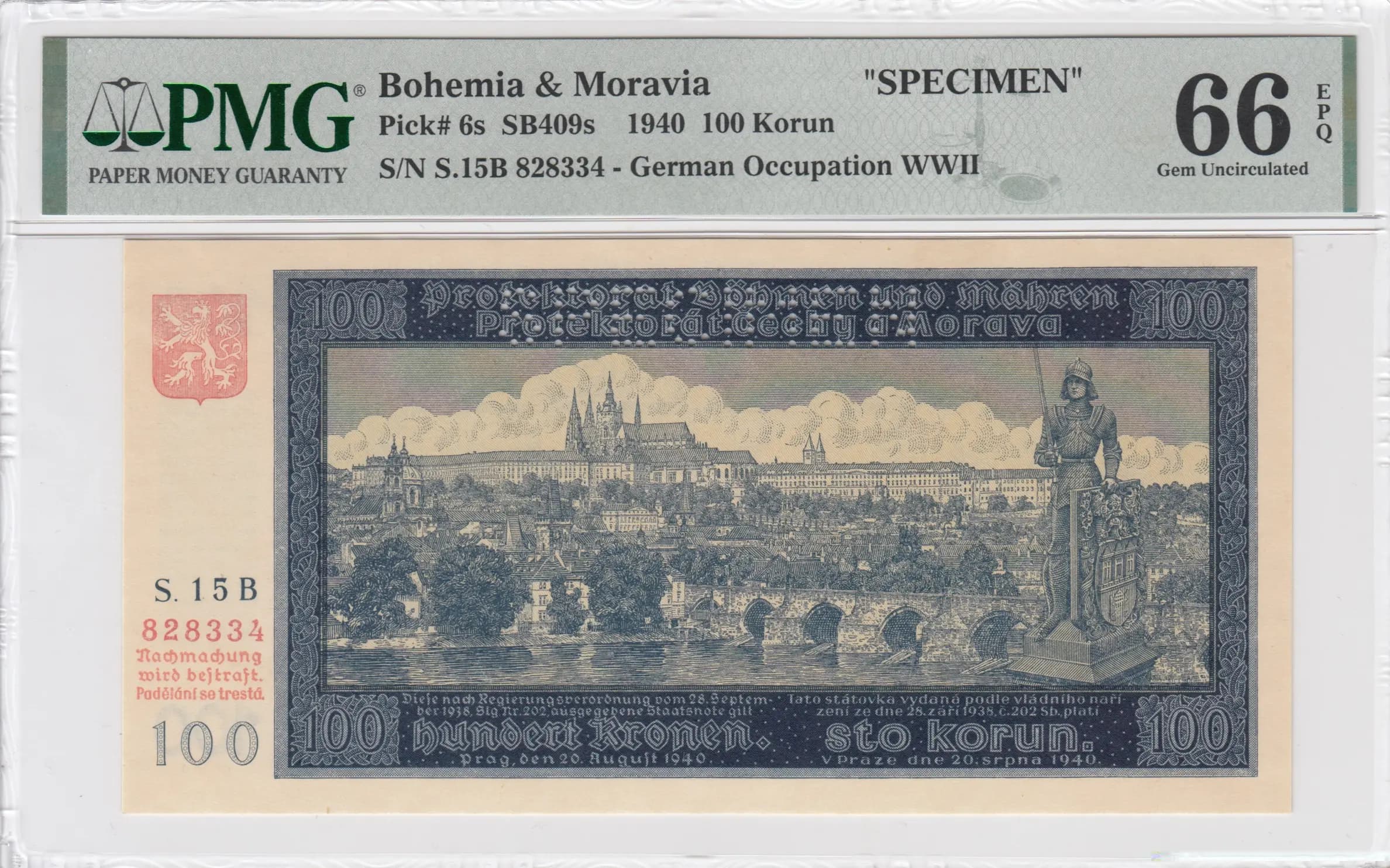
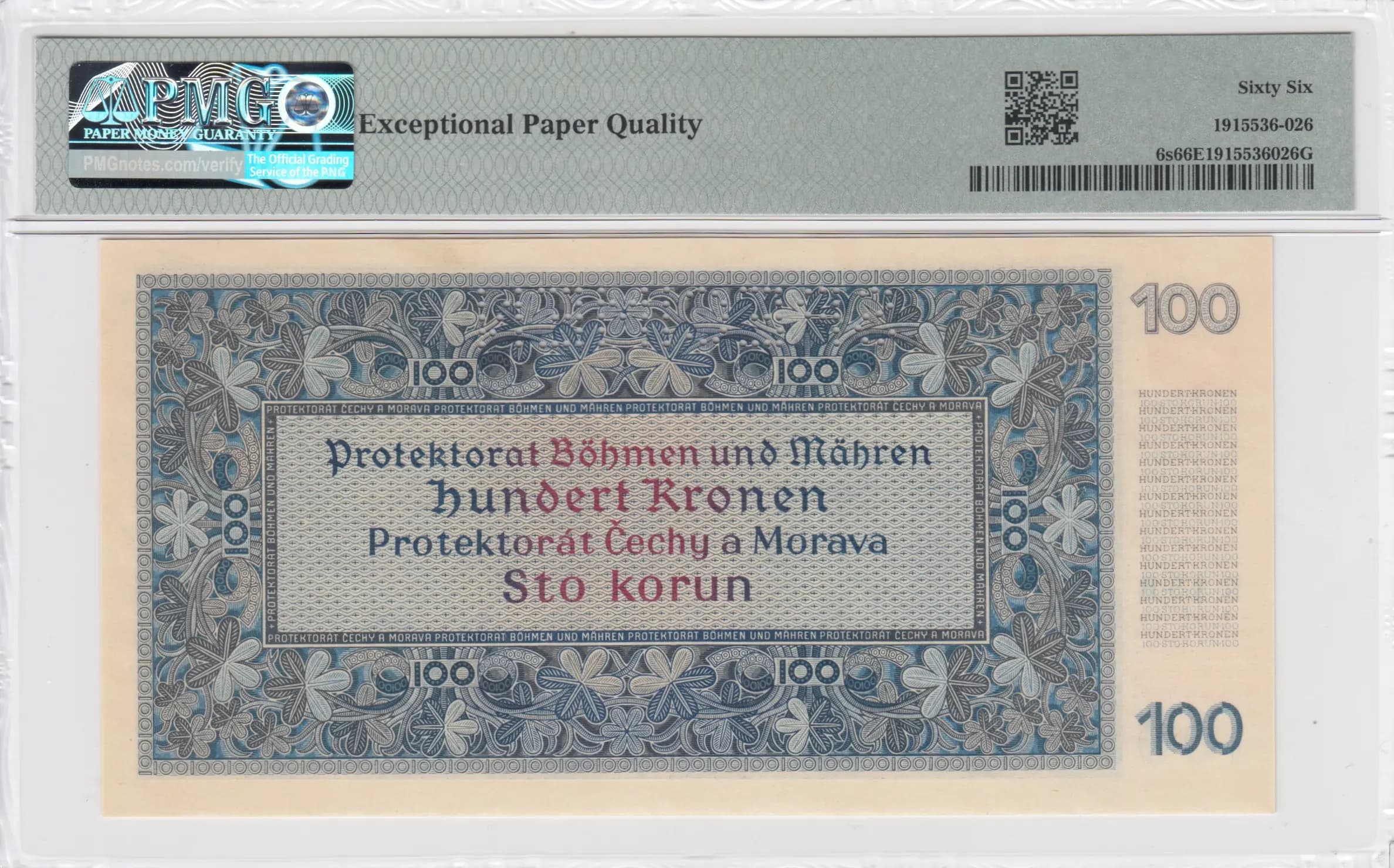
This is a spectacular PMG 66 EPQ specimen of the 1940 Bohemia & Moravia 100 Korun note (Pick P-6s), showcasing exceptional preservation with pristine print quality and no visible wear. The front features a striking engraved Prague cityscape with the iconic Charles Bridge and castle spires, complemented by a period-dressed figure and heraldic lion emblem, while the reverse displays an ornate geometric and floral border design. As a specimen note from this wartime protectorate, it represents an important piece of the region's complex WWII-era monetary history.
Common. While this is a specimen note (designated by the red overprint marking), the Bohemia & Moravia 100 Korun Pick P-6s was produced in substantial quantities for circulation during its brief official period (1940-1945). Specimen notes, though technically non-circulating, were issued in quantities sufficient to make them regularly available to collectors. The PMG 66 EPQ grade reflects exceptional preservation but is not extraordinarily rare for specimen notes, which were stored carefully and often remained in pristine condition. These notes trade regularly in the collector market at moderate prices, typically ranging from $25-75 depending on exact variety and condition.
Issued by the Protektorat Böhmen und Mähren (Protectorate of Bohemia and Moravia) in August 1940, this note reflects the Nazi occupation period following the Munich Agreement and the subsequent German protectorate established over the Czech lands. The prominent depiction of Prague's Charles Bridge and castle complex celebrates the historic Czech capital while remaining under German administrative control, as evidenced by the German-language text and the bilingual (German-Czech) inscriptions required under Nazi occupation policies.
The obverse features a masterfully engraved panoramic view of Prague dominated by the multi-spired silhouette of St. Vitus Cathedral and Prague Castle overlooking the Vltava River spanned by the historic Charles Bridge with its characteristic multiple stone arches. A standing male figure in military or period administrative dress occupies the right side of the composition, likely representing authority or civic administration. The heraldic symbol on the left margin is the Bohemian lion (the traditional coat of arms of Bohemia), rendered in red to emphasize its heraldic significance. The reverse showcases purely decorative design elements with an ornate border composed of repeating floral motifs and geometric patterns in blue-gray and cream tones, serving as background for the authoritative bilingual text declaring the note's issuing authority. The color palette of blue-gray and cream reflects both practical printing considerations and aesthetic conventions of the period.
FRONT: '100' (denomination); 'Protektorat Böhmen und Mähren / Protektorát Čechy a Moravia' (Protectorate of Bohemia and Moravia); '100 hundert Kronen / sto korun 100' (100 hundred crowns); Serial number 'S.15B 828334'; Date 'Praq, den 28.August 1940' (Prague, August 28, 1940 in German); 'V Praze dne 20.srpna 1940' (In Prague on August 20, 1940 in Czech). BACK: '100' (denomination in all four corners); 'Protektorat Böhmen und Mähren / Protektorát Čechy a Moravia' (Protectorate of Bohemia and Moravia); 'hundert Kronen / sto korun' (hundred crowns); 'HUNDERTHKRONEN' (hundred crowns in German); Repeated institutional identification in both languages.
This note was produced using traditional intaglio engraving (steel/copperplate engraving), the standard security printing method for high-value banknotes of this era. The exceptionally detailed and crisp engraved lines visible throughout the ornamental borders, portrait details, and landscape elements are characteristic of intaglio printing. The note was produced by Česká státní tiskárna (Czech State Printing House) or under German-supervised security printing arrangements. The fine line work, consistent ink coverage, and the depth of detail preserved in this specimen-grade example demonstrate the high technical standards of Central European banknote production in 1940.
This specimen is identifiable as variety 'S.15B 828334' based on the serial number prefix 'S.15B'. The dated inscription '28.August 1940 / 20.srpna 1940' (German and Czech dates that differ by 8 days, likely reflecting administrative dating practices across both language bureaucracies) distinguishes this from other 1940 emissions. The red specimen overprint on the left margin is the defining characteristic of specimen status. The bilingual text (German predominant on top, Czech on bottom) represents the standard reverse ordering found on this Pick number throughout its mintage.