20 francs 1948
Market Prices
11 salesAbout This Note
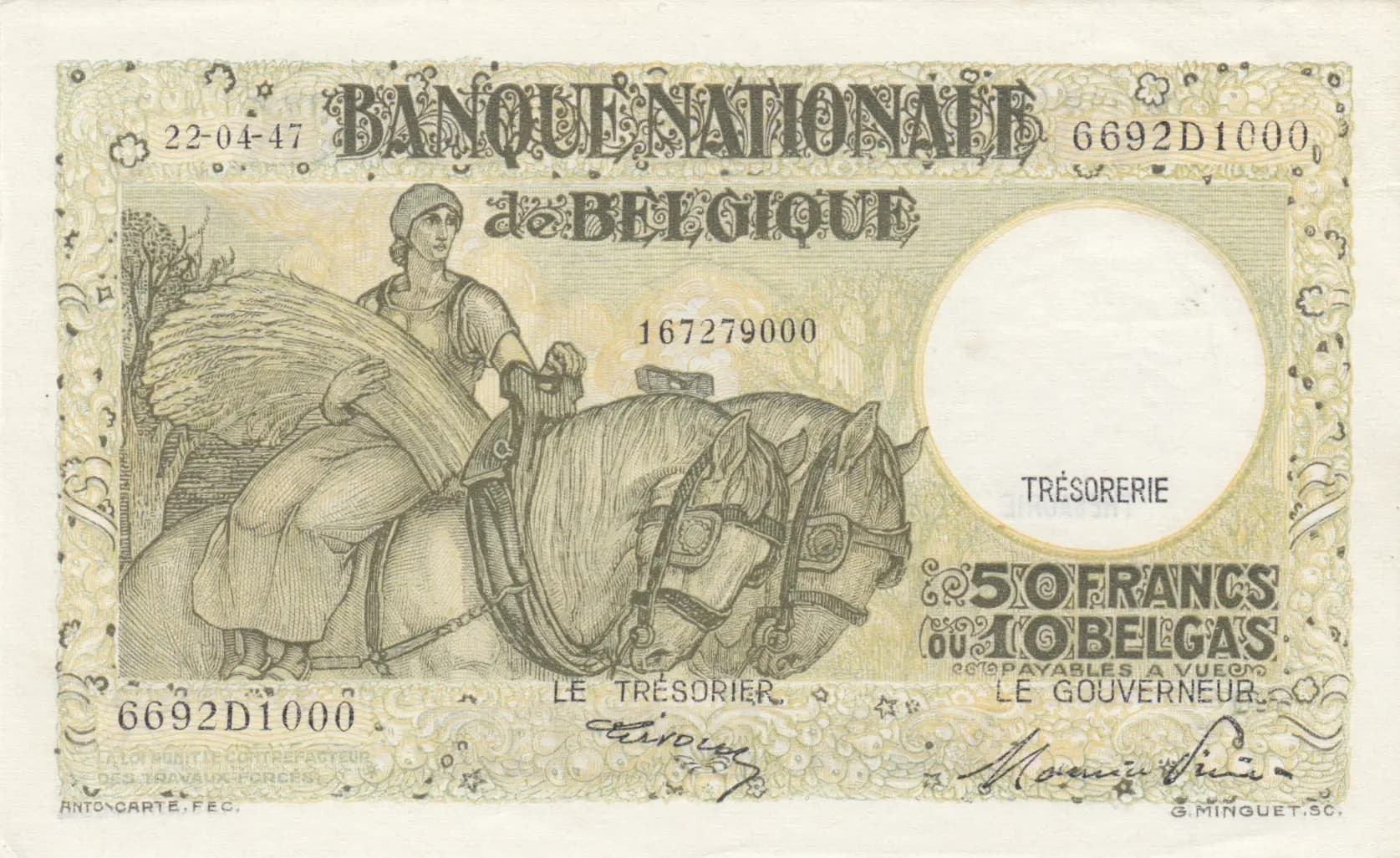
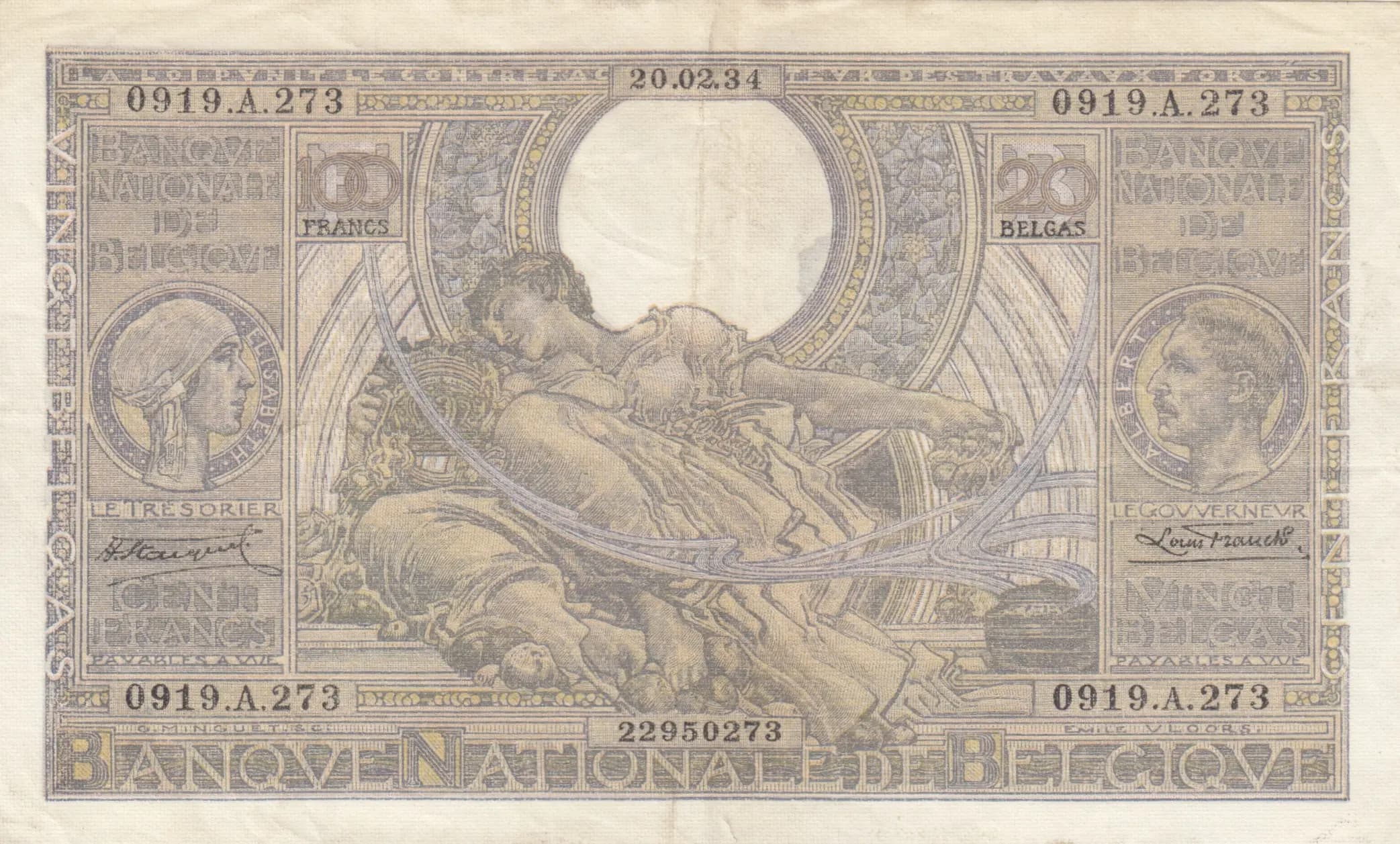
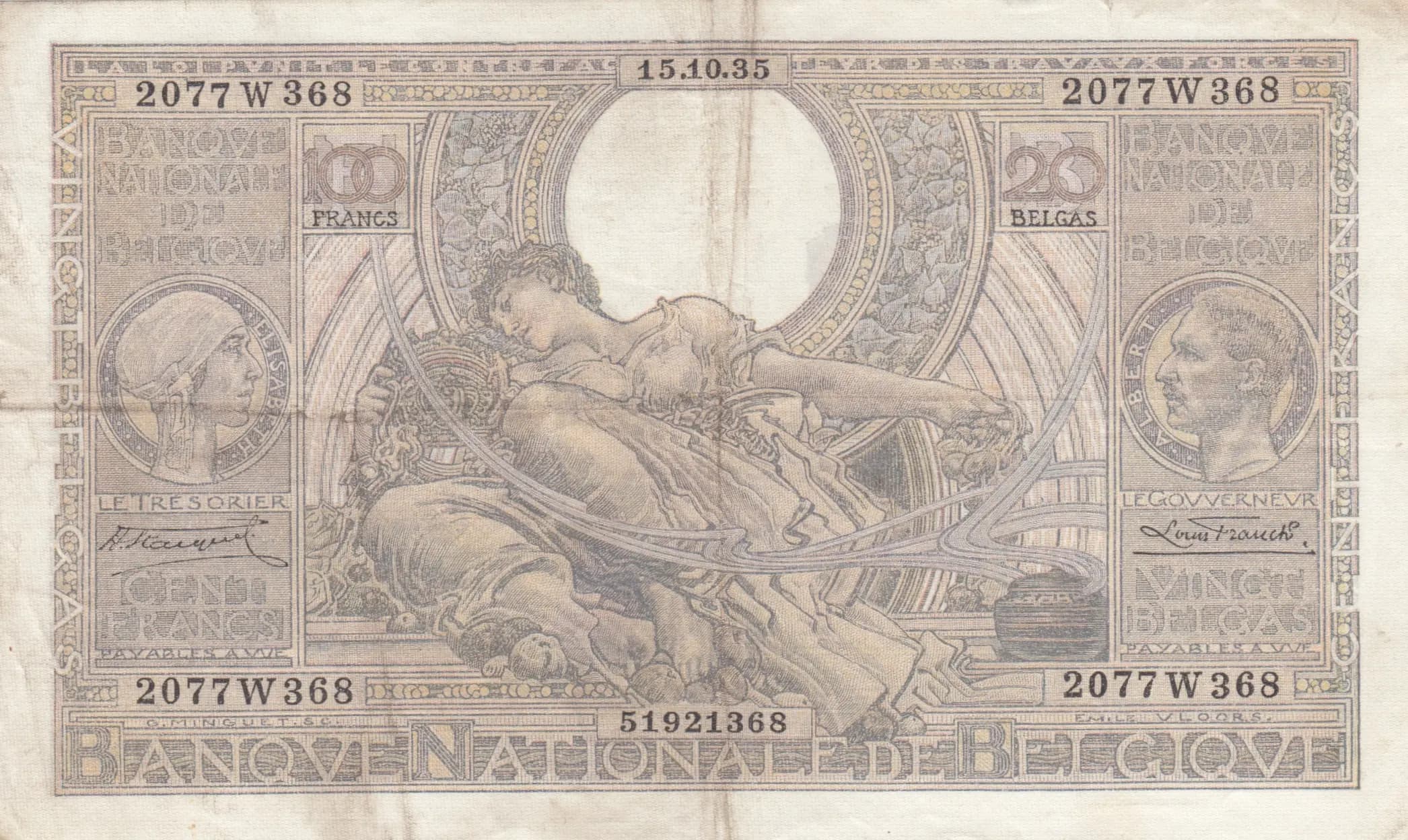
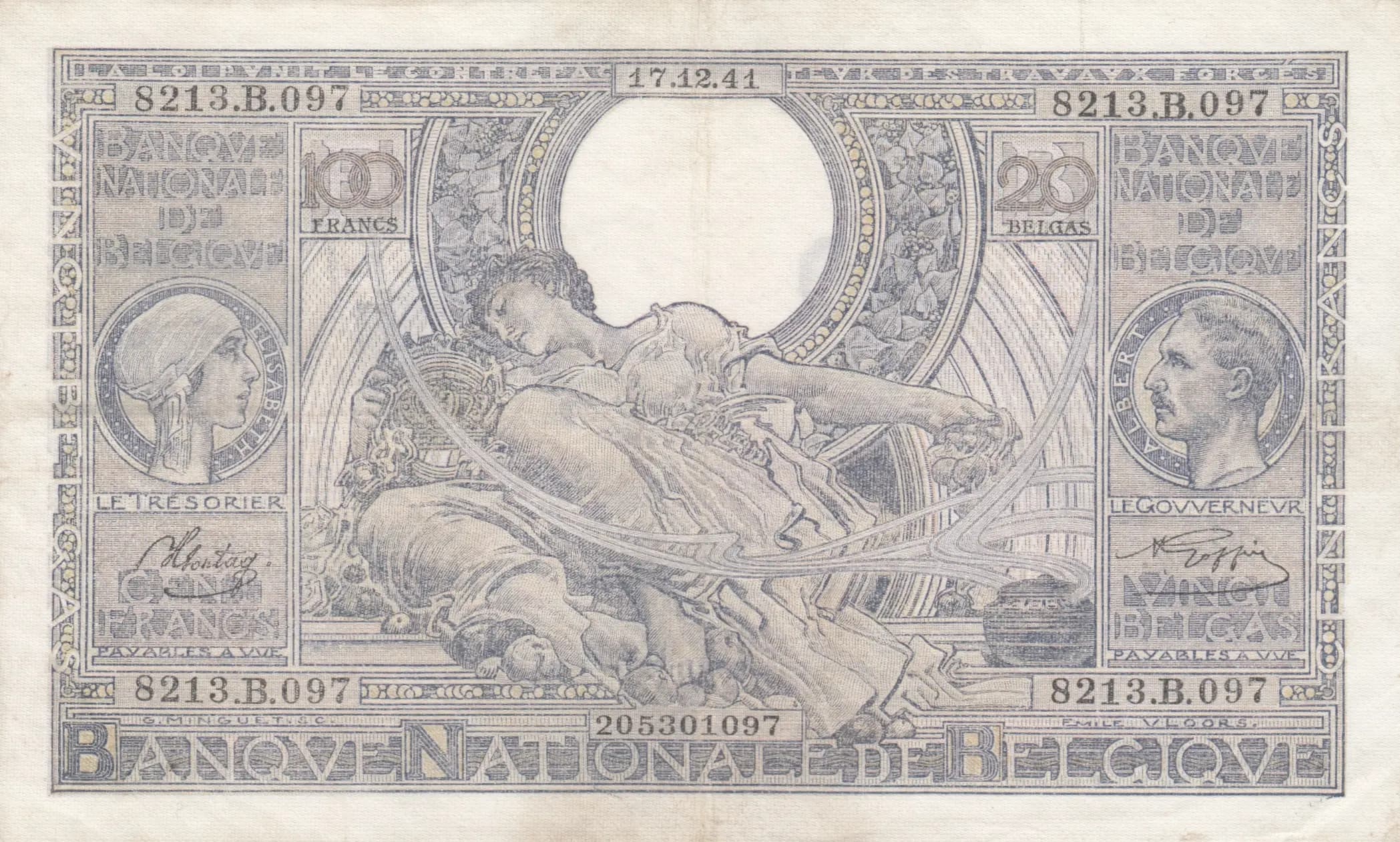
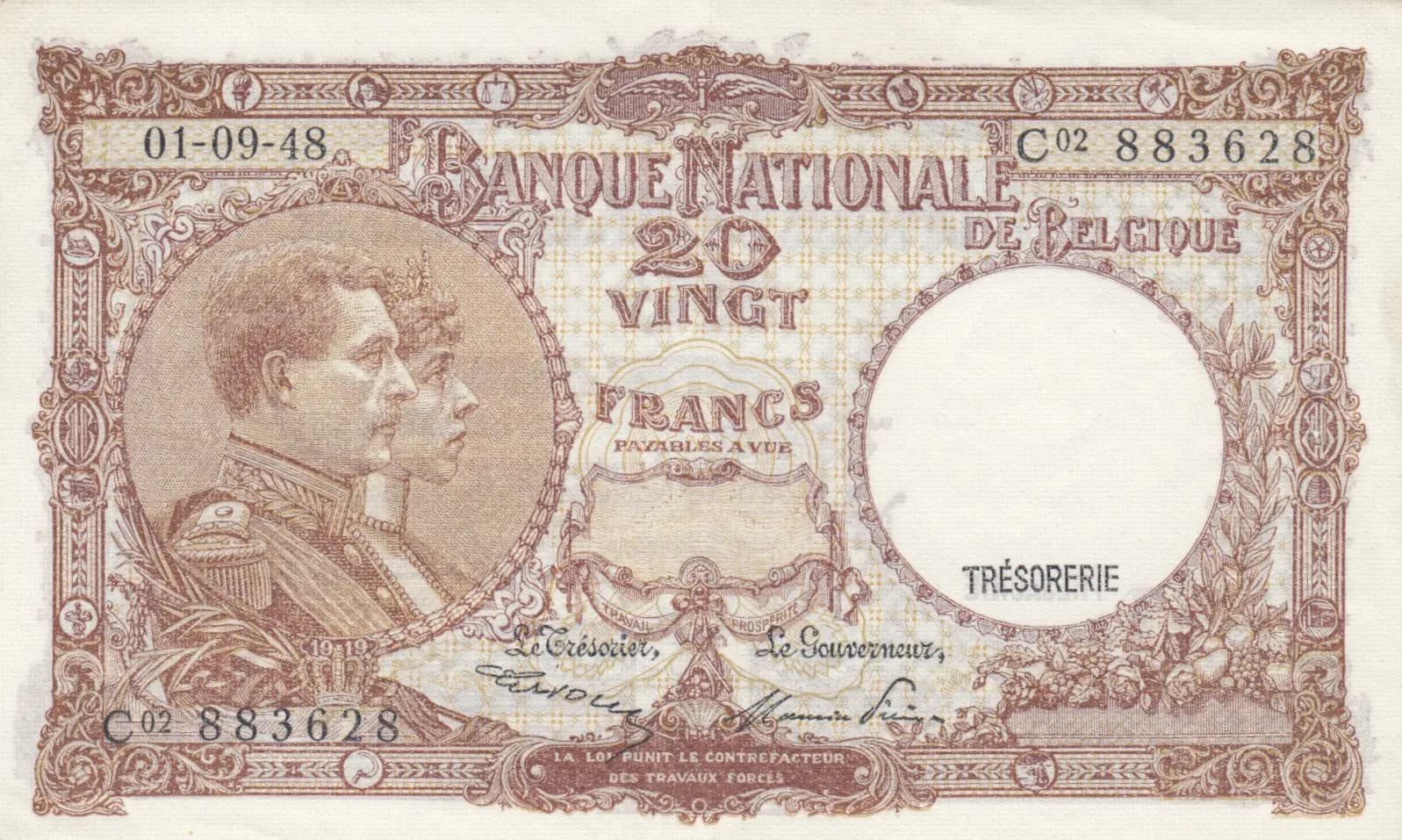
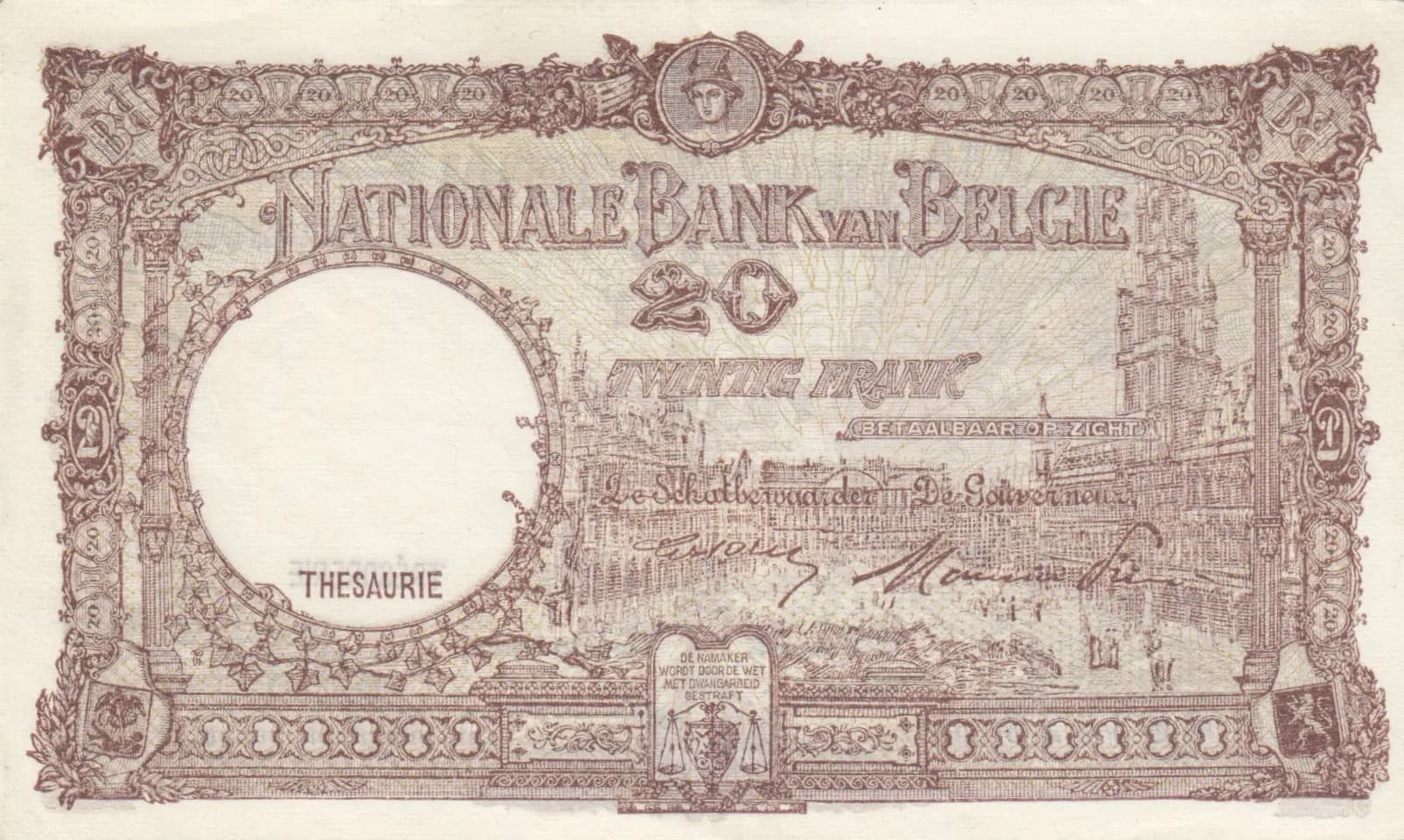
This is a VF-graded Belgium 20 Francs note from 1948 (Pick P-116), issued by the Banque Nationale de Belgique. The note displays the characteristic brown and tan color scheme with ornate decorative borders typical of post-war Belgian currency, featuring a portrait of King Albert in military uniform on the obverse and an architectural engraving of a grand classical building (the Grand-Place/Grote Markt in Brussels) on the reverse. Despite showing age-related foxing and minor creasing consistent with nearly 75 years of storage, the note maintains good eye appeal with clear impressions and legible inscriptions in both French and Dutch.
Common. This is a regular-issue note from 1948 with no indication of limited print run or early recall. The eBay price tracking data shows consistent sales in the $3–$50 range depending on condition, with VF examples regularly selling for $5–$18, and the 2016 catalog value for VF is listed at $18. These price points and the frequency of sales strongly indicate this is a commonly circulated and readily available note in the collector market. No special scarcity factors are evident from the Pick catalog notation or visual characteristics.
This 1948 note represents Belgium's post-World War II monetary reconstruction under the Banque Nationale de Belgique. The dual-language inscriptions (French and Dutch) reflect Belgium's bilingual character and the need to unify the nation following the occupation. The depiction of King Albert and the iconic Grand-Place of Brussels served as symbols of national continuity and recovery, while the 'TRÉSORERIE/THESAURIE' overprints indicate this was a treasury issue during the immediate post-war period of currency stabilization.
The obverse features a right-facing profile portrait of King Albert I in military dress uniform within an ornate oval medallion frame positioned on the left side, surrounded by elaborate scrollwork and geometric borders in brown ink. The reverse displays a detailed architectural engraving of the Grand-Place (Grote Markt) in Brussels, showing a grand classical building facade with prominent columns, steps, and ornamental stonework characteristic of Brussels' 16th-century municipal architecture. Both sides are framed by intricate floral and geometric decorative borders typical of Belgian security printing of the era. The note employs bilingual text—French on the obverse and Dutch on the reverse—reflecting Belgium's constitutional bilingualism. Large circular overprint spaces labeled 'TRÉSORERIE' (obverse) and 'THESAURIE' (reverse) are prominently displayed, indicating this was a specific treasury issue variant.
FRONT (French side): 'BANQUE NATIONALE DE BELGIQUE' (National Bank of Belgium), '20 VINGT FRANCS' (20 Twenty francs), 'PAYABLES A VUE' (Payable on sight), 'TRÉSORERIE' (Treasury), 'LA LOI PUNIT LE CONTREFACTEUR ET L'USAGE DE FAUX' (The law punishes counterfeiting and the use of forgeries), serial number 'C02 8836228', date '01-09-48'. BACK (Dutch side): 'NATIONALE BANK VAN BELGIE' (National Bank of Belgium), '20 TWINTIG FRANK' (20 Twenty francs), 'BERTAALBAAR OP ZICHT' (Payable on sight), 'THESAURIE' (Treasury), 'DE NAMAKER WORDT VERVOLGD MET STRENGSTE STRAFFEN' (The counterfeiter will be prosecuted with the strictest penalties).
This note was produced using intaglio (engraved) printing, the standard security printing method for Belgian banknotes of this period. The fine line engraving is evident throughout the decorative borders, portrait detailing, and architectural rendering of the Grand-Place. The Banque Nationale de Belgique contracted with specialist security printers; for notes of this era, production typically involved the Belgian government printing works or contracted European security printers. The ornate scrollwork, fine linework, and complex border patterns visible in both the visual analysis and physical note characteristics are hallmarks of intaglio security printing.
The PMG population report indicates two cataloged variants for this Pick number: P-116 and P-116s (specimen note, marked with 's' suffix). The observed note is P-116, the regular circulating issue. The visual analysis shows serial number 'C02 8836228' with a 'C' prefix in the letter-number combination. The note displays one of four known signature varieties for this denomination. The 'TRÉSORERIE/THESAURIE' overprints on both sides are characteristic of this 1948 issue and distinguish it from earlier related notes (referenced in catalogs as P-94, P-98, and P-111). No additional rare varieties are apparent from the visual inspection.