100 francs= 20 belgas 1934
Market Prices
55 salesAbout This Note
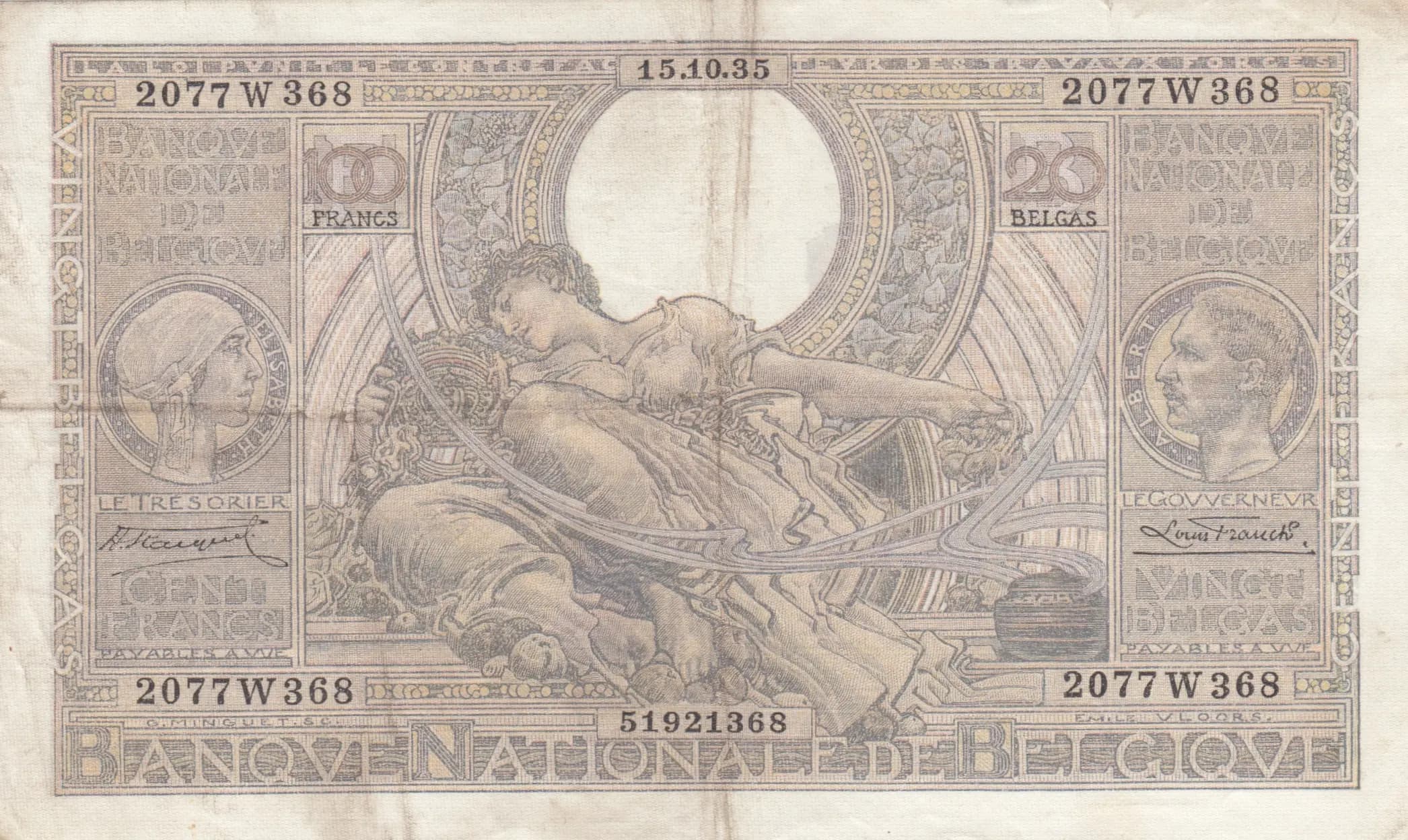
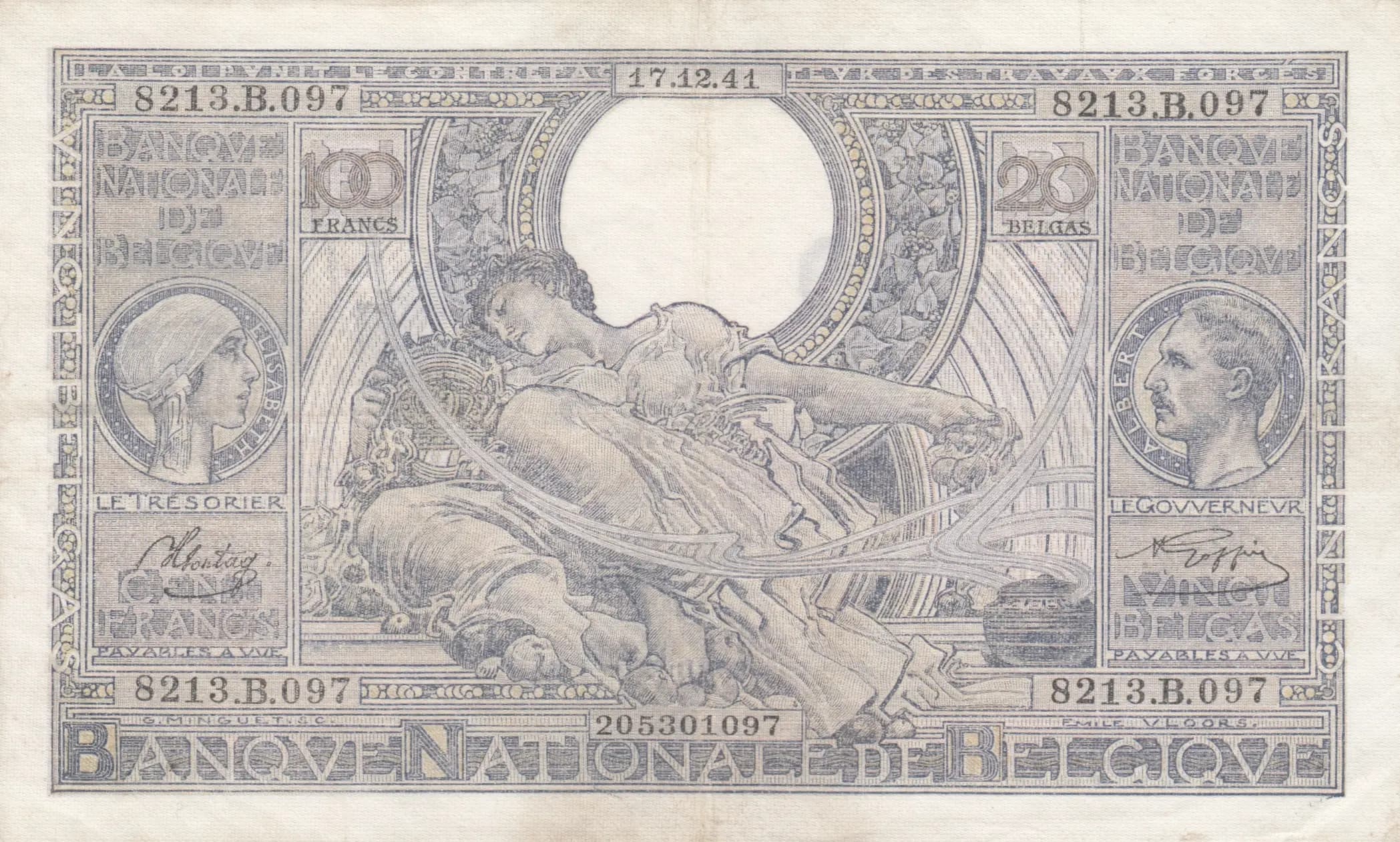
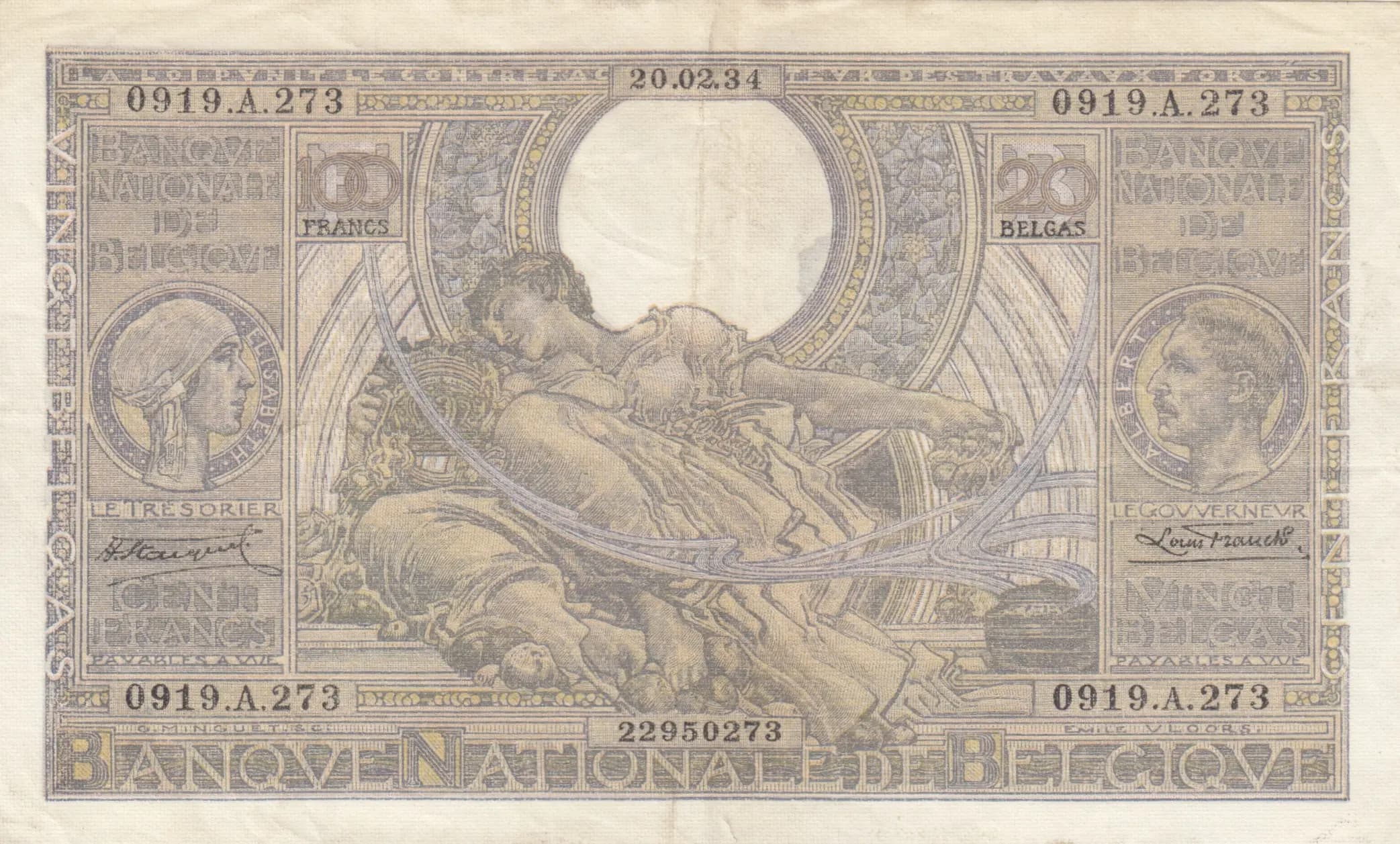
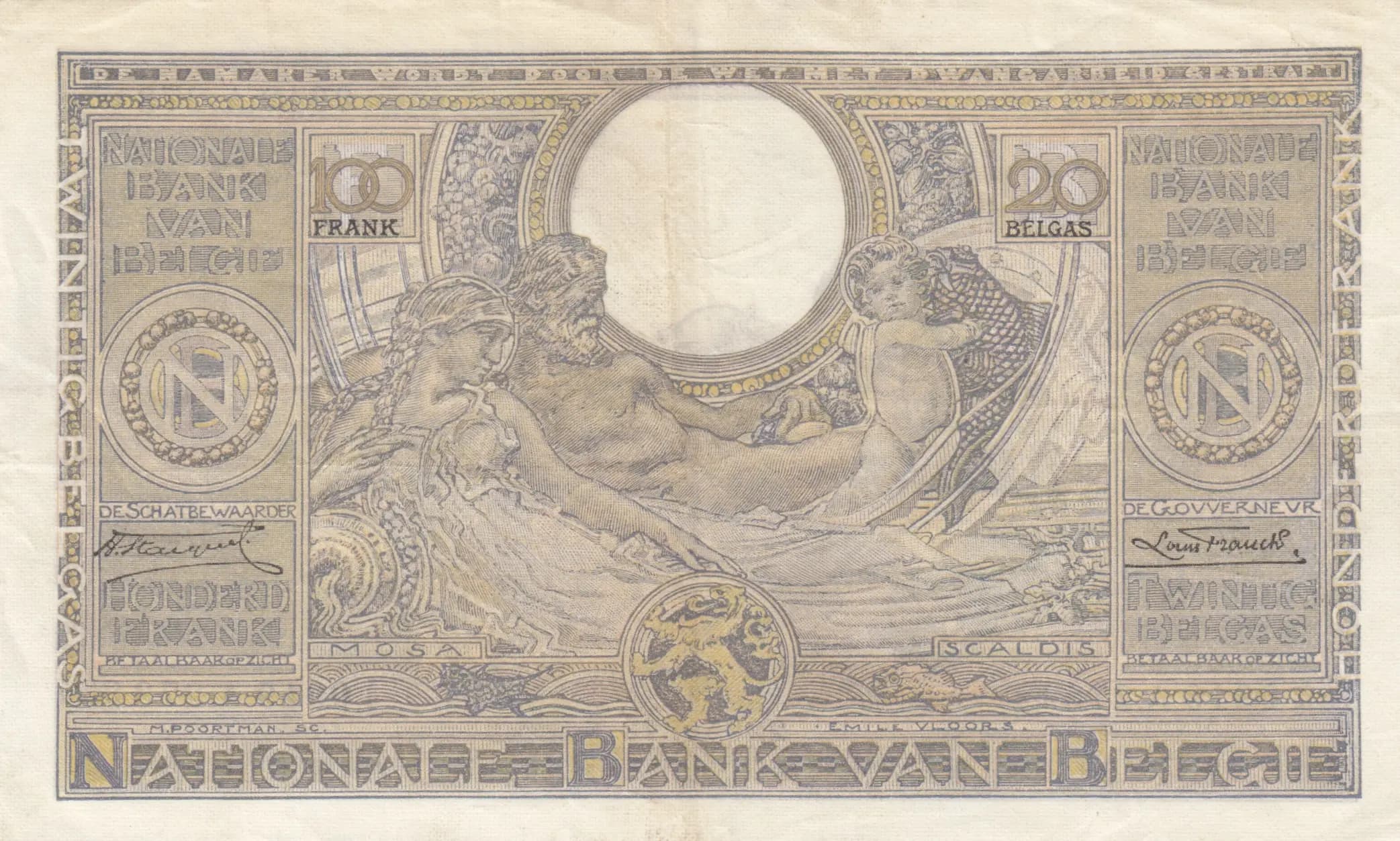
This Belgian 100 Francs / 20 Belgas note from 1934 presents a classically engraved design typical of interwar European currency, featuring allegorical figures representing commerce and the Belgian rivers Meuse and Scheldt. The note exhibits VF condition with visible circulation wear including creasing through the central medallions, light foxing, and age-related discoloration, yet maintains good structural integrity without major tears. The bilingual design (French obverse, Dutch reverse) reflects Belgium's linguistic divisions and makes this a notable example of the country's dual-language currency tradition.
Common. Market data from realbanknotes.com shows consistent VF sales in the $4–$20 range over multiple years, with average prices around $7–$10 for VF specimens. This note was part of a regular issue with extended circulation dates (1933–1943), suggesting substantial print runs. The bilingual design (French obverse vs. Flemish reverse variants) exists, but neither variant commands premium pricing. Unless a specimen has exceptional qualities (high grade, signature varieties, or uncirculated status), this pick number remains a commonly available collectible.
Issued during the early 1930s economic recovery period, this note was printed during a transitional era in Belgian currency when the franc and belga denominations coexisted. The allegorical imagery—featuring representations of prosperity, commerce, and Belgium's major rivers (Mosa/Meuse and Scaldis/Scheldt)—emphasized national economic stability and natural resources during a period of relative political calm before the challenges of the late 1930s. The inclusion of both French and Dutch inscriptions reflects the Belgian state's commitment to linguistic equality between its Walloon and Flemish populations.
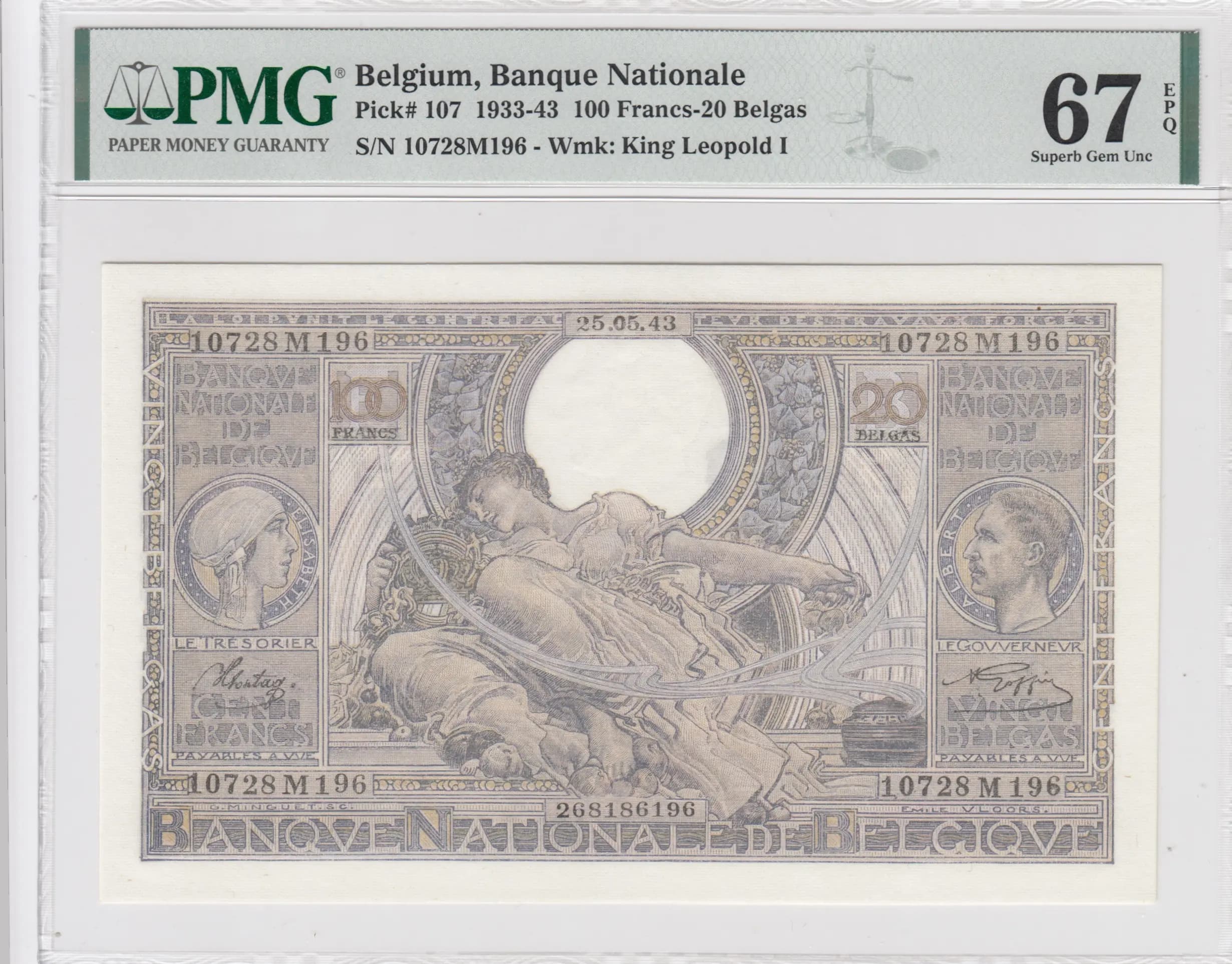
The obverse features Queen Elisabeth within a circular frame on the left (labeled 'The Treasurer') and King Albert on the right (labeled 'The Governor'), flanking a central oval medallion containing an allegorical female figure representing Agriculture or Commerce, accompanied by cherubs and holding a caduceus-like staff. The reverse maintains bilateral symmetry with two female allegorical figures in classical flowing robes within the central medallion, representing the personified rivers Mosa (Meuse) and Scaldis (Scheldt) of Belgium. Heraldic shields with Belgian coats of arms appear in the lower corners of the reverse, while ornate Rococo-style decorative borders, geometric patterns, and floral elements frame all imagery. The overall design reflects Belle Époque aesthetics applied to interwar monetary reform.
OBVERSE (French): BANQUE NATIONALE DE BELGIQUE (National Bank of Belgium) | CENT FRANCS (One Hundred Francs) | VINGT BELGAS (Twenty Belgas) | PAYABLES A VUE (Payable on Demand) | LE TRESORIER (The Treasurer) | LE GOUVERNEUR (The Governor) | Date: 20.02.34 (20 February 1934) | Serial: 0919.A.273 / 22950273. REVERSE (Dutch): NATIONALE BANK VAN BELGIE (National Bank of Belgium) | HONDERD FRANK (One Hundred Francs) | TWINTIG BELGAS (Twenty Belgas) | BETAALBARER OP ZICHT (Payable on Demand) | DE SCHATBEWAARDER (The Treasurer) | DE GOUVERNEUR (The Governor) | MOSA (Meuse River) | SCALDIS (Scheldt River).
Steel engraving and intaglio printing, characterized by the fine line work, cross-hatching, and complex ornamental patterns visible throughout both sides. The note demonstrates sophisticated security printing with multiple security features including finely engraved backgrounds, repeated serial numbers, heraldic devices, and intricate border designs typical of 1930s Belgian National Bank currency production. The printer is likely Giesecke+Devrient or similar specialized security printer employed by the Banque Nationale de Belgique during this period.
The note exhibits the standard French-text obverse variety (P-107). The catalog reference indicates a Flemish-text variant exists as P-112. The observed specimen shows serial number 0919.A.273 with date 20.02.34, indicating a February 1934 printing. Four signature varieties are documented for this issue. The watermark features King Leopold I. No obvious overprints or exceptional printing varieties are apparent in this VF specimen, making it representative of the standard P-107 type in circulation wear.