100 francs 1959
Market Prices
18 salesAbout This Note
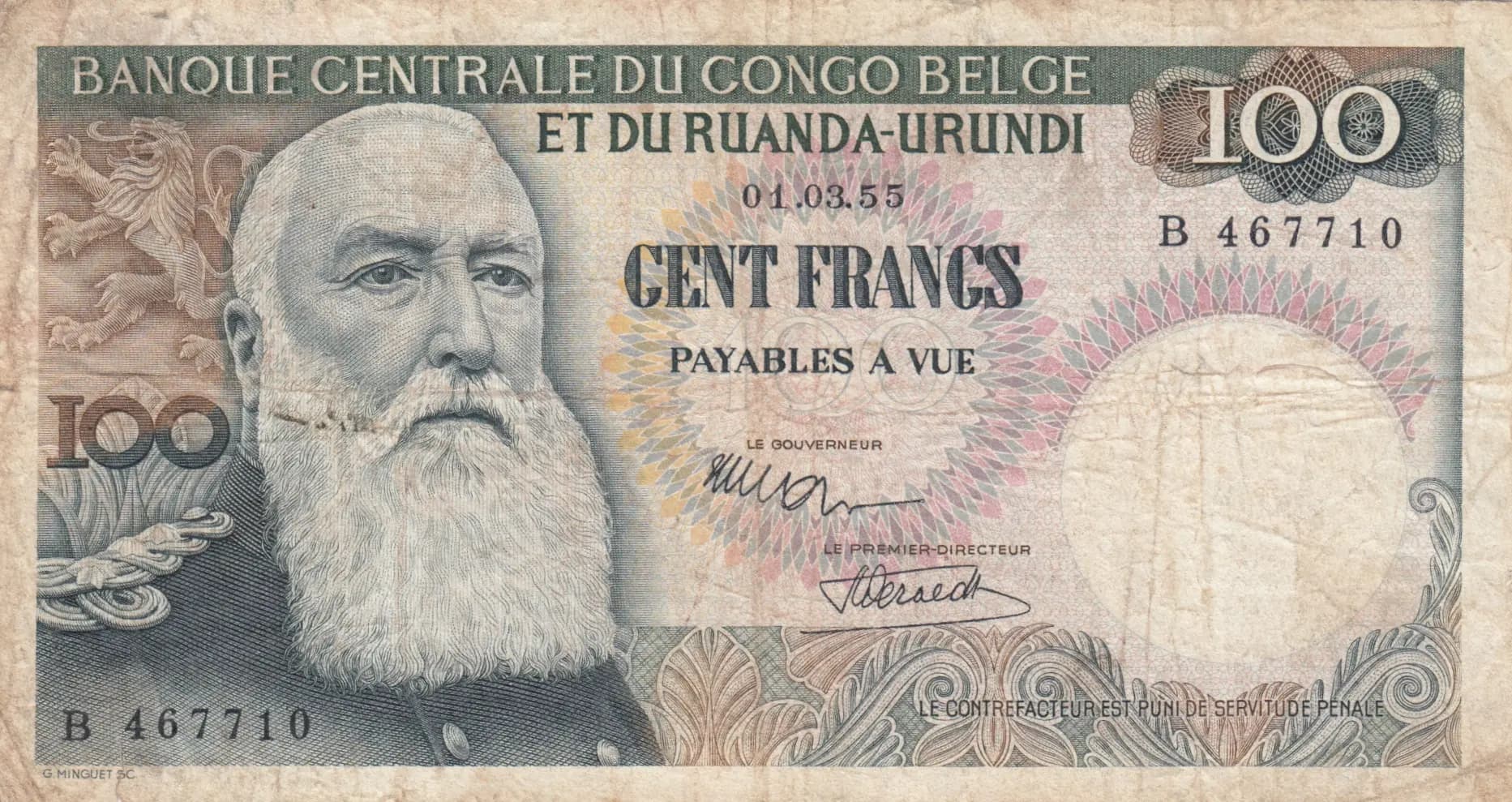
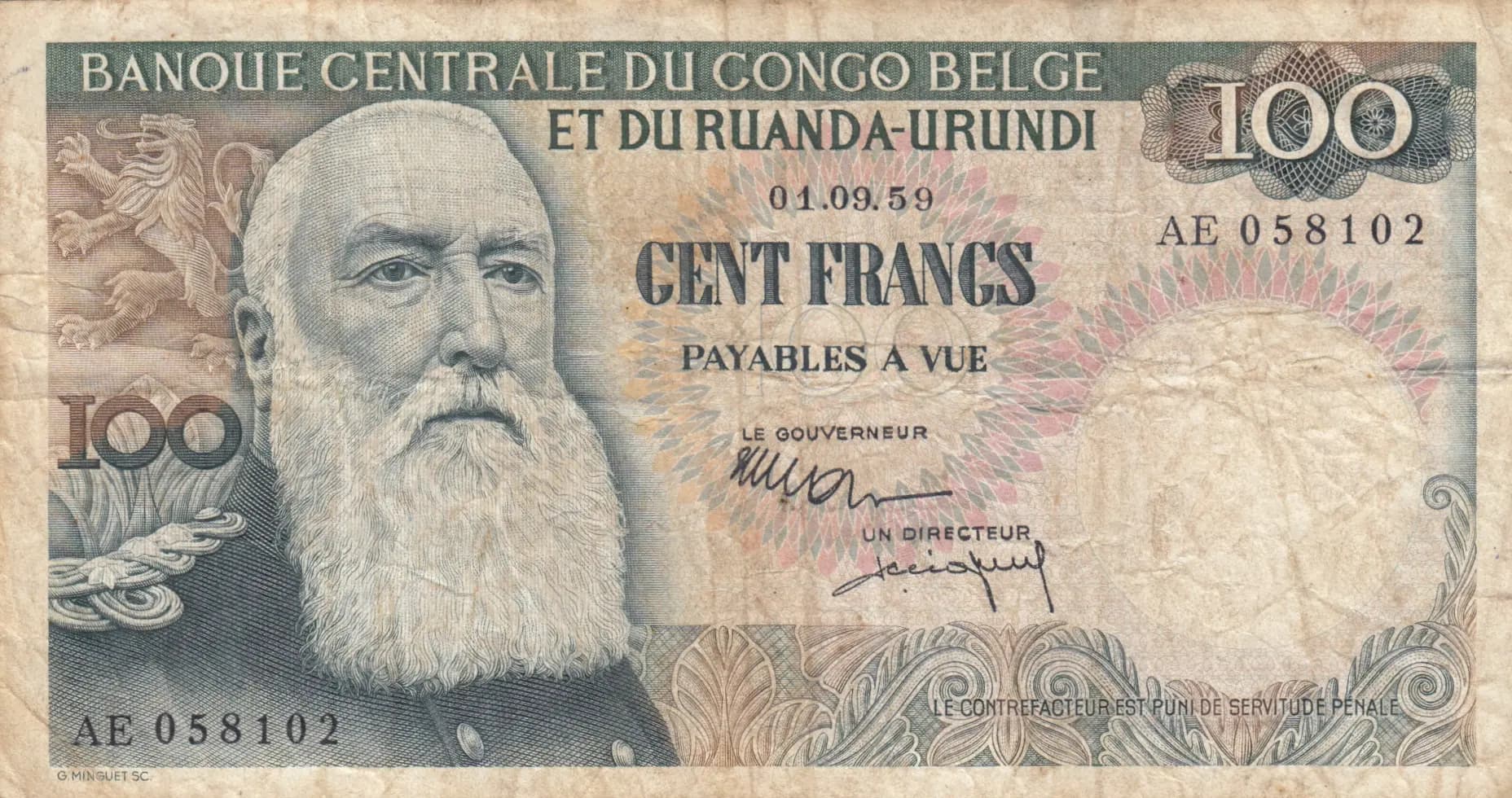
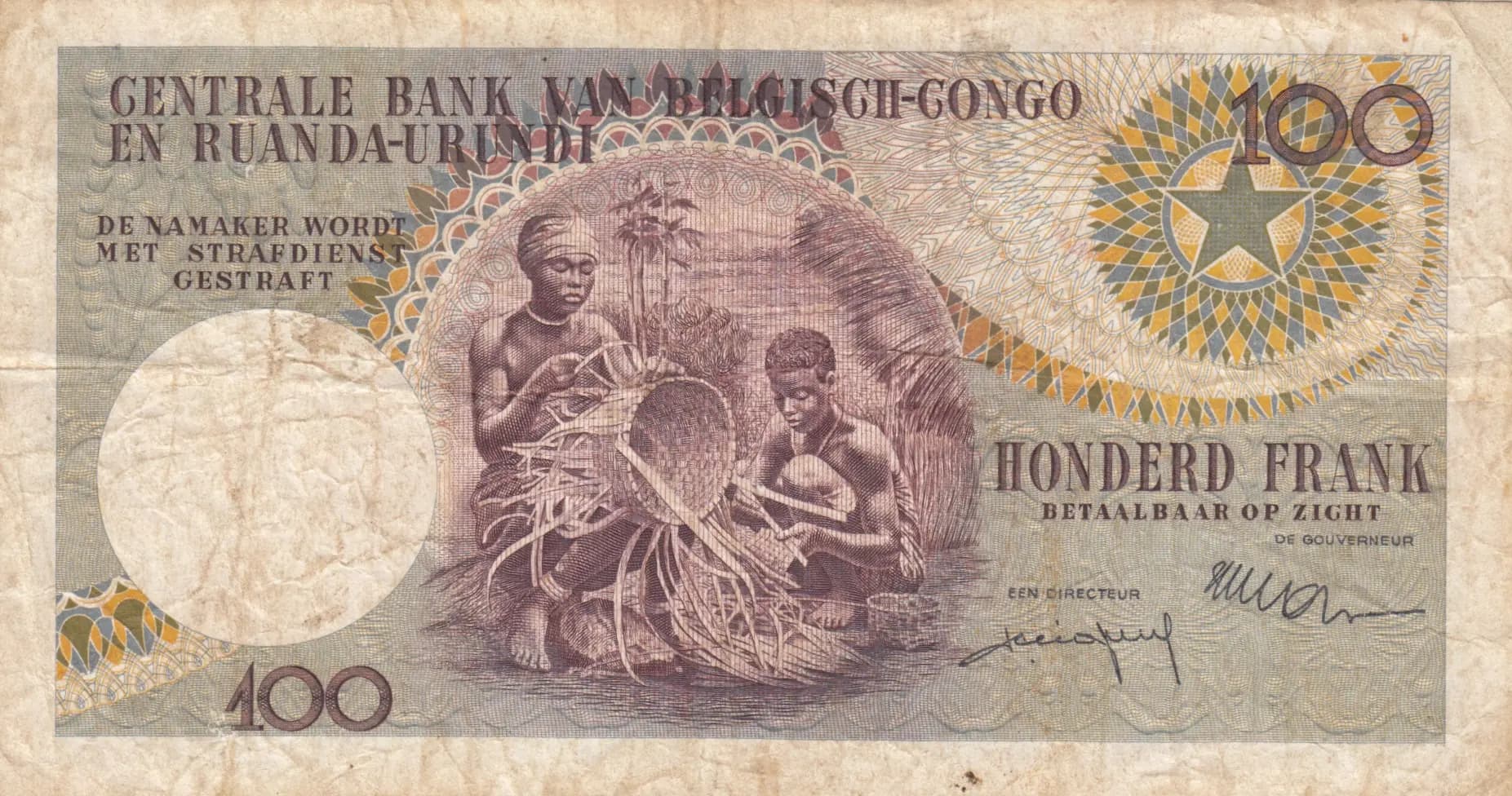
This is a Belgian Congo 100 Francs note from 1959 (Pick P-33b) in Fine condition, featuring a dignified portrait of King Leopold II on the obverse and an ethnographic scene of basket weavers on the reverse. The note displays characteristic moderate wear with creasing, folds, and age-related discoloration typical of circulated notes from this era, yet the engraving remains legible and the design elements are clearly visible. This note represents a significant transitional period in Central African colonial currency, issued just months before Belgian Congo's independence in June 1960.
Common. This note is a regular issue with a circulation span from 1956 to 1960 covering the final years of Belgian Congo, resulting in substantial print runs. eBay market data confirms common-grade pricing: F-graded examples consistently sell in the $10–$27 range, with VF notes bringing $30–$53, and only exceptional PMG-graded high-grade specimens (66+) commanding premium prices ($680+). The 2016 catalog value of $4 (VG), $15 (VF), and $60 (UNC) further confirms this is a widely available note in most grades. The P-33b variant with elephant's head watermark is the standard version and shows no scarcity indicators.
Issued by the Banque Centrale du Congo Belge et du Ruanda-Urundi in September 1959, this banknote was produced during the final year of Belgian colonial rule in Central Africa. The obverse features King Leopold II, the Belgian monarch whose personal rule of the Congo Free State (1885-1908) remains historically controversial, while the reverse depicts basket weavers—an ethnographic representation reflecting the colonial-era documentation of indigenous crafts and labor. The bilingual inscriptions (French and Dutch) reflect Belgium's linguistic divisions and its administration of both the Congo and the UN Trust Territory of Ruanda-Urundi, making this note a tangible artifact of the complex political structures of late colonialism in Africa.
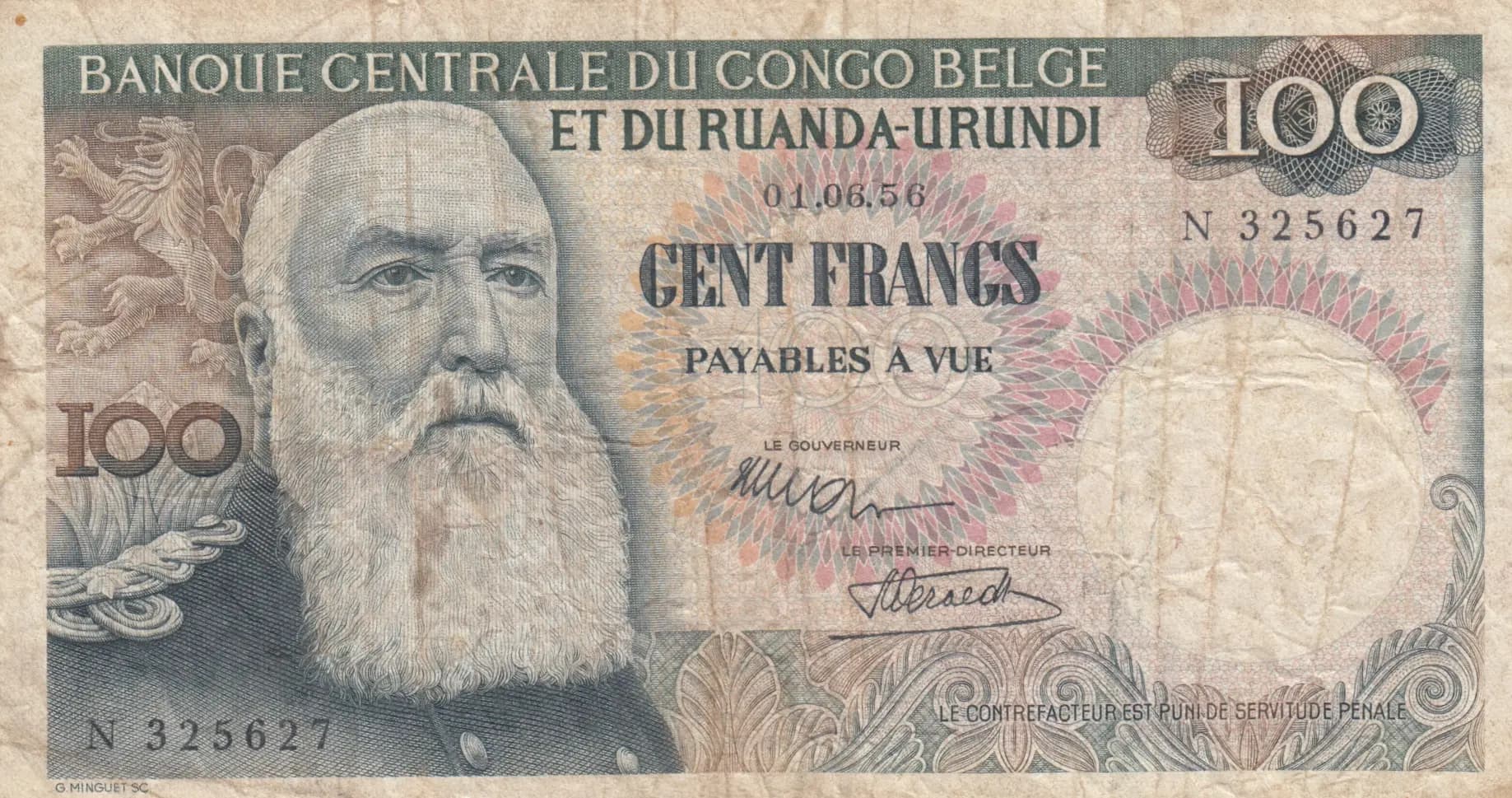
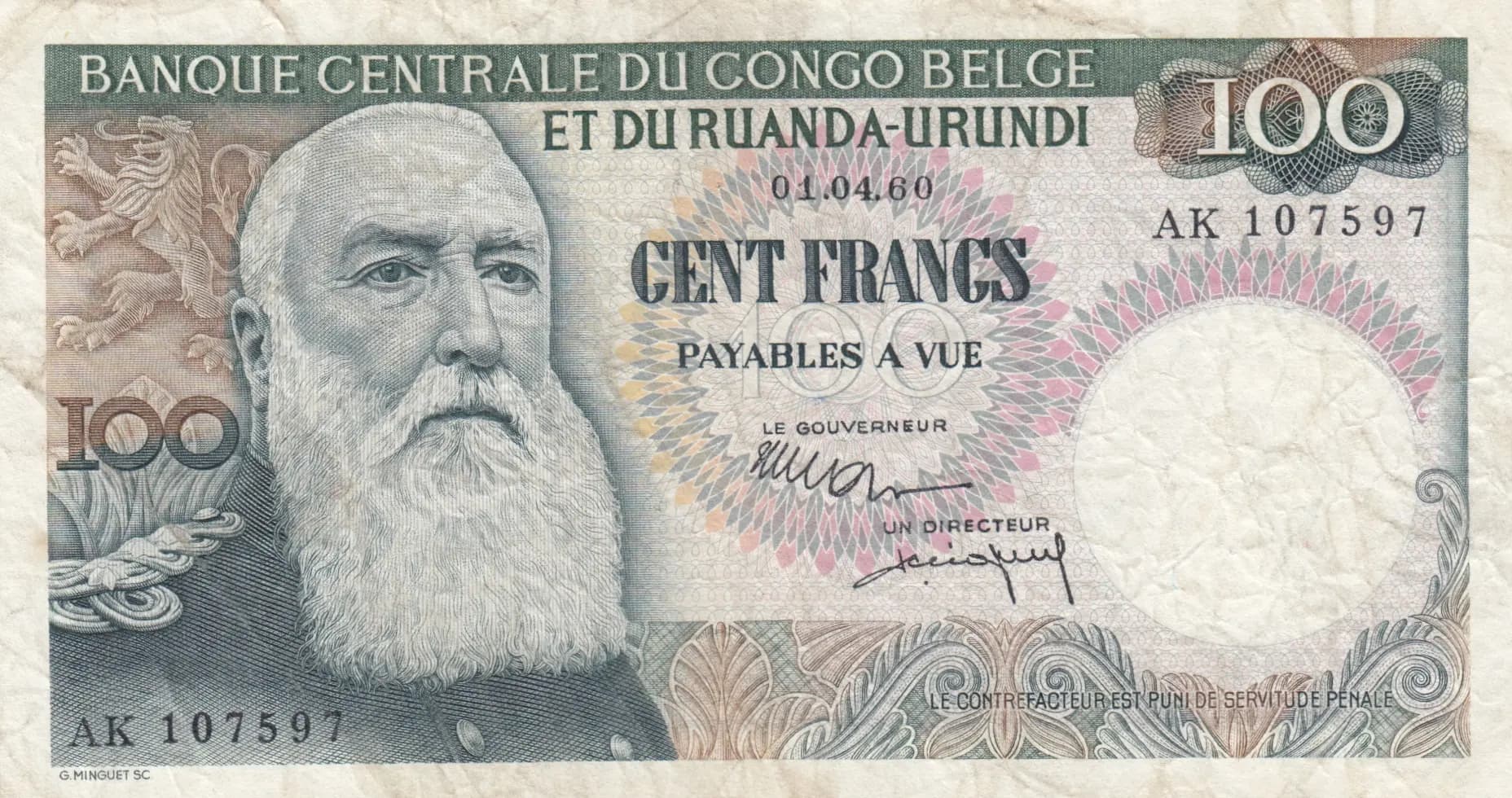
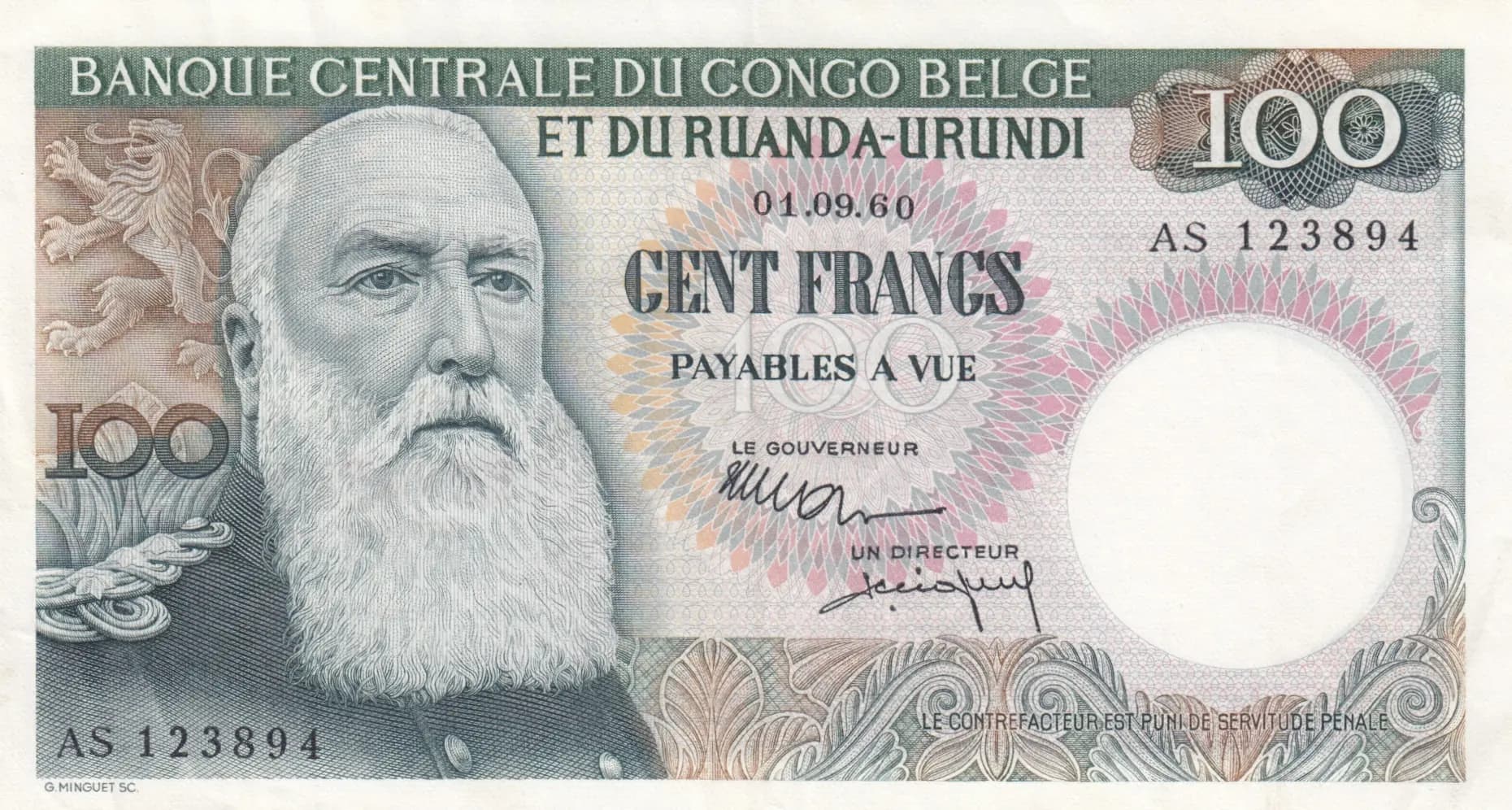
The obverse features a detailed engraved portrait of King Leopold II positioned on the left side, depicted as an elderly, bearded man facing forward. The portrait is rendered in fine line engraving with careful cross-hatching to create depth and character. A heraldic lion design appears in the upper left corner, representing Belgian royal heraldry. The note employs a green-gray color scheme with tan, brown, and cream tones, with ornamental circular patterns and decorative geometric borders framing the design. The reverse depicts a scene of basket weavers at the center—two figures (appearing to include a younger person) engaged with botanical and woven elements, rendered in the same fine engraving technique. A prominent geometric star symbol in yellow-gold and green with concentric radial patterns occupies the right side of the reverse. Both sides include the denomination '100' in multiple corners. The overall composition reflects early-to-mid 20th century currency design conventions, balancing portraiture and economic/labor symbolism typical of Belgian colonial currency.
FRONT (French side): 'Banque Centrale du Congo Belge et du Ruanda-Urundi' (Central Bank of Belgian Congo and Ruanda-Urundi); 'Cent Francs' (One Hundred Francs); 'Payables à Vue' (Payable on Demand); 'Le Gouverneur' (The Governor); 'Un Directeur' (A Director); 'Le Contrefacteur est puni de Servitude Pénale' (The counterfeiter is punished with penal servitude); Issue date: '01.09.59' (September 1, 1959); Engraver mark: 'G Minuet SC'; Serial number: 'AE 058102'. BACK (Dutch side): 'Centrale Bank van Belgisch-Congo en Ruanda-Urundi' (Central Bank of Belgian Congo and Ruanda-Urundi); 'Honderd Frank' (One Hundred Francs); 'Betaalbaar op Zicht' (Payable on Demand); 'De Gouverneur' (The Governor); 'Een Directeur' (A Director); 'De Namaker wordt met Strafdienst gestraft' (The counterfeiter is punished with penal servitude); Denomination: '100'.
The note was produced using intaglio (engraved line) printing, as evidenced by the fine detail, precise cross-hatching, and dimensional quality visible throughout both obverse and reverse designs. The engraver G. Minuet SC is credited on the obverse. The printer was BNB (Banque Nationale de Belgique/Nationale Bank van België), Belgium's national printing works, which did not apply an imprint mark to this issue. The multicolor application and layered tone gradations indicate multiple passes through the intaglio presses to achieve the green-gray, tan, brown, and cream color palette. The security features include an elephant's head watermark (characteristic of P-33b variant) integrated into the paper during manufacture.
This is the P-33b variety, identified by the elephant's head watermark visible as a circular impression area on both obverse (right side) and reverse (left side). The Pick catalog lists three varieties for the 100 Francs 1959: P-33a (Wmk: Elephant's Head), P-33b (Wmk: Elephant's Head), and P-33c (Without Watermark). The observed note is P-33b based on the clear watermark impression pattern. The date of issue shown as '01.09.59' (September 1, 1959) corresponds to the later circulation period. Signature titles read 'LE GOUVERNEUR' and 'UN DIRECTEUR' on the obverse, consistent with the standard P-33b issue type. Serial number prefix 'AE' indicates a standard circulation series.