1 dinar 1964
Market Prices
34 salesAbout This Note
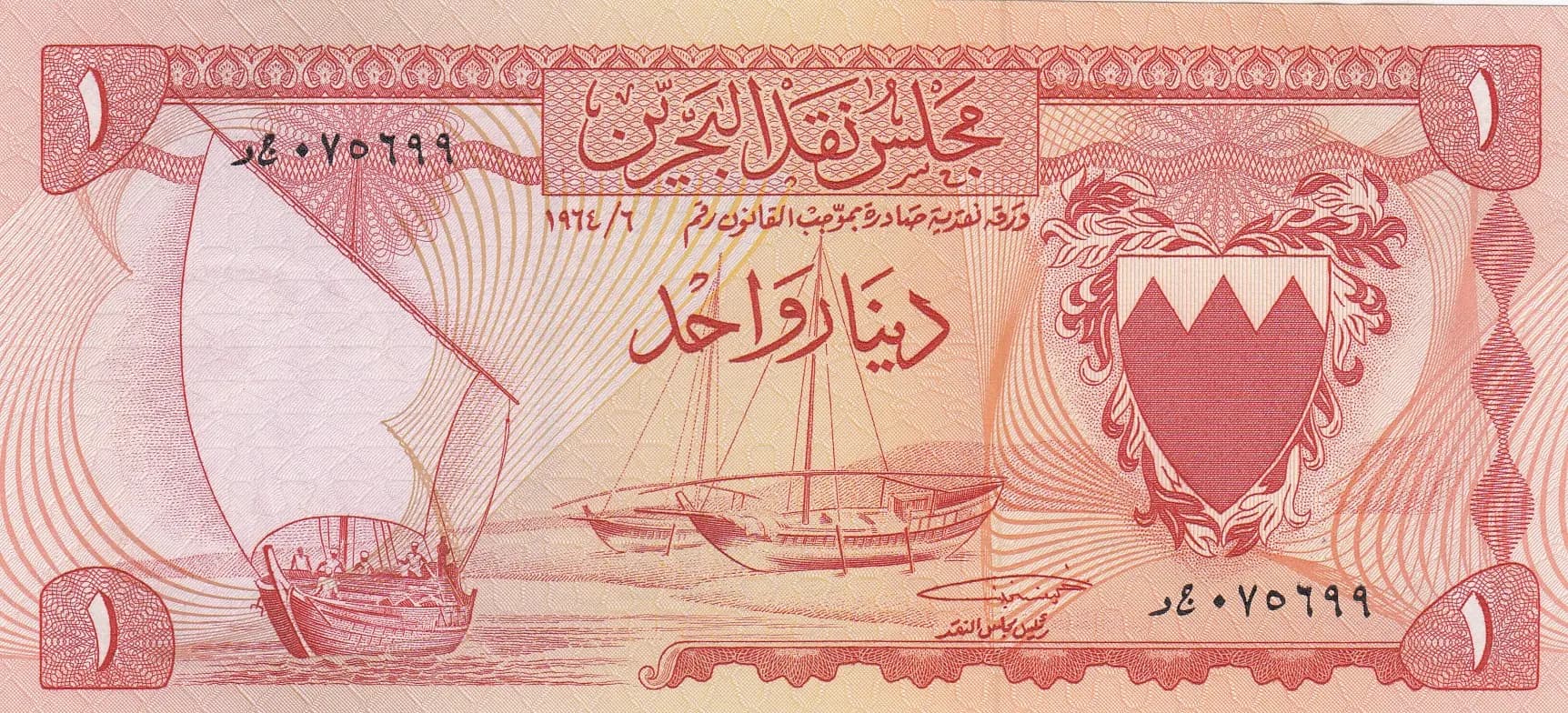
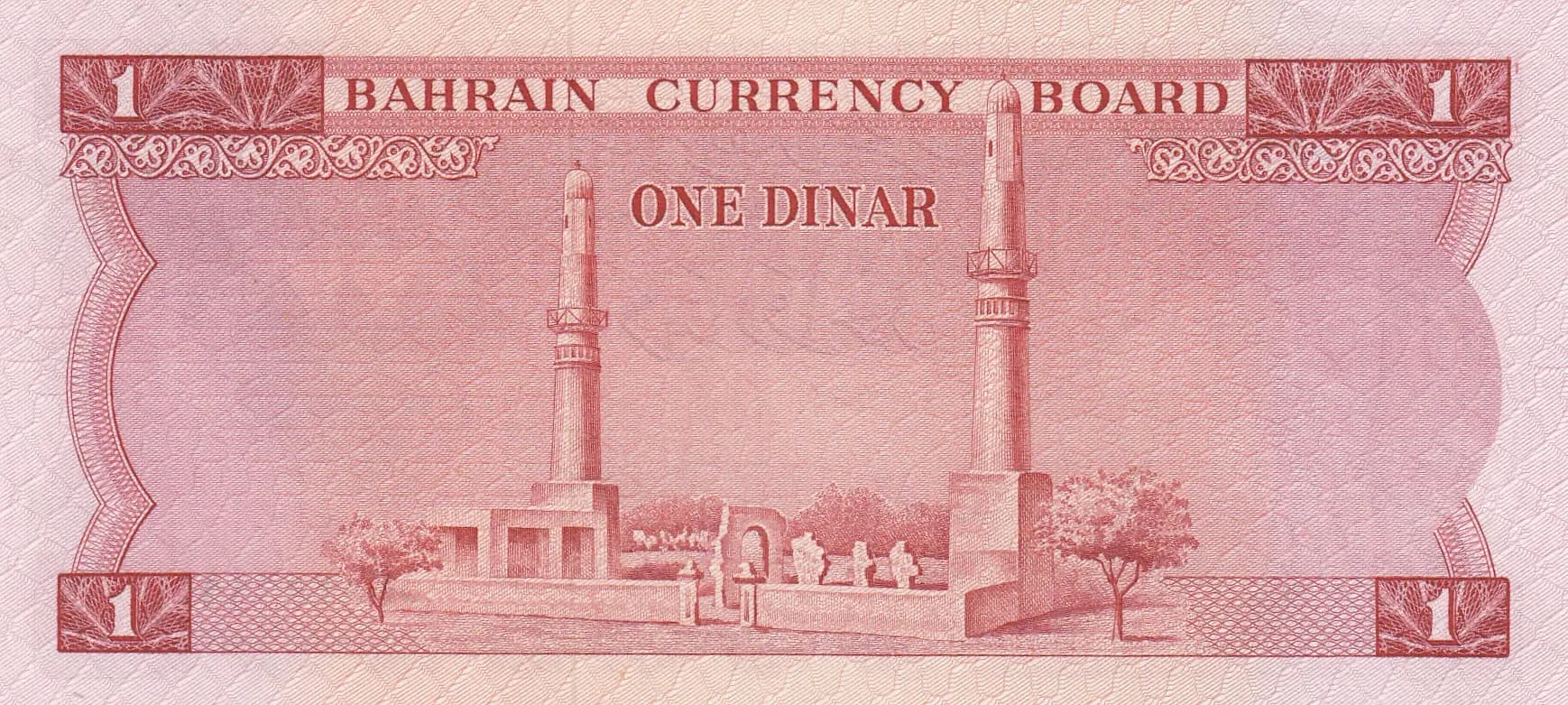
This is a stunning example of Bahrain's first currency issue, the 1 Dinar from 1964 issued by the Bahrain Currency Board. The note displays vibrant rose-pink tones with masterful line engraving depicting traditional dhows on the obverse and the iconic Suq al-Khamis mosque with its twin minarets on the reverse. In UNC condition as graded, the note exhibits pristine preservation with sharp printing, crisp colors, and no evidence of circulation, making it an outstanding example of this historically significant early Gulf currency.
Common. Despite being a 1964 issue from an early currency board period, eBay market data shows consistent availability with regular sales across multiple condition grades (F to UNC) at modest prices. UNC examples, while commanding premium prices ($100-260 historically), remain obtainable with regularity. The 1964 issue was produced in sufficient quantities to meet initial circulation demands. PMG population reports show multiple varieties catalogued, indicating reasonable survivor numbers across grades.
This 1964 note marks Bahrain's transition toward monetary independence, issued just two years before the nation formally established its own currency board separate from the Persian Gulf rupee system. The obverse's depiction of traditional dhows reflects Bahrain's maritime heritage and pearl-diving economy that had dominated the region for centuries, while the reverse showcases the Suq al-Khamis mosque complex—an architectural landmark representing Bahrain's Islamic heritage and commercial significance in the Gulf.
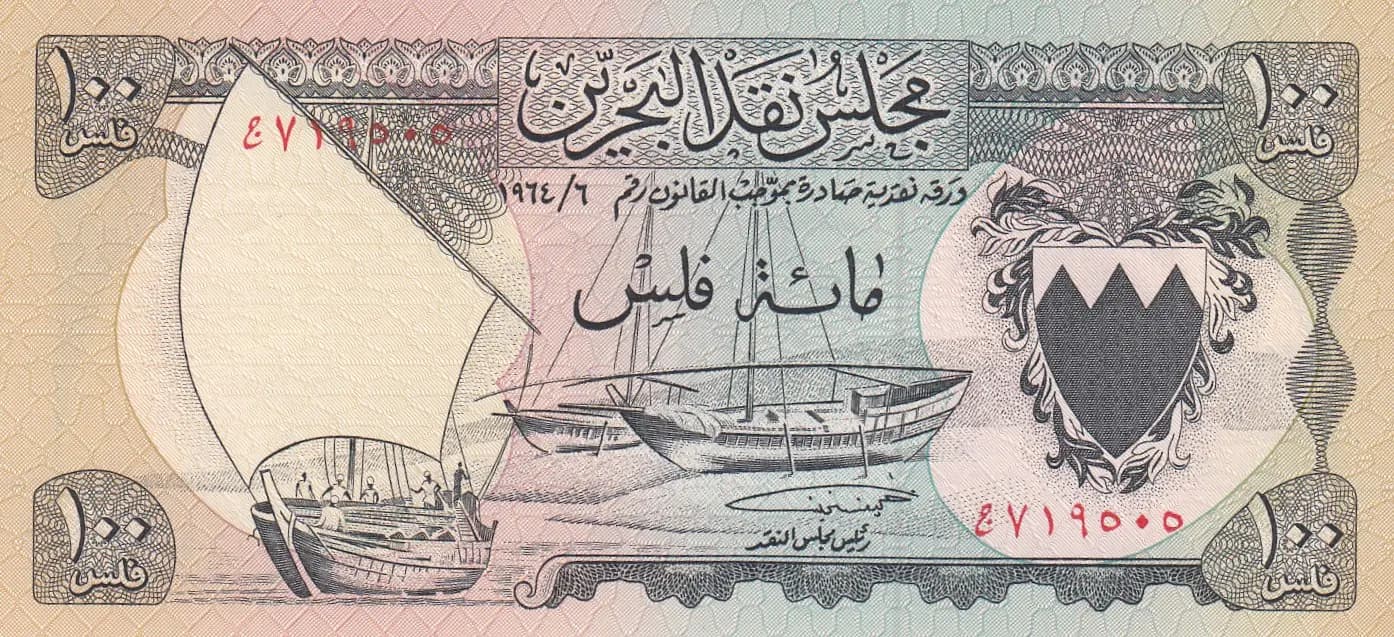
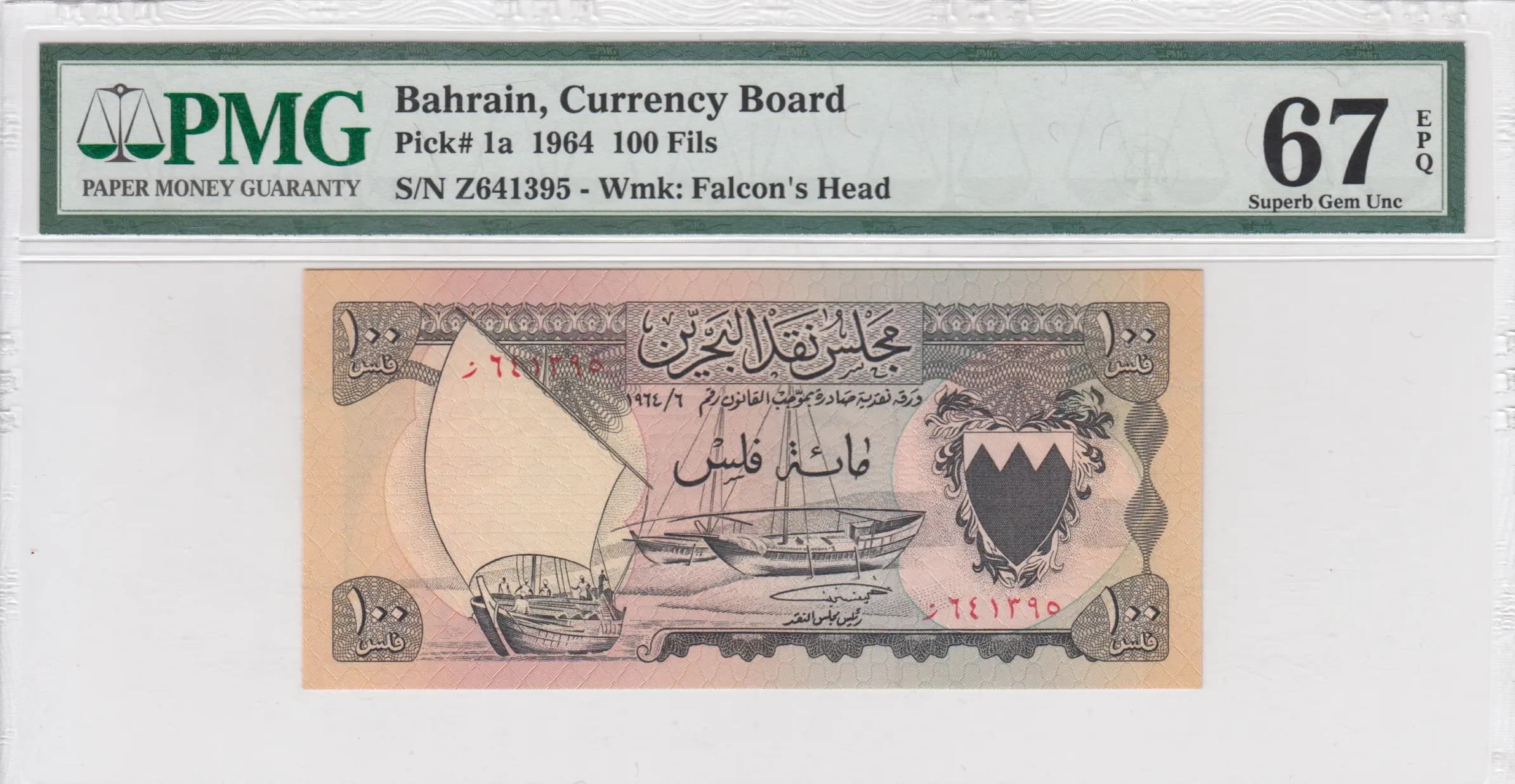
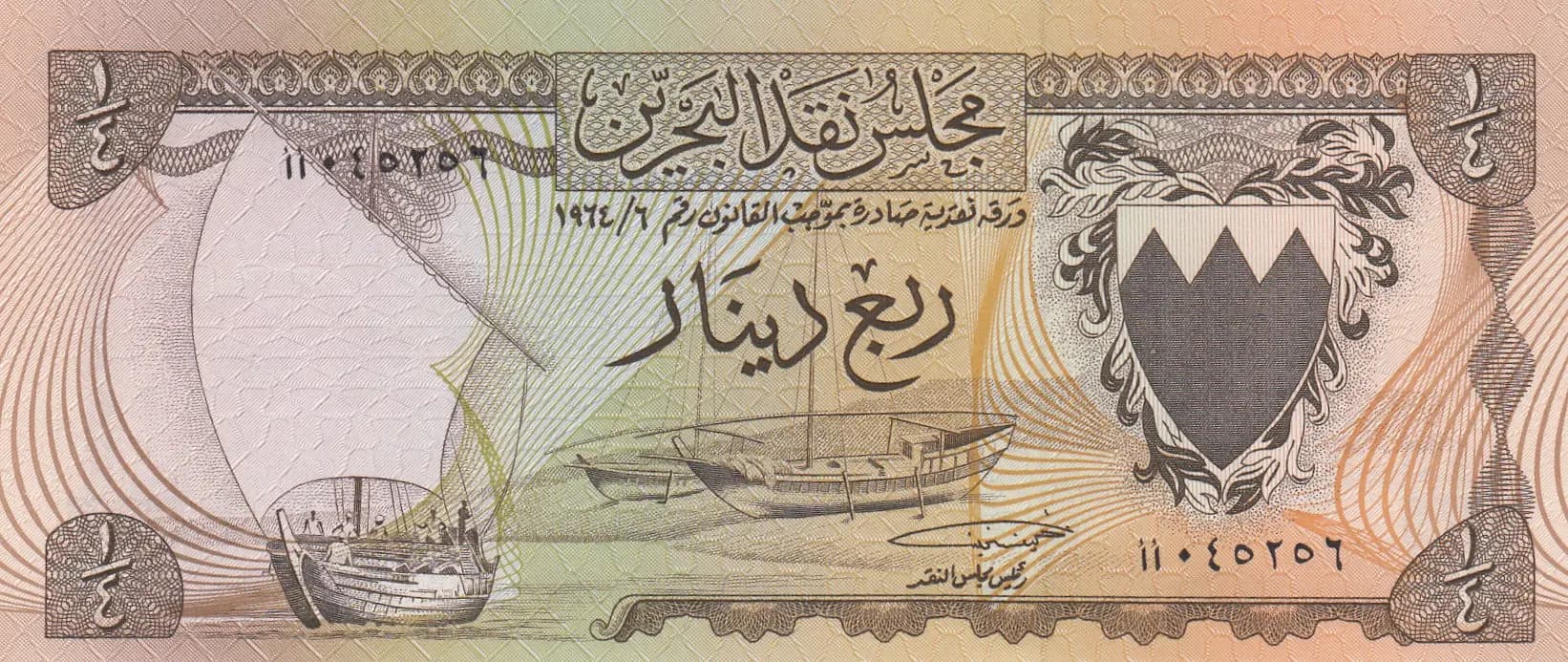
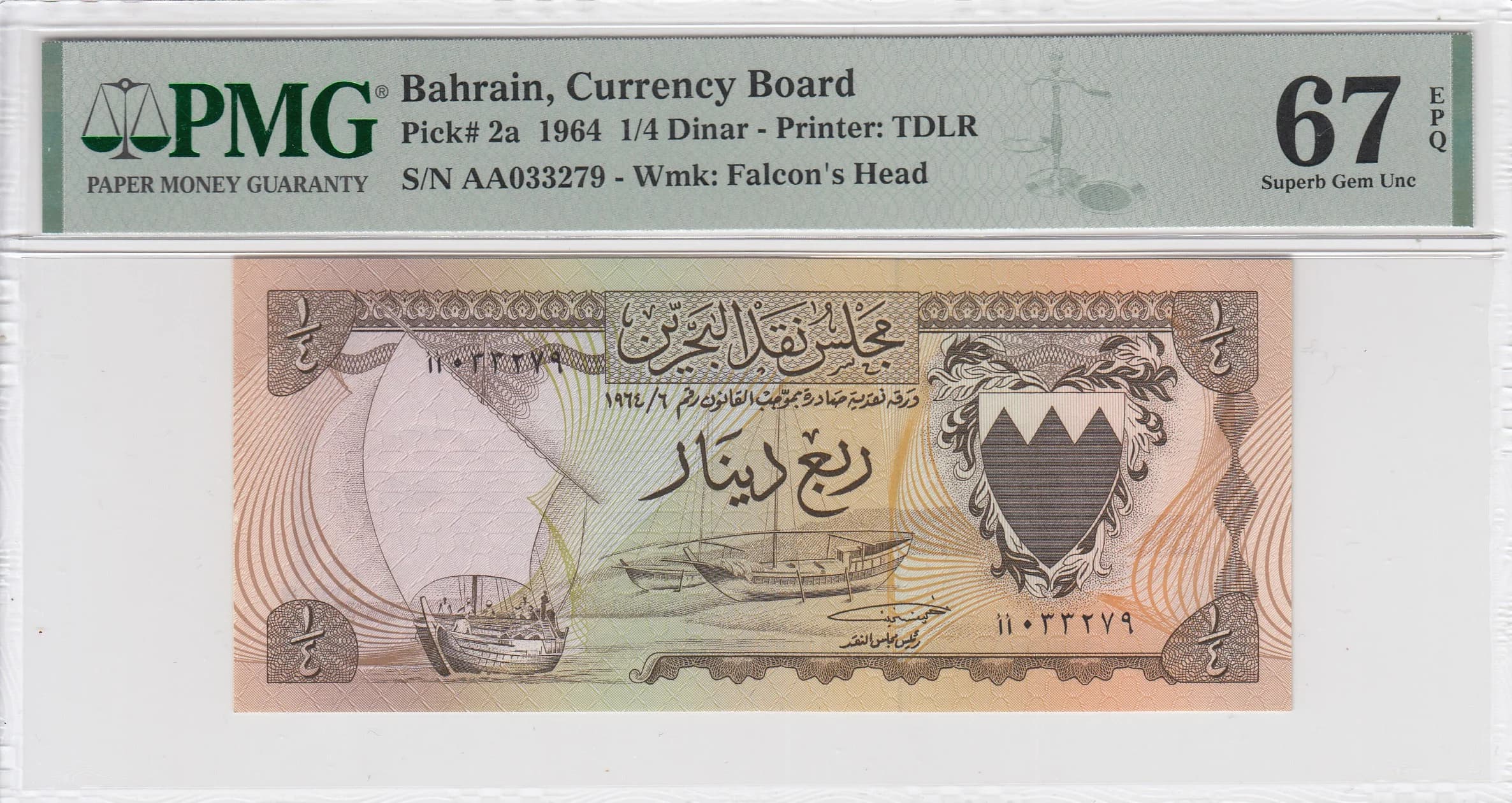
The obverse features a classical engraved seascape with multiple traditional sailing dhows (wooden sailing vessels historically used in Gulf pearling and trade), positioned left of center against a calm seascape. The right side displays the heraldic shield or coat of arms of Bahrain, featuring a crenellated (castle-like) crown design typical of Gulf heraldry. Fine arabesque and Islamic geometric patterns form ornamental borders throughout. The reverse depicts the Suq al-Khamis mosque complex—specifically the fortified structure with two prominent minarets or tower structures flanking a central fort with crenellated walls, surrounded by landscaped vegetation. The architectural rendering emphasizes the mosque's defensive masonry and prominent twin towers, significant landmarks in Bahrain's architectural heritage.
OBVERSE: Arabic calligraphy reads 'مملكة البحرين' (Kingdom of Bahrain) and 'دينار واحد' (One Dinar). English inscriptions include reference codes. REVERSE: 'BAHRAIN CURRENCY BOARD' appears at the top in English, with 'ONE DINAR' denominating the note. Denomination numeral '1' is repeated in corner positions on both sides.
This note was produced using fine line engraving, a classical intaglio printing method characteristic of premium currency production. The detailed linework visible throughout—particularly in the dhow sails, minaret details, decorative borders, and architectural elements—is typical of security printing by De La Rue (TDLR), the established printer for this series. The intricate geometric Islamic patterns and fine line resolution served as anti-counterfeiting measures.
This note likely represents variety P-4a (TDLR printer mark), the standard production variety. The Pick catalog identifies four variants: P-4CS1 (color separation variety), P-4a (TDLR printer), P-4a* (TDLR with asterisk notation), and P-4s (specimen). The visual analysis shows serial number 754799 and reference marking X.V.199, consistent with regular circulation-intended notes of the P-4a variety rather than specimen or special issue variants.