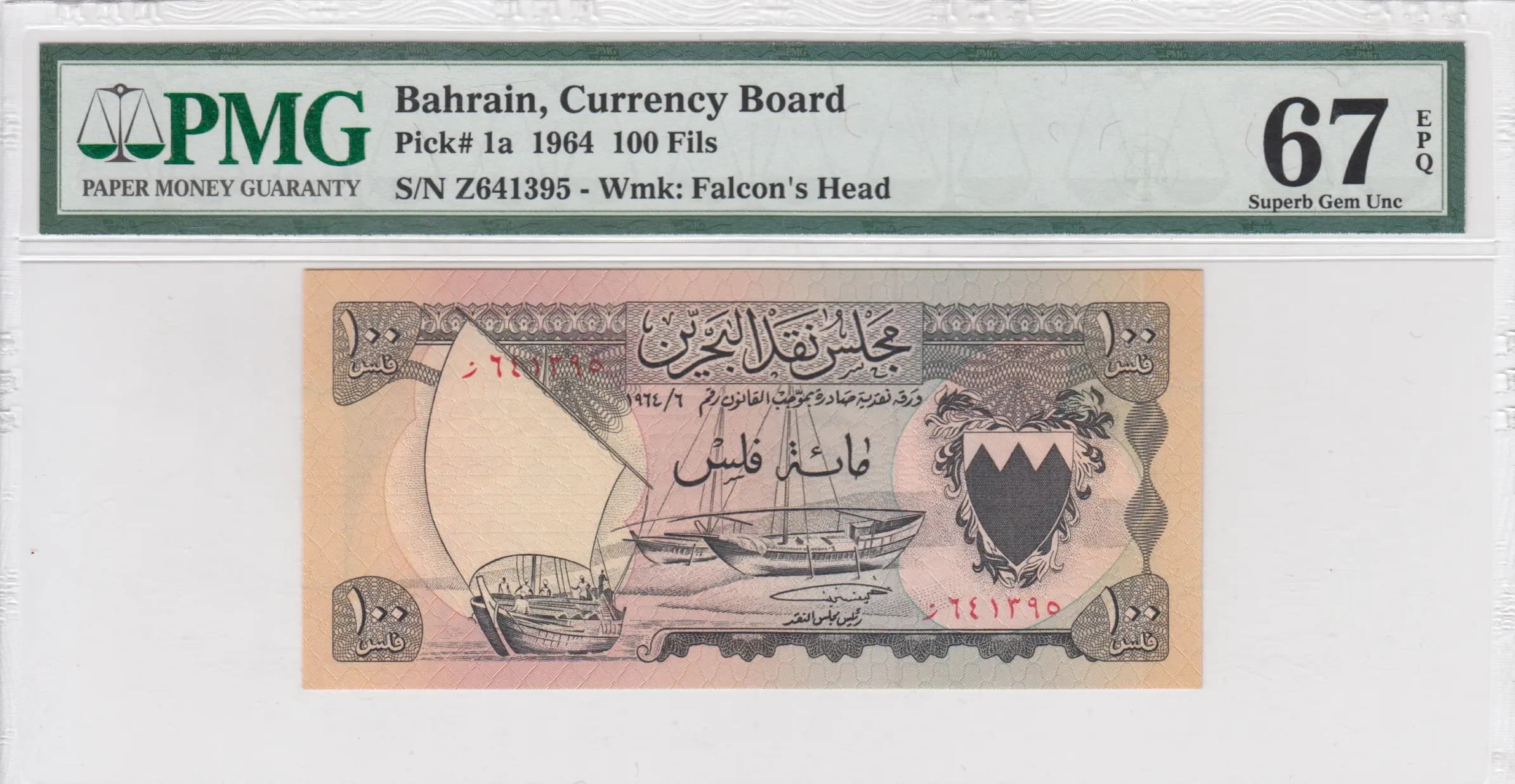
100 fils 1964
Market Prices
69 salesAbout This Note
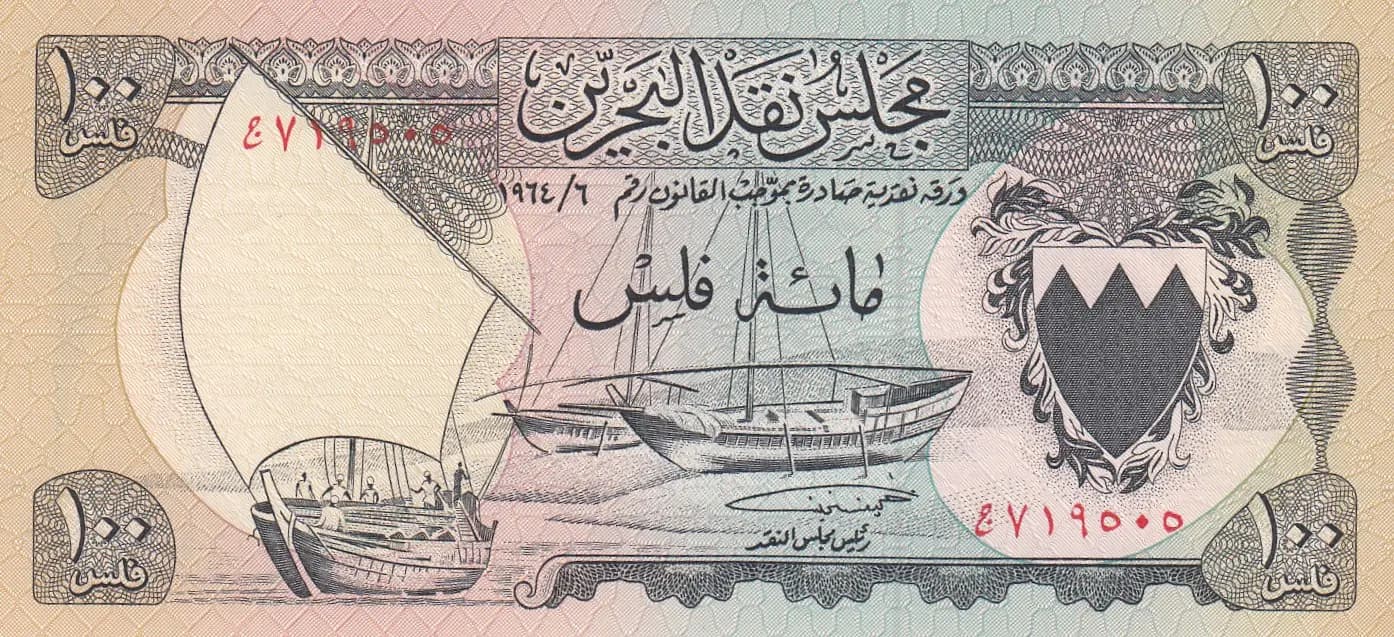
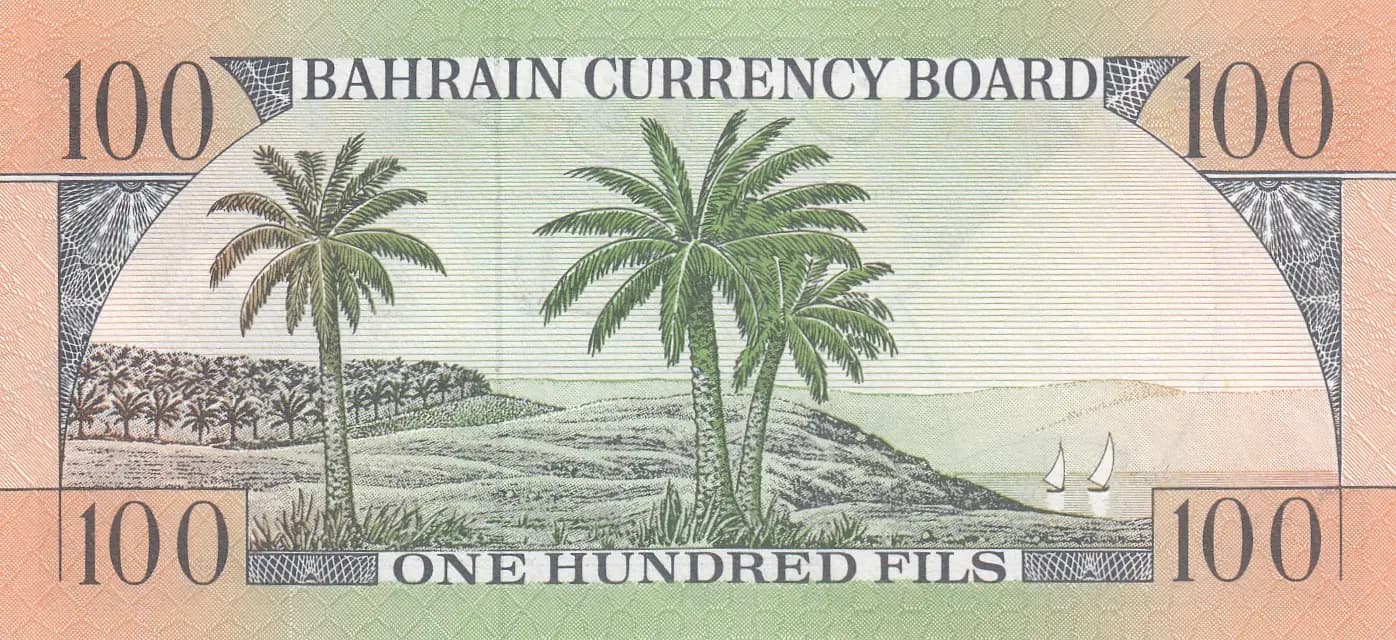
This is the Bahrain Currency Board's iconic first banknote issue, the 100 fils from 1964, presented here in circulated condition showing age-appropriate wear. The note features exceptional classical banknote design with three traditional Arabian dhows on the obverse and a pastoral Bahraini landscape with palm trees on the reverse, rendered in fine engraved detail. The diagonal crease visible in the upper left and red stamp indicate this specimen has seen modest circulation, making it a historically significant example of Bahrain's earliest currency rather than a pristine collectible.
Common. The 100 fils denomination from the 1964 Bahrain Currency Board issue represents the lowest denomination of the inaugural series and was produced in large quantities for everyday circulation. eBay auction data from the provided reference shows consistent sales across all condition grades from 2010 onwards, with circulated examples (F-VF grades) typically realizing $2-$10 and UNC examples $19-$28, indicating robust supply in the collector market. The note was never recalled, no short print run is documented, and the Bahrain Currency Board remained the issuer through multiple subsequent issues, confirming this as a standard, readily available collectible rather than a scarce variety.
Issued in 1964 by the newly established Bahrain Currency Board, this note predates Bahrain's independence by seven years and represents the emirate's first autonomous currency issue. The iconography is deeply rooted in Bahraini maritime and agricultural heritage: the dhows symbolize the pearl-diving and trading traditions that defined the Gulf economy for centuries, while the palm trees and cultivated fields on the reverse depict the oasis agriculture that sustained the island's population. This design aesthetic reflects mid-20th century banknote conventions that favored nationalist imagery connecting currency to authentic local identity.
The obverse depicts three traditional Arabian dhows with full billowing sails, rendered as the primary design element with fine engraved detail characteristic of high-security banknote production. The reverse presents a naturalistic landscape scene featuring multiple date palms (Phoenix dactylifera), cultivated agricultural fields arranged in rows, distant sand dunes or low hills, and a coastal water scene with two small sailing vessels. The heraldic shield on the obverse right contains Bahrain's governmental arms with triangular pattern work. Both sides feature elaborate geometric border patterns and corner ornaments typical of 1960s banknote aesthetics. The color palette—beige, pink, green, and black—creates distinction between obverse and reverse while maintaining visual cohesion.
Front side: 'مصرف البحرين المركزي' (Central Bank of Bahrain), 'ناصر فليفل' (Nasser Falail - official signature), '١٩٦٤/٩' (1964, month 9), '١٠٠' (100), 'فلس' (Fils), '٦٧١٩٥٠٠' (Serial number 6719500). Back side: 'BAHRAIN CURRENCY BOARD' (English issuing authority), '100' (denomination), 'ONE HUNDRED FILS' (English denomination in words).
This note was produced using traditional steel plate intaglio engraving and letterpress printing, the standard security banknote production method for the period. The fine line work visible throughout, the crisp geometric borders, and the detailed landscape rendering on the reverse are characteristic of intaglio engraving executed by specialized security printers. The 1964 date and Bahrain Currency Board issue indicate production by a major security printer; catalog variants note TDLR (Thomas De La Rue) as the printer for variant P-1a, suggesting TDL involvement in the series.
The observed specimen displays the standard obverse design with Arabic text and the English reverse characteristic of Pick catalog P-1. The serial number 6719500 suggests mid-range production sequencing. According to PMG population reports, recognized varieties for P-1 include P-1CS1 (currency set variant), P-1a (TDLR printer variant with asterisk prefix), P-1a* (TDLR with replacement notes), and P-1s (specimen/proof variety). The current note's visual characteristics—signature by Nasser Falail, standard date marking 1964/9, and standard color scheme—are consistent with the base P-1 variety. The presence of a red stamp in the upper left may indicate a bank mark or archival notation rather than a catalogable variety marker.