1/4 dinar 1964
Market Prices
17 salesAbout This Note
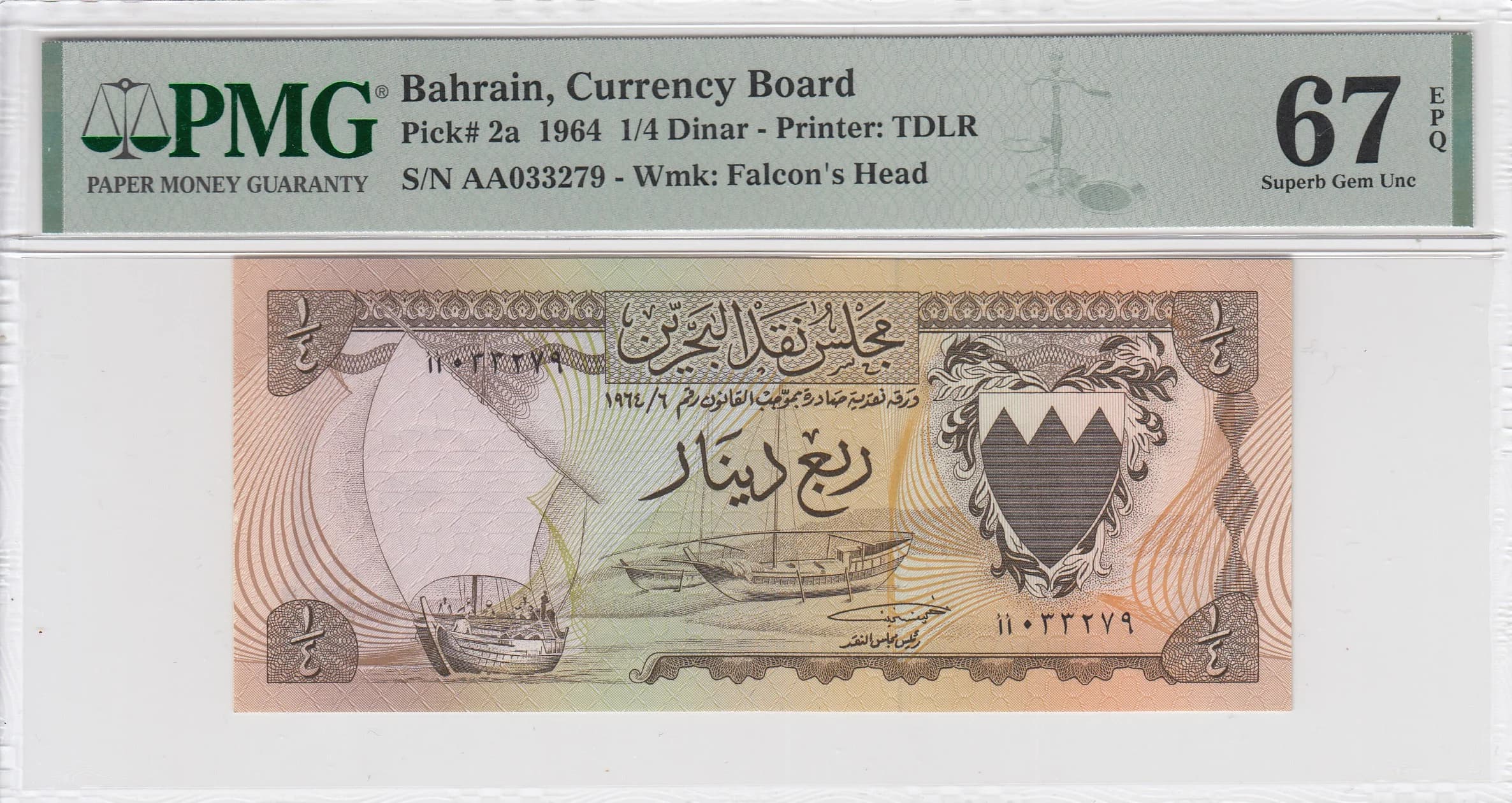
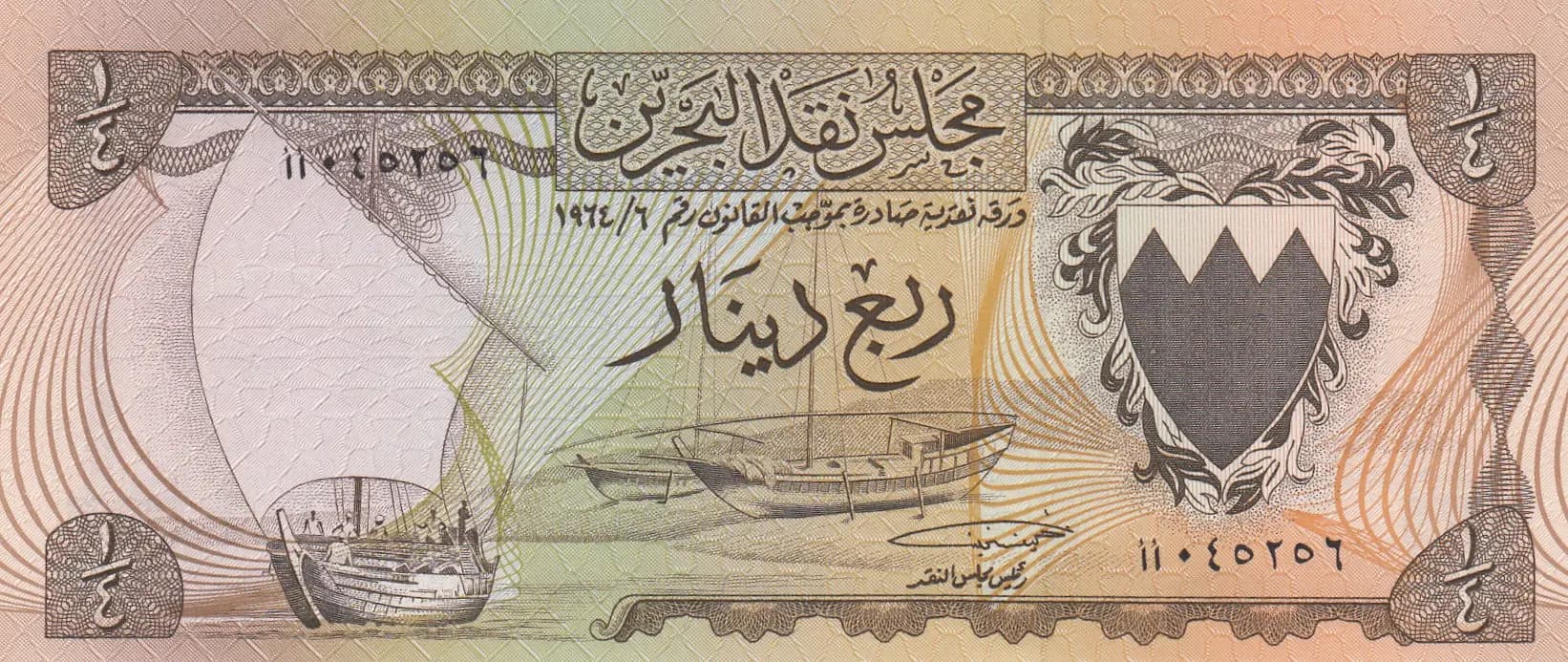
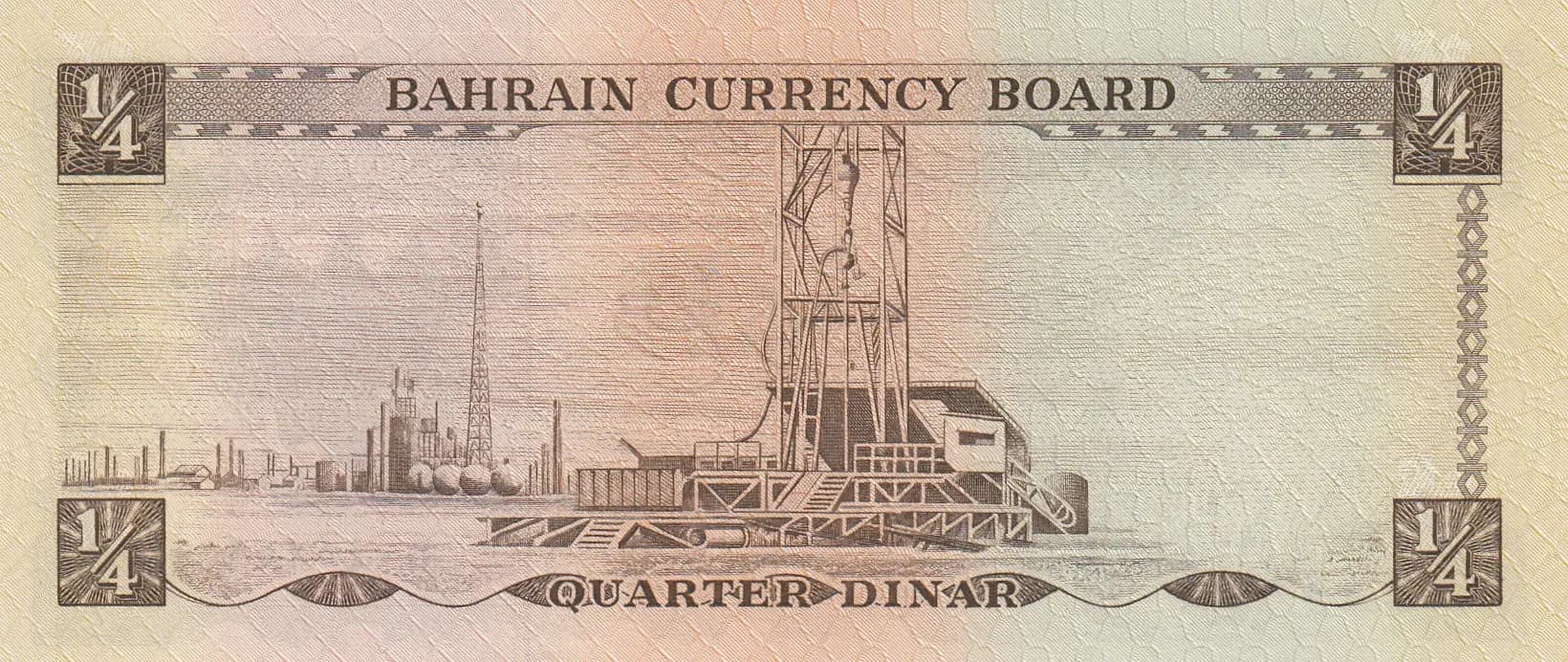
This is a pristine uncirculated example of the Bahrain Currency Board's 1/4 Dinar note from 1964 (Pick P-2), displaying exceptional detail and color preservation. The obverse features traditional Arab dhows rendered in pink and rose tones with the Bahrain arms prominently displayed, while the reverse depicts the oil derrick and industrial facilities that symbolized Bahrain's economic foundation—the imagery reflecting the nation's petroleum-driven development during this pivotal period. The note exhibits sharp intaglio printing with no wear, folds, or creases, making it a desirable specimen for collectors of early Gulf currency and mid-20th century Islamic banking notes.
Common. While this is an early and historically significant issue from Bahrain's first independent currency period, the eBay sales data demonstrates consistent availability at moderate prices. Recent UNC examples sold for $158.52 (August 2024) and earlier sales in the $200-$560 range reflect healthy collector demand but not scarcity. The 2019 catalog value of $30 for UNC and consistent supply across multiple grades indicate this note was produced in sufficient quantities and remains readily obtainable in the collector market. The denomination as a fractional unit (1/4 Dinar) and the passage of 60 years have not created supply constraints typical of rare issues.
Issued by the Bahrain Currency Board in 1964, this note represents the first independent currency of Bahrain before the 1965 introduction of the Bahrain Dinar and marks a transitional period in the emirate's monetary sovereignty. The dual imagery—traditional dhows representing Bahrain's maritime heritage alongside the oil derrick symbolizing its modern economy—reflects the nation's identity at a moment of economic transformation driven by petroleum extraction. The Islamic geometric patterns and Arabic inscriptions on the obverse underscore Bahrain's cultural and religious identity during the early years following British protective treaty arrangements.
The obverse features a classical engraved design centered on two traditional Arab dhows with billowed sails on calm waters, rendered in detailed intaglio work against a multicolored underprint of pink and rose tones with green and cream accents. To the right of the vessels is the Bahrain coat of arms—a shield bearing a crenellated (castellated) crown design characteristic of Gulf heraldry. The entire composition is framed by ornate decorative borders incorporating Islamic geometric patterns, floral motifs, and fine-line flourishes typical of 1960s currency security printing. The reverse depicts an oil derrick or drilling platform in the center with an industrial refinery/processing facility skyline featuring storage tanks and industrial buildings rendered in brown, tan, and gray tones. The perimeter is bordered by decorative scalloped wave patterns, and quarter-denomination markers (representing 4/4ths) appear in the corners with shell or fan motifs, emphasizing the fractional value.
Front side: Arabic text reads 'ربع دينار' (Quarter Dinar); additional Arabic inscriptions appear to reference the Law of 1964 and issuing authority; serial number 11045256 and denomination marker '11' are printed in numerals. Back side: English text reads 'BAHRAIN CURRENCY BOARD' and 'QUARTER DINAR'; denomination markers '4' appear in corners denoting the fractional denomination (four quarters equal one dinar).
Intaglio (engraved) printing on multicolored underprint, executed with fine-line security engraving characteristic of British-influenced currency printing standards of the 1960s. The precision of the linework, intricate border patterns, and detailed industrial scene indicate professional security printing. The PMG population data shows variants attributed to TDLR (potentially Thomas de la Rue, the renowned British security printer), who are known to have produced early Bahrain currency.
This note is identified as Pick P-2 in the base classification. The PMG population report identifies multiple varieties including P-2a and P-2s variants attributed to printer TDLR, suggesting differences in printer attribution or specimen/special issue markings. The visual serial number '11045256' and denomination marker '11' should be documented for cataloging purposes. Collectors should note that variants with different printer markings and specimen designations (P-2s) exist, though the base P-2 remains the standard circulation issue. The watermark noted in catalog references as a falcon's head should be verified on this specific specimen.