1/4 dinar 1964
Market Prices
17 salesAbout This Note
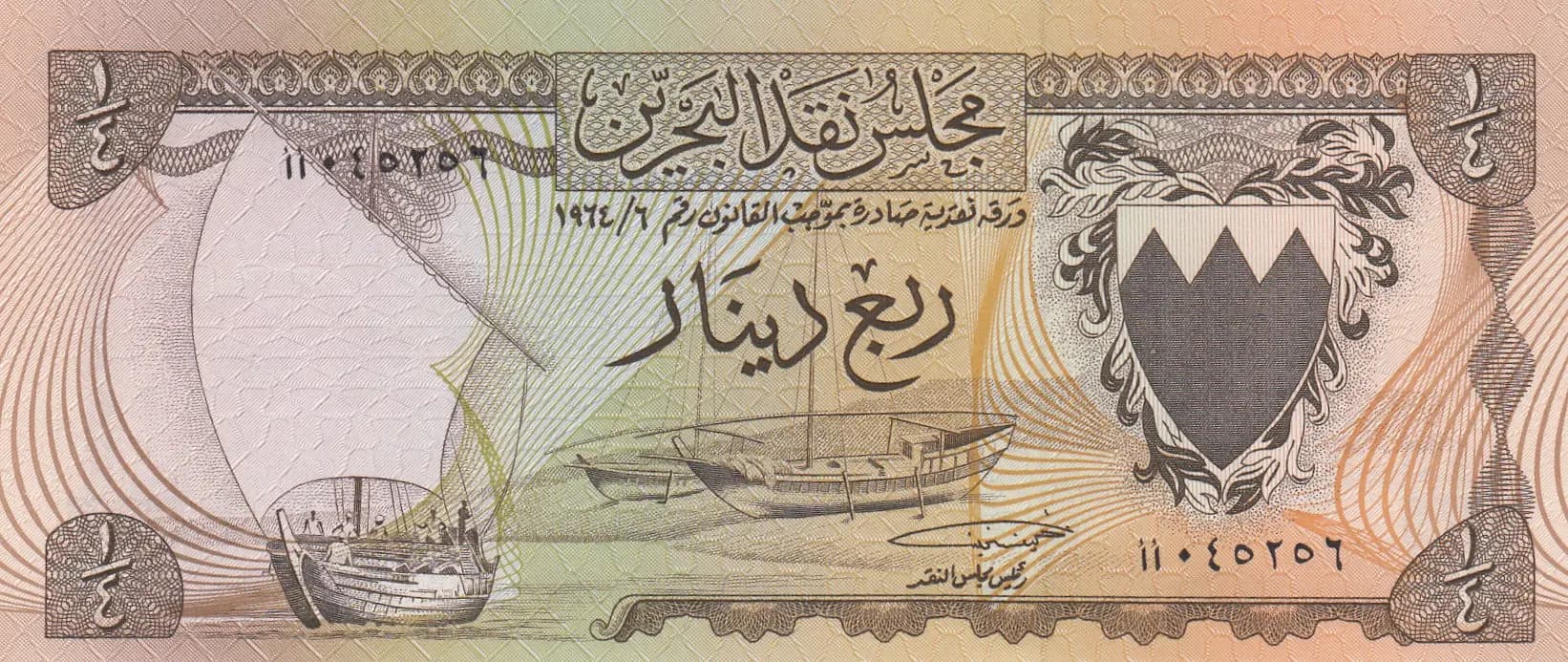
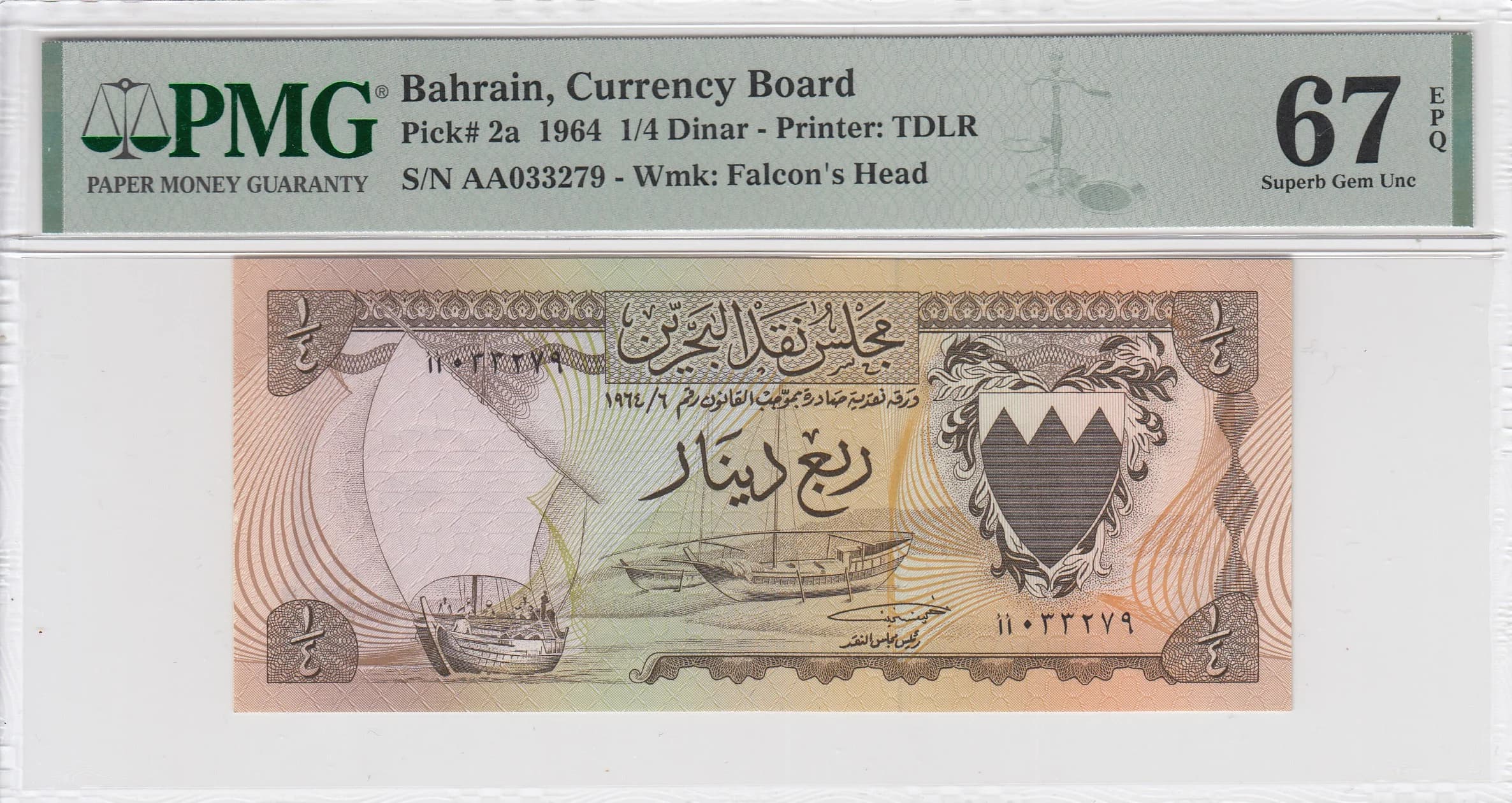
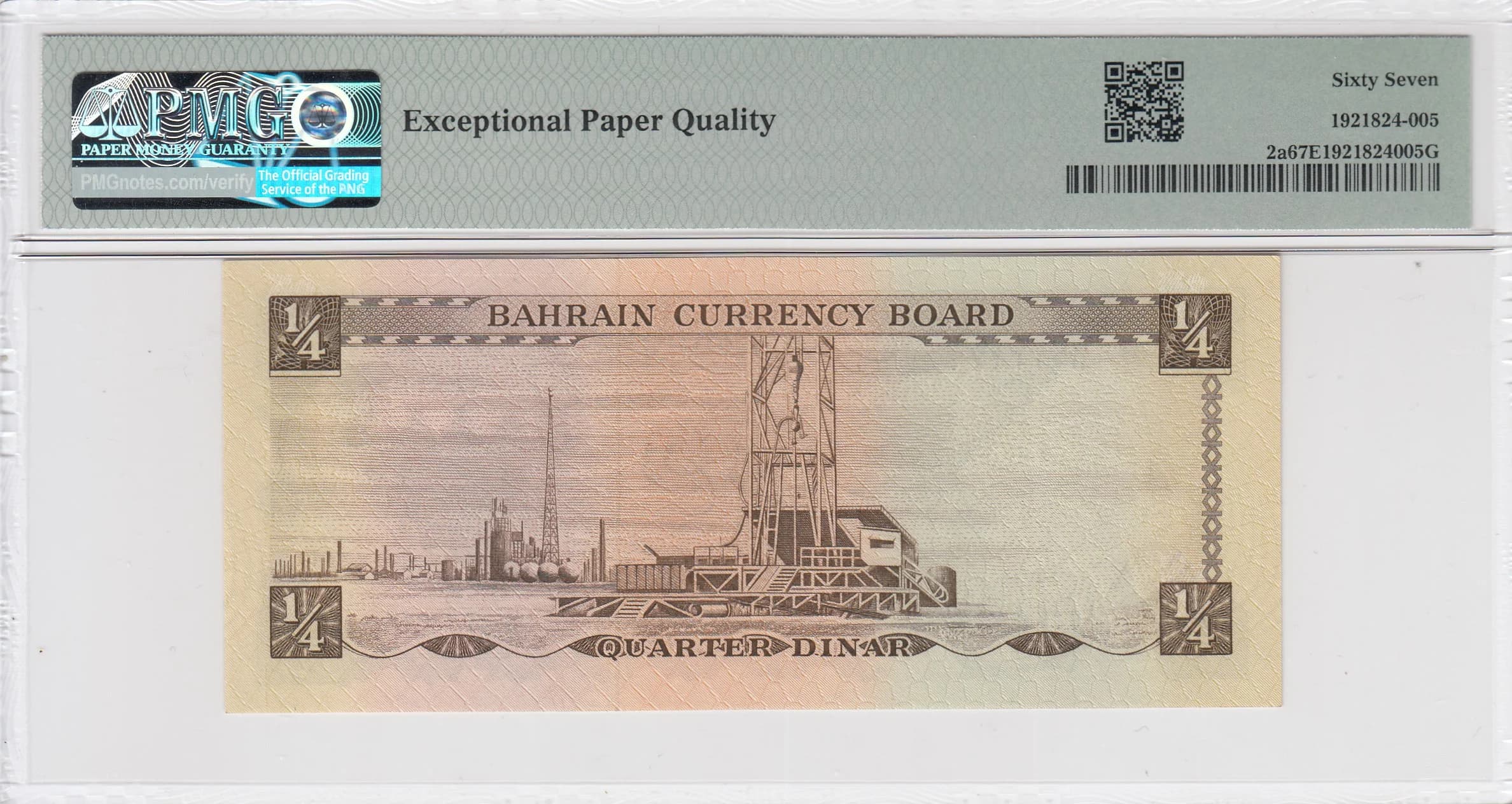
This 1964 Bahrain Currency Board 1/4 Dinar (Pick-2) in PMG 67 EPQ represents a pristine example of Bahrain's early post-independence currency. The note exhibits exceptional condition with no visible wear, creases, or stains, showcasing the original vibrant multicolored design featuring a traditional dhow sailing vessel and the Bahrain coat of arms on the obverse, paired with an industrial oil refinery scene on the reverse. As a foundational piece of Bahrain's numismatic heritage during the currency board era, this high-grade specimen reflects both historical and artistic merit, with recent comparable sales of graded examples commanding prices between $150-$230.
Common. While this is an early issue from Bahrain's currency board era and represents a foundational piece of the nation's monetary history, the denomination and print run were substantial. Secondary market evidence from realbanknotes.com shows consistent availability across multiple condition grades, with ungraded fine examples selling for $15-$30 and ungraded UNC examples for $30-$240. The PMG 67 EPQ grade represents a high-quality specimen, but PMG records show multiple graded examples exist in the population. The price range for this grade ($150-$230 based on 2015-2024 eBay sales) reflects strong collector demand for early Bahraini currency rather than scarcity of the underlying note.
This note was issued in 1964 by the Bahrain Currency Board, preceding the creation of the Central Bank of Bahrain by several years and marking the period when Bahrain was establishing its independent monetary identity. The reverse's prominent depiction of oil infrastructure reflects Bahrain's critical economic reliance on petroleum production, which had been the foundation of the nation's wealth since the early 20th century. The obverse's inclusion of traditional maritime imagery (the dhow) alongside the fortress-based coat of arms symbolizes the balance between Bahrain's seafaring heritage and its emerging modern statehood.
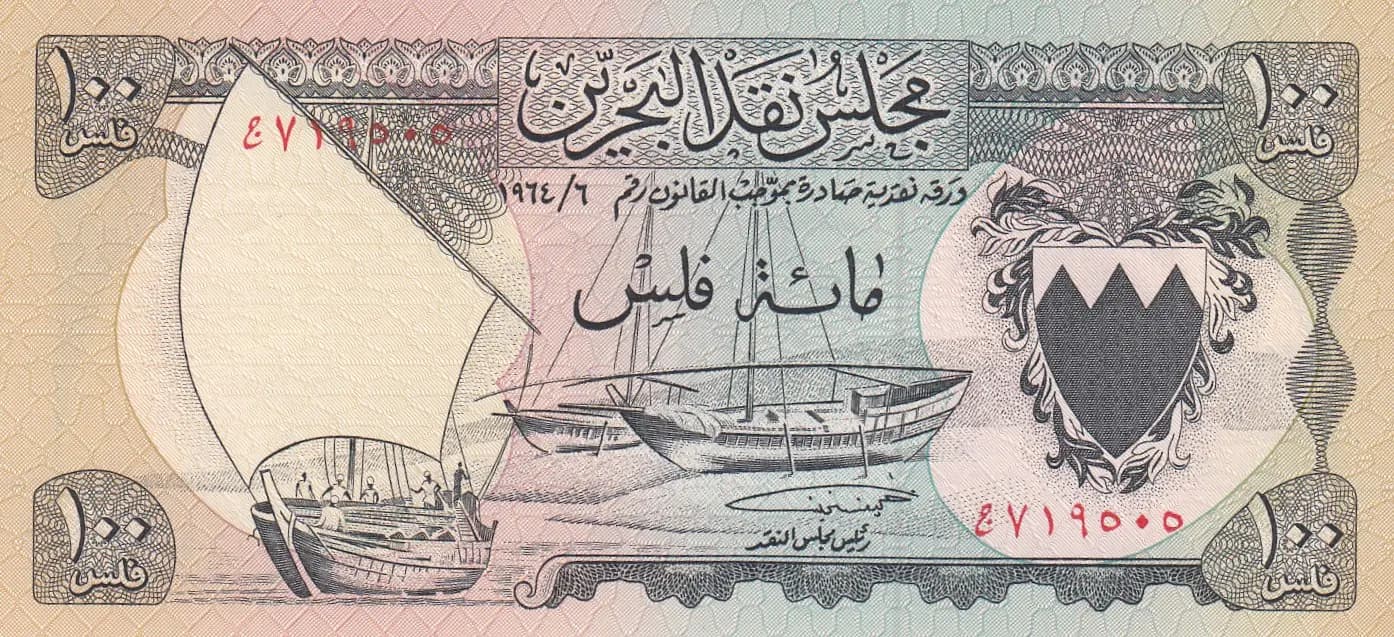
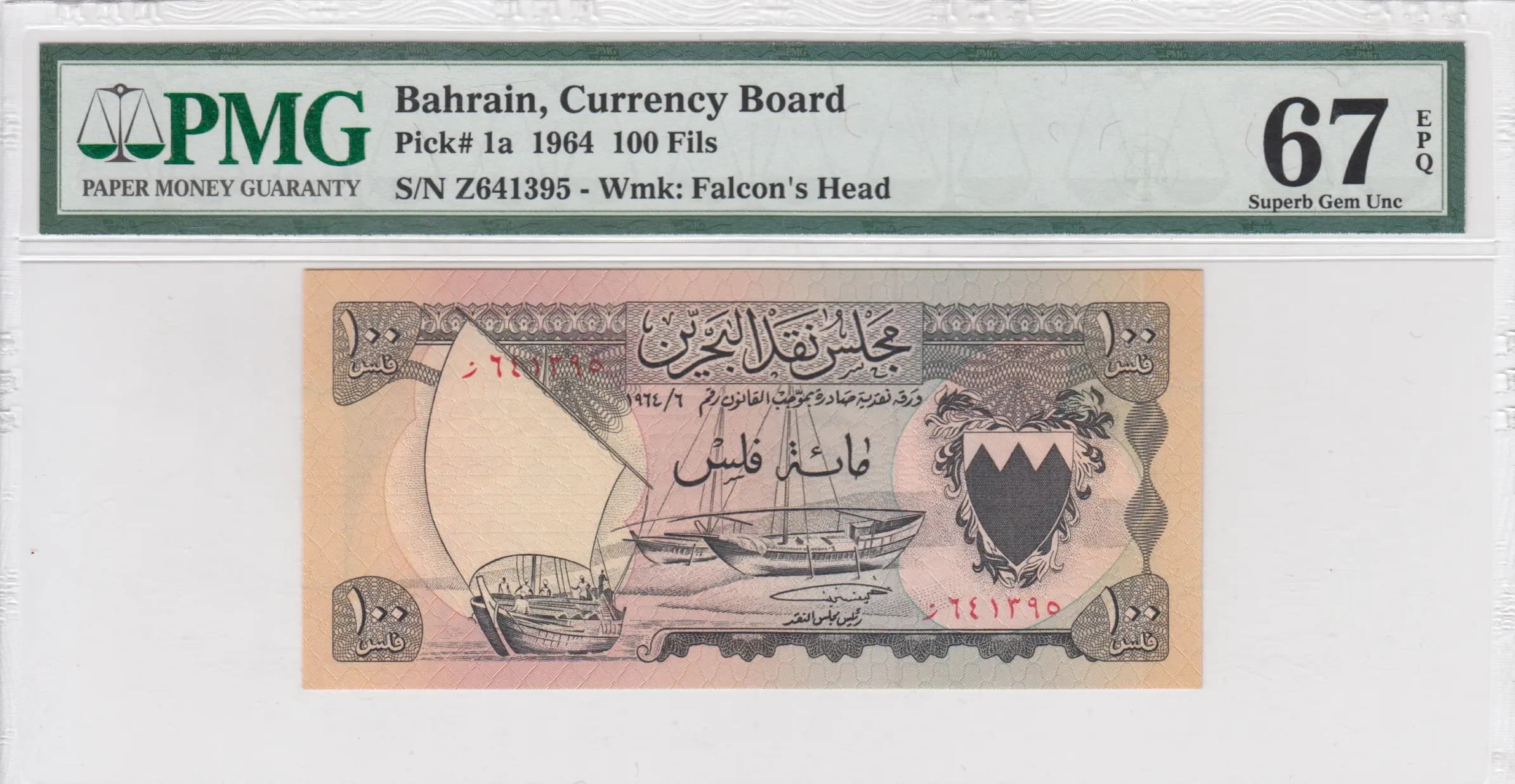
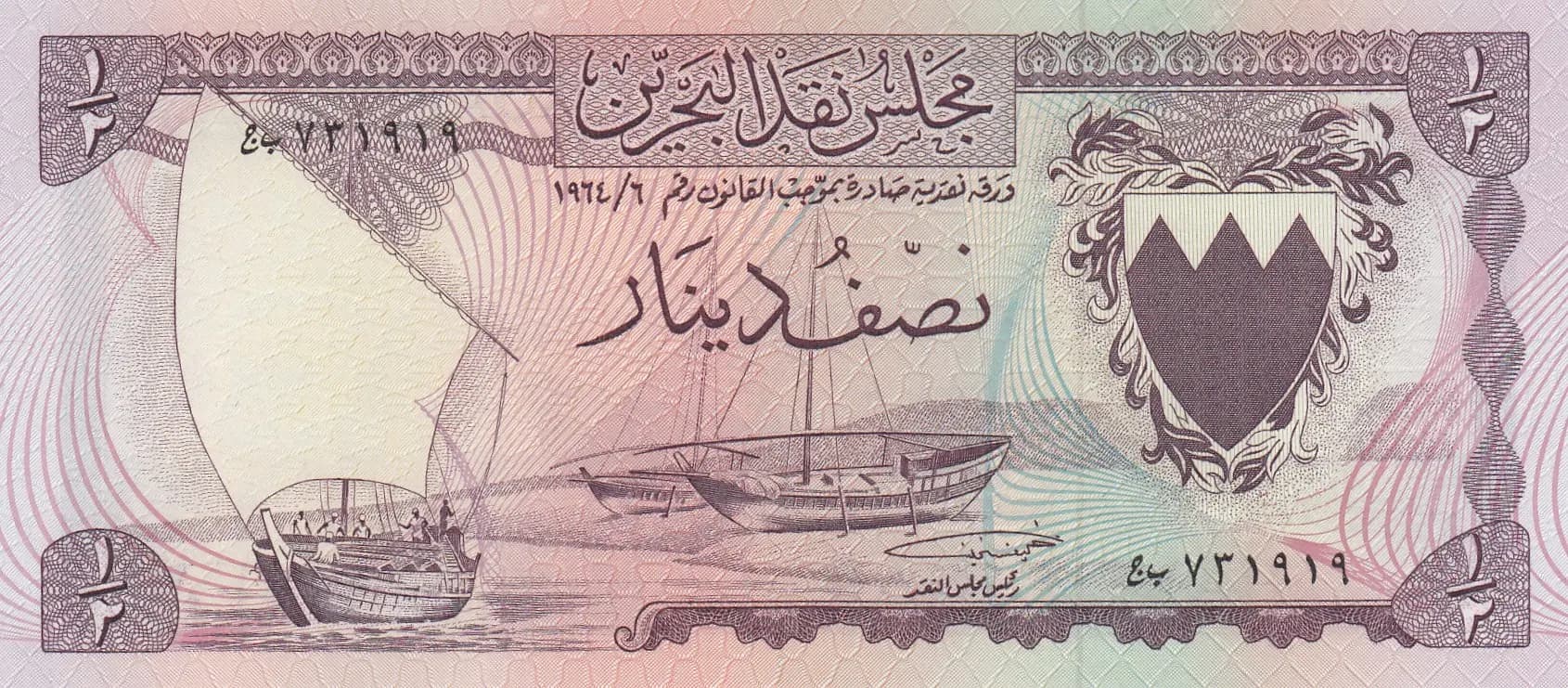
The obverse features a traditional Arab dhow with billowing sails positioned prominently on the left, a classic symbol of Arabian maritime heritage and commerce. The coat of arms of Bahrain—depicting a fortress or castle silhouette within an ornate shield with decorative scrollwork flanking elements—occupies the center-right position. The background employs fine line-work in peach, cream, and light green tones creating an intricate security pattern. The reverse depicts an industrial port or oil refinery complex with prominent storage tanks, oil derricks, and a central tower structure representing Bahrain's petroleum sector, set against a stylized skyline. Denomination markers (1/4) in decorative frames appear in all four corners of both sides, with shell or fan-like ornamental motifs at the bottom of the reverse. The color palette transitions to cream and light brown tones on the reverse.
FRONT: Arabic text 'دولة مصرف البحرين المركزي 1964' translates to 'State of Bahrain Currency Board 1964'; 'ربع دينار' translates to 'Quarter Dinar'; serial number 'AA033279' appears in English numerals. Additional Arabic text references the Gulf/Bahrain region. BACK: 'BAHRAIN CURRENCY BOARD' (English, top); 'QUARTER DINAR' (English, bottom); denomination marker '1/4' appears in all four corners.
The note employs intaglio engraving (recess printing), evidenced by the sharp, crisp detail throughout both obverse and reverse, fine line-work backgrounds, and the precise rendering of security features including the watermark area and intricate guilloche patterns. The multicolored printing technique utilizes separate color plates typical of 1960s security printing standards. Based on PMG population records indicating P-2a and P-2s varieties credited to 'TDLR' (Thomas De La Rue), this note was likely produced by the renowned British security printer Thomas De La Rue & Company, a standard printer for Commonwealth and former Commonwealth currencies during this era.
This specimen appears to be the standard P-2 variety issued by the Bahrain Currency Board. PMG population records indicate three documented varieties: P-2 (standard), P-2a (Printer: TDLR), and P-2s (Printer: TDLR, specimen overprint). The visual analysis does not show evidence of specimen cancellation marks or overprints, suggesting this is either P-2 or P-2a. The serial number format 'AA033279' is consistent with the early production batches of this issue. Without examination of printer marks or additional technical details, the specific variety designation between P-2 and P-2a cannot be definitively determined from the provided images, though TDLR printing for this denomination is well-documented.