50 cents 1968 specimen
Market Prices
6 salesAbout This Note
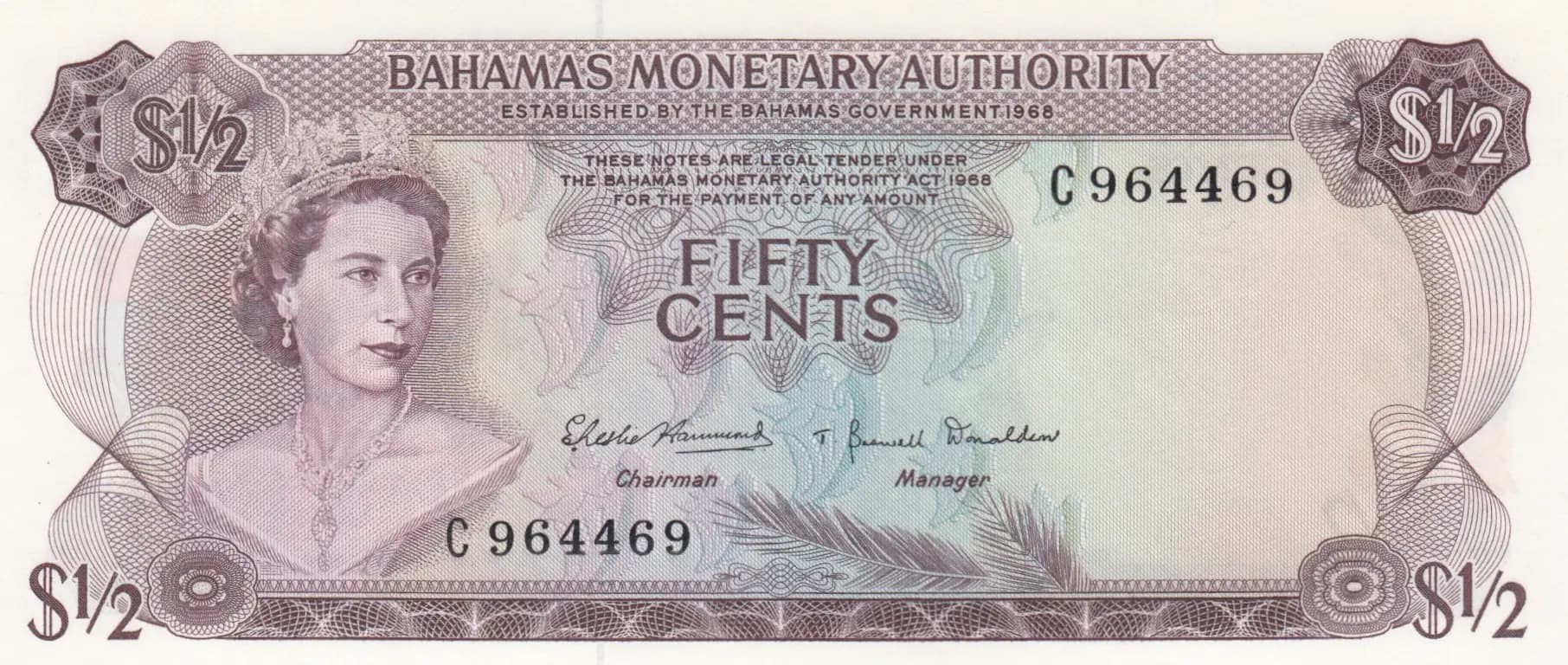
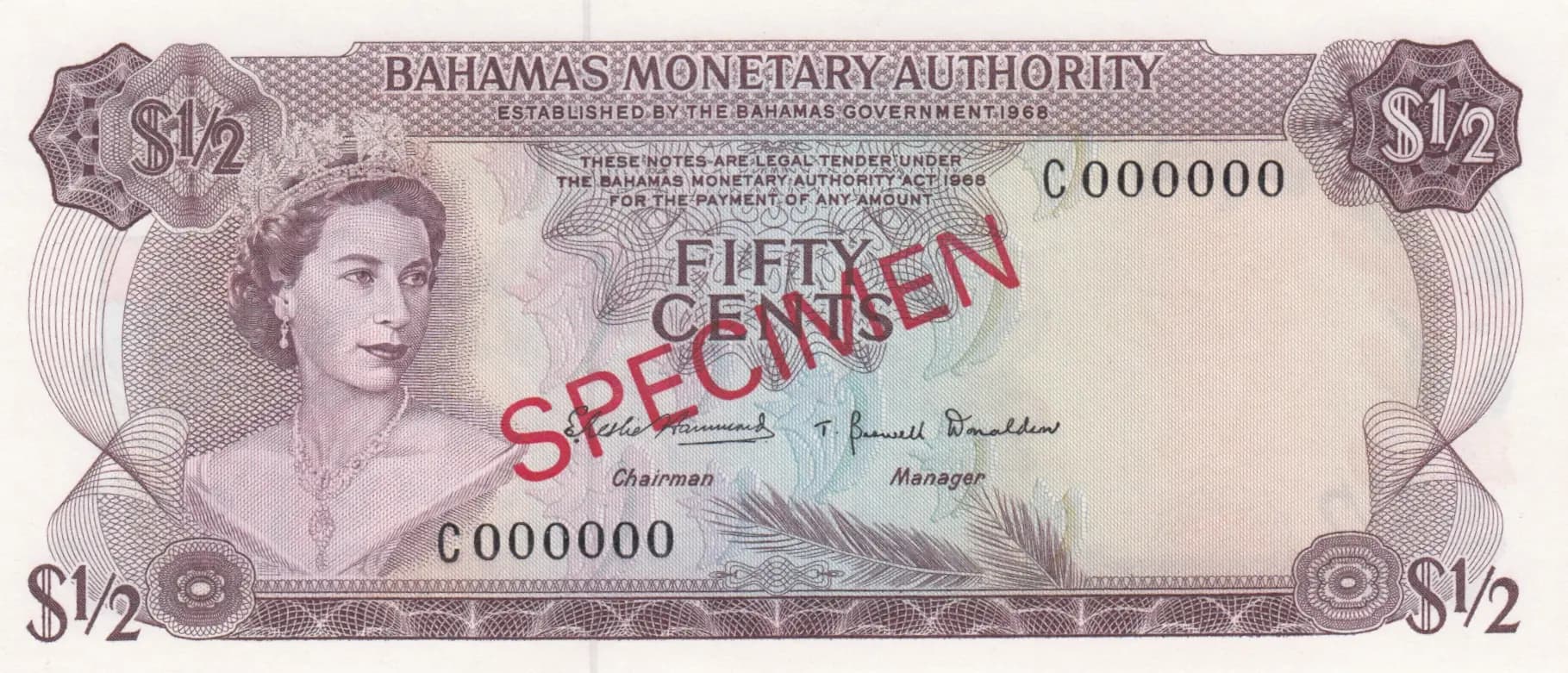
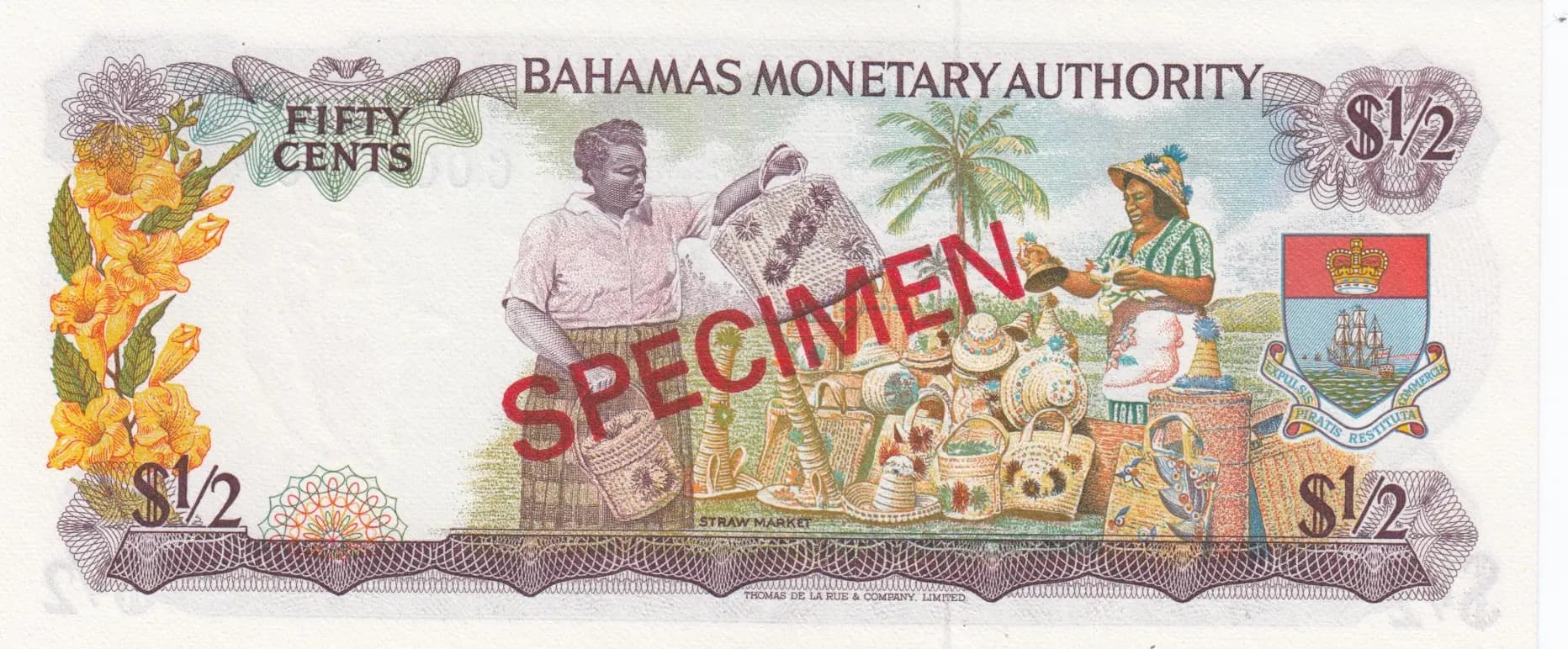
This is a pristine specimen note of the Bahamas Monetary Authority's 50 cents denomination from 1968, printed by Thomas de la Rue in London. The note features Queen Elizabeth II in profile on the obverse and a vibrant depiction of the Straw Market on the reverse, exemplifying the cultural and economic themes of post-independence Bahamas. As an uncirculated specimen note with a red diagonal overprint, it represents an important early emission from the newly established monetary authority and remains highly collectible in this condition.
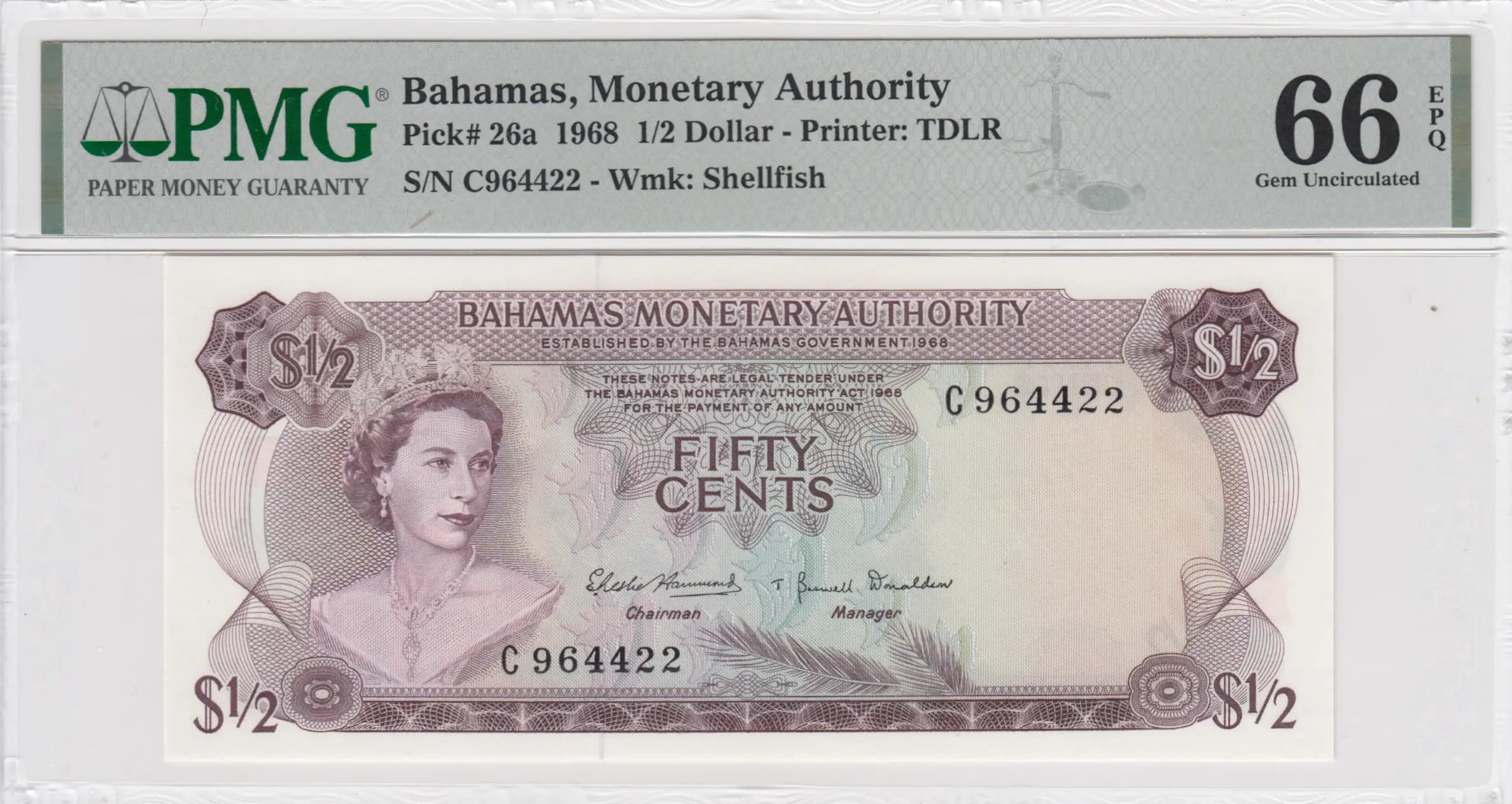
Common. While specimen notes are technically less frequently encountered than circulation issues, this particular Pick-26s specimen has sold regularly on the secondary market. eBay price tracking shows consistent sales of UNC examples in the $43–$57 range as of 2016–2017, with PMG graded examples (66–67) selling in the $71–$72 range as recently as 2025. The 2019 catalog value of $120 for UNC reflects typical specimen premium pricing. The consistent secondary market activity and modest price points indicate this is a commonly available specimen note rather than a scarce or rare variant.
This note was issued in 1968 following the establishment of the Bahamas Monetary Authority under the Law of 1968, marking the nation's transition to independent monetary management after centuries of colonial control. The design deliberately celebrates Bahamian culture and commerce, with the reverse depicting the iconic Nassau Straw Market—a symbol of local handicrafts and tourism that became central to the nation's identity. The choice to feature Queen Elizabeth II reflects the Bahamas' continued Commonwealth ties while the indigenous cultural imagery on the reverse asserted the new nation's distinct identity on its currency.
The obverse features Her Majesty Queen Elizabeth II in left-facing profile, positioned on the left side of the note, rendered in the formal engraved style typical of Commonwealth currency of the era. The design is framed by decorative ornamental cartouches in all four corners containing denomination symbols, with circular seal elements in the bottom corners. The reverse depicts a lively scene of the Nassau Straw Market, showing a man carrying a large basket of woven goods on his head and a woman in traditional dress engaged in commerce, set against a backdrop of palm trees and architectural elements. The Bahamas coat of arms is prominently displayed on the right side of the reverse, featuring a shield with red, white, and blue sections beneath a heraldic crown. Straw baskets, pottery, and other handicrafts are depicted as part of the market scene, celebrating the nation's traditional crafts. The entire design employs fine line work and intricate guilloche patterns characteristic of security printing.
Front side: 'BAHAMAS MONETARY AUTHORITY' / 'ESTABLISHED BY THE BAHAMAS GOVERNMENT 1968' / 'THESE NOTES ARE LEGAL TENDER UNDER THE BAHAMAS MONETARY AUTHORITY ACT 1968 FOR THE PAYMENT OF ANY AMOUNT' / '$1/2' / 'FIFTY CENTS' / 'SPECIMEN' / 'Chairman' / 'Manager' / 'C000000' (serial number, nullified for specimen). Back side: 'BAHAMAS MONETARY AUTHORITY' / 'FIFTY CENTS' / '$1/2' / 'SPECIMEN' / 'STRAW MARKET' / 'THOMAS DE LA RUE & COMPANY, LIMITED' (printer identification).
Intaglio engraving (line engraving) with multi-color offset printing, executed by Thomas de la Rue & Company, Limited of London. The note exhibits the hallmark characteristics of De la Rue's work: fine cross-hatching, sophisticated guilloche patterns, and precise color registration across multiple color separations. The specimen overprint was applied separately in red ink after the primary printing.
This is Pick-26s, the specimen variety of the 1968 50 cents note. The PMG population report indicates two variants exist for this base Pick number: P-26a and P-26s. The 's' designation confirms this as a specimen issue, identifiable by the red diagonal 'SPECIMEN' overprint across both sides and the nullified serial number (C000000). The printer is confirmed as Thomas de la Rue (TDLR), and the note carries a shellfish watermark as noted in catalog references.