50 cents 1968
Market Prices
68 salesAbout This Note
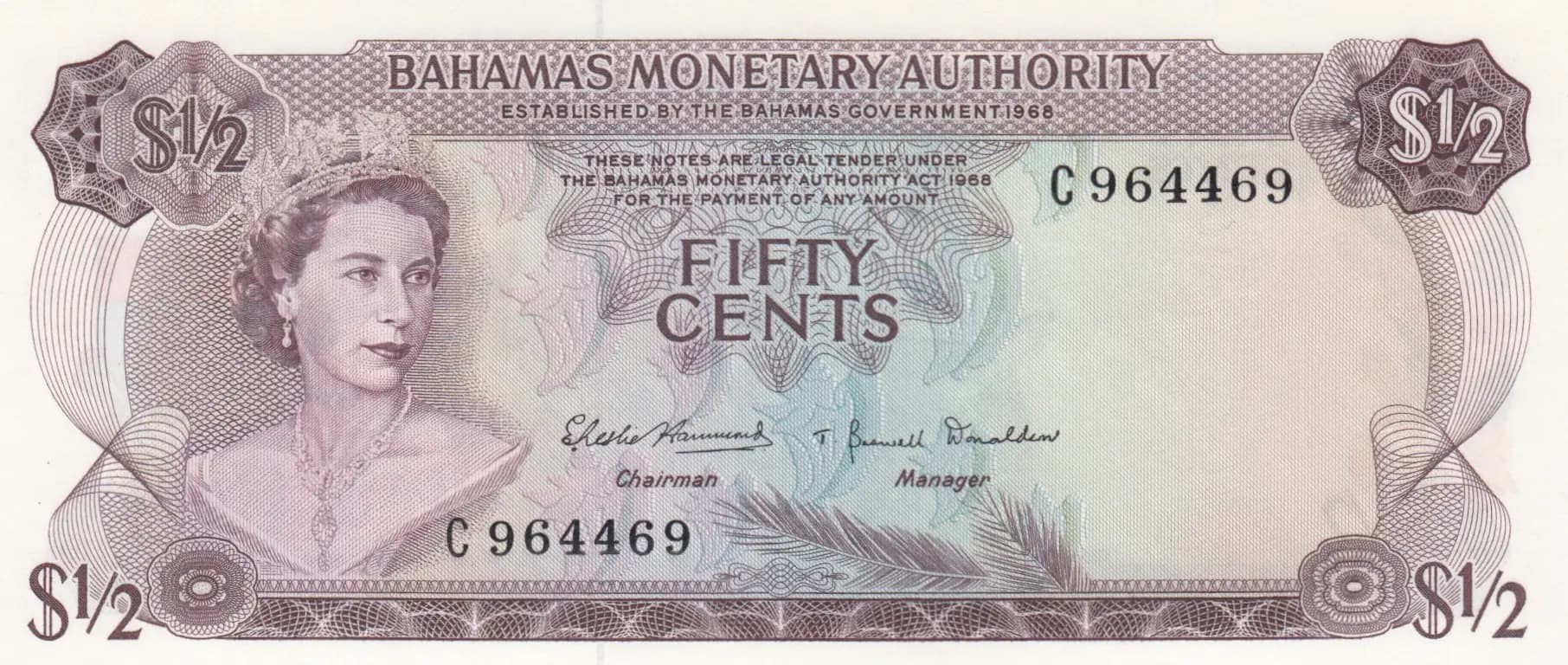
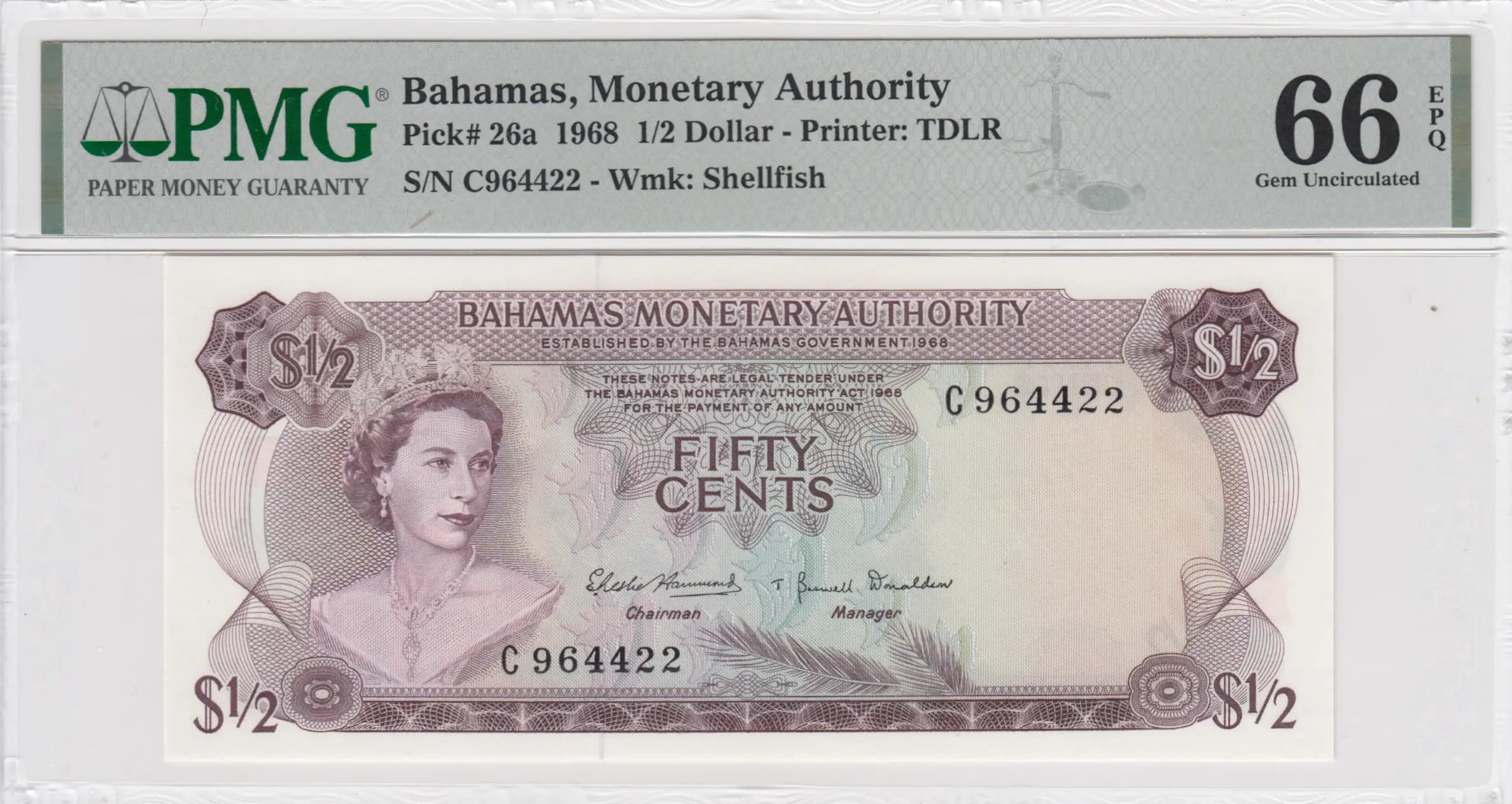
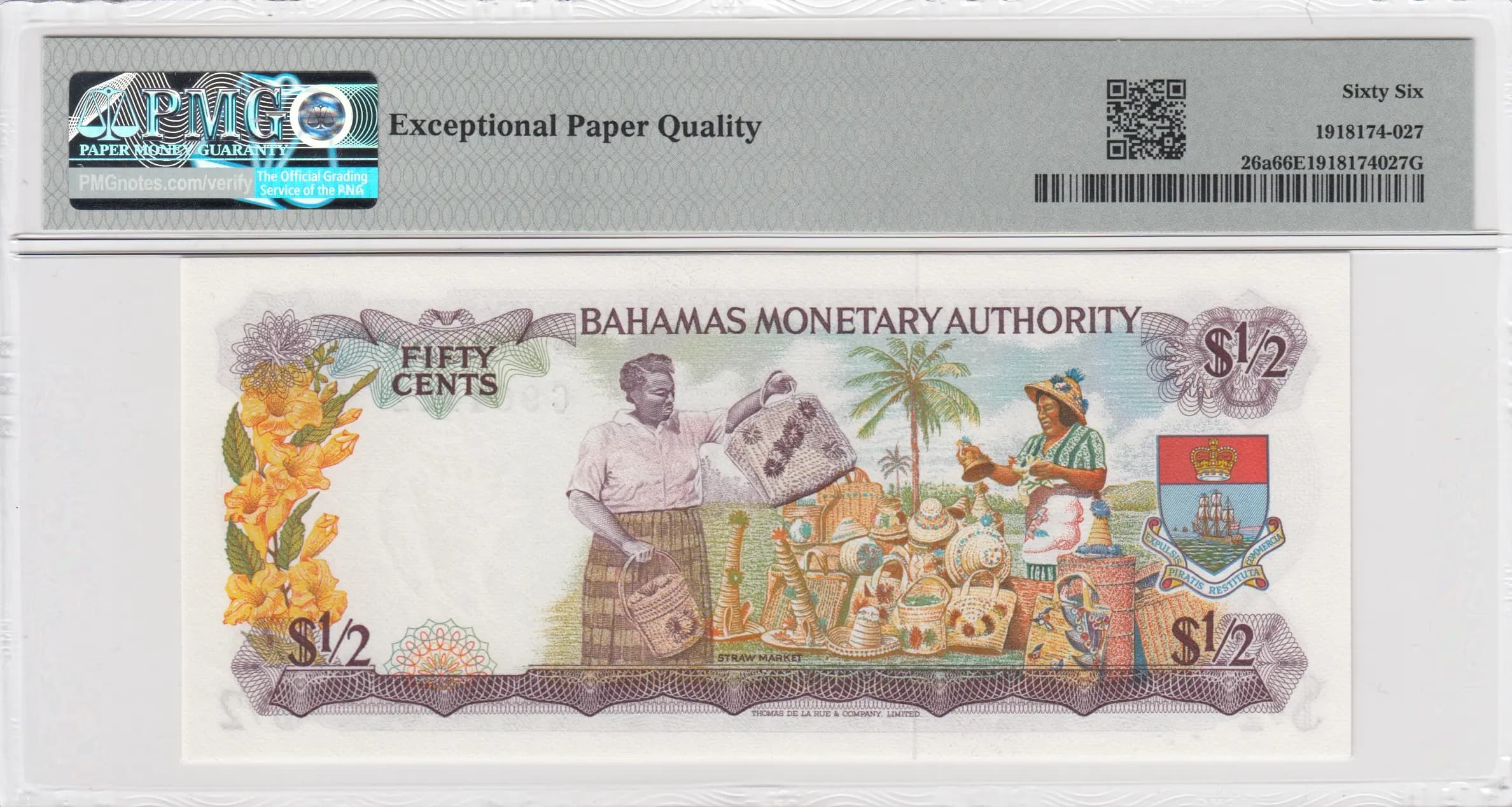
This Bahamas Monetary Authority 50 cents note from 1968 (Pick P-26) is presented in exceptional PMG 66 EPQ condition—representing a near-gem specimen with pristine surfaces and vibrant original colors. The note showcases the portrait of Queen Elizabeth II on the obverse in purple and multicolored underprint, while the reverse depicts the iconic Straw Market scene with tropical flora and the Bahamas coat of arms. With strong market performance for this grade (recent comparable sales in the $44-60 range), this example represents a desirable early Bahamas currency issue in an attractive mid-high grade.
Common. This is a regular-issue note from the Bahamas Monetary Authority's foundational 1968 series with substantial circulation. eBay market data confirms common-grade pricing: uncirculated examples typically sell for $11-40 (2009-2019), while PMG 66 examples achieve $44-60. The consistent appearance of this grade across multiple years of sales data and the relatively modest premium over lower grades indicate healthy supply. No print run restrictions or early withdrawal are documented for Pick P-26. As a post-1960s Commonwealth currency, examples remain readily available to collectors.
Issued under the newly established Bahamas Monetary Authority Act of 1968, this note commemorates the Bahamas' transition to independence and monetary sovereignty. The obverse features Queen Elizabeth II reflecting the Commonwealth connection, while the reverse celebrates local culture through the Straw Market scene with palm trees and workers—imagery that grounds the currency in authentic Bahamian identity and economic life during this formative post-independence period.
The obverse features a formal portrait of Queen Elizabeth II positioned on the left, rendered in profile wearing jewelry and formal attire, serving as the primary numismatic portrait. Denomination markers '$1/2' appear in decorative corner ornaments in all four corners with the text 'FIFTY CENTS' prominently displayed in the center with ornamental circular rosettes in the bottom corners. The reverse presents a vibrant tropical scene depicting the Nassau Straw Market—a culturally significant Bahamian landmark—with native workers engaged in market activities among baskets of woven goods and palm trees. The Bahamas coat of arms occupies the right side, featuring a quartered shield with red and blue sections and a centrally placed ship emblem symbolizing maritime heritage. The overall palette employs purple and mauve on the obverse with multicolored accents on the reverse (yellows, oranges, greens, blues, and reds) to create visual distinction between sides.
FRONT: 'BAHAMAS MONETARY AUTHORITY' (issuing authority); 'ESTABLISHED BY THE BAHAMAS GOVERNMENT 1968' (establishment date); 'THESE NOTES ARE LEGAL TENDER UNDER THE BAHAMAS MONETARY AUTHORITY ACT 1968 FOR THE PAYMENT OF ANY AMOUNT' (legal tender declaration); 'FIFTY CENTS' and '$1/2' (denomination); Serial number 'C964422'; Signature lines for 'Chairman' and 'Manager'. BACK: 'BAHAMAS MONETARY AUTHORITY' (issuing authority); 'FIFTY CENTS' and '$1/2' (denomination); 'STRAW MARKET' (scene identification).
Engraved intaglio printing executed by Thomas De La Rue (TDLR), London—the pre-eminent currency printer of the period. The visual analysis reveals intricate line work, cross-hatching patterns, and detailed security lines characteristic of intaglio engraving. The multi-color printing on the reverse demonstrates sophisticated register control and color separation typical of De La Rue's high-security currency production. Security features integrated into the design include complex ornamental patterns, a shellfish watermark, and decorative border designs.
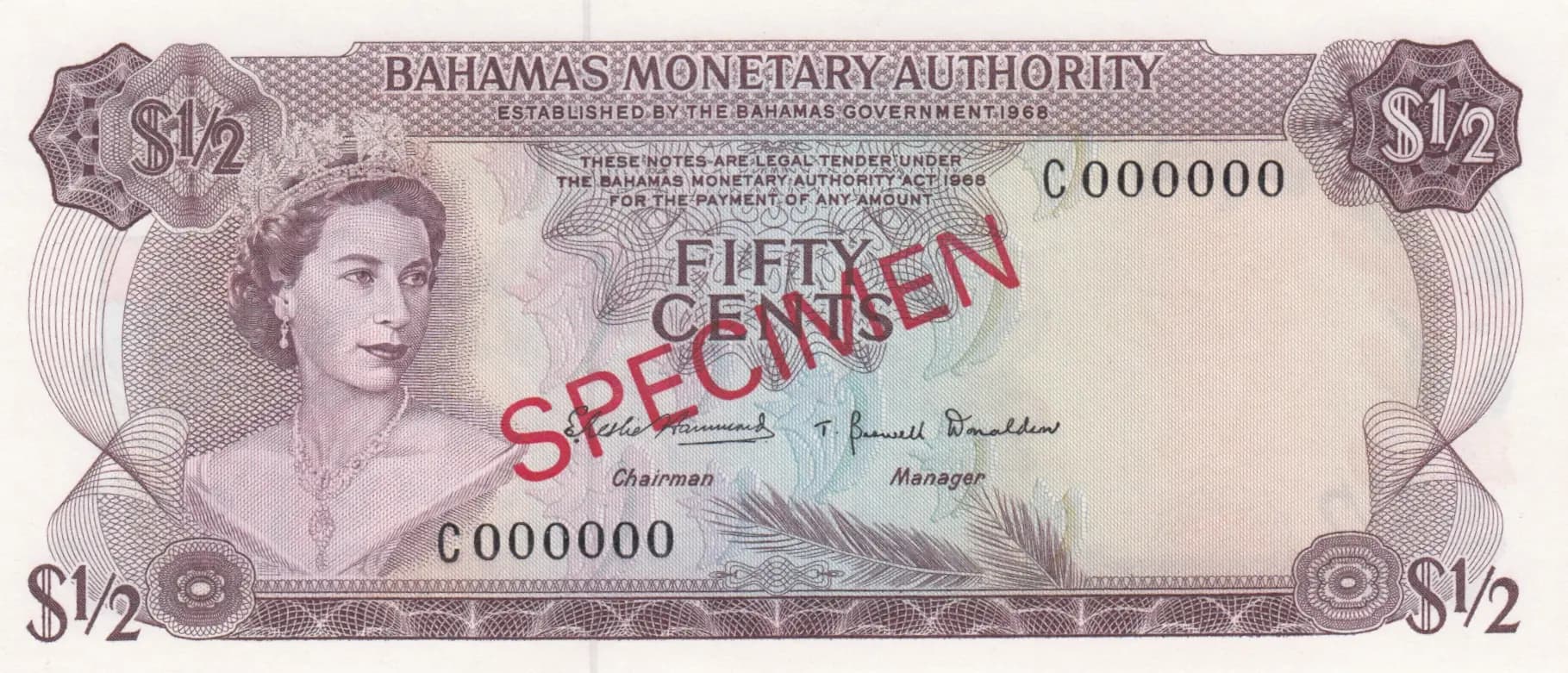
The observed specimen carries serial number C964422, indicating the 'C' prefix series. PMG cataloging recognizes two variants for P-26: P-26a (standard TDLR printing) and P-26s (specimen note). Based on visual inspection showing a regular circulating design with no 'SPECIMEN' overprint, cancellation marks, or perforations, this specimen represents the standard P-26a variety in regular production state. The signature block positions (Chairman and Manager) and the 1968 establishment date are consistent with the initial issue type.