50 cents 1965
Market Prices
39 salesAbout This Note
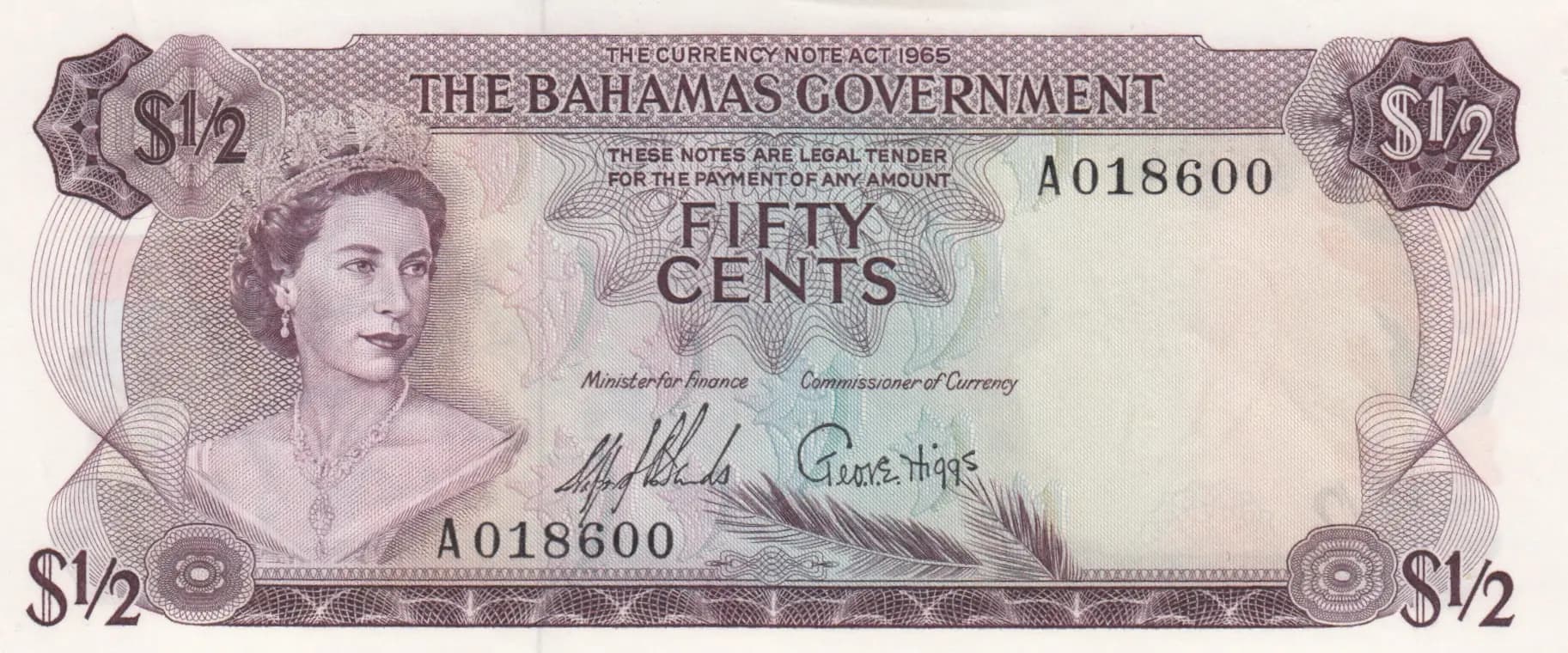
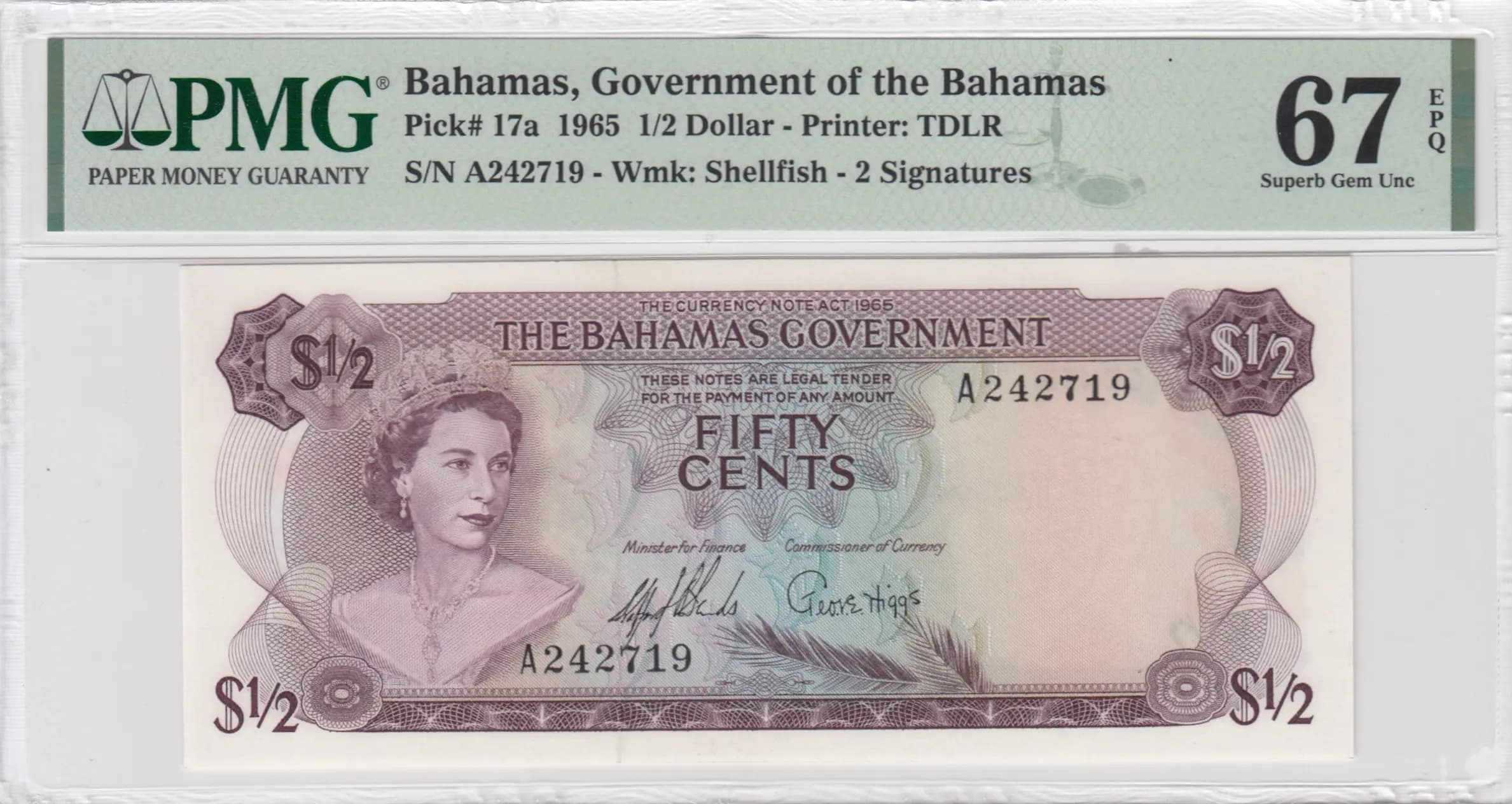
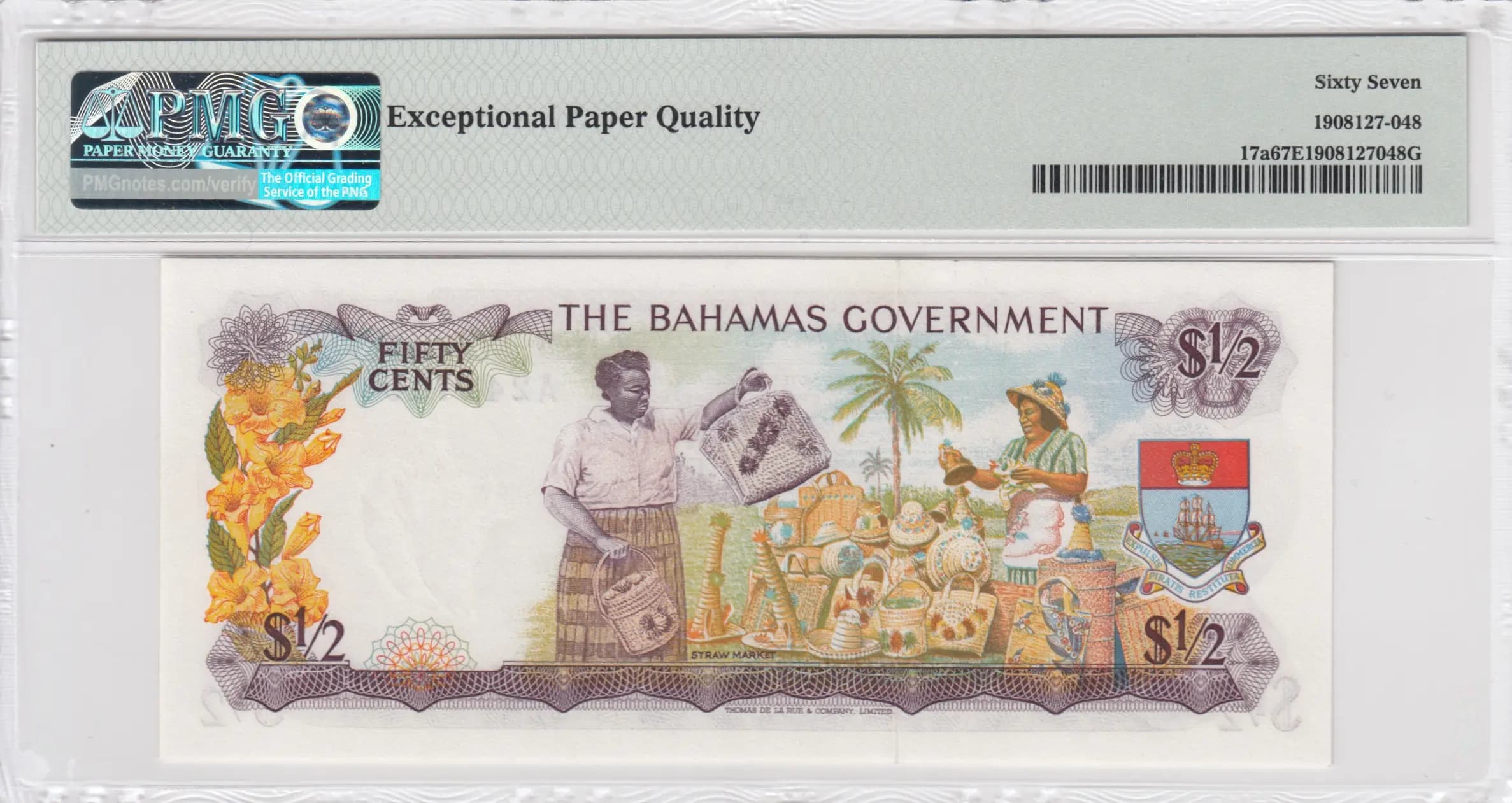
This is a PMG 67 Superb Gem Uncirculated example of the Bahamas Government's inaugural 50 cents note from 1965, graded with Exceptional Paper Quality (EPQ). The note features Queen Elizabeth II in formal ceremonial attire on the obverse and a vibrant depiction of Nassau's iconic Straw Market on the reverse, rendered in colorful intaglio printing with purple, yellow, orange, and green hues. This is an exceptionally well-preserved first-generation Commonwealth Caribbean currency note with pristine paper quality, no visible wear or handling marks, and represents a significant piece of Bahamian numismatic history.
Common. While this is the inaugural issue of Bahamian decimal currency and holds historical significance, the note remains common in the current numismatic market. Print runs for Commonwealth Caribbean currency notes of this era were substantial, and many examples survive. eBay market data confirms common status: UNC examples sell regularly for $20-70, VF specimens for $3-16, and even PMG 67-graded examples have sold at $59-102 range historically, indicating steady but not scarce availability. The PMG 67 EPQ grade elevates this specific specimen above typical market examples, but the underlying note type itself is not rare.
Issued under the Currency Note Act of 1965, this banknote represents the Bahamas' transition to its own decimal currency system and marks the early years of the nation's monetary independence. The reverse design prominently features the Straw Market, a culturally significant Nassau landmark and symbol of Bahamian commerce and daily life, reflecting the government's commitment to incorporating national identity into its currency. The inclusion of Queen Elizabeth II as the reigning monarch acknowledges the Bahamas' Commonwealth status during this period, while the artistic presentation of indigenous economic and cultural elements demonstrates the nation's pride in its unique Caribbean heritage.
The obverse portrays Queen Elizabeth II in left-facing profile wearing formal ceremonial regalia with jewelry and tiara, consistent with Commonwealth currency design conventions of the 1960s. The note is dominated by purple and mauve tones with cream background, featuring ornate four-corner rosette designs and intricate guilloche border patterns typical of high-security banknote engraving. The reverse showcases a detailed scene of Nassau's famous Straw Market with multiple figures engaged in commercial activity, including a prominent standing man in light-colored shirt and figures in traditional dress, surrounded by market stalls and palm trees, rendered in vibrant multicolor intaglio over the purple base. The Bahamas coat of arms appears prominently on the right side of the reverse. Both sides incorporate sophisticated security features including guilloche patterns, microprint elements within decorative borders, and a shellfish watermark.
FRONT SIDE: 'THE BAHAMAS GOVERNMENT' (issuing authority), 'THE CURRENCY NOTE ACT 1965' (legal basis for issuance), 'THESE NOTES ARE LEGAL TENDER FOR THE PAYMENT OF ANY AMOUNT' (legal tender declaration), 'FIFTY CENTS' and '$1/2' (denomination in words and numerical form), 'Minister for Finance' and 'Commissioner of Currency' (signature authorities), Serial number 'A242719' (appears twice for security tracking). BACK SIDE: 'THE BAHAMAS GOVERNMENT' (repeated issuing authority), 'FIFTY CENTS' and '$1/2' (denomination repeated), 'STRAW MARKET' (identification of reverse vignette design).
This note was produced using intaglio (engraved steel plate) printing by Thomas de La Rue of London, the world's premier currency printer of the period. The base design in purple was printed first through intaglio, followed by multicolor overprinting on the reverse to create the vibrant Straw Market vignette in yellow, orange, green, blue, and red. The intricate guilloche patterns, fine line work, and microprint security elements visible throughout the note are characteristic of de La Rue's advanced security printing standards. The high quality of impression and registration observed in this PMG 67 specimen indicates production from early press runs using optimal plate condition.
This specimen represents the standard first emission of the 1965 issue with signature varieties consistent with early printings. The serial number prefix 'A' indicates early production. This Pick 17 note exists with multiple signature combinations representing different periods of the currency's circulation, though the basic design remained constant through subsequent printings. No major varieties (errors, overprints, or design modifications) are documented for this denomination in the initial 1965 emission. The note shown appears to be from the first printing run based on paper quality and plate condition evident in the PMG grading.