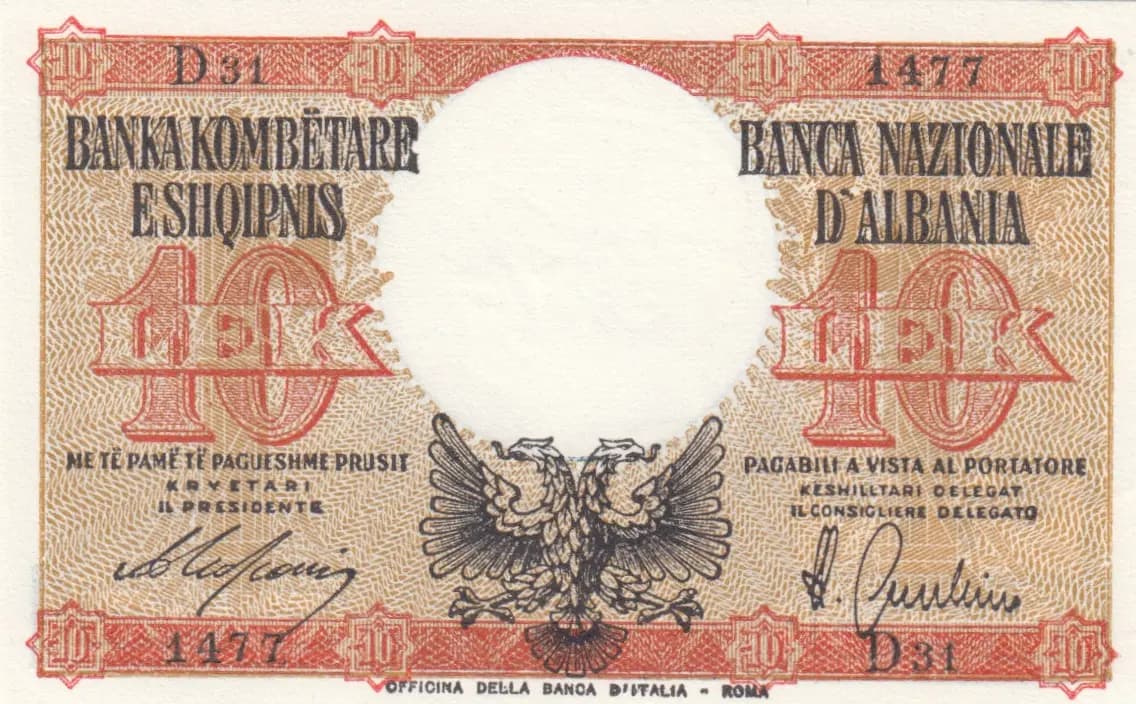
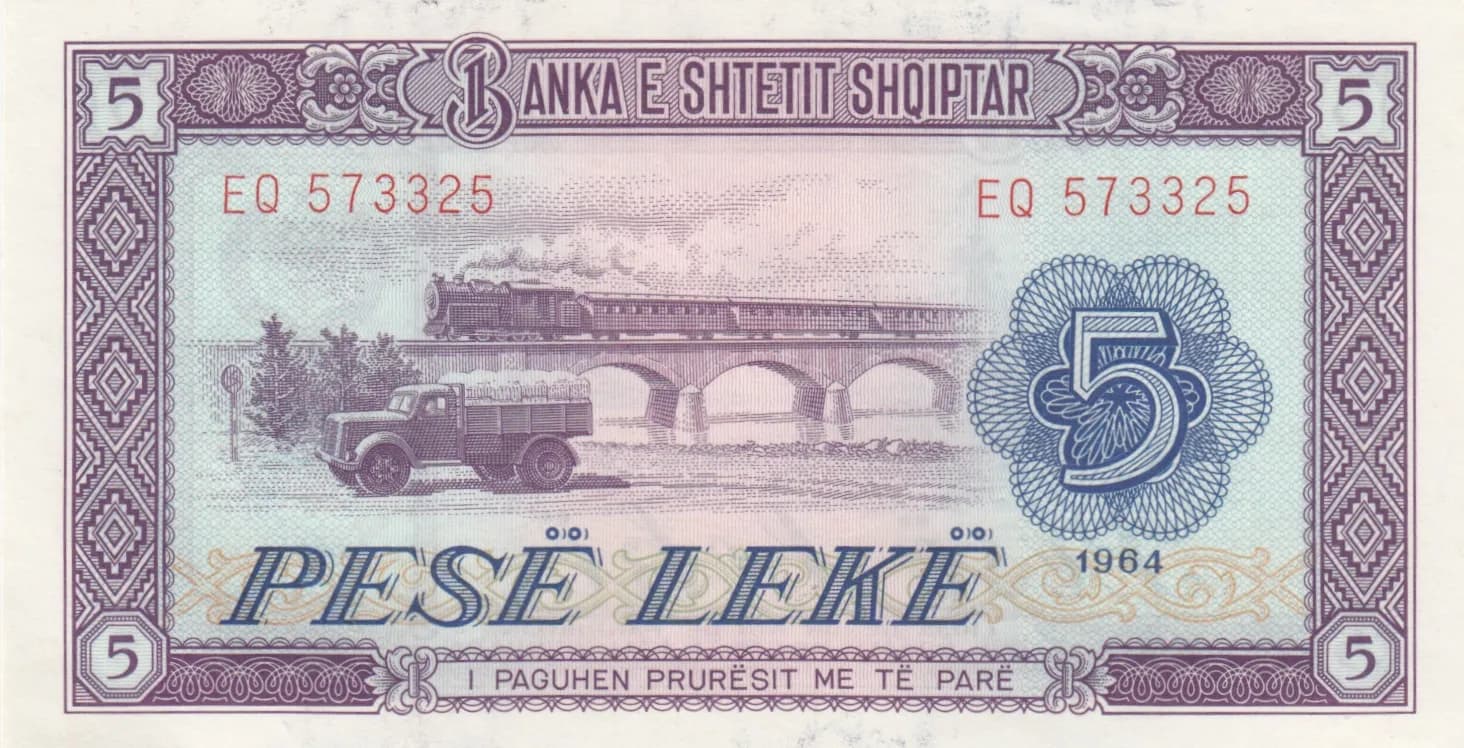
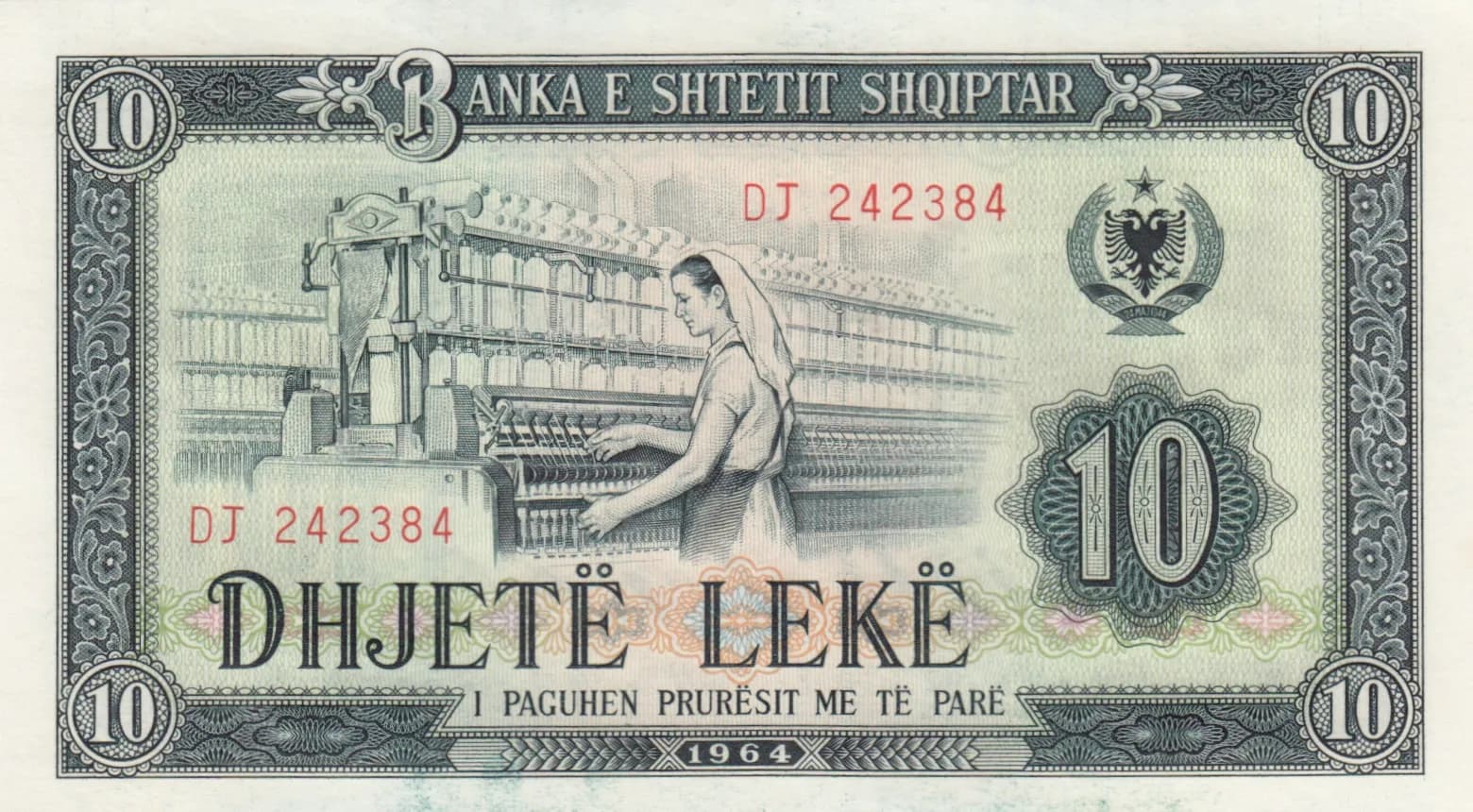
1000 leke 1957
Market Prices
30 salesAbout This Note
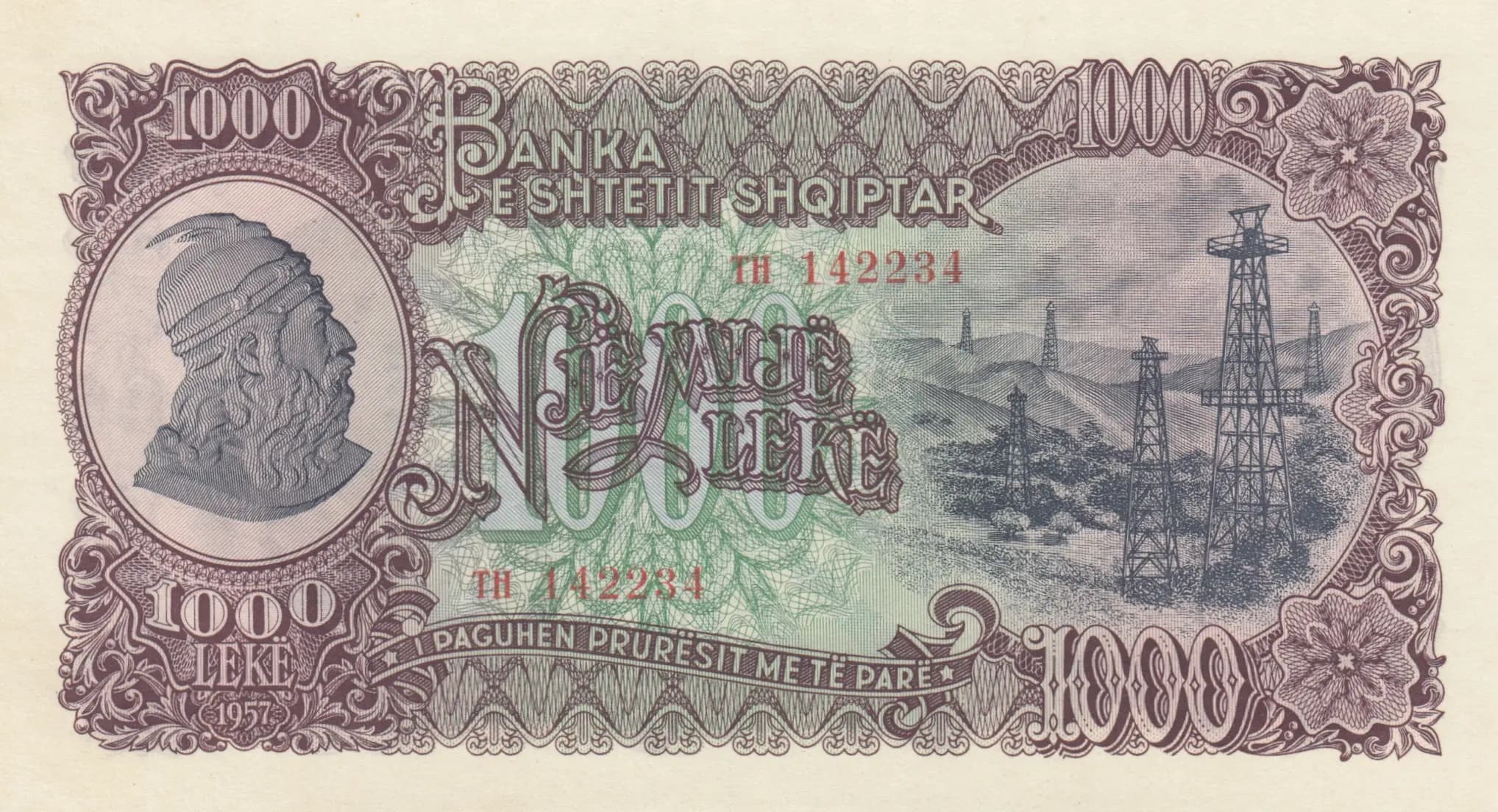
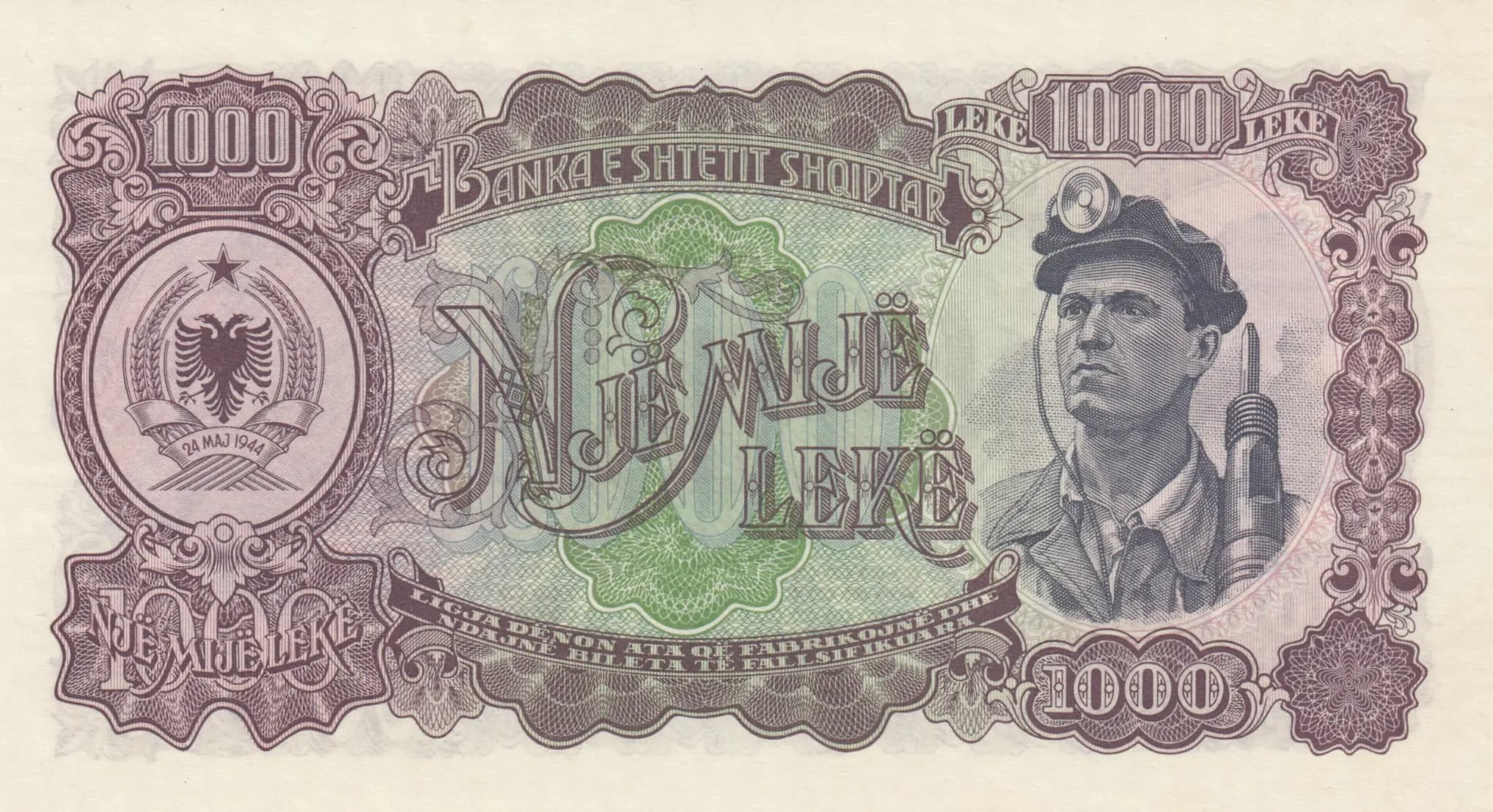
This is an uncirculated 1000 leke note from Albania's 1957 issue by Banka e Shtetit Shqiptar, displaying pristine condition with vibrant purple and multicolor printing throughout. The obverse features a portrait of Skanderbeg on the left with industrial oil derricks symbolizing Albania's economic development, while the reverse showcases the national coat of arms and a miner with jackhammer, reflecting the nation's focus on industrial and agricultural labor. This note exemplifies post-war Albanian monetary design during the early communist period.
Common. Despite its historical significance, this note remains common in the collector market. eBay price tracking data shows consistent sales of UNC examples in the $5–$11 range (with an average around $7–$9 for raw UNC notes), well below the $12.50 catalogue valuation for UNC. Even professionally graded PMG examples at grades 65–67 typically sell for $15–$55, indicating adequate supply. The 1957 issue was part of a regular circulation series with substantial print runs. Condition-sensitive premiums exist (PMG 66–67 specimens command $20–$105), but the base UNC grade in the current lot is widely available.
Issued in 1957, this note reflects Albania's post-World War II reconstruction and early socialist economic policies under Enver Hoxha. The imagery—featuring Skanderbeg (the 15th-century national hero), oil derricks, and industrial workers—propagandizes the regime's emphasis on national sovereignty, industrial development, and workers' contributions to building a modern socialist state. The twin symbols of oil extraction and mining underscore Albania's resource-based economy and the state's commitment to rapid industrialization.
The obverse features a left-facing portrait of Skanderbeg, Albania's national hero and Ottoman-era resistance leader, rendered in classical engraved style within an oval cartouche. To his right, a dramatic landscape depicts oil derricks and industrial transmission towers set against mountainous terrain, symbolizing Albania's industrial modernization. The reverse displays the Albanian national coat of arms (double-headed eagle within a star and laurel wreath) at left center, with the denomination prominently displayed. The right side features a portrait of a miner or industrial worker in profile, wearing a period military-style cap with insignia, holding or posed with a jackhammer—representing the working class and manual labor central to socialist ideology. Both sides are framed by ornate purple and mauve decorative borders with floral scrollwork and corner medallions in classical style.
Front Side: 'BANKA E SHTETIT SHQIPTAR' (State Bank of Albania); 'NJE MIJE LEKE' (One Thousand Leke); '1000 LEKE' (1000 Leke); 'I DAGUHEN PRUNESIT METE PARE' (To the glory of the nation); '1957' (year of issue); Serial number 'TH 142234'. Back Side: 'BANKA E SHTETIT SHQIPTAR' (State Bank of Albania); 'NJE MIJE LEKE' / 'NJE MIJE LEKE' (One Thousand Leke, repeated); '1000 LEKE' (1000 Leke); Fine print inscriptions relating to factory and industrial themes (partially obscured in visual analysis).
Intaglio (engraved) printing on security paper, characterized by fine-line engraving patterns, intricate decorative borders, and security grid patterns visible in the background. The multi-color printing and precise detail work are consistent with high-security banknote production standards of the 1950s. The printer for Albanian notes of this era was typically a Eastern Bloc state security printer, though specific attribution for P-32 is not definitively documented in standard references.
The Pick catalog recognizes two variants for the 1000 leke base number: P-32a and P-32s (the 's' notation typically indicates a specimen note with overprint or marking). The observed note appears to be P-32a (the standard circulation variety) based on the clean, unmarked appearance and absence of specimen overprints. The serial number format 'TH 142234' is consistent with standard Albanian note numbering of the period; serial prefixes may denote print batches, though detailed research on Albanian serial conventions is limited in English-language numismatic literature.