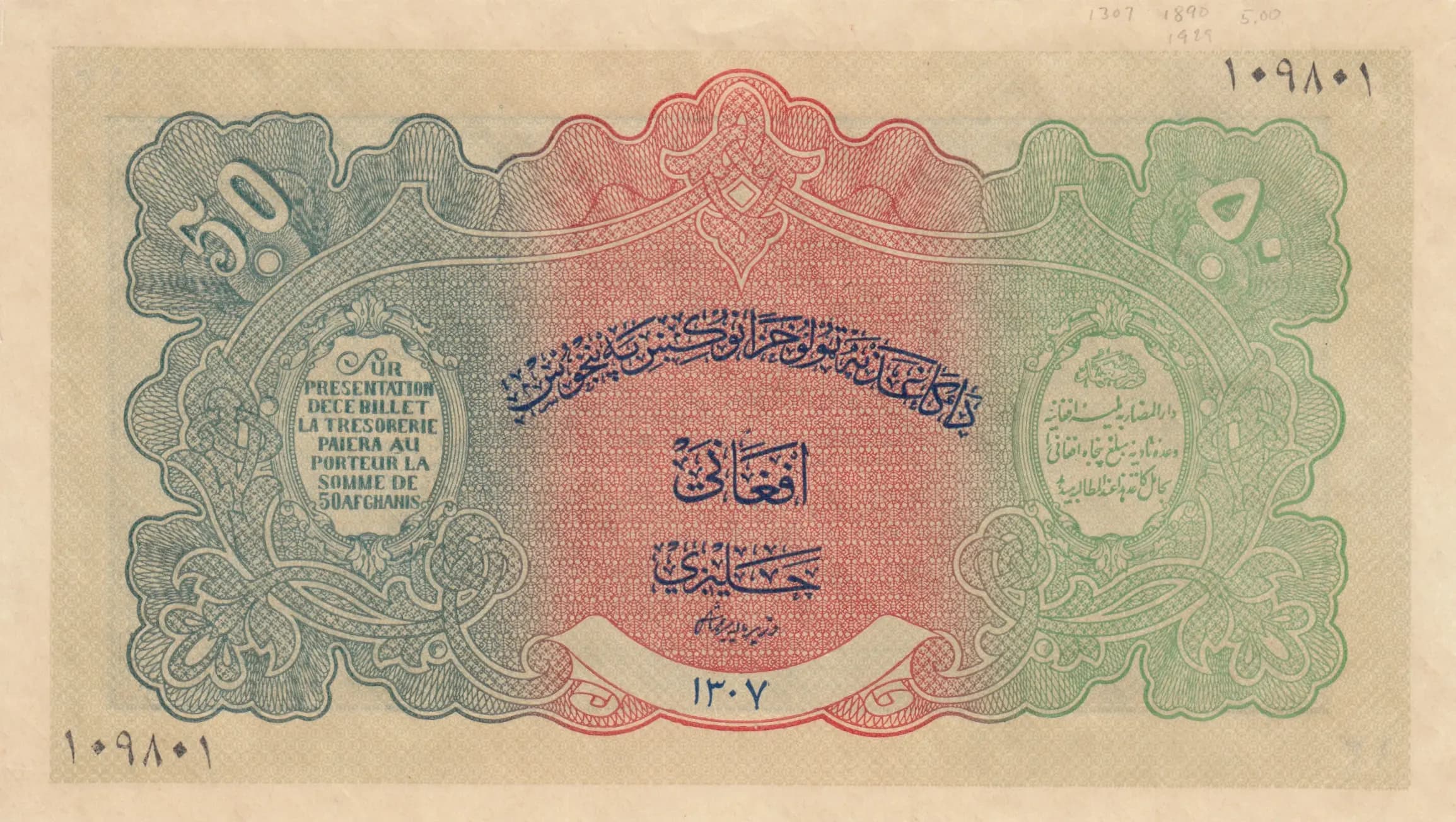
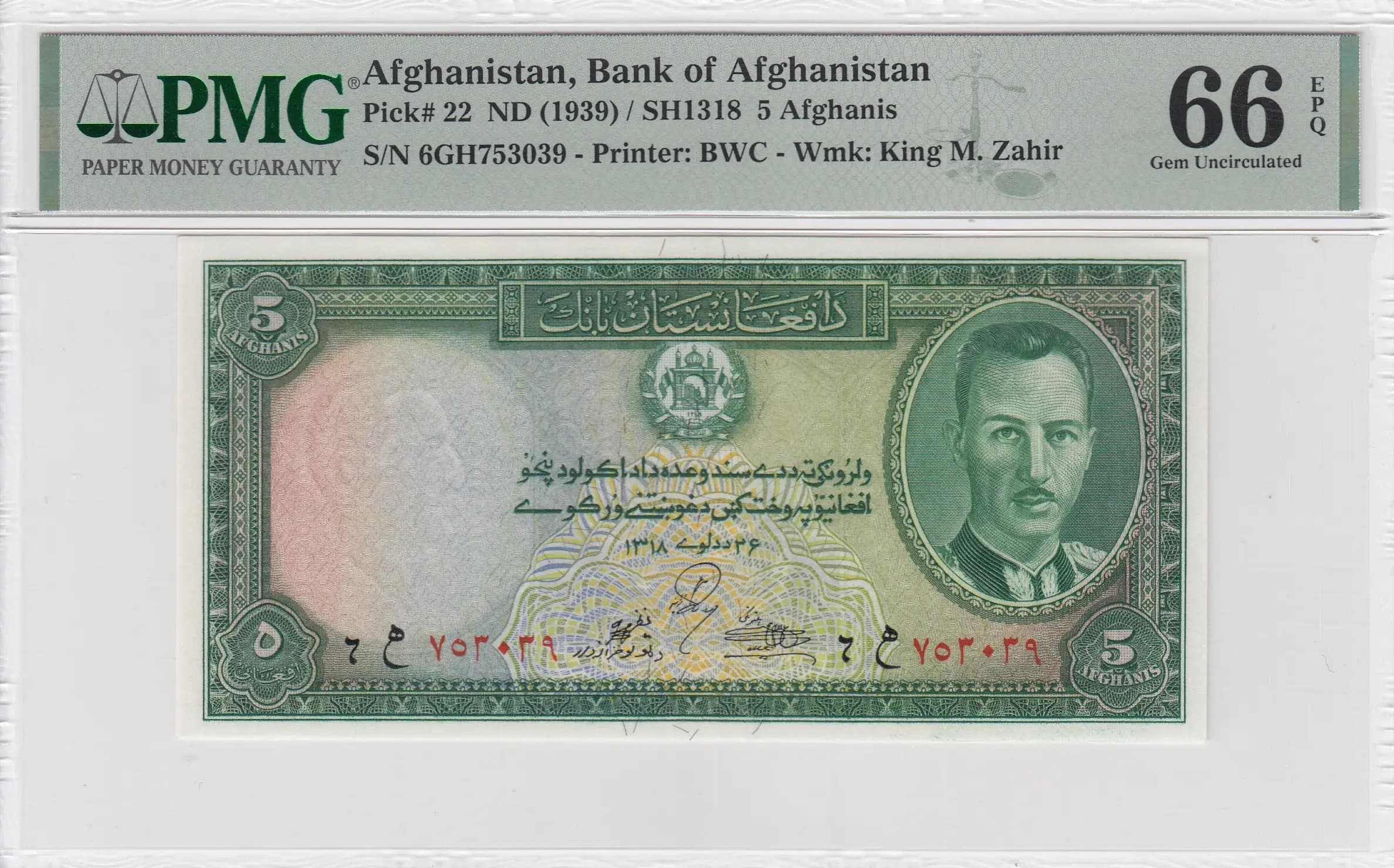
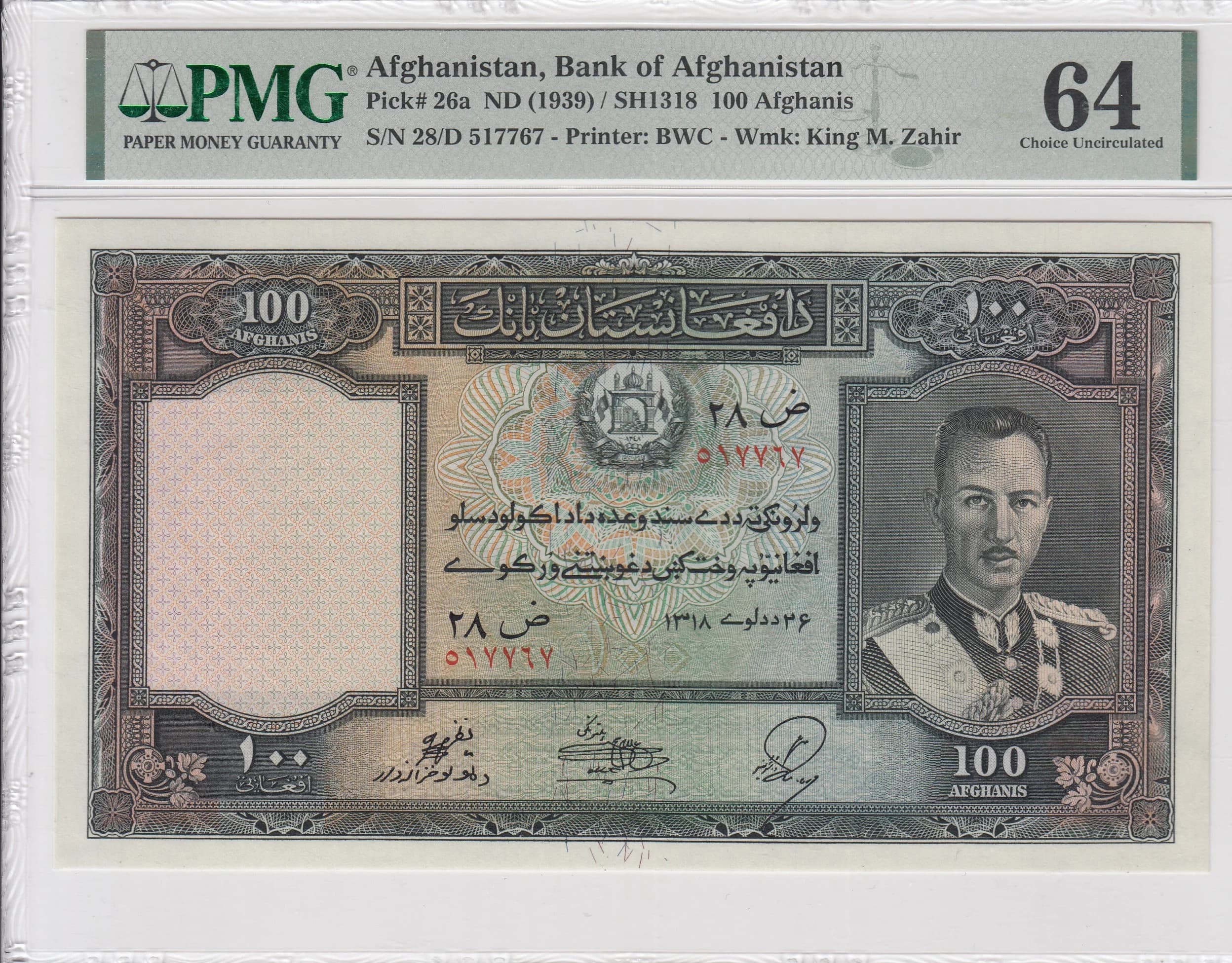
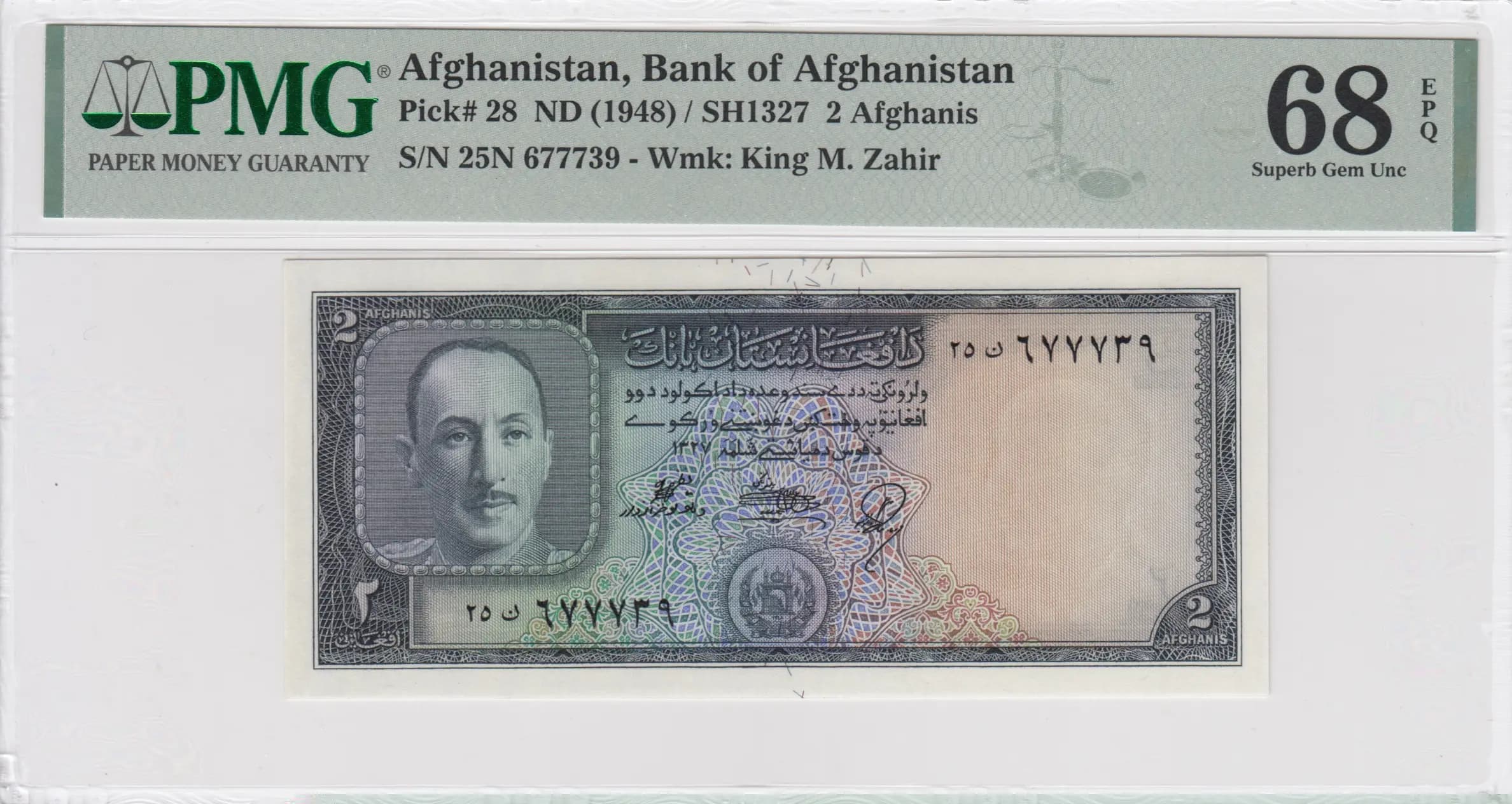
500 afghanis 1973 specimen
Market Prices
6 salesAbout This Note
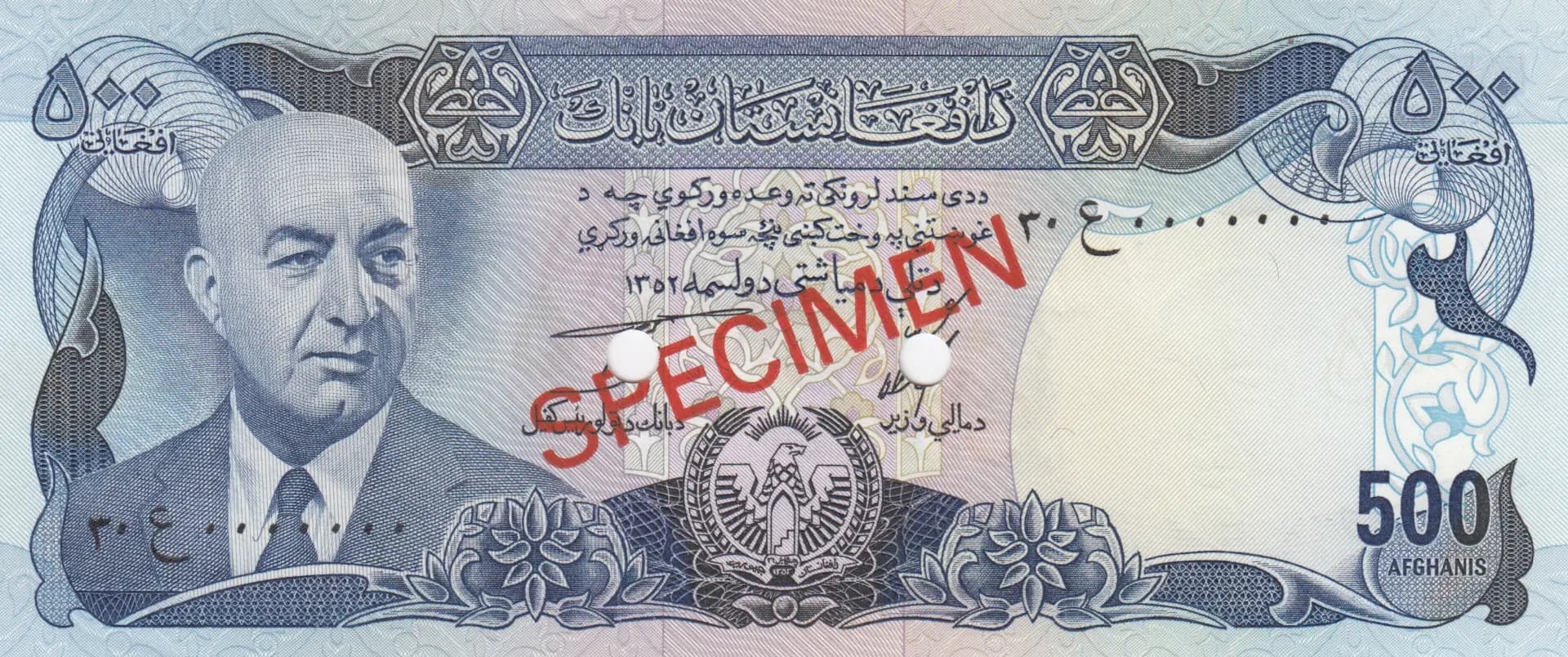
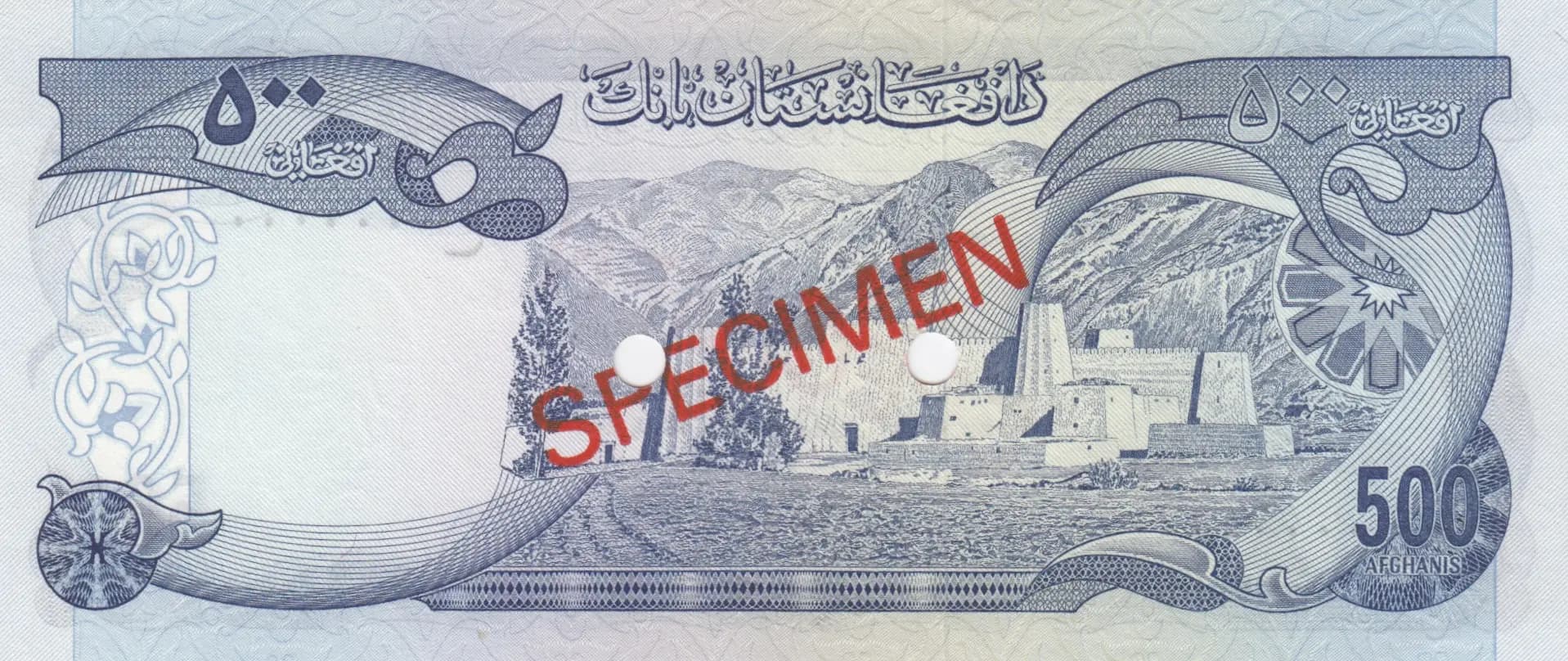
This is a 500 Afghanis specimen note from 1973 (SH 1352), issued by Da Afghanistan Bank during the early years of the Islamic Republic. The note displays exceptional uncirculated condition with characteristic specimen punch holes, featuring a portrait of President Muhammad Daud on the obverse and a detailed landscape with fortified architecture on the reverse. The blue and multicolored engraving showcases fine security printing with intricate geometric and floral Islamic design elements throughout.
Common. Despite its specimen status, this note appears in professional populations (PMG records one catalogued variant), and eBay market data shows regular trading activity with UNC examples selling in the $18-30 range historically. Recent sales show VF examples at lower prices ($4-16), indicating consistent collector demand but no scarcity premium. The 2019 catalogue value of $30 for UNC and recent selling prices under $20 confirm this is a readily available note in the secondary market.
This note was issued in 1973, a transitional period in Afghanistan's modern history following the overthrow of the monarchy. President Muhammad Daud Khan's portrait on the obverse reflects his leadership during this era, while the fortified village depicted on the reverse represents traditional Afghan architectural heritage and tribal strongholds that characterized the nation's cultural landscape. The 'Islamic Republic of Afghanistan' inscription reflects the political ideology of the period.
The obverse features a three-quarter profile portrait of President Muhammad Daud Khan at left, rendered in fine engraved line work against a blue background with multicolored security underprinting. A large circular state emblem with radiating design is centered in the lower portion. The reverse displays a detailed landscape composition dominated by a fortified village or tower structure with crenellations in the center, flanked by cypress trees (traditional to Islamic architecture) and mountain ranges in the background. Both sides are framed by ornate Islamic geometric patterns and floral motifs in the top and bottom borders, with decorative corner designs. The denomination '500 AFGHANIS' appears in the lower right of both sides.
Front side: 'دافغانستان د اسلامی جمهوریت' (Islamic Republic of Afghanistan); 'SPECIMEN' (English); '500 AFGHANIS' (English); Additional Pashto/Dari text containing legal authority and denomination statements. Back side: 'دافغانستان د اسلامی جمهوریت' (Islamic Republic of Afghanistan); 'SPECIMEN' (English); '500 AFGHANIS' (English); Decorative Islamic calligraphy in cartouche at top.
Intaglio (engraving) printing, evidenced by the fine line work, intricate security patterns, and detailed portraiture visible in the visual analysis. The multi-color printing technique incorporates a blue dominant color with grey and white security underprinting. This specimen note bears characteristic punch holes indicating it never circulated, a standard security practice for specimen distribution to banks and collectors.
This is catalogued as Pick P-51as, indicating it is a specimen note (the 's' suffix denotes specimen status). The visual analysis confirms specimen characteristics including the diagonal 'SPECIMEN' red overprint and two punch holes. The date SH 1352 (1973) corresponds to the first issue of this denomination. No signature varieties or serial number prefix distinctions are visible in the images provided. The Pick catalogue records only one variant (P-51s) for this base number, suggesting limited variation within the specimen issue.