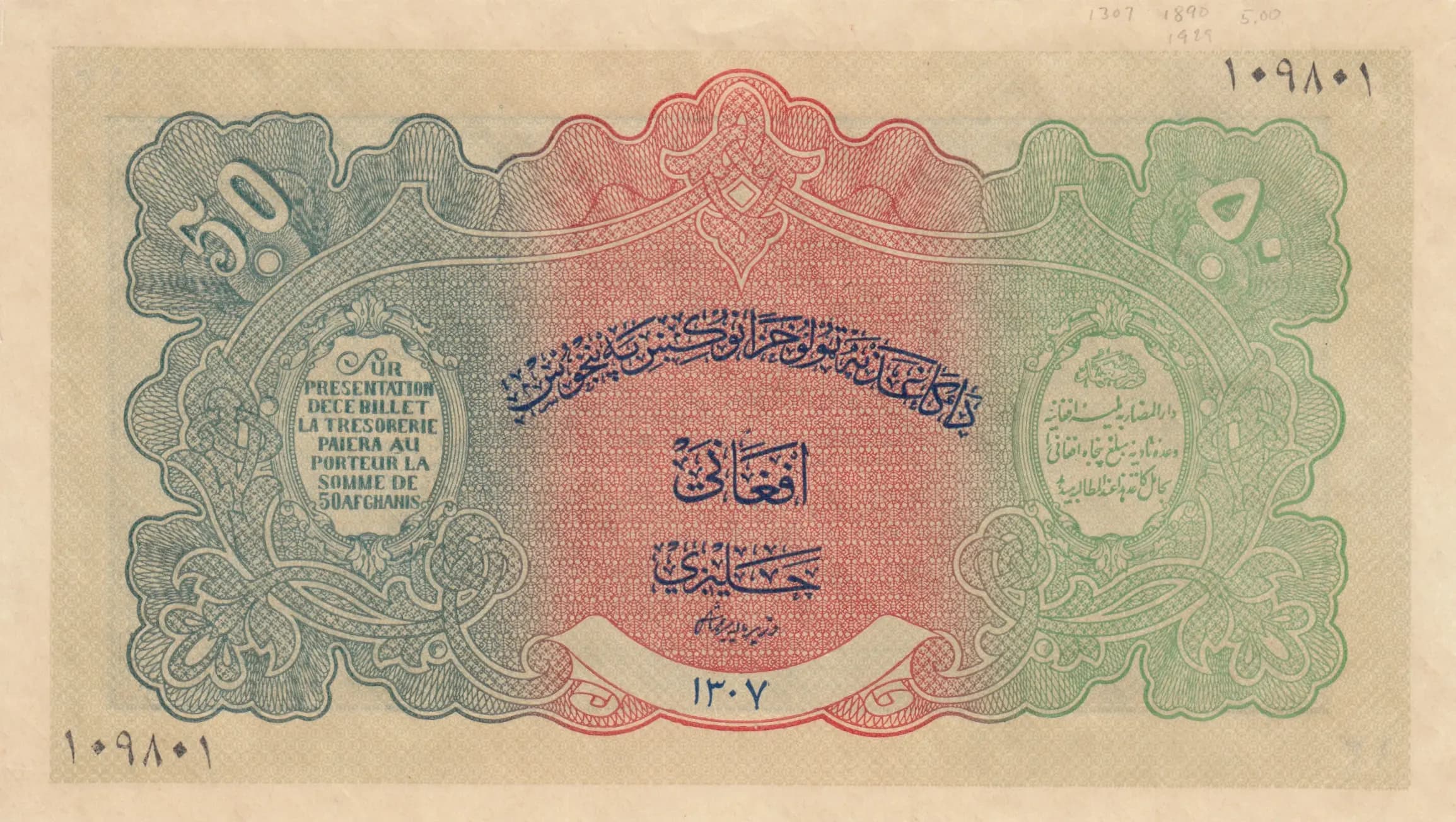
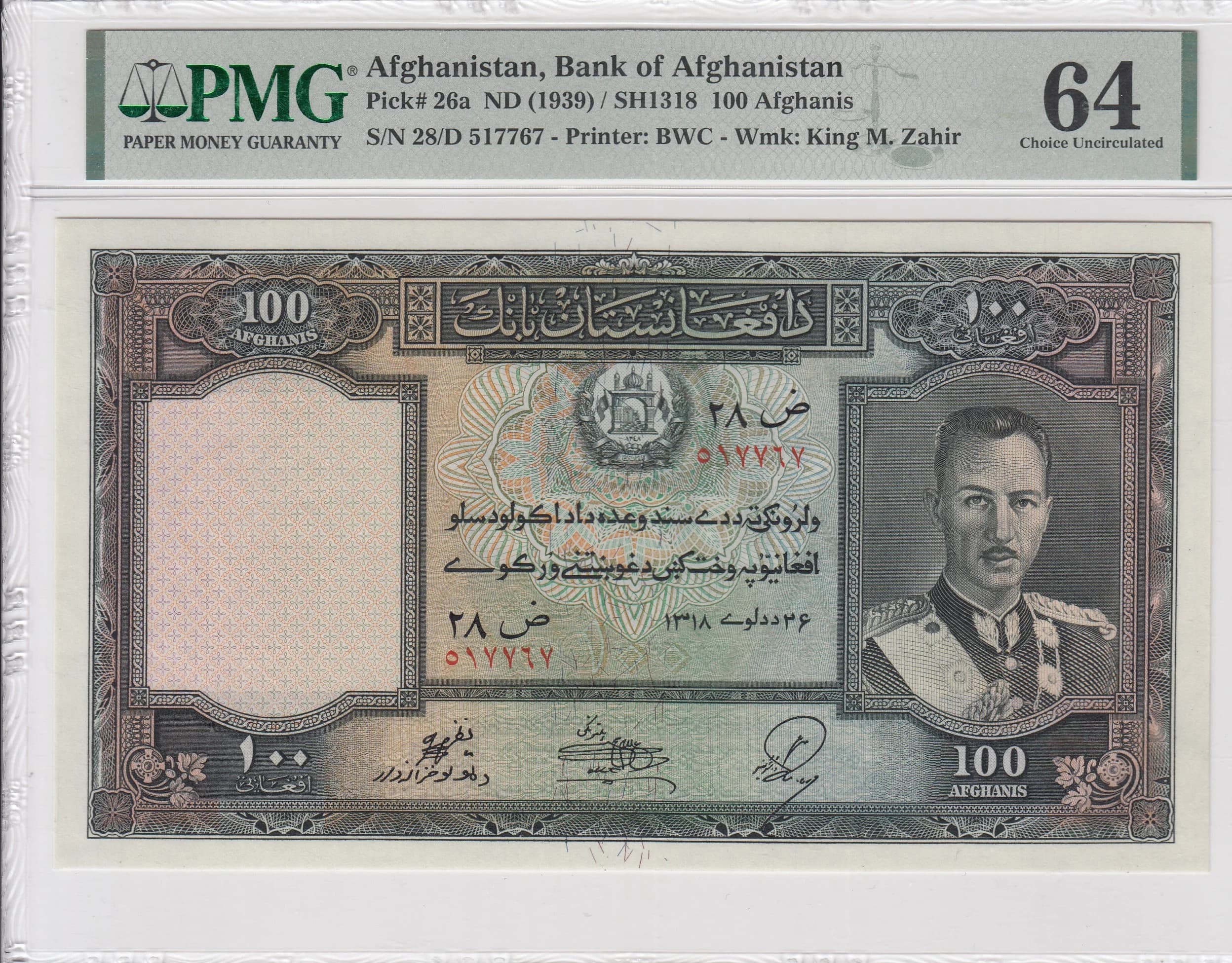
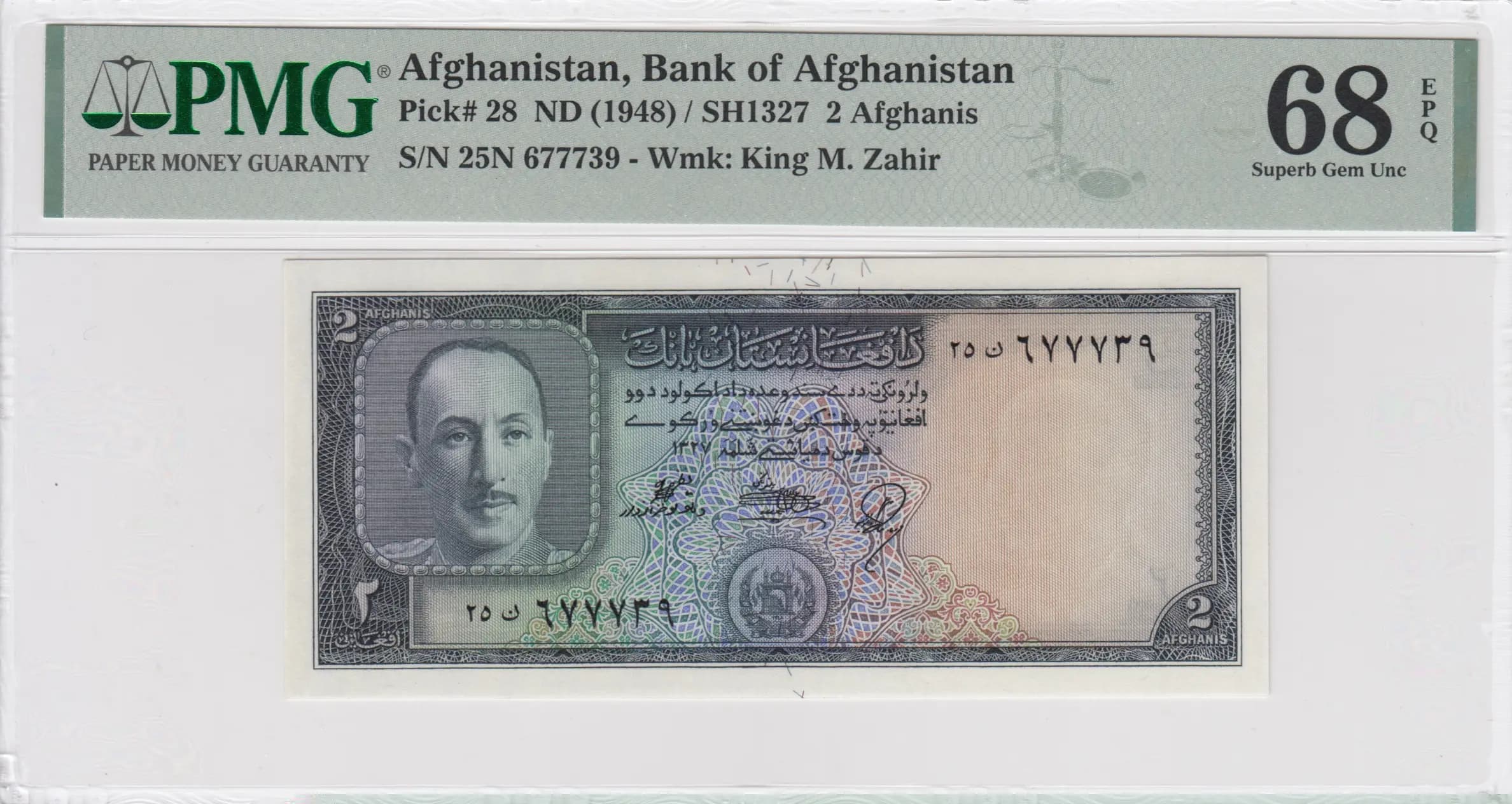
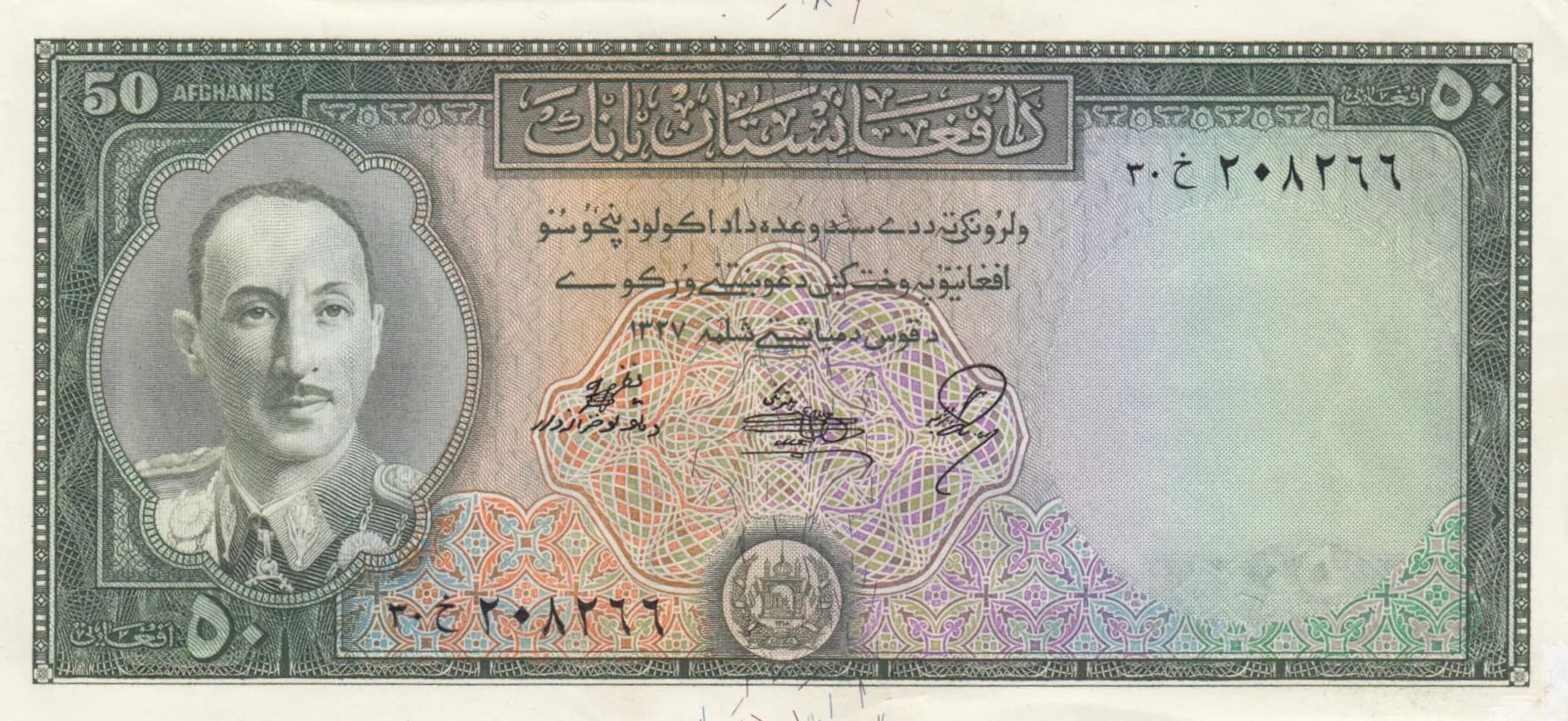
5 afghanis 1939
Market Prices
35 salesAbout This Note
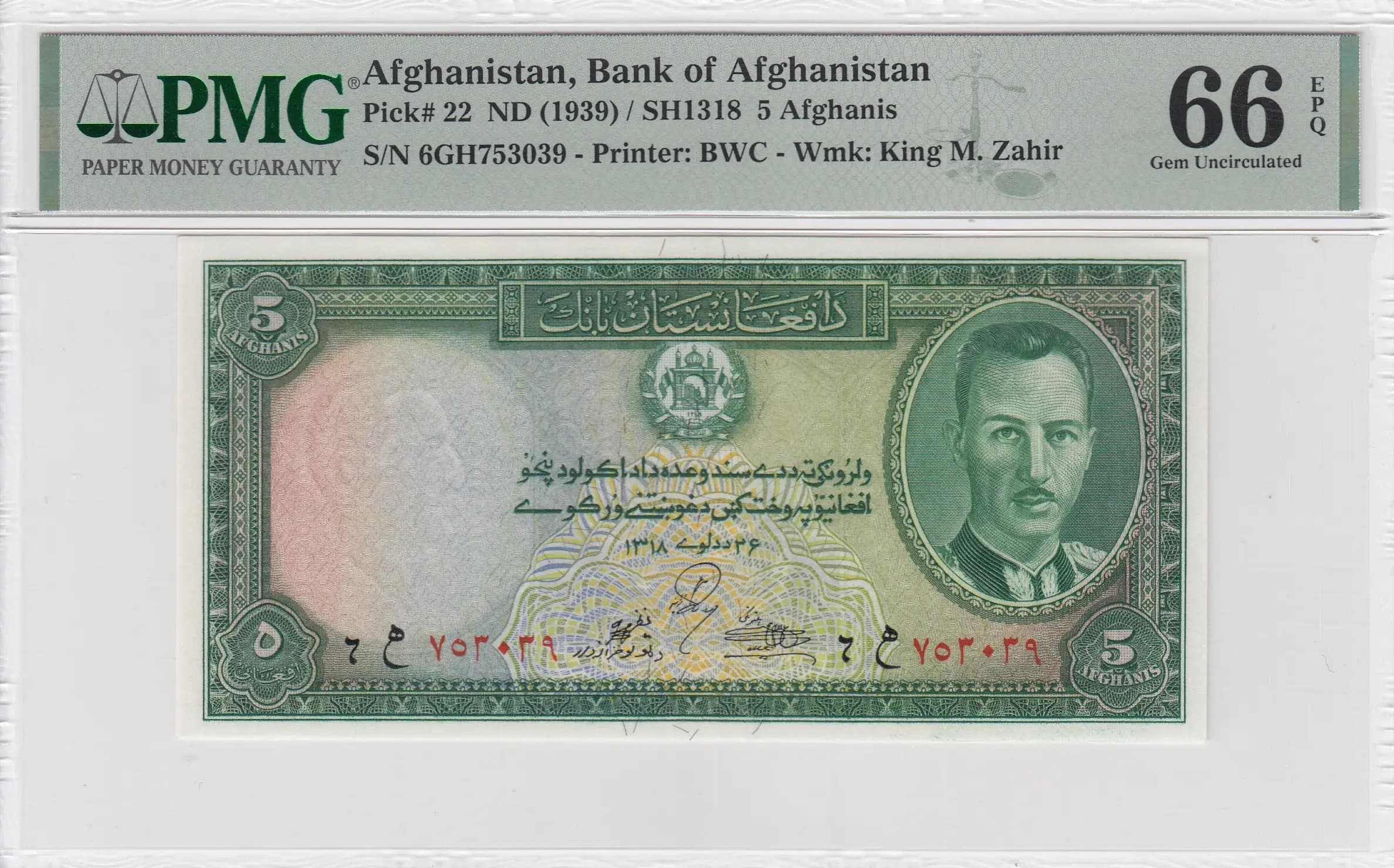
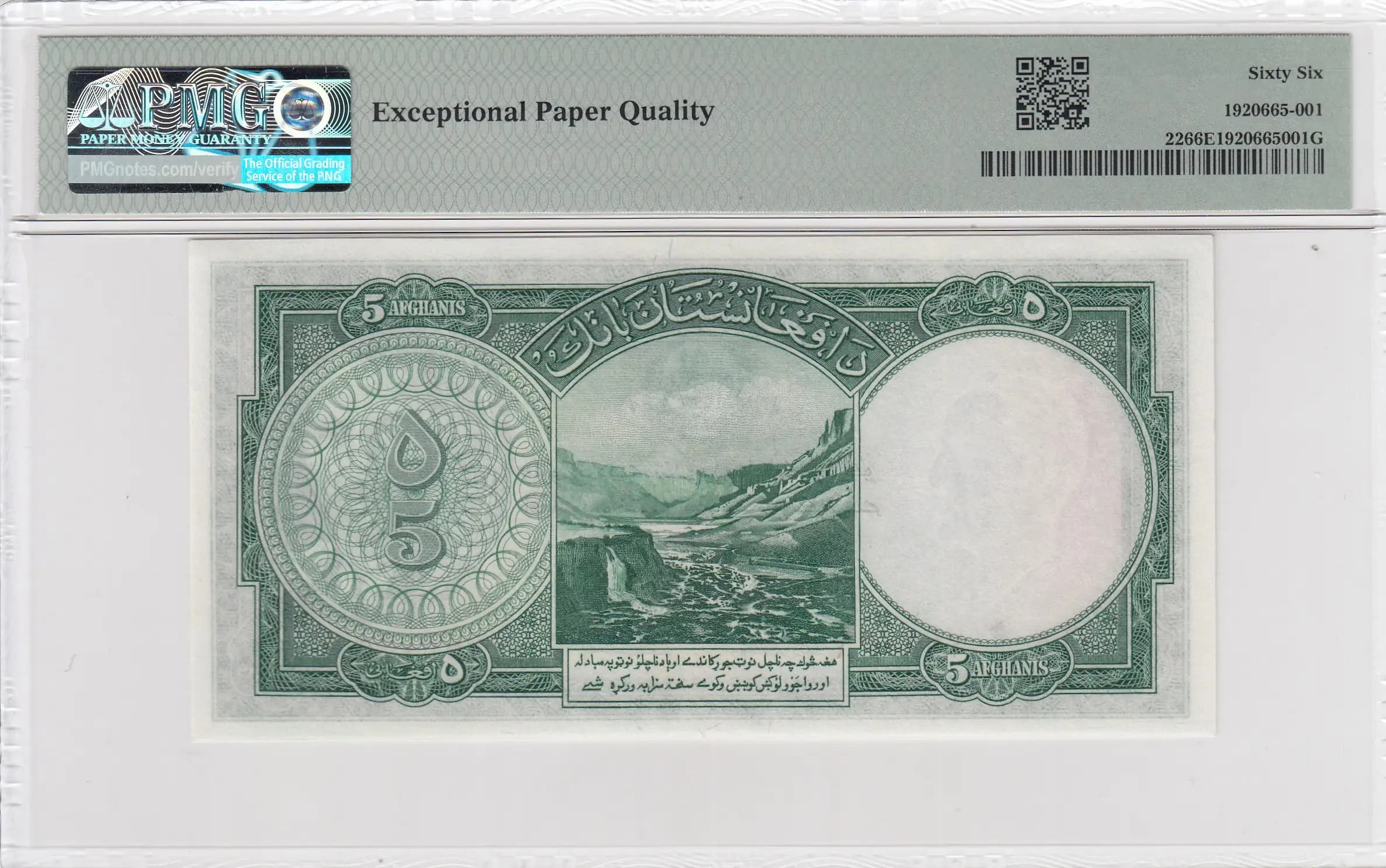
This is an exceptional example of Afghanistan's 5 Afghanis note from 1939 (SH 1318), graded PMG 66 EPQ. The note displays vibrant multicolor printing with a striking portrait of King Muhammad Zahir Shah in an ornate circular medallion on the obverse, while the reverse showcases the scenic Band-e-Amir landscape with its distinctive mountain valleys and water features. The pristine condition with bright colors, sharp detail, and absence of wear makes this an attractive example of early Afghan numismatic artistry.
Common. Despite its age and historical significance, this note is readily available in the collector market, with numerous documented sales across multiple condition grades. The eBay price data provided shows consistent market activity ranging from $8-$122 depending on grade, with PMG 66 examples regularly achieving $47-$73. The 2016 catalog value of $15 for UNC examples and the consistent availability of graded specimens in PMG population reports indicate this is a standard-issue note with adequate surviving quantities. No documented scarcity or recall issues affect this Pick number.
Issued during the reign of King Muhammad Zahir Shah (1933-1973), this 1939 banknote represents Afghanistan's early modern monetary system under Da Afghanistan Bank. The prominence of the king's portrait reflects the centralized authority of the monarchy during this period, while the reverse depicts Band-e-Amir in Bamiyan Province—one of Afghanistan's most significant natural landmarks—underscoring the nation's geographic and cultural heritage during a time of relative modernization and stability.
The obverse features a formal three-quarter profile portrait of King Muhammad Zahir Shah positioned within an ornate circular medallion on the right side of the note, rendered in a refined engraved style typical of 1930s currency design. The background employs a sophisticated gradient technique transitioning from rose/pink on the left through yellow to green on the right, creating visual depth and security complexity. The reverse displays a naturalistic landscape vignette depicting the Band-e-Amir dam and its associated Seven Lakes in Bamiyan Province, with mountains, water features, and vegetation rendered in a detailed oval frame. Both sides feature the national emblem at the top center, while all four corners contain ornamental shield designs housing the denomination '5'. The overall design incorporates geometric and floral border patterns throughout, characteristic of pre-war Afghan monetary design principles.
Front: '5 AFGHANIS' (English, top left in ornamental shield); 'Afghanistan, Bank of Afghanistan' (English text); 'داشتنستان بانک' (Dari/Persian, translates to 'Bank of Afghanistan'); Multiple lines of Dari/Persian script appearing in center and lower portions of the note providing official denominations and issuing authority text. Back: '5 AFGHANIS' (English, in large ornamental medallions on left and right); Multiple lines of Dari/Persian script below the central landscape scene providing official text and denomination confirmations. Serial number component visible as 'Y0Y0Y9' on both sides.
This note was produced using traditional intaglio engraving combined with multicolor letterpress printing, a standard security printing method for banknotes of this era. The fine detail visible in the portrait medallion, landscape vignette, and decorative borders, along with the precise color registration observed in the visual analysis, indicates professional-grade security printing typical of early 20th-century central bank currency production. The printer for Afghan banknotes during this period was typically an established European security printer, though specific attribution would require additional documentation.
This specimen represents the standard 1939 (SH 1318) issue without imprint, as confirmed by the visual analysis and catalog references. The note is cataloged as P-22 with a single documented variant in PMG's population reports. No signature varieties, overprints, or dated subvarieties are evident from the visual analysis. The serial number component visible (Y0Y0Y9) suggests standard production numbering, though complete serial number assessment would require examination of the full serial range, which is not provided in the available documentation.