50 afghanis 1979 specimen
Market Prices
7 salesAbout This Note
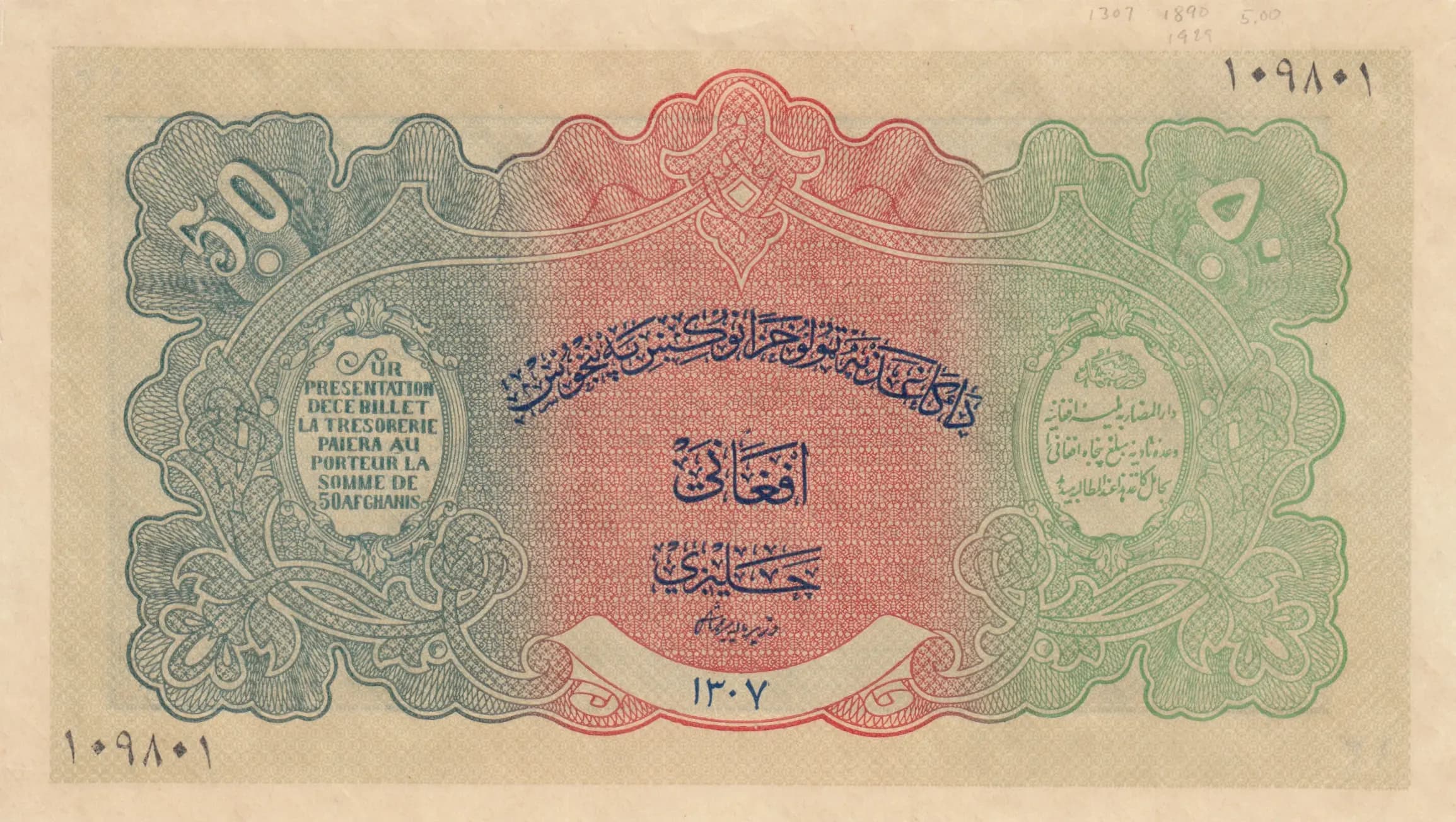
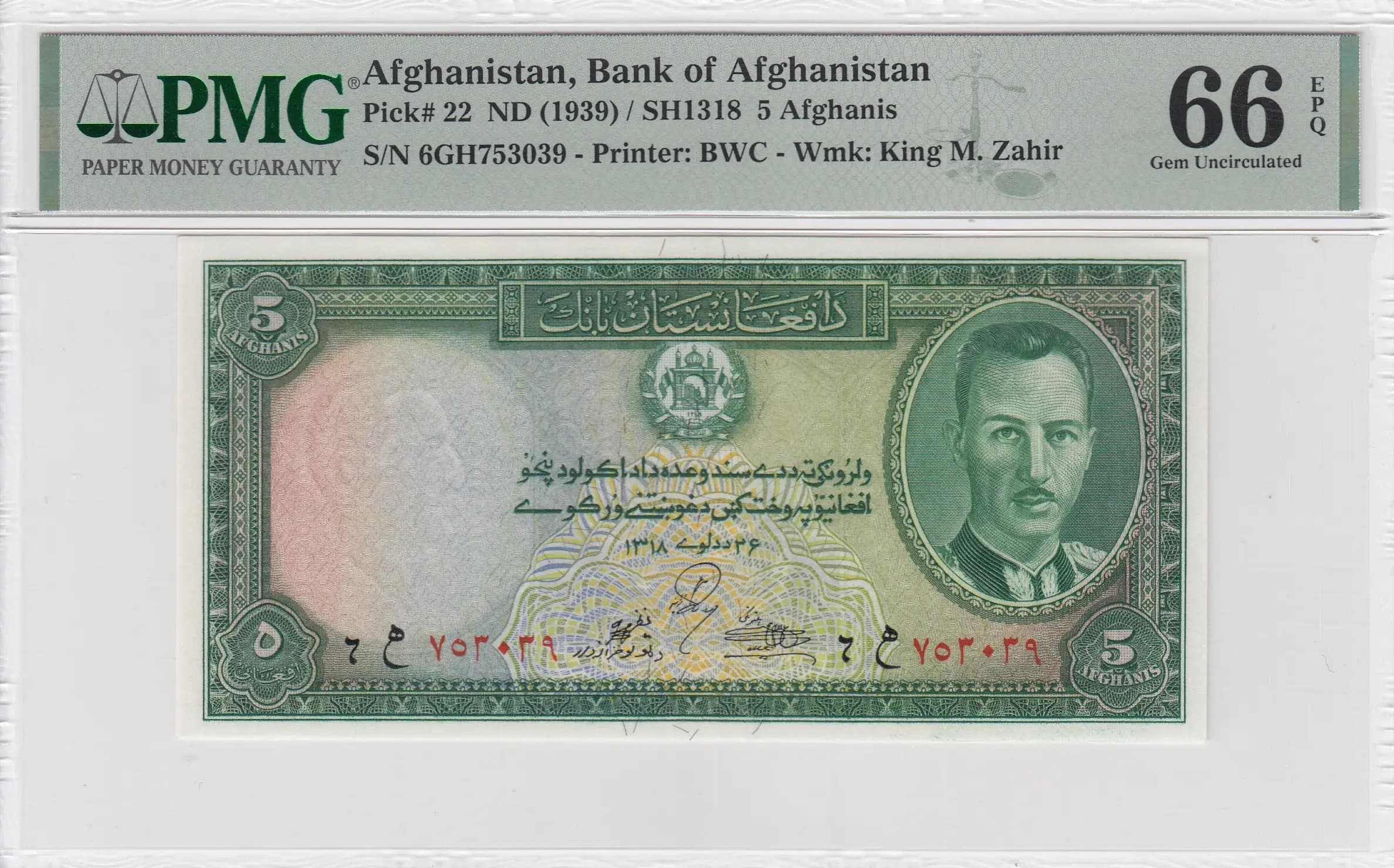
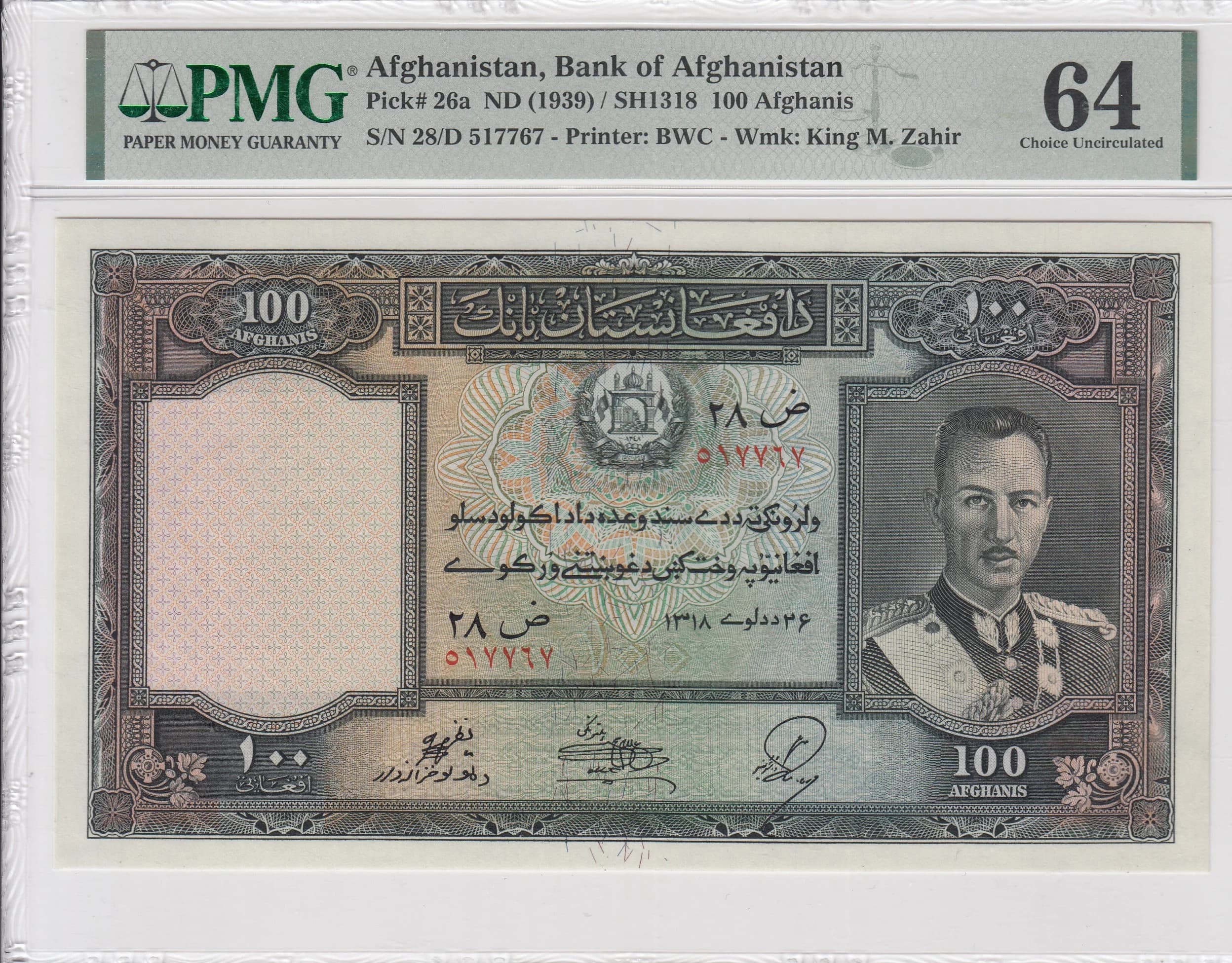
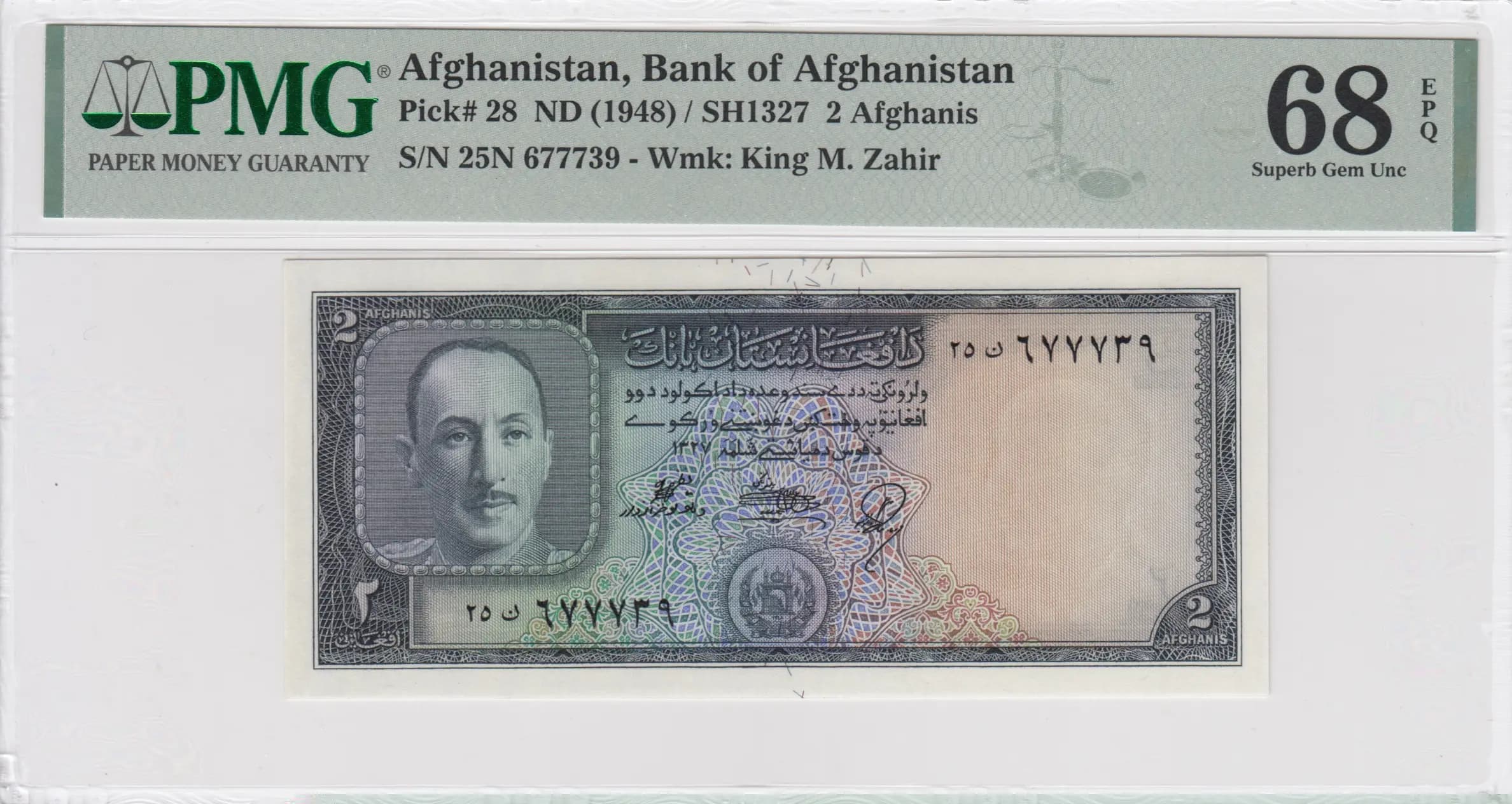
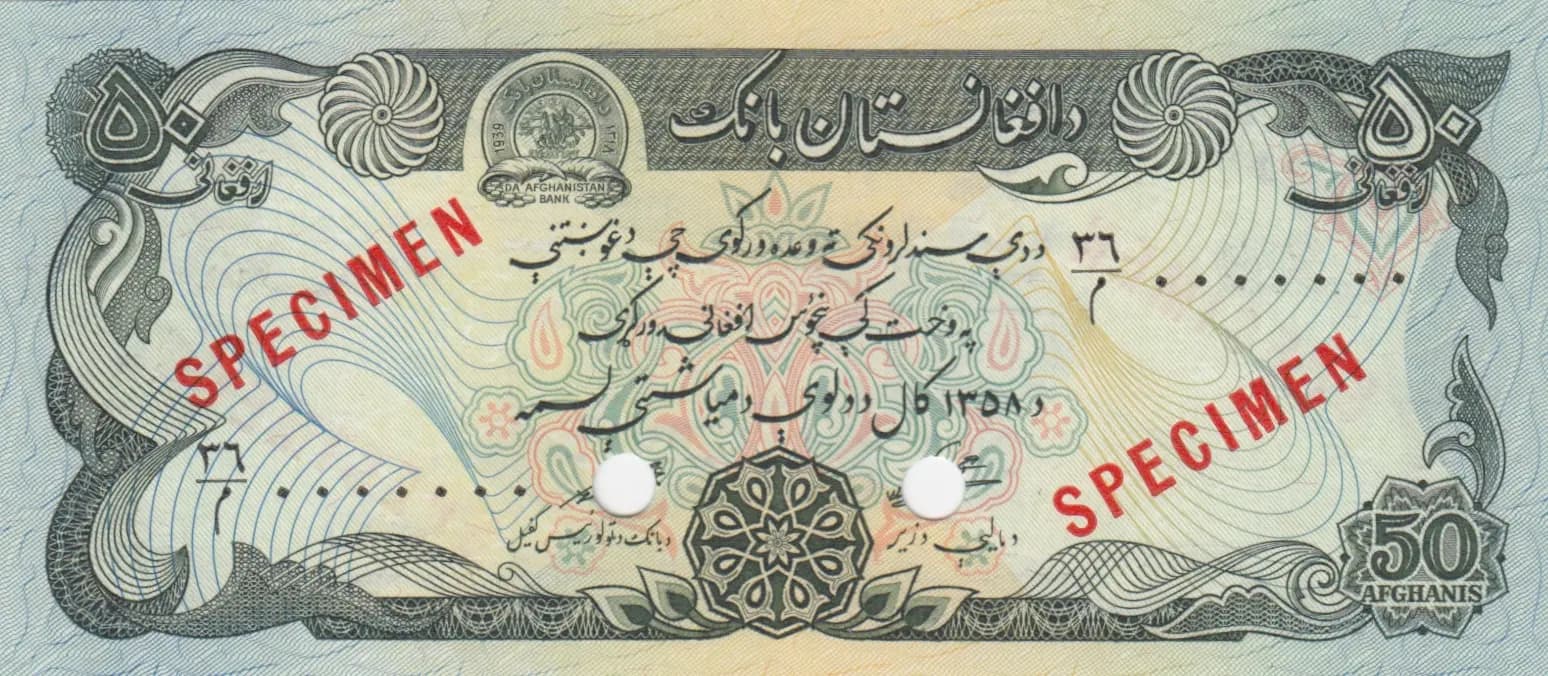
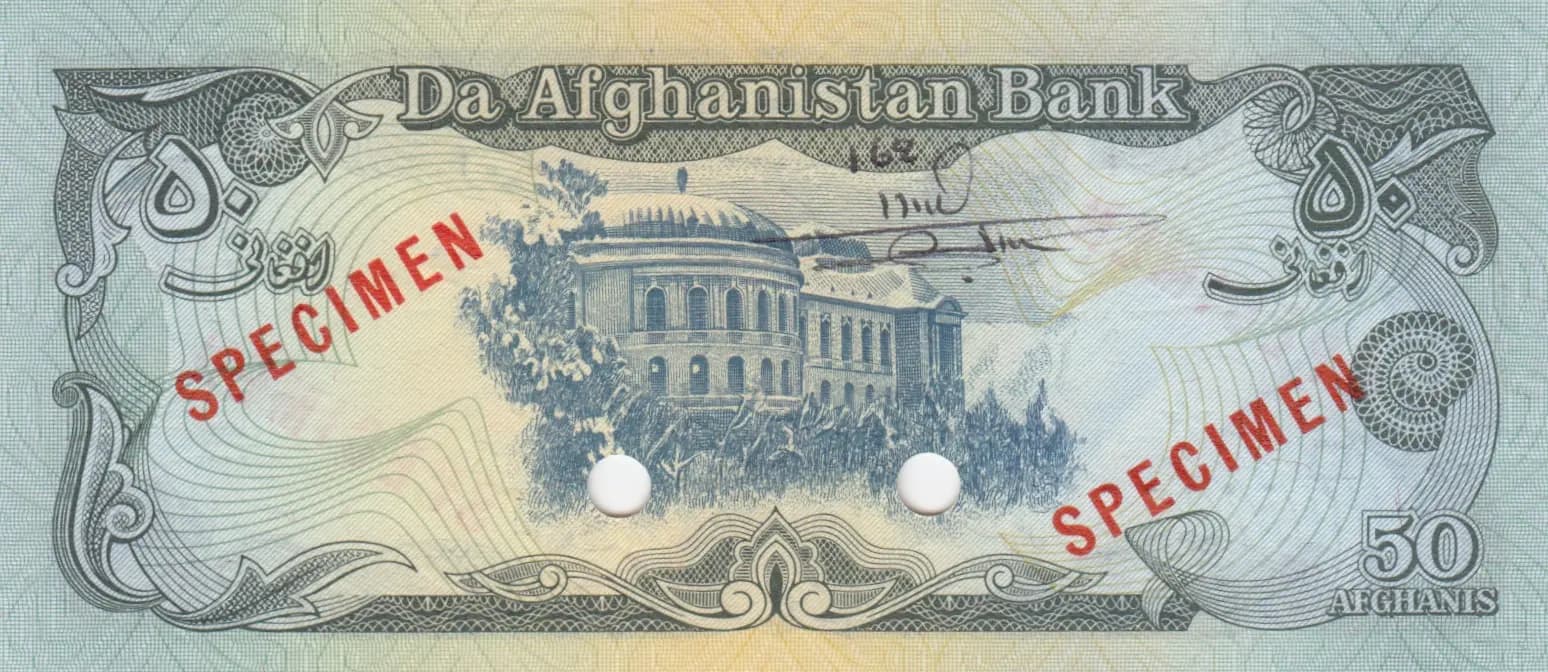
This is a 1979 Da Afghanistan Bank 50 Afghanis specimen note (Pick P-57as) in uncirculated condition, distinguished by prominent red diagonal 'SPECIMEN' overprints and two circular perforations typical of non-circulating sample notes. The obverse features an ornate geometric mandala-like pattern in green, pink, and tan with the Da Afghanistan Bank seal at top center, while the reverse depicts a detailed intaglio engraving of a domed fortress or palace set in a mountainous landscape rendered in blue tones. As a specimen issue, this note was never intended for circulation and represents an important reference example from Afghanistan's banking system during the early Soviet-influenced period.
Common. EBay price tracking data shows UNC examples selling for under $2 (most recent sales at $0.41-$1.38), with even graded specimens (PMG 65-66) achieving only $10.50-$20.50. The 2019 catalogue value of $1 for UNC further confirms this note's common status. While specimen notes carry a slight premium over circulated issues due to their non-circulating status and collector interest, this particular denomination and issue date did not have a limited print run. Specimen overprints and perforations are standard production marking rather than rarity indicators.
This note was issued in 1358 of the Afghan solar calendar (1979 CE), a pivotal year in Afghanistan's modern history marked by political instability and the prelude to Soviet intervention later that year. The Da Afghanistan Bank's seal and bilingual Dari/Persian and English inscriptions reflect the nation's attempt to maintain international banking standards during this turbulent period. The architectural imagery of the palace fortress on the reverse likely represents Dar-al-Aman Palace in Kabul, a symbol of Afghan governance, though the political upheaval of 1979 would soon render such symbolism historically poignant.
The obverse features an elaborate ornamental design centered on a complex geometric mandala or star pattern rendered in green, pink, tan, and light blue, representing traditional Afghan Islamic decorative arts. The Da Afghanistan Bank seal (circular emblem with horseman motif) is positioned at top center. Ornate spiral and geometric border patterns frame the entire design in black and green intaglio work. The reverse depicts Dar-al-Aman Palace in Kabul—a domed fortress structure set on elevated terrain with mountains, hills, and vegetation in the background—rendered in detailed blue intaglio engraving. The architectural illustration occupies the central focus with decorative corner ornaments and geometric border frames matching the obverse design aesthetic.
Front side: 'داافغانستان بانک' (Da Afghanistan Bank in Dari/Persian script) appears at top center; '۱۳۵۸' (year 1358 in Afghan solar calendar, equivalent to 1979 CE); '50' and 'AFGHANIS' appear in corners; 'SPECIMEN' in red diagonal overprint. Back side: 'Da Afghanistan Bank' in English across top in decorative banner; '50' and 'AFGHANIS' in bottom right corner; 'SPECIMEN' in red diagonal overprint. All inscriptions appear in both Dari/Persian and English, reflecting the note's official banking purpose.
Intaglio engraving on multicolored underprint. The intricate geometric patterns, fine line work throughout borders, detailed landscape engraving on the reverse, and the precision of the spiral and mandala designs are characteristic of traditional intaglio security printing. The multicolored underprint visible beneath the black intaglio work indicates a combination process. This note was produced by a professional security printer meeting international banknote standards; the specific printer for Afghan notes of this era was typically De La Rue or similar British security printers, though documentation for P-57as production requires verification.
This is specifically a SPECIMEN variety (P-57as designation) as opposed to the regular issue (P-57a). The specimen designation indicates deliberate two-hole punch perforations and 'SPECIMEN' overprints applied at the printing stage, making it unsuitable for circulation. The catalog reference notes a similar earlier note with different seal configuration exists as P-54, indicating design evolution. Two signature varieties are documented for this denomination according to external references, though the specific signatures visible on this specimen example would require higher resolution inspection to distinguish. The 1358 (1979) date is documented; a later 1370 (1991) version exists per catalog data.