1000 afghanis 1979 specimen
Market Prices
4 salesAbout This Note
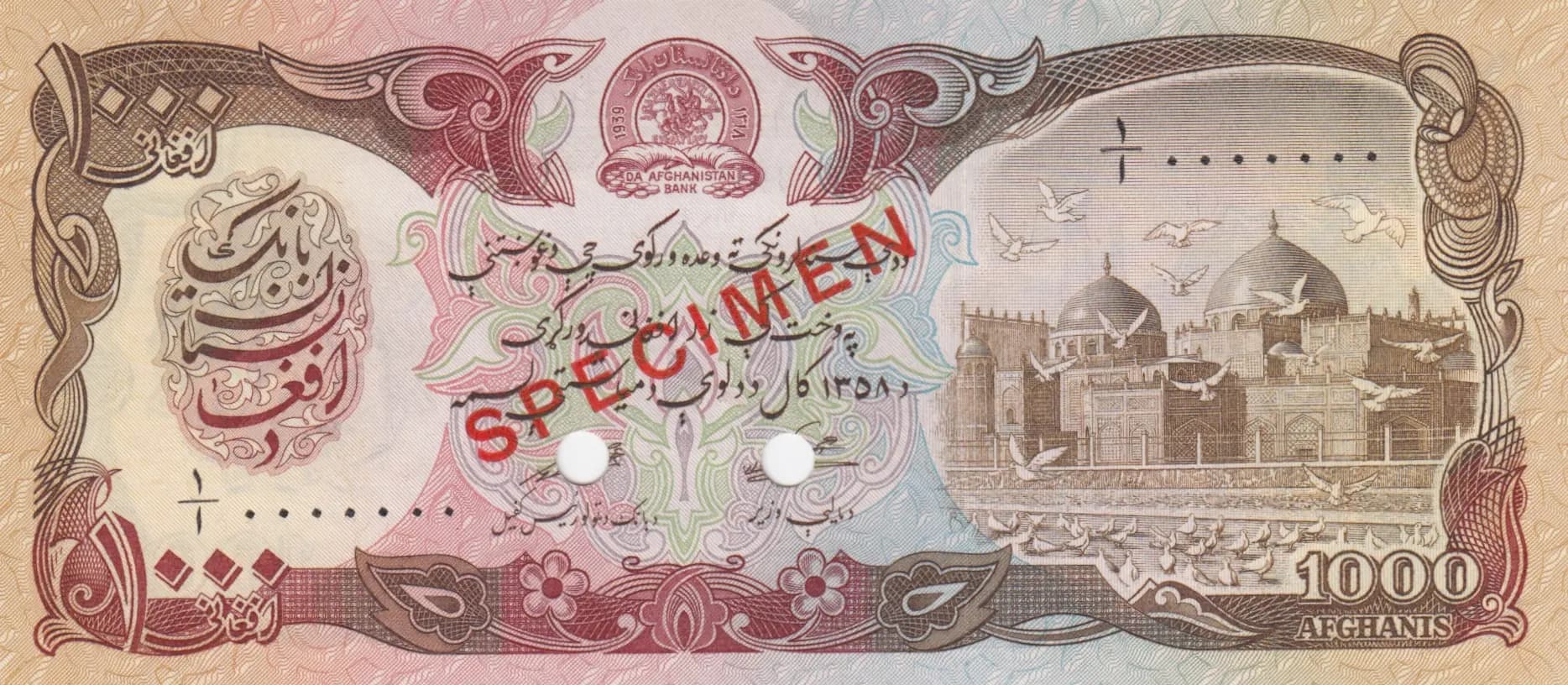
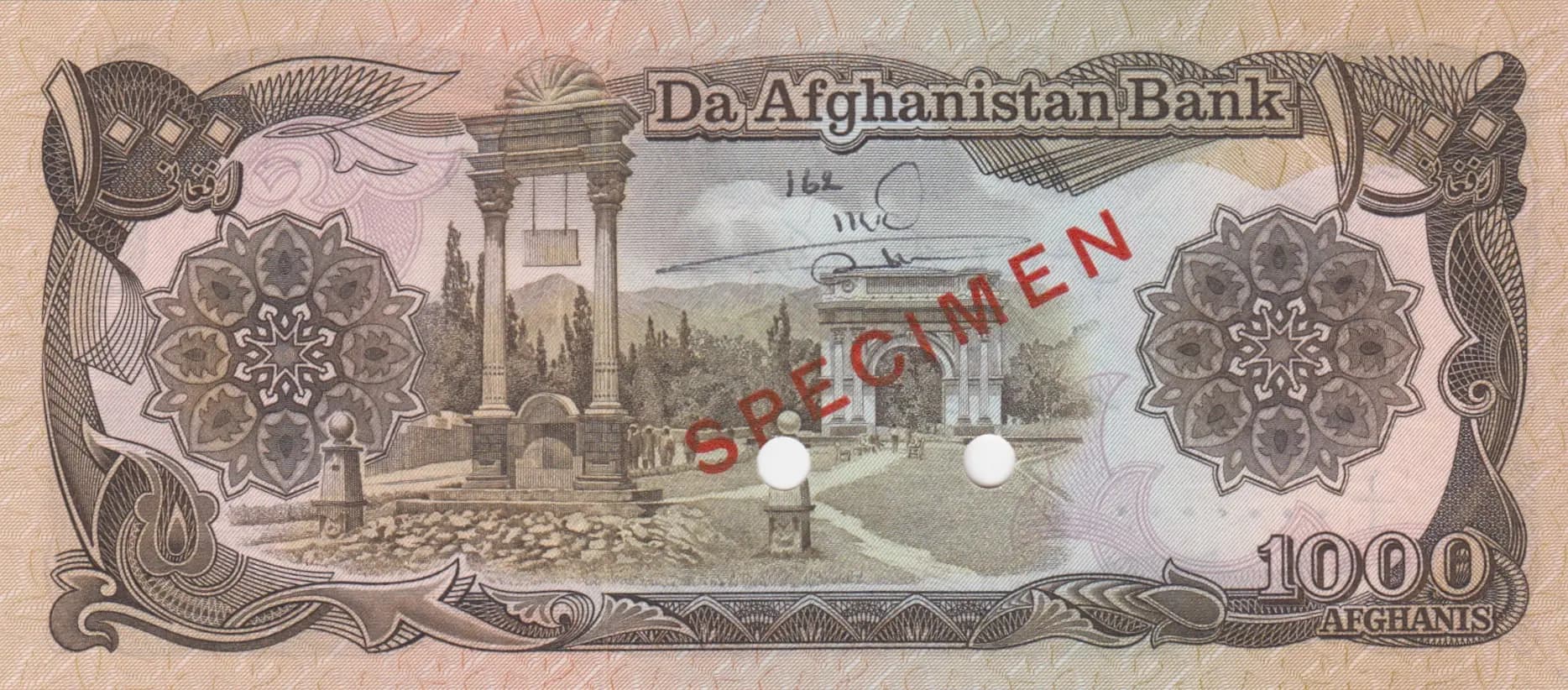
This is a 1000 Afghanis specimen note from 1979 (SH 1358), issued by Da Afghanistan Bank in uncirculated condition. The note features exceptional engraved detail with rich brown, pink, and blue-green color printing, depicting the Mosque of Mazar-e-Sharif on the obverse and classical architectural ruins with columns (Victory Arch area near Kabul) on the reverse. As a specimen note with characteristic red diagonal 'SPECIMEN' overprint and two punch holes, this example represents an important piece of Afghan monetary history from the eve of major political upheaval.
Common. While specimen notes are technically non-circulating and less frequently encountered than regular issues, this 1000 Afghanis specimen has appeared regularly in the secondary market. eBay historical data shows multiple sales of UNC examples ranging from $0.99 to $3.25 (with PMG 66 graded notes reaching approximately $10-11.50), indicating substantial availability and relatively modest collector demand. The denomination and issue date place it among the more accessible Afghan specimens for collectors.
This note was issued in 1979 (Islamic year 1358), the year of the Soviet invasion of Afghanistan, marking a significant moment in the country's modern history. The depicted landmarks—the Mosque of Mazar-e-Sharif, one of Islam's holiest sites, and the classical ruins near Kabul—represent Afghanistan's rich architectural and cultural heritage. The specimen designation indicates this was an official prototype or presentation example from Da Afghanistan Bank, issued before this series entered regular circulation during a period of major geopolitical transition.
The obverse features an ornate engraved representation of the Mosque of Mazar-e-Sharif (the Noble Shrine), depicted on the right side with characteristic domes and minarets, complemented by flying birds in the architectural scene. The reverse displays classical ruins with tall columns in a landscape setting, representing the Victory Arch (Taq-e-Zafaraan) near Kabul, with cypress trees and mountains in the background. Both sides incorporate the Da Afghanistan Bank seal at top center and are framed by intricate ornamental borders featuring floral medallions and geometric patterns in corners. The color scheme employs dark brown as the primary color with deep red-violet, pink, tan, and blue-green accents in the underprint, creating substantial visual depth and security complexity.
Front side: 'DA AFGHANISTAN BANK' (issuing authority), 'SPECIMEN' (red overprint indicating non-circulating status), '1000' (denomination), 'AFGHANIS' (currency unit), '1358' (Islamic calendar date corresponding to 1979). Back side: 'Da Afghanistan Bank' (issuing authority), 'SPECIMEN' (red overprint), '1000 AFGHANIS' (denomination). Additional Arabic/Dari script appears on both sides but full transliteration from the images is not completely legible; these inscriptions typically contain additional bank information and security text.
Intaglio (engraved) printing on multicolored underprint, evidenced by the fine line work, intricate detail reproduction, and depth of the architectural engravings visible in both the mosque and classical ruins scenes. The precision of the geometric medallions, floral patterns, and border work confirms professional security printing standards typical of currency production in the 1970s-80s era. The specimen note characteristics and security features suggest production by a major international currency printer, though specific printer attribution for this Pick number would require additional archival documentation.
This is cataloged as Pick P-61as, the 's' suffix denoting specimen status. The note displays the characteristic red diagonal 'SPECIMEN' overprint and two white circular punch holes in the center area, which are standard security markings applied to specimen notes to prevent accidental circulation. The date shown is 1358 (SH—Solar Hijri calendar), which corresponds to 1979 CE. No serial numbers are visible in the specimen examples, consistent with standard specimen production practices.