20 tala 1985
About This Note
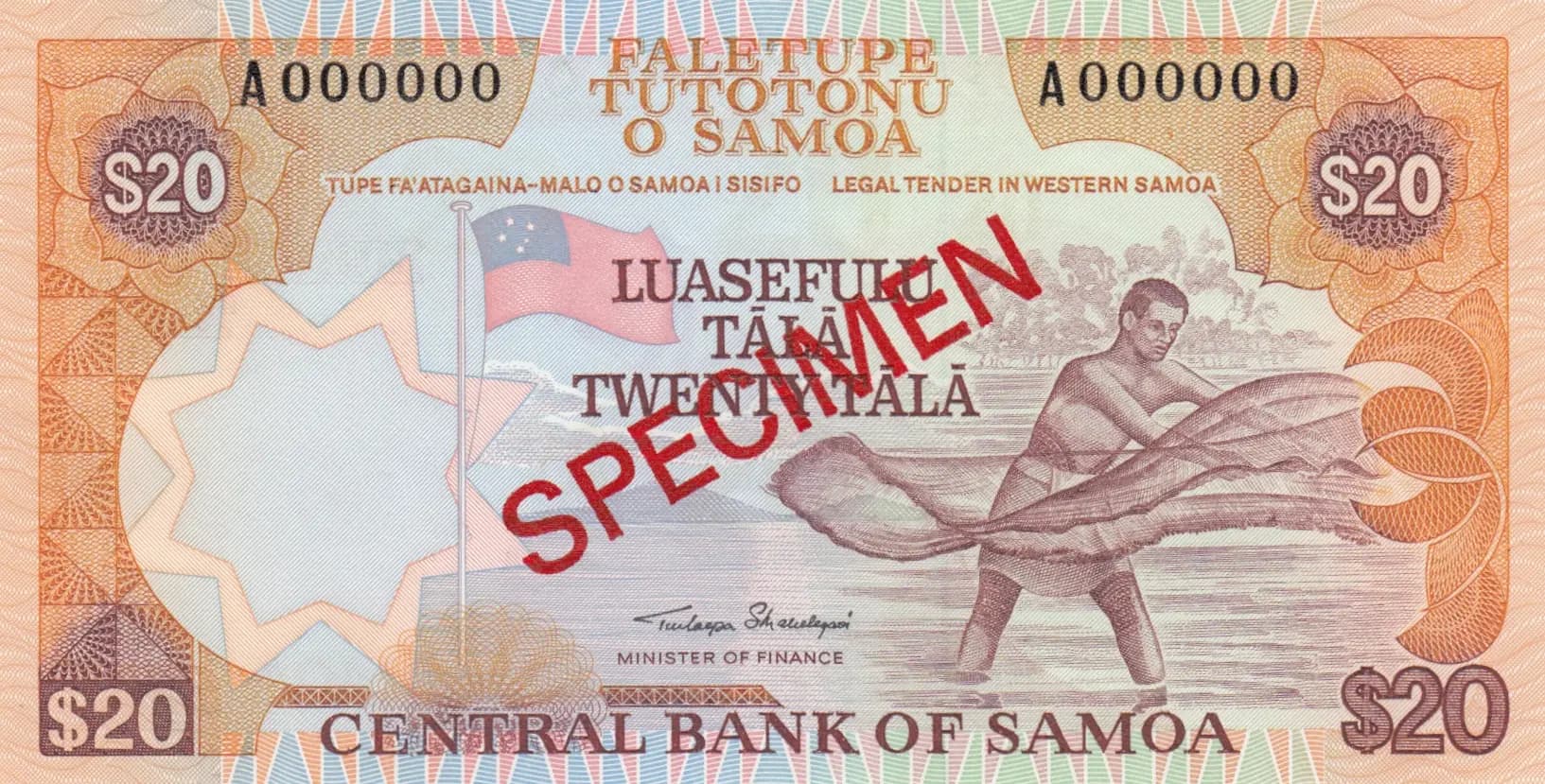
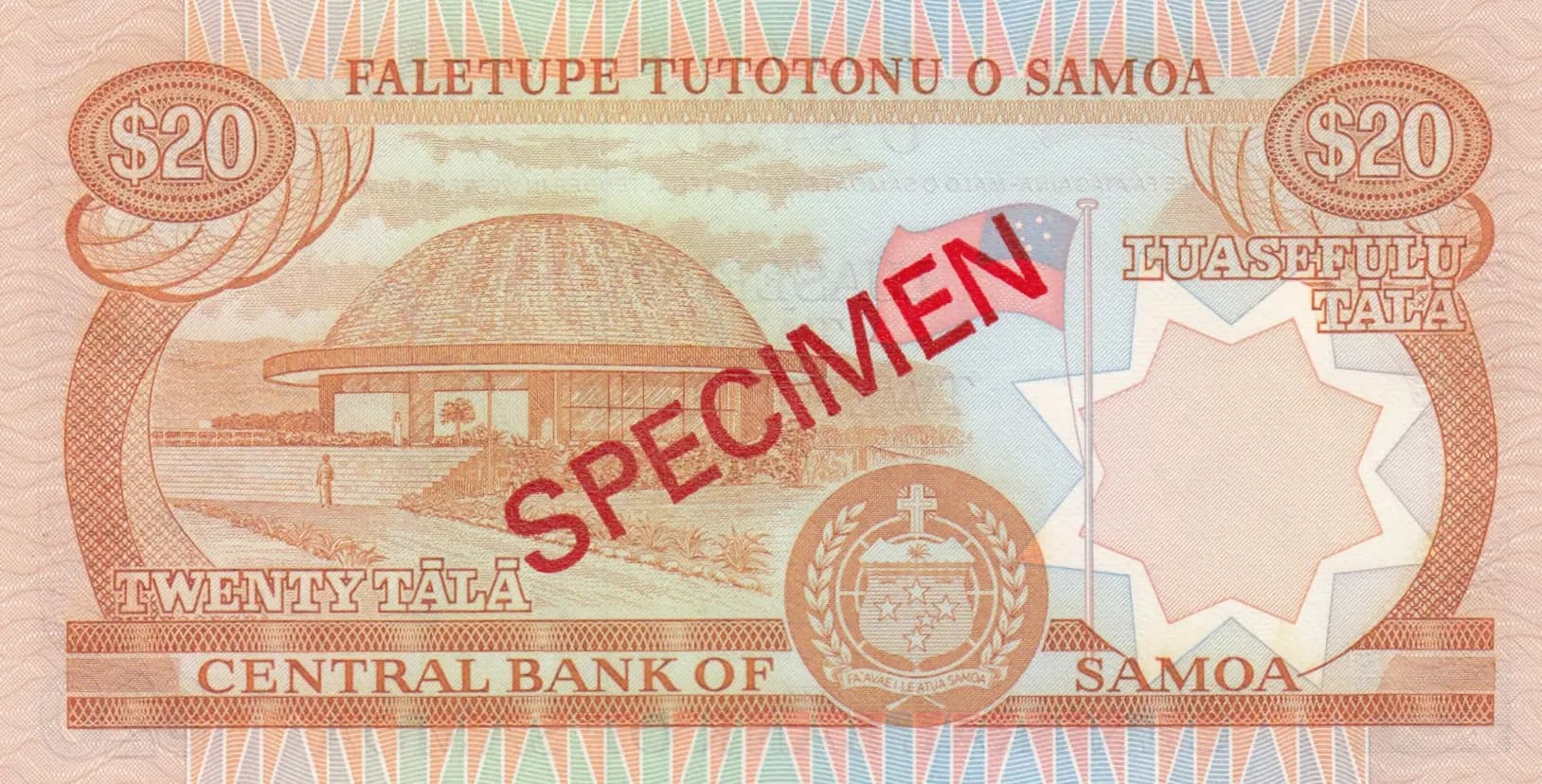
This is a 1985 Western Samoa 20 Tala specimen banknote (Pick 28) in uncirculated condition, distinguished by its prominent red 'SPECIMEN' overprint and serial number A000000 indicating non-circulation status. The note features vibrant orange, tan, and blue coloring with a traditional Samoan fisherman depicted on the obverse and the iconic fale (parliament house) on the reverse, representing the cultural and political identity of Western Samoa during the mid-1980s. As a specimen note, this piece is particularly valuable to collectors of currency specimens and Pacific island numismatics.
Common. The 1985 20 Tala note (Pick 28) from Western Samoa was part of a standard circulation issue with a substantial print run typical of the denomination. While specimen notes with red overprints were produced in limited quantities for official and archival purposes, the basic design of this denomination remains commonly available in the numismatic market. No evidence of short print runs, recalls, or scarcity factors specific to this Pick number exists. Specimen notes are more specialized than regular circulation notes but remain accessible to collectors at modest valuations.
Issued by the Central Bank of Samoa (Faletupe Tututonu o Samoa) in 1985, this banknote reflects Western Samoa's monetary independence and national identity during a period of economic development in the South Pacific. The obverse features a traditional fisherman holding a large leaf, symbolizing the nation's maritime heritage and subsistence economy, while the reverse prominently displays the Fono (parliament house) in Apia, emphasizing the country's governmental structures and civic identity. The bilingual English and Samoan inscriptions underscore the country's colonial legacy and the cultural significance of the Samoan language in the newly independent nation.
The obverse features the Western Samoa national flag in the upper left corner, with a dignified male figure depicted from the waist up in the center-right area, dressed in traditional or semi-traditional Samoan attire while holding what appears to be a large taro leaf or similar plant material—a reference to the nation's agricultural heritage and traditional subsistence practices. The reverse showcases a detailed architectural illustration of the Fono (Parliament House) located in Apia, rendered in perspective view and emphasizing the traditional Samoan open-sided fale structure characteristic of the building. Both sides display ornamental circular denomination markers featuring '$20' in the corners, with decorative geometric borders and fine line pattern backgrounds throughout. The national flag appears again on the reverse right side, and a coat of arms or national seal with a cross symbol is visible in the lower right portion of the reverse. The overall design palette employs warm orange and tan tones with blue accents, creating a distinctive and culturally representative aesthetic.
FRONT SIDE: 'FALETUPE TUTUTONU O SAMOA' (Central Bank of Samoa), 'TUPE FA'ATAGAINA-MALO O SAMOA I SISIFO' (Legal tender in Western Samoa), 'LEGAL TENDER IN WESTERN SAMOA' (English version of legal tender declaration), '$20' / 'TWENTYTALA' / 'LUASEFULU TALA' (all meaning Twenty tala/dollars), 'MINISTER OF FINANCE' (signing authority), 'CENTRAL BANK OF SAMOA' (issuing institution), 'SPECIMEN' (non-circulation indicator). BACK SIDE: '$20' / 'TWENTYTALA' / 'LUASEFULU TATA' (all meaning Twenty tala/dollars), 'FALETUPE TUTUTONU O SAMOA' (Central Bank of Samoa), 'SPECIMEN' (non-circulation indicator), 'CENTRAL BANK OF SAMOA' (issuing institution).
The note exhibits characteristics of intaglio printing, evidenced by the fine line patterns, detailed background designs, and the crisp, defined nature of the portraits and architectural elements. The geometric borders and ornamental patterns display the precision typical of currency printing. Security features including watermark areas are visible in the light background regions. Based on Pick 28 (Western Samoa 1985 issues), this note was likely printed by De La Rue or a similar major currency printer contracted by the Central Bank of Samoa, though specific printer attribution would require additional documentation.
This is a specimen variety of Pick 28, identifiable by the red diagonal 'SPECIMEN' overprint and the serial number A000000, which is the standard numbering used for specimen notes. The specimen designation indicates this note was never intended for circulation and was produced for presentation to government officials, foreign central banks, or archival purposes. No other significant varieties (such as different signature combinations or date variations) are apparent from the visual analysis, as the 1985 date and the bilingual inscription format remain consistent with the standard issue. Collectors should distinguish between this specimen note and regular circulation examples of the same denomination and year.