20 tala 1980
“#005025”
About This Note
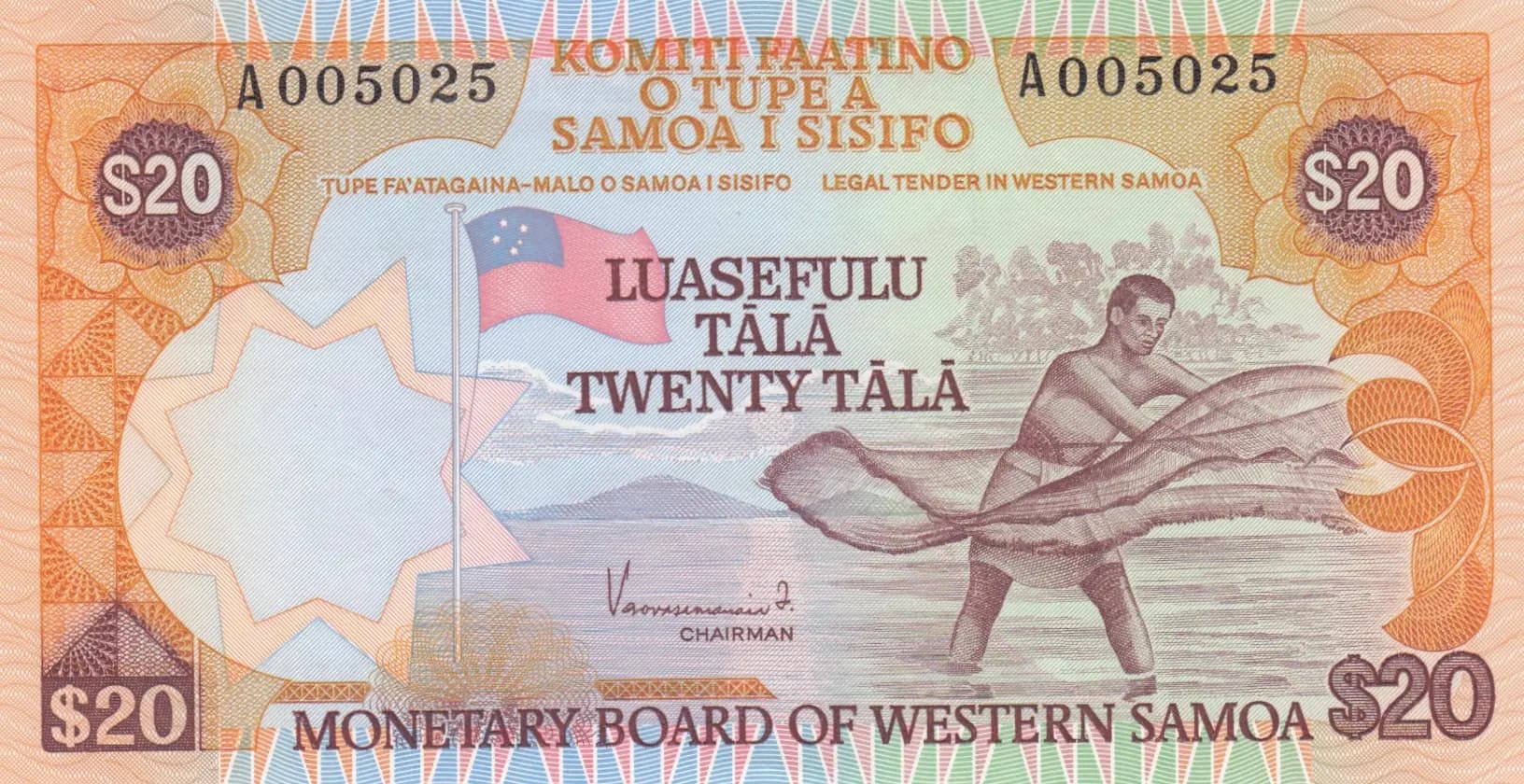
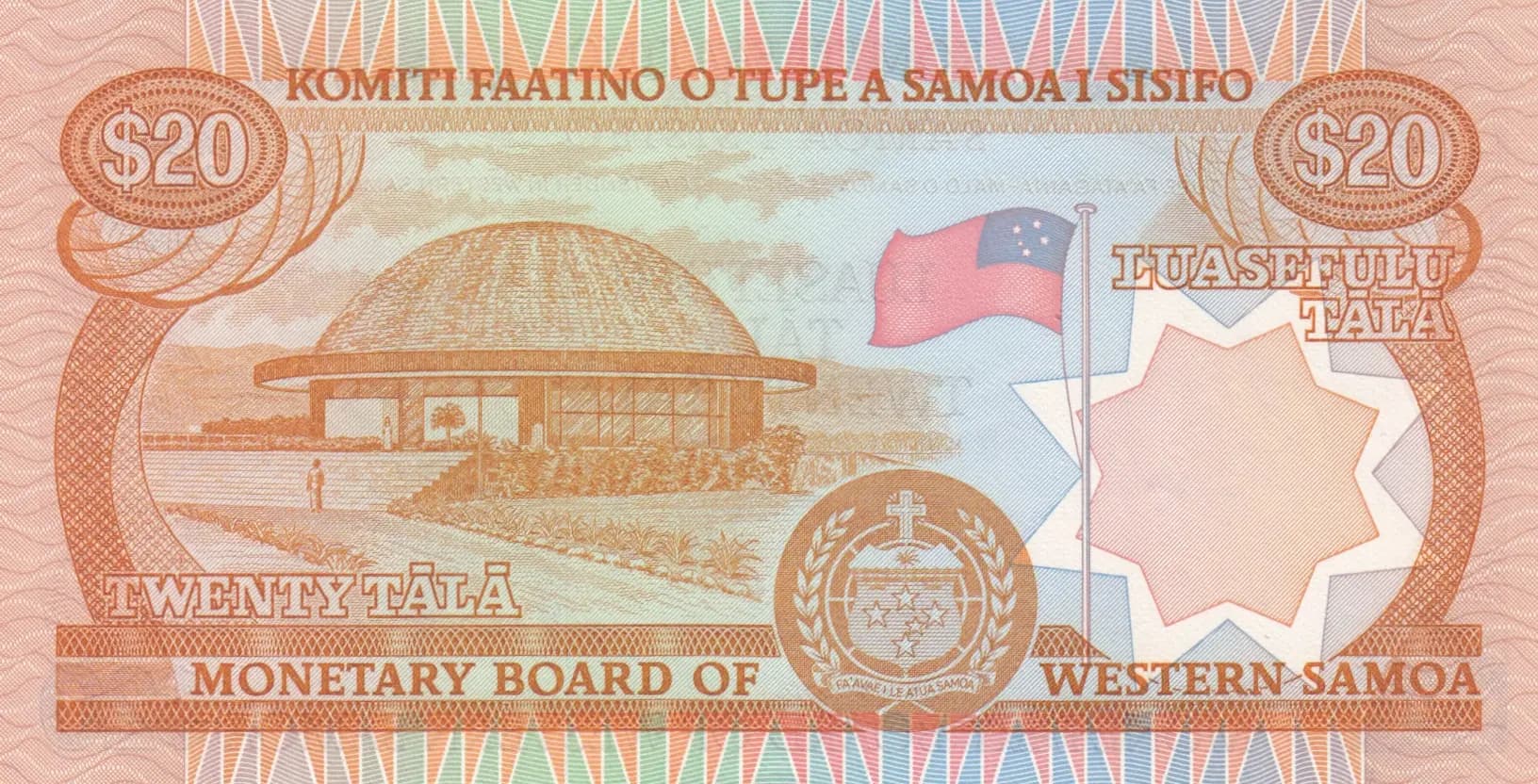
This is a crisp uncirculated example of Western Samoa's 1980 20 tala banknote (Pick P-23), featuring vibrant orange, tan, and green tones with exceptional print quality and sharp security details throughout. The obverse depicts a traditional Samoan fisherman in profile engaged in net gathering, while the reverse showcases the iconic fale (traditional meeting house) with its characteristic domed roof, both powerful symbols of Samoan cultural heritage. In UNC condition with serial number A005025, this note represents a well-preserved specimen of early post-independence Samoan currency design.
Common. The 20 tala denomination from Western Samoa's 1980 series represents a standard circulation note from a nation with a small but stable monetary system. No evidence of limited print runs, recalls, or short-lived issuance exists for this Pick number. Uncirculated examples are readily available in the numismatic market at modest premiums over face value, consistent with common early post-independence banknotes from Pacific island nations.
Issued in 1980 by the Monetary Board of Western Samoa during the nation's early period as an independent state (since 1962), this note celebrates distinctly Samoan imagery reflecting the country's cultural identity and economic traditions. The depiction of traditional fishing practices and the fale (parliament house/communal meeting space) underscore the importance of both subsistence economies and communal governance in Samoan society during this formative period. The bilingual inscriptions in English and Samoan demonstrate the post-colonial linguistic landscape of the newly sovereign nation.
The obverse features a prominent male figure depicted as a Samoan fisherman in traditional dress, shown in right profile actively engaged in gathering or fishing with a net, set against a stylized seascape background. The Western Samoa national flag (red and blue field with white stars representing the Southern Cross) is positioned in the upper center-left area. Denomination markers appear in all four corners in circular cartouches. The reverse depicts a traditional Samoan fale—an open-sided communal meeting house characterized by its distinctive rounded/domed roof structure—centered on the note, with the national flag again featured in the upper portion and the official coat of arms of Western Samoa (featuring a shield, wreath, and cross) displayed prominently in a circular seal in the lower center. Both sides are unified by an elaborate color scheme and extensive security printing.
FRONT SIDE: 'KOMITI FAATINO O TUPE A SAMOA I SISIWO' (Monetary Board of Western Samoa); 'TUPE FA'ATATAGAINA-MALO O SAMOA I SISIWO' (Legal tender in Western Samoa); 'LEGAL TENDER IN WESTERN SAMOA'; 'LUASEFULU TALA' (Twenty tala in Samoan); 'TWENTY TALA' (English denomination); 'CHAIRMAN' (signature line); '$20' (numerical denomination). BACK SIDE: 'KOMITI FAATINO O TUPE A SAMOA I SISIWO' (Monetary Board of Western Samoa); 'HUASEFULU TALA' (Twenty tala - variant Samoan spelling); 'TWENTY TALA' (English denomination); 'MONETARY BOARD OF WESTERN SAMOA'; '$20' (numerical denomination).
This note was produced using intaglio (steel engraving) printing, evidenced by the fine line work, complex guilloche patterns, and detailed micro-printing visible throughout both sides. The security features include intricate geometric patterns, wave-pattern security lines at top and bottom borders, and fine-lined background work characteristic of high-security currency production from this era. The printer for Western Samoa's early banknotes was typically a specialist security printer such as De La Rue or similar Commonwealth currency specialist, though definitive attribution for this specific issue would require additional research of Samoan central bank records.
The specimen observed bears serial number A005025, indicating an early printing from the series. Variety identification for this Pick 23 would typically involve monitoring of serial number prefixes, signature variations (Chairman's signature blocks), and any minor printing run differences. The bilingual inscription variant 'LUASEFULU TALA' (front) versus 'HUASEFULU TALA' (back) may represent a minor orthographic variation or printing run difference worth noting by specialists, though both appear to be legitimate Samoan language renderings of 'Twenty tala.' Further cataloging would require comparison across multiple specimens to establish distinct varieties.